Greece in July: Heat, Crowds & What to Do
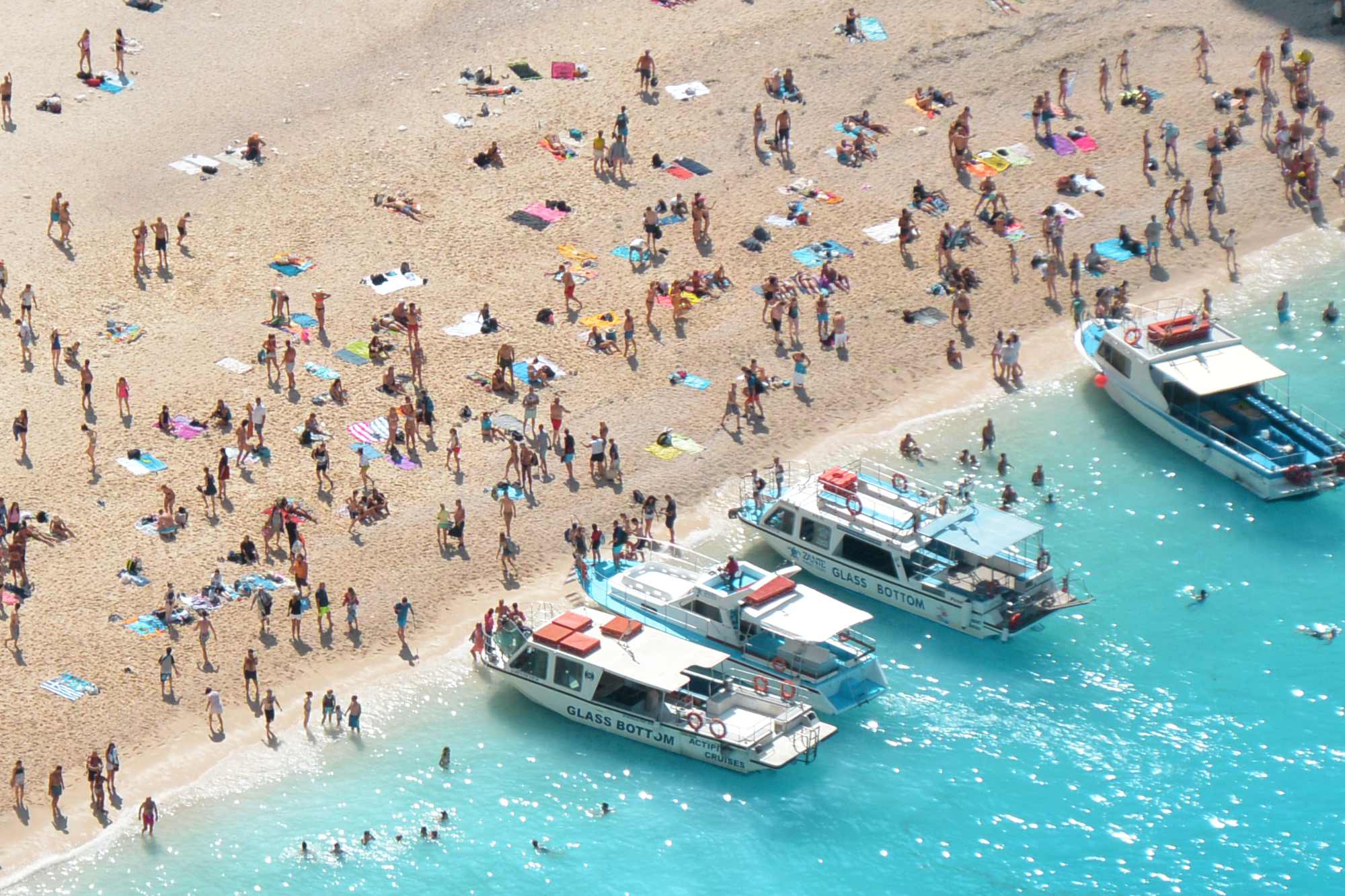
Greece in July is peak season — and it shows. The weather is reliably hot, the sea is warm, the islands are alive, and pretty much everything you pictured about a Greek summer is happening. It’s also the most crowded and expensive month of the year. Santorini in July means an hour-long queue to watch the sunset in Oia. Mykonos means beach clubs at €30 minimum spend. Athens means 38°C on marble pavements.
None of this makes July a bad time to go. It makes it a time that rewards planning more than any other month. The people who have a great July in Greece are the ones who know which places to avoid, which places thrive in peak season, and how to structure their days around the heat.
This guide covers exactly that — what Greece in July is really like, the honest trade-offs, the tourist traps to skip, how locals actually live through July, and the destinations and tactics that make peak season work.
July Weather in Greece: What It’s Really Like
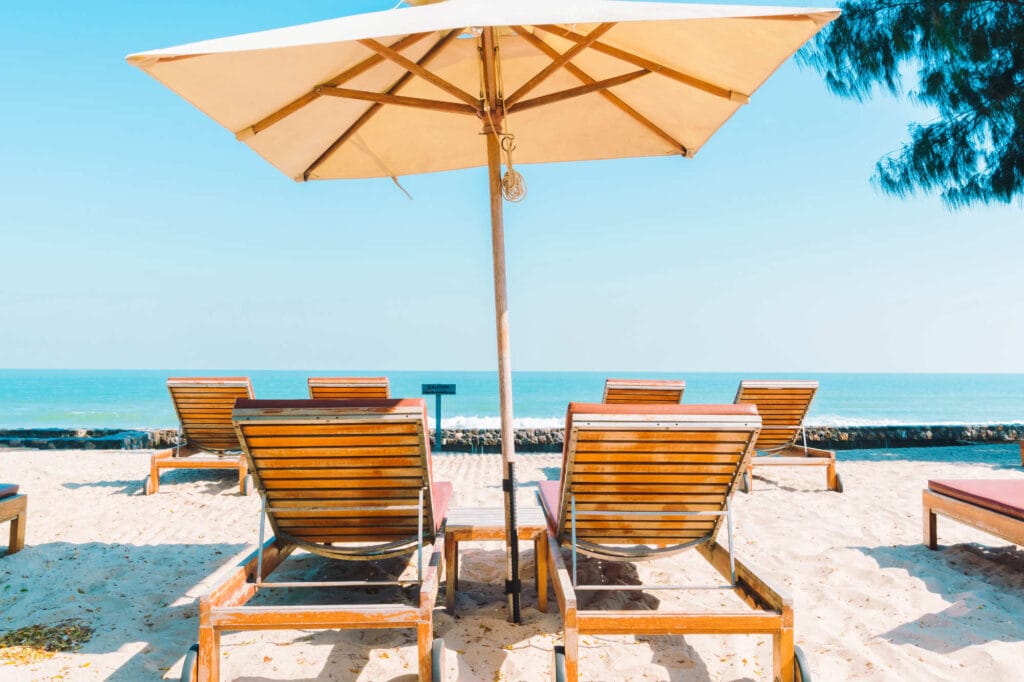
July is the hottest and driest month across most of Greece. Rain is almost nonexistent. What you will deal with is heat — and depending on where you are, it can range from pleasantly warm to genuinely exhausting.
| Region | Avg High | Avg Low | Rain Days | Sea Temp |
| Athens | 33–36°C (91–97°F) | 22–24°C | 0–1 days | 25°C |
| Santorini / Cyclades | 28–31°C | 22–24°C | 0–1 days | 26°C |
| Crete | 29–32°C | 22–24°C | 0–1 days | 26°C |
| Rhodes | 30–33°C | 22–24°C | 0–1 days | 27°C |
| Corfu / Ionian Islands | 30–33°C | 21–23°C | 1–2 days | 26°C |
| Thessaloniki | 31–34°C | 20–22°C | 1–2 days | — |
The Cyclades (Santorini, Mykonos, Paros, Naxos) feel cooler than these numbers suggest because of the meltemi wind — more on that below. Athens and Thessaloniki on the mainland, without that sea breeze, can feel punishing. 36°C in Athens with no wind is genuinely hard work if you’re trying to sightsee all day.
The sea in July is as warm as it gets — 25–27°C across Greece. Beach days are effortless. Evening swims at sunset are one of the best things about July in the Greek islands.
The Meltemi Wind: Greece’s July Wild Card
The meltemi is a strong, dry northerly wind that dominates the Aegean in July and August. It’s one of the most important things to understand about Greece in July — it affects where you stay, how you get around, and whether your ferry runs on time.
Where it blows strongest
- Cyclades: Santorini, Mykonos, Paros, Naxos, Milos — strong and consistent
- Dodecanese: Rhodes, Kos — moderate to strong
- Crete north coast: moderate
- Ionian Islands (Corfu, Zakynthos): mostly unaffected
- Athens: meltemi provides relief from heat, but doesn’t dominate
What the meltemi means practically
On a breezy meltemi day (Force 5–6), the Cyclades feel 5–8°C cooler than the thermometer says. This is why Paros feels more comfortable in July than Athens despite similar temperatures. The downside: on strong meltemi days (Force 7+), smaller ferries between islands can be cancelled or delayed. This happens several times a month in July.
Rule of thumb: if you’re island hopping in July, always book morning ferries — the meltemi typically builds through the day and peaks in the afternoon. Check Poseidon weather service (poseidon.hcmr.gr) for daily forecasts if you’re travelling between islands.
Which Destinations Actually Work in Greece in July
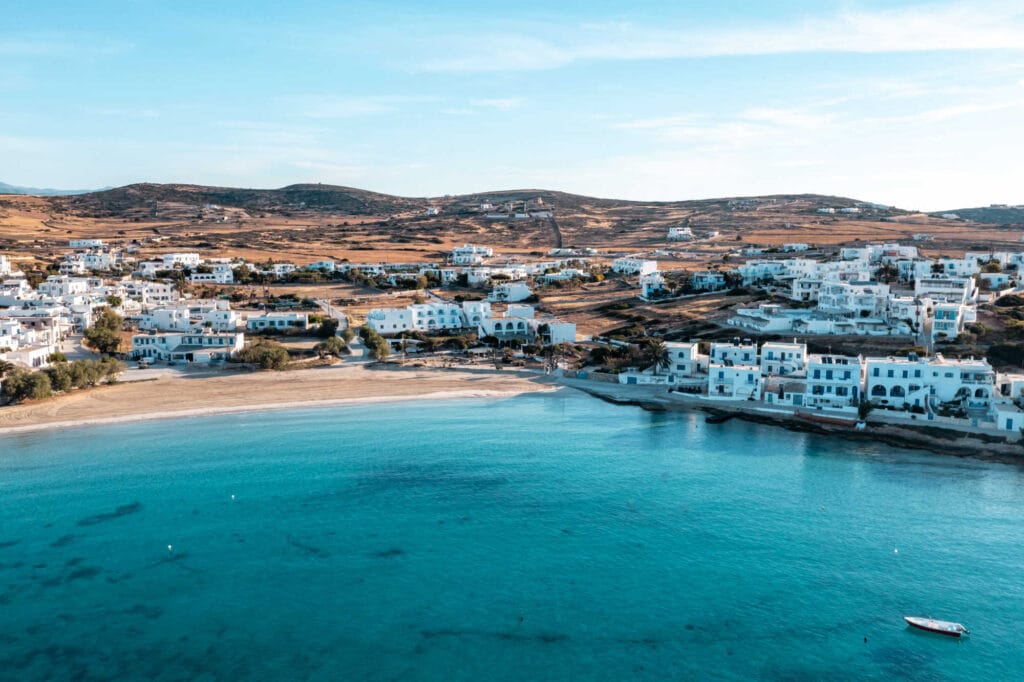
Not everywhere handles July peak season equally well. Here’s an honest assessment:
The Cyclades: Choose Wisely
Santorini and Mykonos in July are fully at peak intensity. They work — the atmosphere, the scenery, the food are all real — but only if you accept the conditions: crowds, prices, and the need to book everything weeks or months ahead. The saving grace on both islands is the meltemi, which keeps temperatures in the high 20s rather than the 35°C+ of the mainland.
The smarter July move in the Cyclades: Paros and Naxos. Both have beautiful beaches, good food, and the same sea and meltemi breeze — with a fraction of the Santorini/Mykonos crowd and 30–40% lower prices. Naxos in particular is the largest Cycladic island, with a proper local town, excellent beaches, and a mountain interior that’s almost empty in July.
Crete: The Best Big-Island Option in July
Crete in July is busy at the popular spots (Chania, Elafonisi, Balos) but has enough size and diversity to absorb the crowds. The key: rent a car and head east (Sitia, Xerokampos, Vai) or south (Agia Galini, Frangokastello). These areas see a fraction of the tourist traffic and have excellent beaches. The Samaria Gorge is still worth doing in July — start at 6:30am before the heat builds.
Rhodes: Busy but Functional
Rhodes handles July better than Santorini. The Old Town is crowded but large enough to absorb visitors. The island has enough beaches spread along its coastline that you can always find a quieter one. Rhodes also benefits from being a large island — drive north to Kallithea or south toward Lindos early in the morning for the best experience.
Athens: Survive It, Don’t Linger
Athens in July is hot — genuinely, uncomfortably hot. Daytime temperatures of 35–38°C on exposed marble surfaces make midday sightseeing miserable. That said, Athens is unavoidable for most Greece trips. Strategy: use Athens as a 1–2 day transit point, visit the Acropolis at 8am sharp, and escape to the islands as quickly as possible. The Plaka neighborhood in the evening, when temperatures drop and restaurants fill up, is actually pleasant in July.
Corfu and the Ionian Islands: A Quieter Alternative
The Ionian Islands (Corfu, Zakynthos, Kefalonia) are protected from the meltemi, making the sea calmer and the beaches less windy than the Cyclades. They’re also less fashionable than Santorini and Mykonos, which keeps the crowd profile different — more family-oriented, less party-focused. July here is busy but not frantic.
Tourist Traps to Avoid in Greece in July
July is the month when the worst of Greece’s tourist industry is on full display. These are the things experienced travelers avoid:
The Oia Sunset Queue
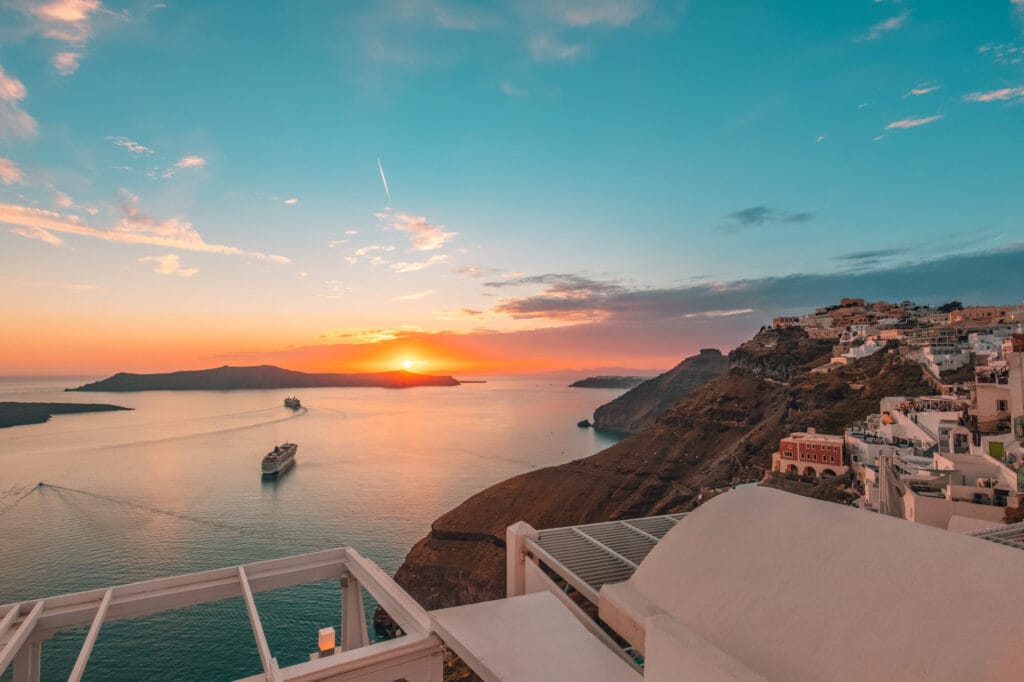
The famous Santorini sunset from Oia’s castle ruins is genuinely beautiful — and genuinely overrun in July. Arriving 90 minutes early to stand in a growing crowd for a 10-minute event is a July reality. The workaround: watch the sunset from the caldera path between Fira and Imerovigli instead. Same view, zero queue, better photos because you’re not shooting through 200 other people’s phones.
Overpriced Caldera-View Restaurants
Restaurants with direct caldera views in Santorini charge 40–60% more than restaurants 50 meters further back — for identical food. The view from your table during dinner is a sliver of what you see from the path. Have the view for free on the path, eat at a taverna in Pyrgos or Megalochori village instead. Better food, half the price, almost no tourists.
Organized ‘Sunset Cruises’ at Peak Markup
Sunset catamaran cruises are marketed heavily in Santorini and Mykonos in July at €100–150 per person. The standard 5-hour cruise is genuinely good, but the same experience via a smaller local boat operator costs €60–80. Ask at your hotel for local operators rather than booking through the tourist desk in Fira.
Overpriced Beach Sunbeds at Famous Beaches
Red Beach and Perissa in Santorini, Paradise and Super Paradise in Mykonos — all have sunbed operations charging €25–40 per pair per day in July. The free workaround: arrive early (before 9am) and take any unclaimed space with your own towel. By 11am those same beaches are 100% sunbed-occupied and you’ll be paying to stay.
Athenian Taxi Overcharging
Taxis from Athens airport to the city center have a fixed fare (€40 daytime, €55 nighttime) — some drivers ignore the meter or claim ‘extra charges’ for luggage. Insist on the meter or use the Uber app, which works well in Athens and often costs 20% less than taxis for airport runs.
‘Traditional’ Tavernas Near Major Sites
Restaurants within 200 meters of the Acropolis, Fira main street, and Mykonos Town waterfront charge tourist prices: €5 for a coffee, €18 for a Greek salad, €28 for grilled fish. Walk 5–10 minutes away from the tourist drag and prices drop by 30–50% for the same food.
Insider Tips: How to Do Greece in July Like a Local
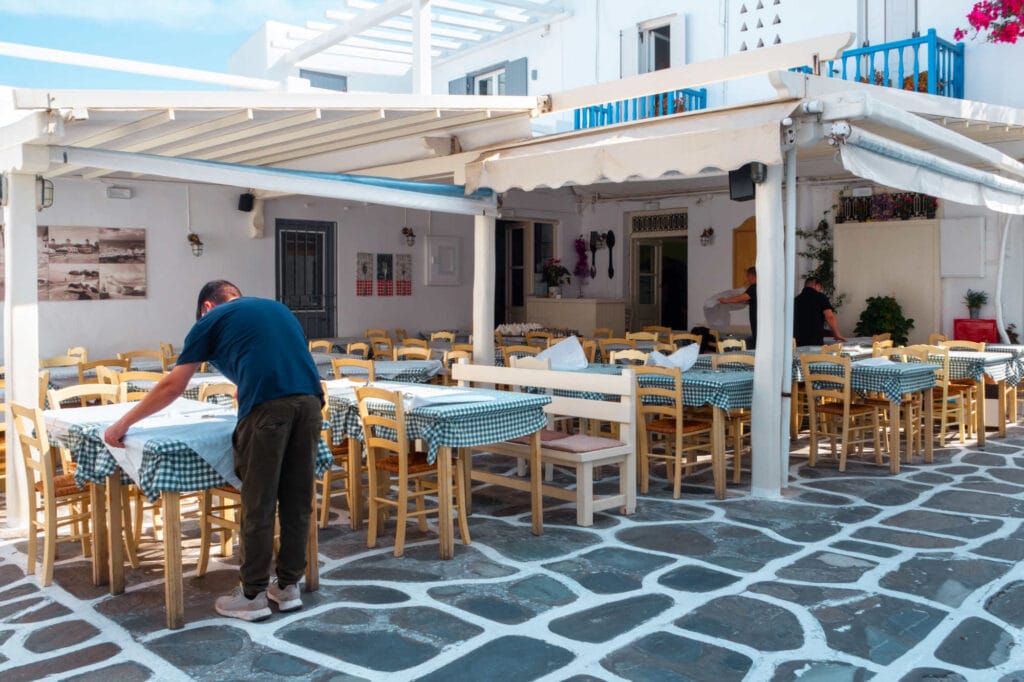
Greeks don’t sightsee at noon in July. This is the single most important thing to understand.
The Greek Summer Schedule
Local life in July follows a specific rhythm: activity in the morning (7am–1pm), full shutdown midday (1–5pm), revival in the late afternoon, and real socializing from 9pm until 2am. Adjust to this schedule and July becomes far more enjoyable.
- 7–9am: Archaeological sites, market, morning swim before beaches fill up
- 9–12pm: Sightseeing, exploring, active activities
- 12–5pm: Lunch, siesta, beach with shade, air-conditioned museum
- 5–8pm: Second sightseeing window — temperatures drop, light is beautiful
- 9pm onwards: Dinner (Greeks eat late — restaurants fill up after 9:30pm)
Find the Locals’ Beach
Every island has a ‘tourist beach’ (mentioned in every guidebook, full of sunbeds) and a ‘locals’ beach’ (no sunbeds, free, often better). Ask your hotel owner or landlord — not the tourist desk — where they go on their day off. On Santorini, locals go to Vlychada. On Crete near Heraklion, they go to Agia Pelagia or Amoudara rather than Elounda. On Mykonos, locals head to Agios Sostis — no beach clubs, no music, no sunbeds, just the best sand on the island.
Eat at Village Tavernas, Not Port Restaurants
The best food in Greece in July is never at the restaurants facing the ferry port or the main tourist street. Head inland — every island has villages a 10–15 minute drive from the main town where tavernas serve locals year-round. These places have no English menus (use Google Translate), lower prices, and food that’s actually cooked rather than reheated.
Book the First or Last Ferry of the Day
On popular Cyclades routes in July, the 7am ferry is half-empty and never gets cancelled for wind (the meltemi hasn’t built yet). The 2pm ferry is full, hot, and more likely to be delayed. Same logic for ferries from the islands back to Piraeus — book the early morning departure.
Go to Smaller Islands for the Weekend
Athenian families flood the Cyclades every weekend in July (Friday evening to Sunday). If you’re flexible, schedule your stays on popular islands during weekdays and use weekends for lesser-visited spots or inland exploration. Hotels on Santorini and Mykonos are cheaper Sunday–Thursday than Friday–Saturday.
What to Do in Greece in July
Beach Days — The Main Event
July is Greece’s prime beach month. Water at 25–27°C, 14+ hours of daylight, and beaches ranging from dramatic black volcanic sand (Santorini’s Perissa) to flat turquoise lagoons (Balos in Crete, Navagio in Zakynthos). The strategy: go early or go late. The 7–9am beach window and the 6–8pm evening swim are the best experiences. Midday (11am–3pm) means full beaches, maximum UV, and peak heat.
Water Sports
July is peak season for water sports across Greece. Windsurfing at Paros (Pounta Beach) and Naxos (Mikri Vigla) is world-class — the meltemi provides consistent 15–25 knot wind conditions. Scuba diving is excellent in the clear July waters (visibility often 20–30 meters). Kayaking, paddleboarding, and jet skiing are available at virtually every beach with any infrastructure.
Sailing and Boat Trips
July is the best month for sailing in Greece if you know what you’re doing — consistent meltemi for sailors who can handle it, warm water, and stunning anchorages that are inaccessible by road. For non-sailors, day boat trips to sea caves, remote beaches, and snorkeling spots are available from every major island. Book directly with the operator at the port rather than through hotel desks for 20–30% lower prices.
Archaeology (Early Morning Only)
Archaeological sites in July are best between 8–10am. The Acropolis in Athens, Knossos in Crete, and Lindos in Rhodes all open at 8am — arrive at opening and you’ll have a meaningfully different experience from arriving at noon. By 10–11am, tour groups dominate and the heat is building. The Acropolis Museum in Athens is excellent for the 11am–3pm dead zone — air-conditioned, world-class collection, and calmer than the outdoor site.
Nightlife
July is when Greek island nightlife reaches its peak. Mykonos is the obvious choice, but each island has its scene. Ios is the party island of the Cyclades — cheaper than Mykonos, younger crowd, genuinely wild. Rhodes has a bar street in the Old Town that runs until 4am. Kavala and Thessaloniki on the mainland have sophisticated local bar and music scenes far cheaper than the islands.
How Much Does Greece Cost in July
July is peak pricing across the board. Book everything in advance — availability and price both deteriorate the closer you get to travel dates.
| Type | June | July | Notes |
| Budget hostel dorm | €30–50/night | €45–70/night | Book 4+ weeks ahead |
| Mid-range hotel (Athens) | €100–150/night | €140–210/night | AC essential — verify before booking |
| Mid-range hotel (Santorini) | €180–280/night | €280–500/night | Non-caldera view saves 40% |
| Boutique cave hotel (Santorini) | €380–600/night | €550–1000/night | Book months ahead |
| Villa / apartment rental | €150–250/night | €220–450/night | Best value for groups of 4+ |
| Car rental (Crete/Rhodes) | €35–55/day | €50–80/day | Book in advance — July sells out |
The single best accommodation hack for July Santorini: stay in Fira or Karterados (a quiet village 10 min walk from Fira) rather than Oia. Same access to everything, 30–50% lower prices.
Food Costs in July
| Item | Tourist Area Price | Local Area Price |
| Greek coffee / frappe | €3.50–5 | €2–3 |
| Gyros / souvlaki | €4–6 | €3–4.50 |
| Taverna lunch (per person) | €18–30 | €12–18 |
| Fresh fish dinner (per person) | €25–45 | €18–28 |
| Beach sunbed pair | €25–40/day | Free (arrive early) |
| Boat day trip | €70–120/person | €50–80 (book direct) |
How to Save Money in July Without Sacrificing Quality
July in Greece doesn’t have to mean July prices for everything. These approaches genuinely work:
- Stay on a secondary island and day-trip to the famous one. Base yourself on Paros and take a day trip to Mykonos — you’ll see everything you want without paying Mykonos hotel rates.
- Book accommodation Sunday–Thursday only. Friday and Saturday nights on popular islands are 15–25% more expensive.
- Eat the set lunch menu (menu tou imeras). Most tavernas offer a 2–3 course lunch for €10–14 that the tourist menu never mentions. Ask for it specifically.
- Use the supermarket for breakfast. Greek supermarkets have excellent local yogurt, honey, fresh bread, and fruit. A self-catered breakfast costs €3–4 vs €12–18 at a hotel or café.
- Take the local bus (KTEL) instead of taxis on larger islands. Crete and Rhodes have reliable bus networks that connect major beaches and towns for €2–5 per trip. A taxi to the same beach: €15–25.
- Book ferries 3–4 weeks ahead. Last-minute ferry bookings in July are 20–40% more expensive on popular routes, when available at all.
- Avoid island restaurants on the main harbor/port. Walk inland 5 minutes. Prices consistently drop 25–40%.
What to Pack for Greece in July

July packing is about heat management and sun protection above everything else.
Clothing:
- Lightweight linen or cotton — synthetics are miserable in 35°C heat
- Multiple swimsuits — you’ll use one daily, sometimes twice
- Light loose trousers or a skirt for evenings — shorts are fine at beaches and casual places, but some nicer restaurants prefer long trousers
- One light layer for air-conditioned restaurants, ferries, and museums — the temperature contrast can be dramatic
- Comfortable, worn-in walking shoes for archaeological sites — new shoes and cobblestones are a bad combination
- Flip flops for beaches and casual use
Sun protection — non-negotiable:
- SPF 50 sunscreen — bring large quantities from home (expensive in Greece, €15–25 per bottle in tourist areas)
- Wide-brim hat — non-negotiable at archaeological sites and beaches
- Quality sunglasses
- After-sun lotion or aloe vera gel
- Light scarf or sarong — for church entry (required) and midday sun cover
Practical items:
- Reusable water bottle — drink 2–3 liters daily in July heat
- Small portable fan — sounds excessive, not excessive on an Athens street at noon
- Electrolyte tablets or powder — sweating heavily in July heat depletes electrolytes faster than water alone replaces them
- Dry bag for boat trips and beach days
- Power adapter (Type C/F — standard EU plug)
- Greece Packing List: What to Bring for Every Season
July vs. August: Is There a Difference?
People often ask whether August is worse than July. The honest answer: yes, slightly — but less than you’d think.
| Factor | July | August |
| Crowds | Peak — very busy | Peak — marginally busier 1–15 Aug |
| Prices | Peak | Peak (slight dip after Aug 15) |
| Heat | 33–36°C (mainland) | 35–38°C (mainland), marginally hotter |
| Meltemi wind | Strong, consistent | Very strong, more ferry disruptions |
| Availability | Book 4–8 weeks ahead | Book 2–4 months ahead |
| Atmosphere | Full summer energy | Same, plus August 15 holiday crowds |
| After mid-August | N/A | Prices and crowds begin dropping Aug 20+ |
If you have a choice between July and August: July is slightly easier to navigate. August 1–15 is the most intense period of the Greek tourist year — the Dekapentavgoustos (August 15th holiday) brings every Greek family to the islands simultaneously. August 20–31 starts the shoulder season retreat — crowds thin, prices begin falling.
Practical Tips for July Travel in Greece
Book everything before you arrive. In July, ‘I’ll sort it when I get there’ means paying premium prices for what’s left — or finding nothing. Accommodation, ferries, popular tours, and car rentals should all be confirmed before departure.
Carry cash in smaller denominations. Many beach bars, boat trip operators, and small tavernas operate cash-only in July. ATMs on smaller islands run out of cash on busy weekends — not an exaggeration. Withdraw enough in Athens or a larger island to cover a few days.
Verify your accommodation has working air conditioning. Not just ‘air conditioning available’ — actually confirmed and tested. In July, a room without functioning AC is a room you won’t sleep in. Read recent reviews specifically mentioning AC, not just the listing description.
Book the Acropolis online before you go. Skip-the-line tickets at the Acropolis are available via the official Greek culture ministry website (etickets.culture.gr). In July, the walk-up queue can be 45–60 minutes. The online ticket is the same price — there’s no reason not to book.
Take the overnight ferry from Athens to Crete or Rhodes. The overnight ferry from Piraeus to Heraklion (Crete) and Rhodes departs around 9pm and arrives in the morning — you travel while sleeping and save a night’s accommodation. Cabin berths cost €30–50 extra but are worth it. Book at least 2–3 weeks ahead in July.
Wear shoes at beaches near rocks. July means jellyfish season in parts of Greece (mostly the Ionian and Aegean coasts). They’re rarely dangerous but unpleasant. Swim fins or water shoes also protect against sea urchins on rocky beaches.
July Greece Checklist
Before you go:
- Book flights 8–12 weeks ahead — July prices spike close to departure
- Book all accommodation before arrival — no ‘figure it out on arrival’ in July
- Book ferries 3–4 weeks ahead for all inter-island routes
- Book Acropolis entry online at etickets.culture.gr
- Bring large quantities of SPF 50 sunscreen from home
- Pack electrolyte tablets for heat management
- Verify accommodation has working, reviewed air conditioning
While you’re there:
- Follow the local schedule: active 7am–12pm, rest 12–5pm, revive 5pm–late
- Visit archaeological sites at 8am opening — before heat and tour groups
- Eat lunch at village tavernas, not port-facing restaurants
- Ask locals where they swim — find the non-tourist beach
- Book morning ferries — meltemi builds through the day
- Carry 2–3 liters of water daily when sightseeing
- Withdraw cash on larger islands — small island ATMs run dry on weekends
What I’d do differently: I’d book a week earlier (late June) or a week later (mid-August onwards). July 1–31 is peak everywhere simultaneously. Shifting by just one week in either direction gives you the same weather with meaningfully less competition for everything.
Explore More About Greece Travel
- When Is the Best Time to Visit Greece?
- Greece in June: What to Expect
- Greece in April: Spring Travel Guide
- Island Hopping in Greece: The Ultimate Guide
- Greece Ferry Guide: How to Book & Navigate Islands
- Greece Packing List
- Getting Around Greece: Ferries, Flights & Cars
- Best Greek Islands for Couples
- Best Greek Islands for Families
FAQ: Greece in July
Is July a good time to visit Greece?
Yes — with planning. July offers the full Greek summer experience: warm sea, long days, fully open islands, and peak atmosphere. The trade-offs are real: it’s the most crowded and expensive month, and the heat on the mainland is intense. But travelers who plan ahead and know which places to avoid do very well in July.
How hot does Greece get in July?
On the mainland (Athens, Thessaloniki), July highs regularly reach 35–38°C. The Cycladic islands stay cooler — 28–31°C — thanks to the meltemi wind. Crete and Rhodes average 29–33°C. Evenings across all regions drop to a pleasant 22–24°C.
What is the meltemi wind in Greece in July?
The meltemi is a strong, dry northerly wind that dominates the Aegean from June through August, peaking in July. It can cool the Cyclades by 5–8°C compared to mainland temperatures, but also causes ferry delays and cancellations on strong days. Book morning ferries to reduce wind-related disruption.
Which Greek islands are best in July?
For a balance of weather, beaches, and manageable crowds: Paros, Naxos, and western/eastern Crete. For full peak-season atmosphere with acceptance of crowds and prices: Santorini and Mykonos. For family-friendly July: Crete and the Ionian Islands (Corfu, Zakynthos). For escaping peak tourism entirely: small Aegean islands like Ikaria, Tilos, or Astypalaia.
Is Greece too crowded in July?
Popular spots — Oia in Santorini, Mykonos Town, Athens’ Acropolis at midday — are genuinely very crowded. But Greece is a large country with hundreds of islands and coastline. Crowds are concentrated in about a dozen famous spots. The rest of the country in July is perfectly navigable with moderate advance planning.
How expensive is Greece in July?
July is peak pricing. A mid-range hotel in Santorini costs €280–500/night. Athens mid-range runs €140–210/night. Food and transport costs don’t change dramatically with season, but accommodation, ferries, and car rentals are at their most expensive. Book in advance — last-minute July bookings pay a significant premium.
What are the biggest tourist traps in Greece in July?
The main ones: overpriced caldera-view restaurants in Santorini (walk 50 meters from the view, prices drop 40%), paid sunbeds at famous beaches (arrive before 9am with a towel instead), tourist-desk boat trip commissions (book directly at the port), and restaurants within 200m of major archaeological sites or ferry ports.
Can you swim in Greece in July?
July is Greece’s prime swimming month. Sea temperatures reach 25–27°C across all regions — warm enough for long beach days and evening swims. The water is clear, jellyfish are occasional rather than constant, and virtually every beach has full facilities.