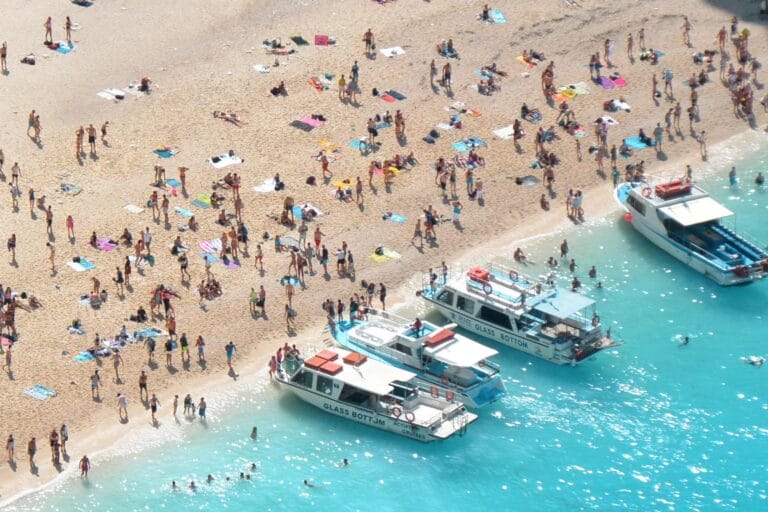

Greece in May: The Complete Shoulder Season Guide
Greece in May is quietly the best time to visit — and the people who know this tend not to advertise it. The weather is warm without being punishing, every island and site is fully open, prices sit well below their summer peak, and the crowds haven’t arrived yet. This guide gives you the full picture: real temperatures by region, honest cost comparisons, which islands deliver in May and which don’t, and the things worth watching out for before you book.
One important note: early May and late May are almost two different trips. The landscape is at its most vivid and green in early May, wildflowers are everywhere, and the light is extraordinary. But the sea is still brisk, and a handful of smaller seasonal businesses may still be in the final stages of opening. By late May, everything is running at full capacity, the sea is genuinely swimmable, and the weather feels like early summer.
Note: This page contains affiliate links. We may earn a small commission at no extra cost to you when you book through our links. This helps us keep creating free travel guides.
1. What to Actually Expect in Greece in May
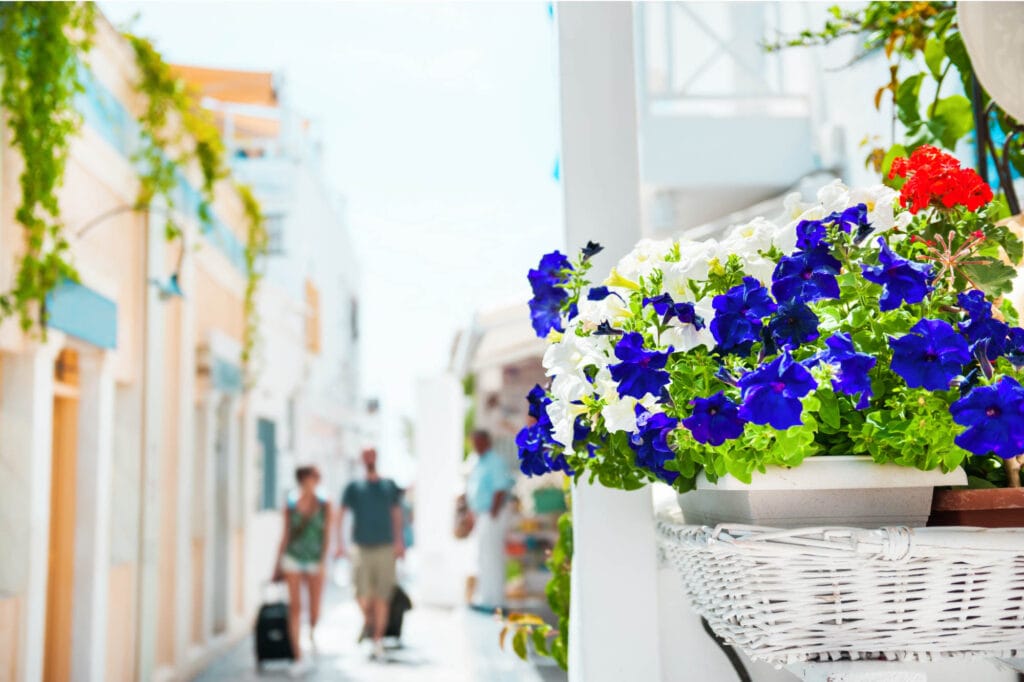
Average daytime temperatures reach 21–26°C across Athens and most islands, with the southern islands — Crete, Rhodes, Kos — running warmer. You get around 10–12 hours of daylight, roughly a 74% chance of sunshine on any given day, and minimal rainfall: 10–20mm on the islands and 25–40mm on the mainland. When it does rain in May, it’s usually a brief shower, not a grey week.
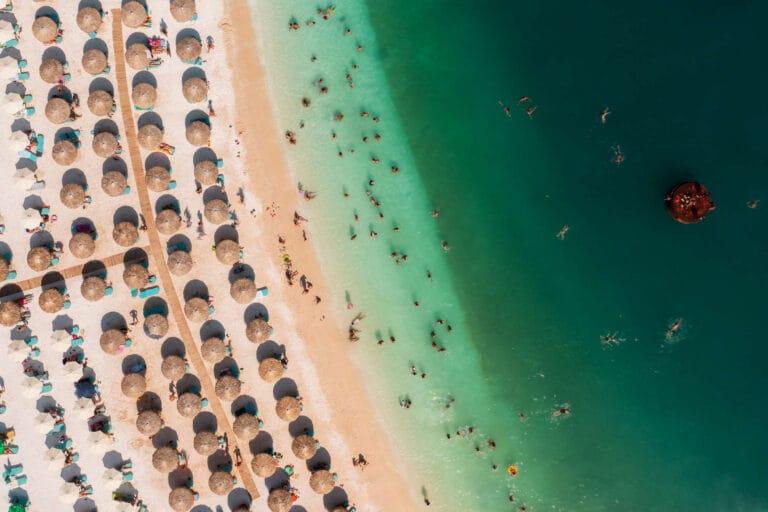
The sea in May averages 18–20°C depending on region. Cool enough to be refreshing, warm enough for a daily dip from mid-month onward — particularly in the south. If long hours of warm-water swimming are your entire trip plan, aim for late May in Crete or Rhodes rather than early May in the Cyclades.
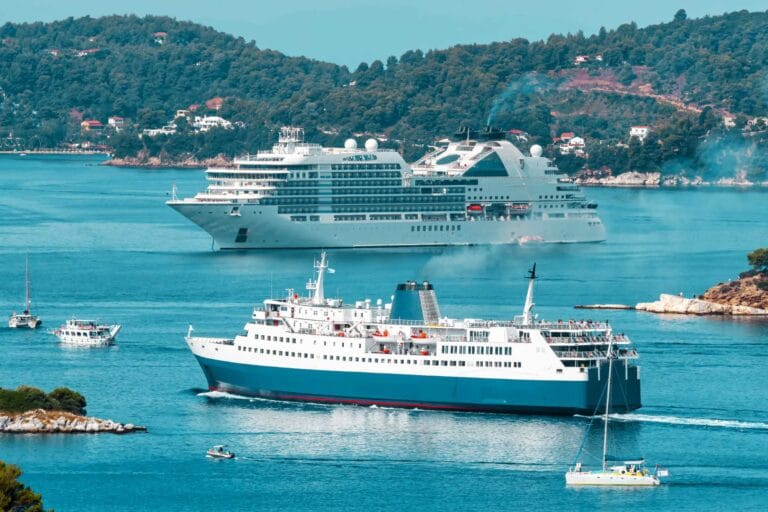
Tourism infrastructure is fully open. Ferries run on near-summer schedules, hotels and restaurants are operating, tours are bookable. What you won’t encounter: the volume of visitors that makes Santorini’s narrow streets feel like a theme park queue in August.
2. Weather in Greece in May — by Region
| Region | Avg Temp | Sea Temp | Sunshine | Notes |
| Athens & Mainland | 22–26°C | — | 9–10 hrs | Best for sightseeing & ancient sites |
| Cyclades (Santorini, Mykonos, Naxos) | 22–25°C | 18–20°C | 10–11 hrs | Winds mild compared to summer |
| Crete & Dodecanese (Rhodes, Kos) | 24–28°C | 20–22°C | 11–12 hrs | Warmest, most summer-like in May |
| Ionian Islands (Corfu, Kefalonia, Lefkada) | 21–24°C | 18–19°C | 9–10 hrs | Greener, slightly wetter early May |
| Northern Greece (Thessaloniki, Halkidiki) | 20–23°C | 17–18°C | 9 hrs | Cooler evenings, occasional showers |
Late May across all regions sees daytime highs push toward the top of those ranges. If you’re travelling in early May and warmth matters most, prioritise Crete, Rhodes, or Kos over the Cyclades or Ionian islands.
3. Best Islands to Visit in Greece in May

Crete — Best Overall Pick for May
Crete in May averages around 25°C with 12 hours of sunshine and barely three rainy days all month. The Samaria Gorge — one of Europe’s great hikes at 16km through the White Mountains — opens for the season in May, and the crowds are a fraction of what they’ll be in July. The Palace of Knossos is quieter than it will be for the next four months. Hire a car: the road through the mountain villages and the south coast is one of the best drives in Greece, and May is exactly when the interior looks its most dramatic.
Santorini — Yes, Even in May
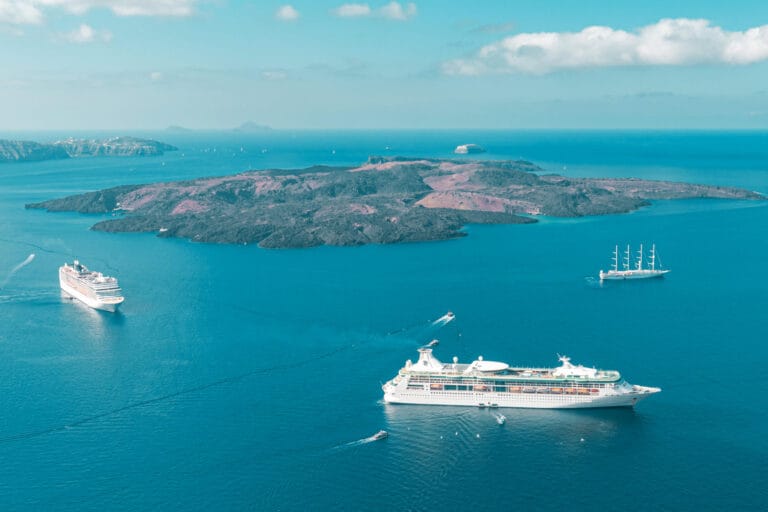
In the Cyclades, daytime temperatures sit between 22°C and 25°C, with winds still mild compared to summer. Santorini in May means you can actually walk around Oia without being wedged into a tour group. Sunsets at the famous viewpoints are watchable without crowd management issues. Hotels are available and rates are noticeably lower than from June onward. The only trade-off: the sea around Santorini is on the cooler side in May — more of a brave dip than a long swim.
Naxos — Best for Hikers and Beach Seekers
Naxos in May is ideal for hiking: the island’s green interior is in full bloom, the beaches are beautiful and uncrowded, and the atmosphere is genuinely laid-back. The nightlife scene centres around Chora rather than big clubs, which suits most people visiting in shoulder season. Naxos is also significantly cheaper than Mykonos — and has better beaches. That’s not an opinion, it’s what locals will tell you freely.
Rhodes — Warmest and Most History-Rich
Rhodes averages 24°C in May with 11 hours of daily sunshine. The walled medieval Old Town is far more pleasant to explore in mild May weather than under July’s heat. Rhodes works best as a primary destination rather than a quick stop — it’s geographically separate from the Cyclades, so plan it as its own trip rather than an add-on from Santorini.
Corfu — For Scenery Over Swimming
The Ionian islands stay green much longer than the Aegean islands, and in May Corfu is particularly beautiful: olive groves, the Venetian Old Town, dramatic west coast cliffs. The sea is among the coolest in Greece in early May, so this is the right choice if you want spectacular scenery and a relaxed pace over intensive beach time. A stray spring shower is possible, especially early in the month.
Milos — Book Early, Even in May
The volcanic coastline, Sarakiniko’s lunar beach, the coloured fishing village of Klima — all accessible in May without the summer boat tour bottleneck. Accommodation on Milos is limited even by Greek island standards, so book well in advance even for shoulder season.
4. Best Mainland Destinations in May

Don’t overlook mainland Greece in May. The weather is perfect for driving to Delphi, Olympia, or the monasteries of Meteora. The Peloponnese is particularly good in May: ancient sites with manageable temperatures and almost no queues.
Athens
Athens is at its best for walking-heavy sightseeing in May. Temperatures are comfortable for spending 3–4 hours outdoors without wilting. The Acropolis, Ancient Agora, and National Archaeological Museum are all better experienced now than in August — and the 8am slot at the Acropolis in May is a genuinely different experience from a midday visit in summer.
Meteora
The monasteries perched on vertical rock pillars in central Greece are one of the most extraordinary sights in Europe — and May is when the base of those pillars is green rather than the dry brown of summer. The hiking paths between the monasteries are comfortable in May temperatures; in July they’re a test of endurance. Consider staying overnight in Kalambaka rather than doing it as a rushed day trip from Athens.
Nafplio and the Peloponnese
Ancient Mycenae, the Theatre of Epidaurus, the Venetian fortress at Nafplio — all within a 90-minute drive of Athens and all substantially more pleasant to visit in May’s temperatures than in peak summer. Nafplio is one of the most charming towns in Greece and worth an overnight stay.
5. Prices in May vs Summer: What You’ll Actually Save
Travelling in shoulder season (April–May or September–October) saves 20–30% on hotels compared to July–August rates. The gap is biggest on premium islands: a Santorini property that costs €500 a night in August may be €150–200 in May. Here’s how the numbers actually look:
| Cost Category | May (Shoulder) | July–Aug (Peak) | Saving |
| 3-star hotel (Athens) | €80–120 / night | €120–180 / night | 25–30% |
| 3-star hotel (Santorini) | €120–200 / night | €250–500+ / night | 40–50% |
| Acropolis ticket (adults) | €30 | €30 | Same — flat rate since Apr 2025 |
| Ferry Athens–Santorini | €40–60 standard | €50–80 standard | ~15–20% |
| Tours & excursions | 10–20% lower | Peak pricing | ~10–20% |
Important update on the Acropolis ticket: from April 2025, the price increased to €30 for adults — a flat year-round rate with no seasonal discount. The old combination ticket covering 7 archaeological sites for €30 was also discontinued in April 2025. You now need individual tickets for each site, which adds up considerably. Book online in advance — timed entry is mandatory and early morning slots sell out first.
6. Things to Do in Greece in May

Hike the Samaria Gorge, Crete
16km through the White Mountains, ending at the Libyan Sea. Opens for the season in May (usually from May 1st, weather permitting). In July this hike is a sweaty ordeal with hundreds of other people. In May it’s genuinely enjoyable: cooler air, flowing water in the riverbed, wildflowers on the slopes. Take the early bus from Chania — it leaves from 6:30am. Don’t start the gorge after noon; it takes 5–7 hours and the exit closes at 4pm.
Sail the Cyclades
By May, conditions are ideal for sailing. The meltemi winds that make summer sailing uncomfortable in the Cyclades haven’t arrived yet — calmer crossings and more predictable weather. Charter companies offer lower rates than summer. A week-long sailing trip through Paros, Naxos, Milos, and Folegandros in May is a better experience than the same route in August.
Explore Athens Without the Crowds
The Acropolis at 8am in May. The Ancient Agora on a Tuesday morning. The National Archaeological Museum with actual space to stand in front of the exhibits. These are experiences worth planning around. Athens in May is what the city was meant to feel like.
Island Hop Efficiently
Ferries run on near-full summer schedules in May. You’re not fighting for deck space, not booking weeks ahead for basic routes, and boats run on time more consistently than peak season. The Athens–Santorini–Paros–Naxos circuit is comfortable and well-connected throughout May.
Greek Orthodox Easter (If Timing Aligns)
Greek Orthodox Easter moves each year and occasionally falls in May. If it does during your travel dates, this is one of the most extraordinary cultural experiences in Greece: the midnight Anastasi service with candles and fireworks, the lamb on the spit on Easter Sunday, the whole country in a genuinely festive mood. Plan deliberately around it — accommodation books up fast and ferries fill in the Easter week.
7. What to Pack for Greece in May
- Light layers for evenings — temperatures drop to 15–18°C after sunset. A light cardigan is not optional.
- One packable jacket or wind layer — non-negotiable for ferry crossings, which can be breezy regardless of the air temperature on land.
- Good walking shoes — the Acropolis path is marble: smooth, slippery, and uneven. Sandals are a bad idea here.
- Sunscreen from day one — the rocks at ancient sites reflect light, and UV in Greece is stronger than most northern Europeans expect, even on overcast days.
- Swimwear — swimmable from mid-May in most regions, from early May in Crete and Rhodes.
- A packable rain layer — takes up nothing; covers the occasional brief shower, particularly in early May on the mainland.
- Cash (€30–50) — most places take cards, but the Athens flea market, smaller bakeries, and some island tavernas are still cash-only.
8. Honest Downsides of Travelling in May
- The sea is cool in early May. If your trip is built entirely around long warm-water beach sessions, early May will disappoint — especially in the Cyclades and Ionian islands. Late May in Crete or Rhodes is a different story.
- Some smaller businesses are still ramping up. The big islands are fully open. Smaller or more remote islands may have limited taverna and accommodation options in early May — a ‘just-opening’ vibe that can feel thin.
- Greek Orthodox Easter disrupts travel. When Easter falls near your dates, domestic flights and ferries fill up and prices spike. Check the date and book well in advance if you’re travelling near that window.
- May 1st is a strike risk. Labour Day on May 1st regularly sees ferry and public transport strikes. Avoid tight connections on or immediately around May 1st.
- Nightlife is quiet. The full Mykonos club scene starts in June. May is lively and social, not electric.
9. Tourist Traps & Things to Watch Out For in May
The ‘Skip-the-Line’ Acropolis Ticket Scam
Third-party websites charge premium prices for ‘skip-the-line’ Acropolis access. What they don’t mention: even advance ticket holders wait 15–30 minutes at security screening during busy periods. The timed entry system introduced in 2024 means no one actually skips the line. Buy directly from the official Hellenic Heritage website (etickets.tap.gr). Don’t pay inflated prices for identical access.
May 1st Ferry Strikes
Labour Day on May 1st is an annual transport disruption risk. Don’t book connections that rely on ferries running normally on May 1st without checking the current situation closer to the date.
Hotels Pricing May Like June
Popular Santorini and Mykonos properties have been pushing May prices upward as shoulder season demand grows. Always compare specific dates — don’t assume ‘May = shoulder season savings.’ Late May on the most popular islands can be surprisingly close to early June pricing.
The Combination Ticket That No Longer Exists
Many travel blogs still mention the Athens combination ticket covering 7 archaeological sites for €30. It was discontinued in April 2025. Budget for individual site tickets if you’re planning to visit multiple Athens sites — the total adds up significantly.
10. What We’d Do Differently in May
- Book the Acropolis the moment you confirm your travel dates. Timed entry sells out, early morning slots go first. The 8am slot is worth the alarm.
- Choose late May over early May if the sea matters. The extra two weeks makes a real difference in water temperature, especially outside the southern islands.
- Skip the most famous island and use the savings on a less-visited one. May on Naxos or Milos is a better version of May on Santorini at meaningfully lower cost.
- Rent a car for the mainland. Athens–Nafplio–Olympia–Meteora is an excellent May road trip, completely comfortable in spring temperatures.
- Don’t start the Samaria Gorge after noon. Take the early bus from Chania and begin before 9am.
- Check the Greek Orthodox Easter date before booking anything. If it falls near your trip, add 6–8 weeks to all booking timelines.
11. Explore More
- When Is the Best Time to Visit Greece?
- Greece in April: Spring Travel Guide
- Greece in June: What to Expect
- Getting Around Greece: Ferries, Flights & Cars
- Island Hopping in Greece: The Ultimate Guide
- Greece Ferry Guide: How to Book & Navigate Islands
- How to Plan a Trip to Greece: Step-by-Step Guide
12. FAQ
Is May a good time to visit Greece?
Yes — arguably the best month for most travellers. Warm weather, long days, everything open, prices below summer peak, and manageable crowds. The only real caveat is sea temperature: cool in early May, comfortable from mid-month onward, particularly in the south.
What is the weather like in Greece in May?
Warm and mostly sunny. Athens averages 22–26°C during the day; southern islands like Crete and Rhodes reach 24–28°C. Expect around 10–12 hours of sunshine daily, minimal rainfall, and cool evenings that require a light layer. The sea sits at 18–20°C — brisk but swimmable from mid-May onward.
How crowded is Greece in May?
Noticeably less crowded than June–August. The Acropolis, Santorini, and Mykonos still see visitors, but not the volumes of peak summer. You can walk around Oia without a crowd management problem. Smaller islands feel genuinely quiet.
Which Greek islands are best in May?
Crete and Rhodes for warmth and guaranteed sun. Santorini if you want the iconic experience without peak crowds. Naxos for beaches, hiking, and value. Milos for scenery. Corfu for greenery and atmosphere over swimming.
Can you swim in Greece in May?
Yes, with variation. By mid-to-late May, swimming is comfortable on most islands — particularly Crete and Rhodes where sea temperatures reach 20–22°C. Early May in the Cyclades or Ionian islands is more of a ‘brave dip’ situation: perfectly doable, just refreshing rather than warm.
Is Greece cheaper in May than in summer?
Yes. Hotels typically run 20–30% lower than July–August rates, with bigger gaps on premium islands like Santorini. Tours and excursions can also be 10–20% cheaper. However, May prices have been creeping upward in recent years — late May in particular can be close to early summer pricing on the most popular islands.
What should I watch out for in Greece in May?
Two things above all: May 1st ferry strikes (Labour Day — check before booking tight connections) and Greek Orthodox Easter, which varies by year and causes domestic travel spikes, full ferries, and higher accommodation prices. Also be aware that the Athens combination ticket was discontinued in April 2025 — budget for individual site tickets instead.
Do I need to book in advance for Greece in May?
For the Acropolis: yes, always — timed entry is mandatory and early morning slots sell out. For ferries on popular routes (Athens–Santorini, Athens–Mykonos), book 1–2 weeks ahead in May. For accommodation, book as early as possible on Santorini and Mykonos; other islands are more flexible. If Greek Orthodox Easter falls near your dates, add 6–8 weeks to all those timelines.
Ready to Plan Your May Trip to Greece?