Greece in August: Everything You Need to Know
Greece in August is the most popular month of the year for a reason: the weather is as certain as it gets, the sea is warm, the islands are fully alive, and the energy of a Greek summer is at its absolute peak. It’s also the most challenging month to visit well. August is when every mistake you can make — booking too late, going to the wrong place, trying to sightsee at noon — costs the most.
The tourists who struggle in Greece in August are the ones who didn’t plan ahead or expected the same experience as June. The tourists who have a great August are the ones who treat peak season like a game with known rules: book early, move early, eat where locals eat, and choose destinations that actually thrive under pressure.
This guide is the honest version of what Greece in August looks like — the weather realities, the Dekapentavgoustos holiday that turns August 15 into the busiest day of the Greek year, which islands survive peak season, which are worth skipping, the tourist traps to avoid, and the insider moves that make August work.
August Weather in Greece: What to Really Expect
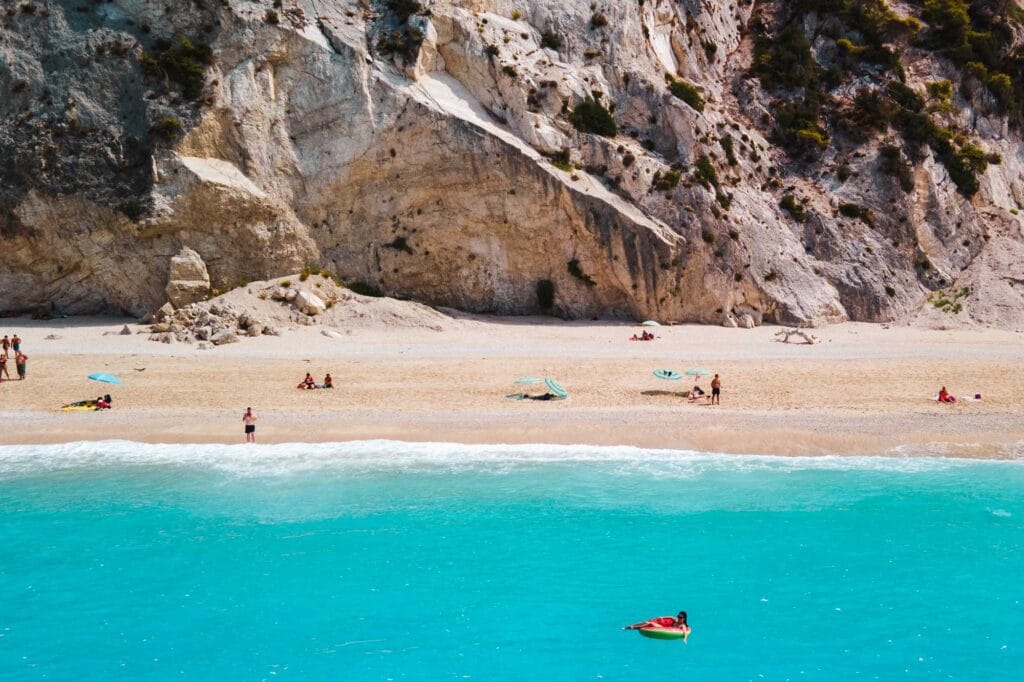
Greece in August is hot and bone-dry. Rain is essentially nonexistent across the south. What varies between regions is wind — and that makes a larger difference than most people expect.
| Region | Avg High | Avg Low | Rain Days | Sea Temp |
| Athens | 34–38°C (93–100°F) | 23–25°C | 0–1 days | 26°C |
| Santorini / Cyclades | 28–32°C | 22–24°C | 0 days | 26–27°C |
| Crete | 29–33°C | 22–24°C | 0–1 days | 26–27°C |
| Rhodes | 31–34°C | 23–25°C | 0 days | 27–28°C |
| Corfu / Ionian Islands | 31–34°C | 22–24°C | 0–1 days | 26°C |
| Thessaloniki | 32–35°C | 21–23°C | 1–2 days | — |
The real feel vs the thermometer
Athens at 37°C with no wind feels like a punishment. Santorini at 30°C with a strong meltemi feels like a pleasant warm day. The wind is the key variable in August — it’s why experienced travelers choose the Cyclades over the mainland in peak summer, even though the island temperatures aren’t dramatically lower on paper.
The meltemi in August is at its strongest and most consistent. On the Cyclades, Force 6–7 winds (24–33 knots) are not unusual for stretches of several days. This cools things down significantly but causes more ferry disruptions than in July. If you’re island hopping in August, build in buffer days.
Sea temperature in August reaches its annual peak: 26–28°C across most of Greece. Evening swims at 27°C sea temperature are one of the genuinely great things about Greece in August — the water holds its warmth until well after sunset.
Dekapentavgoustos: What August 15 Means for Your Trip
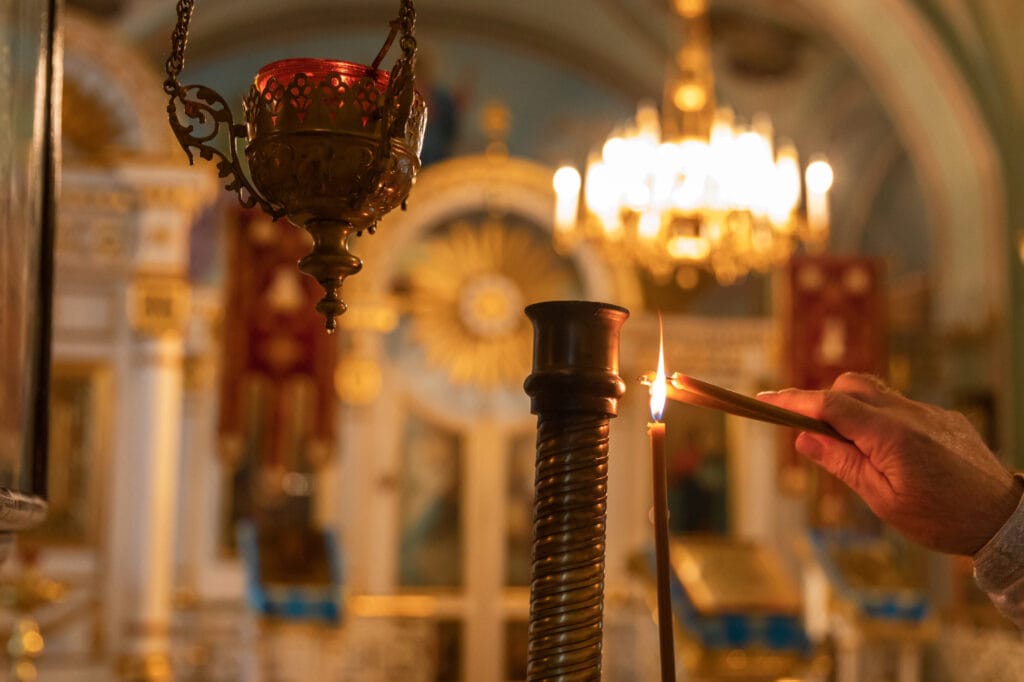
August 15 (the Dormition of the Virgin Mary, known as Dekapentavgoustos) is the most important summer holiday in Greece. Understanding it is essential for anyone visiting in August.
What happens on August 15
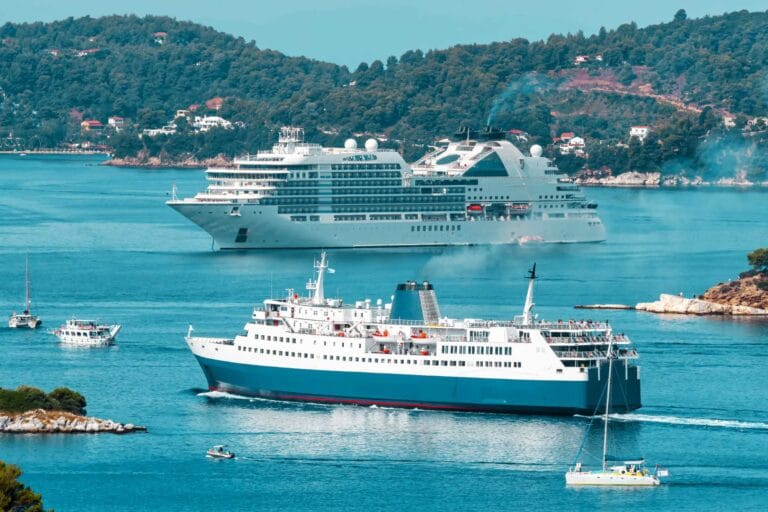
Every Greek who can takes time off around August 15. The islands receive a surge of domestic Greek tourists — Athenians, Thessalonikians, diaspora returning from abroad — on top of the already-peak international tourist crowd. Ferry routes from Piraeus and Thessaloniki fill to capacity in the days before August 15. Some ferry routes sell out 3–4 weeks in advance for the August 12–16 window.
On the day itself, religious services are held across the country. The island of Tinos is the most significant pilgrimage site — the Church of Panagia Evangelistria receives tens of thousands of pilgrims. Many Greeks travel specifically to their family’s home island for the holiday. If you’re on a small or mid-sized island on August 15, you’ll find the local celebration (music, food, dance in the village square) genuinely worth staying up for.
Practical impact on your trip
| What | Impact | What to do |
| Ferries Aug 12–16 | Often fully booked | Book 4+ weeks in advance |
| Accommodation Aug 13–16 | Peak of peak — highest prices | Book months ahead or avoid these dates |
| Shops & services Aug 15 | Many closed (national holiday) | Stock up August 14 |
| Restaurants Aug 15 | Fully booked at popular spots | Book ahead or eat early |
| Island atmosphere Aug 15 | Festive, local, authentic | Worth experiencing if you’re there |
| Ferry/bus Aug 15 daytime | Reduced schedules | Don’t plan travel on the day itself |
The week after August 15 is when the Greek tourist season begins winding down — not noticeably in the first few days, but by August 20–25, crowds start thinning and some prices begin dropping. If you can time your trip to arrive August 16–20 and leave in early September, you’ll catch better conditions than the first half of August.
Which Destinations Work in Greece in August
Crete: The Best Big-Island Choice in August
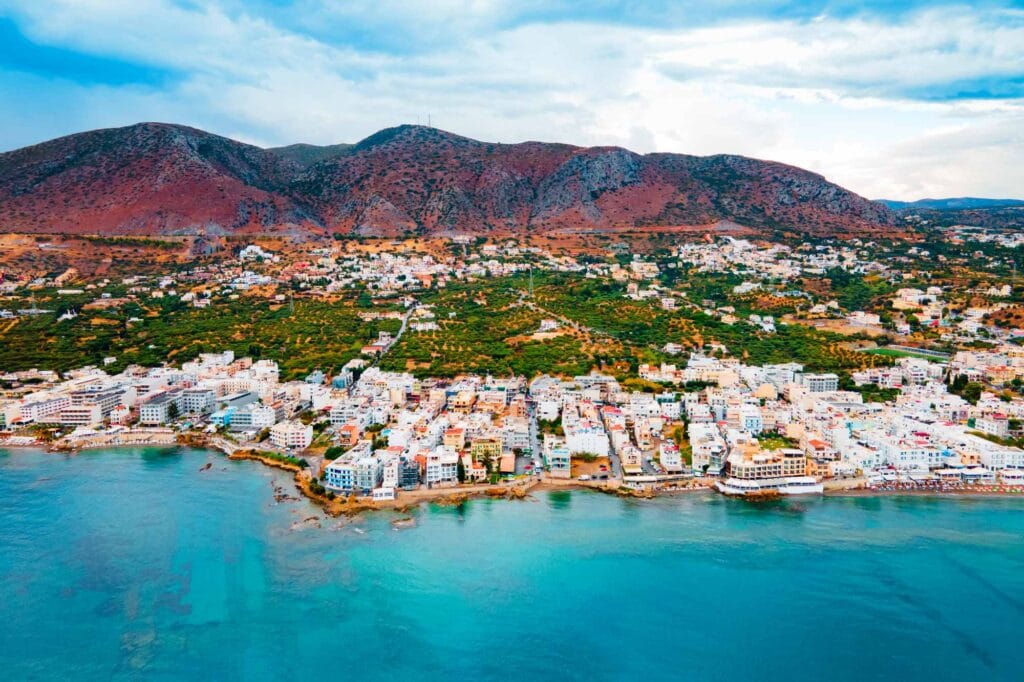
Crete is Greece’s largest island and the one that absorbs August peak season better than anywhere else. The north coast (Chania, Heraklion, Rethymno) is busy — but the island is big enough that driving east toward Sitia, or south toward Agia Galini and Frangokastello, puts you in a different Greece entirely. The south coast of Crete in August has excellent beaches, far fewer tourists than the north, and water that’s been warming since June — 27°C and crystal clear.
Renting a car in Crete is not optional in August — it’s the difference between fighting for space on the Elafonisi bus (€12 each way, standing room only) and arriving at 7:30am before the lagoon fills up.
Paros and Naxos: The Smarter Cyclades Choice
For everyone who wants the Cyclades experience in August without the Santorini/Mykonos pricing and crowd intensity: Paros and Naxos. Both have excellent beaches, good food, the same Aegean blue water, and meltemi breeze. Naxos is the largest Cycladic island with a proper working town, mountain villages, and beaches on the west coast that rival anything in the Cyclades. Prices are 30–50% lower than Santorini for equivalent accommodation.
Paros has a well-established but not overwhelming bar and nightlife scene around Parikia and Naoussa — active enough to feel like summer without the Mykonos intensity. Naoussa in August is genuinely one of the most pleasant evening experiences in the Cyclades.
Rhodes: Busy but Well-Equipped for It
Rhodes handles August better than most island destinations because it’s large, has diverse accommodation, and the Old Town — despite being busy — is big enough to absorb the crowds. The west coast beaches are windier (meltemi-facing) and less crowded; the east coast beaches are calmer and busier. Lindos in August is a genuine squeeze — go at 7am or skip it. The rest of Rhodes is manageable.
Corfu: A Different August
Corfu in August is busy with a different profile than the Cyclades — more British package holidays, more families, less party scene. The island is green, the sea is calm (no meltemi on the Ionian), and there are genuinely quiet spots if you rent a car and head north toward Kassiopi or south toward Kavos. Avoid Kavos if you’re not specifically looking for 18–25 party tourism — it’s that demographic, exclusively, in August.
The Underrated August Option: Pelion Peninsula
The Pelion Peninsula on the Greek mainland is one of the best-kept August secrets. Two hours from Volos by car, it has forested mountains running down to pebble coves with clear water, traditional stone villages, and a fraction of the island crowds. It’s where Athenians who are tired of the islands go in August. No ferries needed. No flight from Athens — just a rental car and a mountain road.
Where Not to Go in Greece in August
Some places are genuinely not worth the effort in August:
Athens for Sightseeing
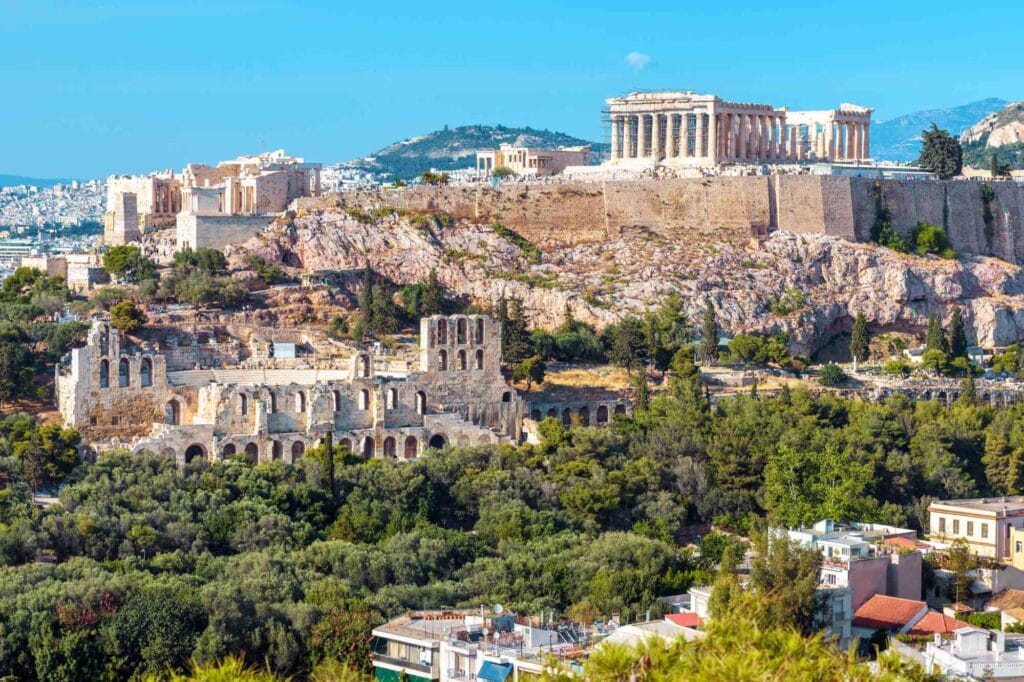
Athens in August is survivable but not pleasant for extended stays. Temperatures of 36–38°C on marble and asphalt make midday in the city center brutal. If Athens is unavoidable — and it usually is as a transit point — spend no more than 1–2 days, visit the Acropolis at 8am on the first morning, and escape to the islands. The city empties out in August as Athenians leave for the coast — some good restaurants close, neighborhoods become quiet in an eerie way.
Mykonos in August
Mykonos in August is fully committed to being expensive and crowded. If that’s what you want, it delivers. If you’re going because you think you ‘should’ see Mykonos, August is the worst time. A mid-range hotel room costs €300–600/night. Beach clubs require minimum spends of €40–80 per person. The famous Chora streets are shoulder-to-shoulder from 10am to midnight. Go in June instead, or choose Paros as a base and do a day trip to Mykonos to see what the fuss is about.
Santorini in the Second Week of August
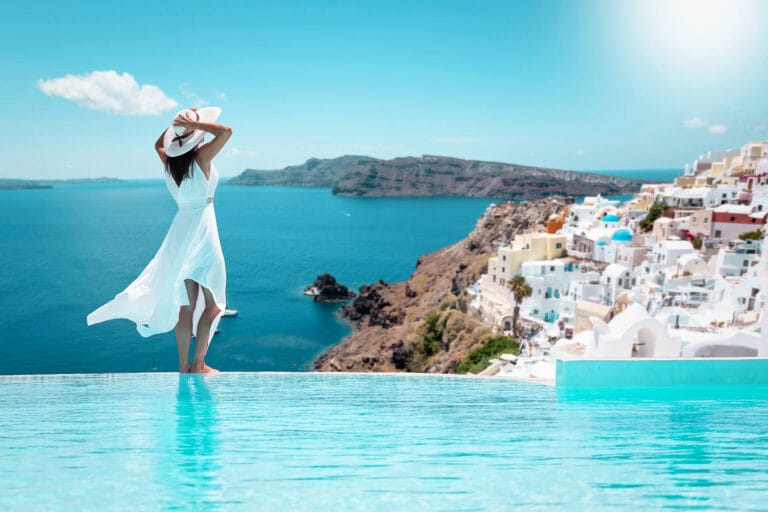
Santorini at any point in August requires advance booking and managed expectations. The second week of August — around Dekapentavgoustos — is the absolute peak of the peak. Oia is physically difficult to walk through. The caldera-view restaurants are booked solid. If Santorini is on your list, go in the first few days of August or, better, the last week when things begin to thin slightly.
Tourist Traps to Avoid in Greece in August
August is when Greece’s worst tourist-facing practices are most visible. These are the ones that cost travelers real money:
‘Premium’ Ferry Tickets That Aren’t
On popular August routes, some agents sell ‘VIP’ or ‘premium’ ferry seats at double the standard fare, implying better access or priority boarding. On most Greek ferries, the difference between economy and ‘VIP economy’ is minimal — a wider seat in a slightly less crowded cabin. The genuine upgrade worth paying for in August is a private cabin on overnight ferries (Piraeus–Crete, Piraeus–Rhodes) — that’s a real benefit. Day-ferry ‘premium’ seats usually aren’t.
Hotel Breakfast at Tourist Prices
Hotel breakfasts in August on the islands cost €15–25 per person for what is usually a mediocre buffet. A Greek bakery (fournos) 100 meters from any hotel serves fresh tiropita (cheese pie), koulouri (sesame bread ring), and coffee for €3–4. This is how Greeks start their day. It’s better food at a quarter of the price.
‘Genuine Greek Experience’ Dinner Shows
In Santorini and Mykonos, dinner shows promising ‘traditional Greek music and dance’ cost €60–120 per person and are produced entirely for tourists. Real live Greek music in August happens at village panigiri festivals — free, genuine, and one of the best August experiences available. Ask your hotel if any local festivals are happening nearby during your stay.
The Jet Ski Scam
On busy beaches in August, jet ski operators sometimes return equipment with pre-existing damage and claim the renter caused it, demanding €200–500 on the spot. Before renting any jet ski or water sports equipment, photograph every existing scratch and dent from multiple angles while the operator watches. Reputable operators do a walkthrough themselves — if they skip it, that’s a red flag.
Overpriced Souvenir Shops in Tourist Zones
The ceramic plates, olive oil soaps, and saffron sold in the main tourist streets of Santorini and Mykonos cost 2–3 times what the same items sell for in local supermarkets and pharmacies. Greek olive oil soap: €3 at a pharmacy, €9 at a Fira souvenir shop. Saffron from Kozani (the real Greek saffron): available at any supermarket for a fraction of tourist-store prices.
Insider Tips: How Locals Handle August in Greece
Leave the Island for a Day During Peak Week
Many Greeks who live on tourist islands in August take their own escape on August 14–16. Boat captains take their families to a deserted cove. Restaurant owners close for a day. If you have a rental boat or can book a private boat trip, going to a small uninhabited islet on August 15 while everyone else is at the village festival is one of the best things you can do in Greece in August.
The 7am Rule
Every popular beach, archaeological site, and viewpoint in Greece in August is a different place at 7am than it is at 11am. Elafonisi beach in Crete at 7:30am: fifteen people, pink sand, calm water. At 11am: 2,000 people, no parking, sunbed queue. This isn’t an exaggeration. The 7am rule is the single most effective tactic in August Greece.
Find the Panigiri
Every Greek village celebrates its patron saint’s day with a panigiri — an outdoor festival with live traditional music (usually a lyra or clarinet), dancing, roast lamb or goat, and free-flowing local wine. In August, these happen almost every night somewhere. They start late (10pm), run until 3–4am, and cost almost nothing. Your hotel owner knows where they are — ask specifically. This is the real Greece in August, not the sunset queue.
Go South on Any Island
The north coast of most Greek islands faces the ferry routes and gets the most development. The south coast — facing Africa — tends to be wilder, less developed, and less crowded. On Crete, the south coast villages of Loutro (car-free, accessible only by boat or foot), Agia Roumeli, and Sfakia are worlds apart from Chania in August. On Rhodes, the far south around Prasonisi is almost empty. On Corfu, the south around Gardenos and Issos is quieter than the crowded northeast.
Use the Afternoon Ferry Gap
Most tourists take the 8–10am or the 2–4pm ferries between islands. The 5–6pm ferry (where available) is often the least booked of the day — the meltemi is easing, the boat is quieter, and you arrive at your destination in the early evening, perfect for dinner. Check schedules on ferryscanner.com for this option on your routes.
What to Do in Greece in August
Beaches
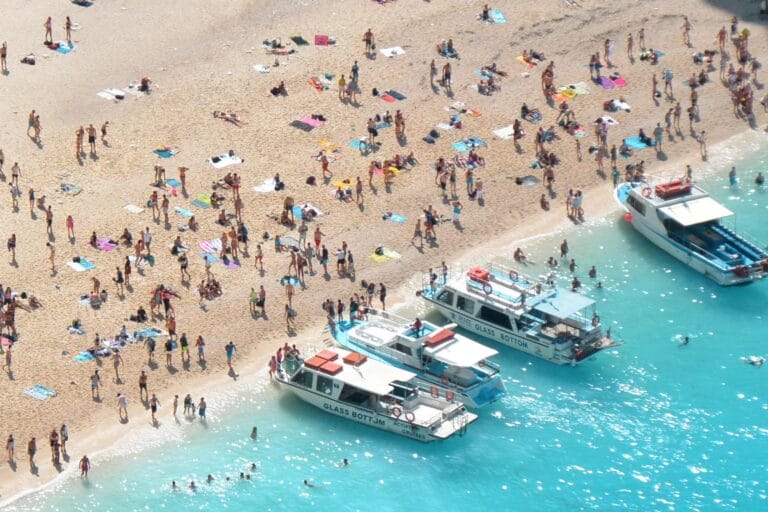
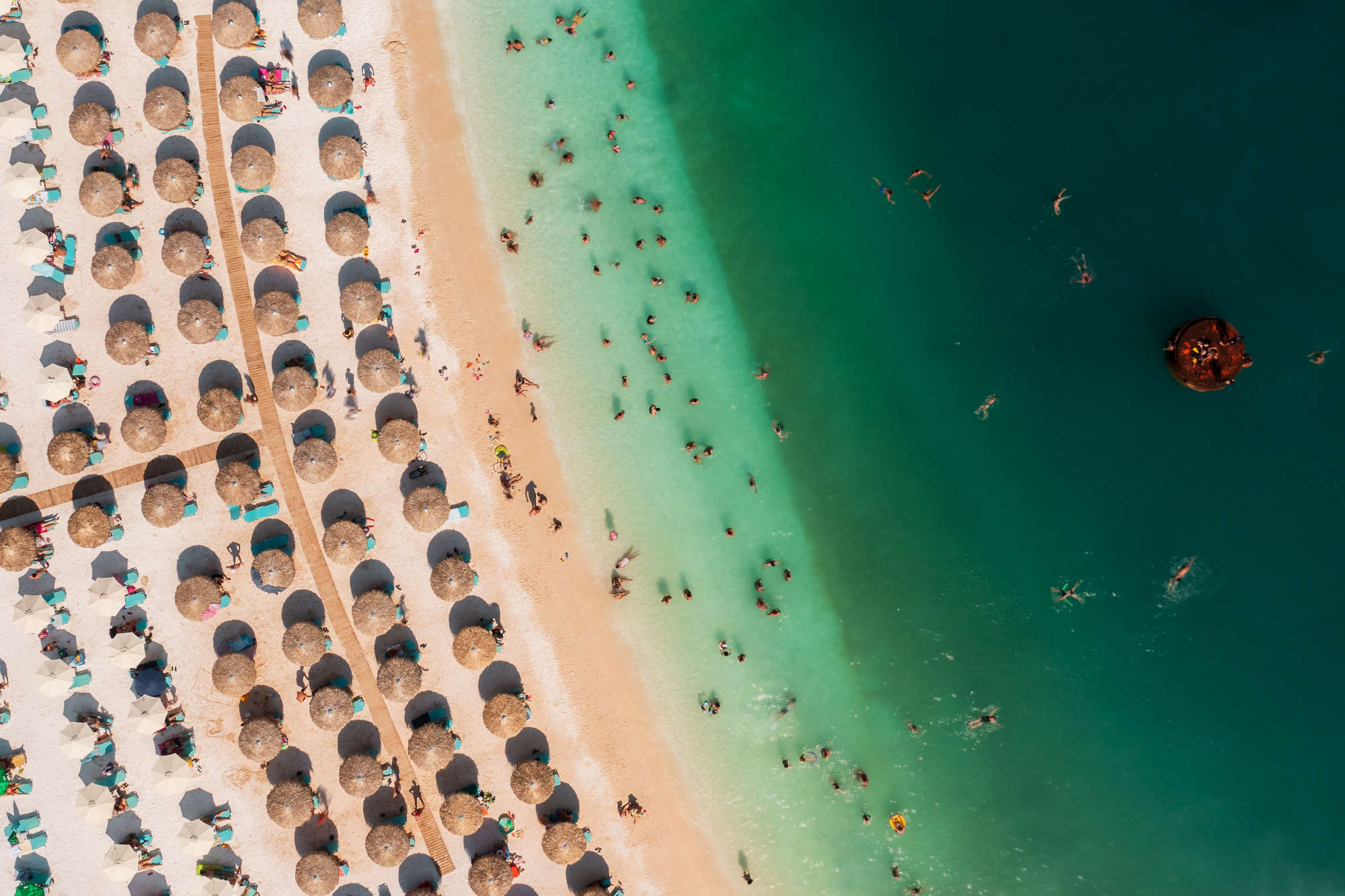
August is the month where beach-focused travelers get the most value. Sea temperatures of 26–28°C, 14 hours of daylight, and crystal-clear water make this Greece at its most purely hedonistic. The strategy: popular beaches before 9am or after 5pm; lesser-known beaches at any time. A rental car on any large island opens up coves that the bus-dependent crowd never reaches.
Panigiri Festivals
August is the richest month for local festivals across Greece. The schedule runs from the Assumption of Mary celebrations on August 15 through dozens of smaller village saint’s days. Tinos (August 15 pilgrimage), Lefkada (international folklore festival, early August), and Thessaloniki (various cultural events) are the largest. Village panigiria are smaller and more genuine — ask locally for dates.
Sailing
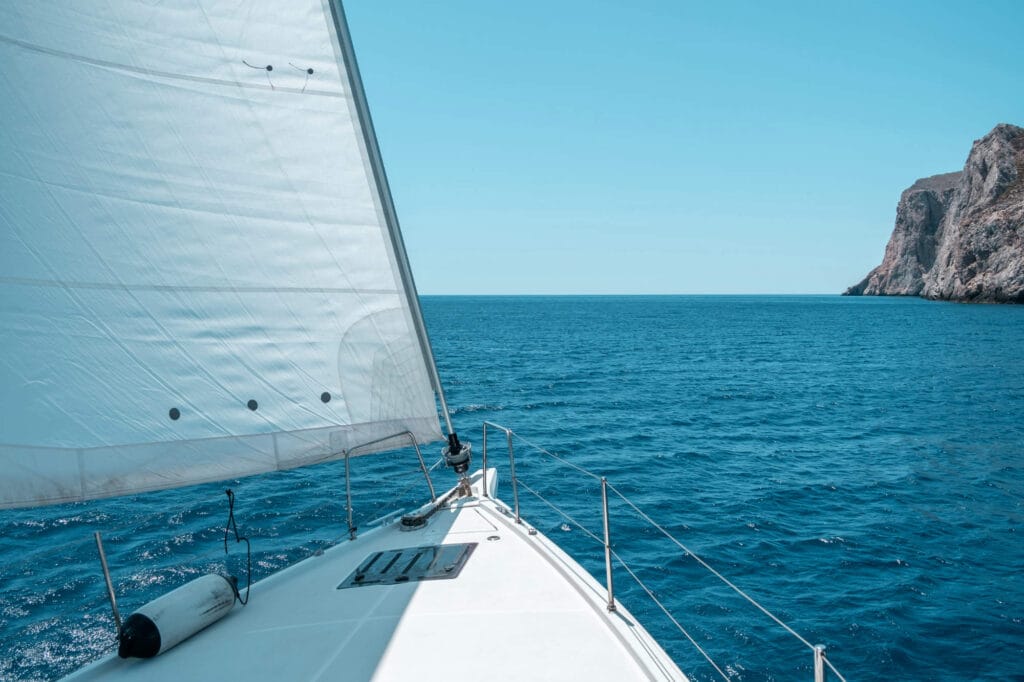
August is sailing season in Greece. The meltemi provides consistent wind for experienced sailors. Bareboat charter companies are fully booked months in advance on popular routes — if sailing is a priority, book by March or April for August. For non-sailors, day sailing trips and flotilla holidays (guided group sailing with a lead boat) are available and don’t require experience.
Archaeology (Morning Only)
The ancient sites are sweltering by midday in August. The Acropolis from 8–9:30am is manageable and genuinely extraordinary — the early light on the Parthenon is one of the best photographic moments in Greece. From 10:30am onwards it’s crowded and hot. The Acropolis Museum stays open until 8pm and is air-conditioned — ideal for a 3–5pm visit when the outdoor site is unbearable. Pre-book tickets at etickets.culture.gr for all major Athens sites.
Water Sports and Diving
August is peak season for water sports. Windsurfing at Paros (Pounta) and Naxos (Mikri Vigla) gets world-class meltemi conditions — the Paros international windsurfing competition runs in August. Scuba diving visibility in August reaches 25–30 meters in the Aegean. Most dive centers offer PADI beginner courses and guided dives for non-divers — a 2-hour intro dive typically costs €55–75.
How Much Does Greece Cost in August
August is peak pricing — the most expensive month of the year. The further in advance you book, the more money you save.
| Type | June | July | August 1–15 | August 16–31 |
| Budget hostel dorm | €30–50 | €45–70 | €50–80 | €40–65 |
| Mid-range hotel (Athens) | €100–150 | €140–210 | €150–230 | €120–180 |
| Mid-range hotel (Santorini) | €180–280 | €280–500 | €320–600 | €260–450 |
| Cave hotel (Santorini) | €380–600 | €550–1000 | €600–1200 | €500–900 |
| Car rental Crete/Rhodes | €35–55/day | €50–80/day | €60–90/day | €50–75/day |
Note the August 16–31 drop: once Dekapentavgoustos passes, prices begin softening noticeably. If your August trip has flexibility, arriving August 18–20 instead of August 5–10 can save 15–25% on accommodation.
Food Costs in August
| Item | Tourist Zone | Local / Village |
| Coffee / frappe | €4–6 | €2–3 |
| Gyros / souvlaki | €4.50–6.50 | €3–4.50 |
| Taverna lunch (per person) | €20–35 | €12–18 |
| Fresh grilled fish (per person) | €28–50 | €18–28 |
| Beach sunbed pair | €30–50/day | Free before 9am |
| Day boat trip | €80–130/person | €55–85 (direct booking) |
How to Save Money in August Without Ruining the Trip
- Book accommodation on the less glamorous side of the island. Santorini: stay in Fira or Akrotiri instead of Oia — same island, same sunsets from the caldera path, 35–50% cheaper. Mykonos: stay in Mykonos Town backstreets rather than beachfront — walk to the beach rather than pay for the view.
- Travel as a group of 4+. A villa or apartment rental split four ways beats four individual hotel rooms — often by 40–50% in August.
- Eat the daily special. Every Greek taverna has a board or a verbal daily menu of whatever was fresh that morning — it’s always cheaper and usually better than the printed menu. Ask: ‘Ti ehete simera?’ (What do you have today?).
- Take night ferries. The overnight ferry from Piraeus to Heraklion (Crete) costs €35–50 for a deck seat, €65–90 for a cabin berth — versus €90–150 for a flight plus airport transfer costs. You travel while sleeping and save a night’s accommodation.
- Visit the local market (laiki agora). Every large town has a weekly open-air market with local produce, olives, cheese, and bread at supermarket prices. For a self-catered breakfast or picnic lunch, it’s the best value in August.
- Skip the car on small islands. On Santorini and Mykonos, ATV rentals (€25–35/day) or scooters (€20–30/day) are cheaper and more practical than cars. On Santorini, the cable car (€6 one way) beats the taxi queue from the old port every time.
What to Pack for Greece in August
Clothing:
- The lightest fabrics you own — linen, cotton, rayon. Synthetic fabrics are genuinely uncomfortable in 35°C heat
- Multiple swimsuits — you’ll wear one daily, sometimes twice (morning beach + evening swim)
- One smart-casual outfit for nicer restaurants — most places are very casual in August, but a few require long trousers
- A light layer for ferries, buses, and air-conditioned restaurants — the temperature contrast between outside and inside can be 10–15°C
- Worn-in sandals or shoes for cobblestoned sites — new footwear is a mistake on Greek marble
Sun and heat protection — this is the priority:
- SPF 50 sunscreen in large quantities — buy at home, not in Greece (€15–25/bottle in tourist areas)
- Wide-brim hat — non-negotiable at beaches and archaeological sites in August
- Quality UV-protection sunglasses
- After-sun lotion or pure aloe vera gel — you will burn more than you expect
- A light scarf or sarong — for entering churches, covering in midday sun, beach cover-up
Health and hydration:
- Reusable water bottle (1.5–2L) — drink 2–3 liters daily minimum in August heat
- Electrolyte tablets or sachets — sweating heavily depletes electrolytes faster than water replaces them; headaches and fatigue in August are often dehydration, not heat
- Small personal fan — sounds unnecessary; isn’t, on a crowded August ferry or a hot Athens bus
- Travel first aid basics including blister plasters — cobblestones and sandals make blisters inevitable
- Greece Packing List: What to Bring for Every Season
Practical Tips for August Travel in Greece
Book everything before you leave. In August, ‘figure it out on arrival’ means paying whatever’s left — or finding nothing. Accommodation, ferries, popular excursions, and car rentals must be confirmed before departure. This isn’t optional advice in August; it’s the difference between a trip that works and one that doesn’t.
Pre-book Athens Acropolis tickets. Use etickets.culture.gr. The walk-up queue in August can be 60–90 minutes. The online ticket is the same price. There is no reason to queue.
Book ferries around August 15 at least 4–5 weeks ahead. The Piraeus–Santorini and Piraeus–Mykonos boats for August 12–16 sell out weeks in advance. If you miss this window, check for high-speed catamaran services (Hellenic Seaways) which sometimes have last-minute availability at higher prices.
Verify AC works before you check in. Read recent (within 3 months) reviews specifically mentioning air conditioning. August heat means a room without functioning AC is a room where you will not sleep. If the AC doesn’t work on arrival, ask for a different room immediately — don’t wait.
Carry cash — especially on smaller islands. ATMs on Ios, Folegandros, Astypalaia, and other smaller islands have limited cash reserves and run out on August weekends. Withdraw enough in Athens or a larger island to cover 3–4 days.
Wear shoes in the sea near rocky areas. August is jellyfish season (primarily barrel jellyfish — large but harmless, though unpleasant). They’re more common near rocky coastlines and after wind shifts. Water shoes also protect against sea urchins on rocky beaches, which are a real hazard in the Aegean.
Don’t plan inter-island travel on August 15 itself. Ferries run reduced schedules on the national holiday. If you need to move between islands, do it on August 14 or August 16.
August Greece Checklist
Before you go (at least 6–8 weeks ahead):
- Flights booked — August prices spike dramatically in the last 4 weeks
- All accommodation confirmed — no ‘figure it out on arrival’
- Ferries booked, especially around August 12–16 (Dekapentavgoustos)
- Acropolis and major site tickets pre-booked at etickets.culture.gr
- Car rental confirmed for Crete, Rhodes, or Corfu
- Large quantities of SPF 50 sunscreen packed from home
- Electrolyte tablets in your bag
While you’re there:
- Follow the 7am rule — popular beaches and sites before the crowds build
- Adopt the Greek schedule: active early morning, rest midday, revive late afternoon
- Ask your hotel about local panigiri festivals — don’t miss one
- Eat at village tavernas or ask ‘Ti ehete simera?’ for the daily special
- Carry 2–3 liters of water when sightseeing — refill constantly
- Photograph water sports equipment before renting — every scratch, every dent
- Book morning ferries — meltemi builds through the day
What I’d do differently: I’d time my trip to arrive August 18–20 rather than August 1–10. The Dekapentavgoustos crowd has dispersed, prices have started dropping, but the weather is identical and the sea is at its absolute warmest. Late August in Greece is genuinely one of the best combinations of the season.
Explore More About Greece Travel
- When Is the Best Time to Visit Greece?
- Greece in July: Heat, Crowds & What to Do
- Greece in June: What to Expect
- Island Hopping in Greece: The Ultimate Guide
- Greece Ferry Guide: How to Book & Navigate Islands
- Best Greek Islands for Couples
- Best Greek Islands for Families
- Greece Packing List
- Getting Around Greece: Ferries, Flights & Cars
FAQ: Greece in August
Is August a good time to visit Greece?
Yes — if you plan ahead. August offers the hottest weather, warmest sea, and most vibrant atmosphere of the year. It’s also the most crowded and expensive month. Travelers who book early, choose the right destinations, and structure their days around the heat consistently have excellent trips. Those who arrive without reservations or try to sightsee at noon struggle.
How hot is Greece in August?
Athens and the mainland regularly reach 35–38°C in August. The Cycladic islands stay cooler — 28–32°C — thanks to the meltemi sea wind. Crete and Rhodes average 29–33°C. Nights are warm but comfortable at 22–25°C across most regions.
What is Dekapentavgoustos and how does it affect tourists?
Dekapentavgoustos (August 15) is Greece’s biggest summer holiday — the Dormition of the Virgin Mary. It’s a national holiday: many businesses close, ferries run reduced schedules, and domestic Greek tourists flood the islands. Ferry routes around August 12–16 sell out weeks in advance. The celebrations themselves — especially in villages with outdoor festivals — are worth experiencing. Plan around the logistics, not away from the holiday.
Which Greek islands are best in August?
For balance of quality and manageable crowds: Crete (especially west and south), Naxos, and Paros. For full peak atmosphere with acceptance of crowds and prices: Santorini and Mykonos. For families: Crete, Corfu, Zakynthos. For escaping peak tourism: lesser-known islands like Ikaria, Astypalaia, Symi, or Halki.
Is Greece too crowded in August?
The famous spots are genuinely very crowded — Oia at sunset, Mykonos Town, Athens midday. But Greece has thousands of kilometers of coastline and hundreds of islands. Crowds are concentrated in about a dozen well-known places. Rent a car, go south on any large island, wake up at 7am — and you’ll find Greece in August surprisingly uncrowded.
How expensive is Greece in August?
August is peak pricing across the board. Santorini mid-range hotels run €320–600/night in early August. Athens mid-range: €150–230/night. Car rentals, ferries, and popular tours cost 20–40% more than June. Prices begin dropping noticeably after August 15. Booking 6–8 weeks in advance is the most effective way to manage costs.
What are the biggest tourist traps in Greece in August?
The main ones to avoid: hotel breakfasts at €15–25 per person (go to a local bakery instead), ‘traditional Greek dinner shows’ at €80–120 (find a real village panigiri instead), jet ski rentals without a pre-rental damage walkthrough, souvenir shops on main tourist streets vs pharmacies and supermarkets for the same items at half the price, and restaurant markup within 200 meters of any ferry port or major tourist site.
Can you swim in Greece in August?
August has Greece’s best swimming conditions of the year. Sea temperatures reach 26–28°C — warm enough for evening swims well after sunset. Water clarity in the Aegean in August is exceptional, often 20–30 meters visibility. The only caveats: jellyfish are occasionally present near rocky areas, and popular beaches fill up by 10am. Swim early, swim late, or find a less-famous beach.