
Best Time to Visit Greece: A Month-by-Month Guide
The best time to visit Greece depends entirely on the experience you’re after — the country doesn’t have a bad season, just different ones, each with its own character. The real question isn’t whether to go, but when to go for what you actually want.
If you want deserted white-washed streets and still-warm sea, September is your answer. If you’re chasing the full-tilt, midnight-swims, rooftop-cocktails energy of the islands, mid-July delivers. And if you want Athens practically to yourself with tickets to every museum on the same day — January and February are surprisingly good.
This guide breaks down every month and season so you can match your travel style to the right window — whether you’re planning a romantic escape for two, a family trip, or a solo adventure.
Note: This page contains affiliate links. We may earn a small commission at no extra cost to you when you book through our links. This helps us keep creating free travel guides.
Greece at a Glance: Understanding the Best Time to Visit Greece
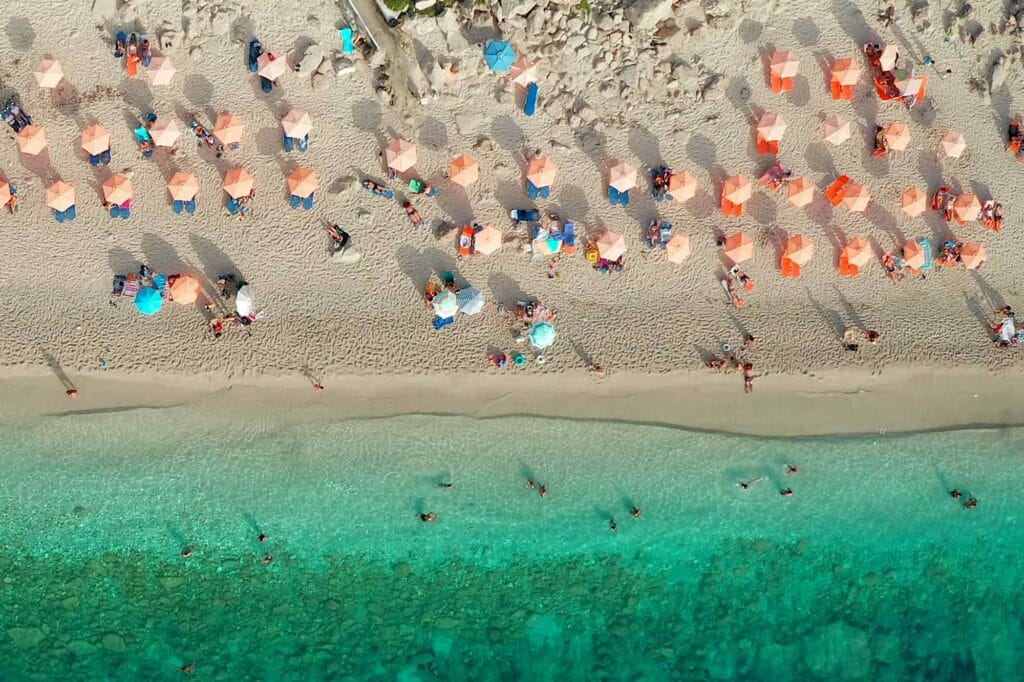
Greece sits in the Mediterranean, which means hot, dry summers and mild, wet winters. The tourist season officially kicks off in April and winds down in October — but there’s activity year-round in Athens and a handful of larger islands.
Here’s the quick overview before we go deeper:
| Season | Months | Temp | Crowds | Prices |
| Shoulder (Spring) | Apr – May | 18–25°C | Low–Medium | Moderate |
| Peak (Summer) | Jun – Aug | 28–35°C | Very High | Highest |
| Shoulder (Autumn) | Sep – Oct | 20–28°C | Medium | Moderate |
| Off-Season (Winter) | Nov – Mar | 8–15°C | Very Low | Lowest |
The best time to visit Greece for most travellers falls in the shoulder seasons — April–May and September–October. You get reliable sunshine, comfortable temperatures, and far fewer crowds than July and August.
Spring (April – May): The Sweet Spot
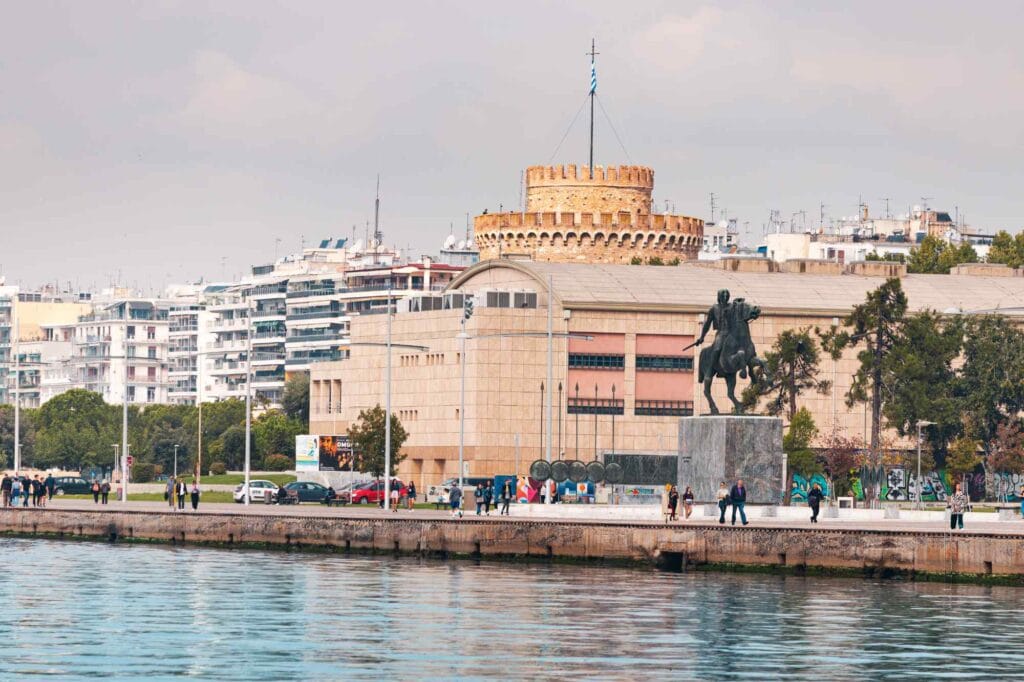
Spring is, genuinely, one of the best-kept secrets of Greek travel. Temperatures sit between 18°C and 25°C — warm enough for the beach by late May, cool enough to walk Santorini’s caldera path without collapsing. Flowers are everywhere. The hills of Crete turn impossibly green. And tourist infrastructure is fully open without the midsummer crush.
Why Spring Works So Well
- Prices for hotels and car rentals are 20–40% lower than July–August
- Ferry routes and flights are running, but not overbooked
- Restaurants have availability — no queuing for 90 minutes at a sunset bar
- Hiking conditions are ideal: Samaria Gorge in Crete opens in May
- Easter in Greece (usually April) is a genuinely spectacular cultural experience
April is ideal for city travel — Athens, Thessaloniki, and Rhodes Town come alive without the heat making every afternoon walk a feat of endurance. May edges ahead for island visits, especially the Cyclades.
For couples: May in Santorini is exceptional. You get the sunsets, the caldera views, the good restaurants — without sharing them with 10,000 other people.
Summer (June – August): Peak Greece

This is Greece at its most intense — blazing sun, crowded beaches, long evenings that stretch past midnight, and the full-volume energy of party islands like Mykonos and Ios. If atmosphere and action are your priority, summer delivers.
June: The Best Summer Month
June is the window many experienced travellers choose. The Meltemi wind (a dry northern breeze) hasn’t fully kicked in yet, temperatures are hot but rarely brutal, and the crowds are still a week or two away from their August peak. It’s the last comfortable month before the islands get truly slammed.
July & August: Full Peak
- Temperatures regularly hit 35°C+ in the Cyclades and Dodecanese
- Ferries, hotels, and beaches are at maximum capacity
- Booking anything last-minute is essentially impossible
- The iconic Oia sunset involves standing elbow-to-elbow with hundreds of visitors
- Meltemi winds can be strong in the Aegean (affects ferry schedules and outdoor dining)
That said — if you love the energy, the water is at its warmest (27–29°C), events and beach clubs are in full swing, and the nightlife on Mykonos and Paros is unmatched. Just book absolutely everything at least 3–4 months ahead.
Autumn (September – October): The Secret Season
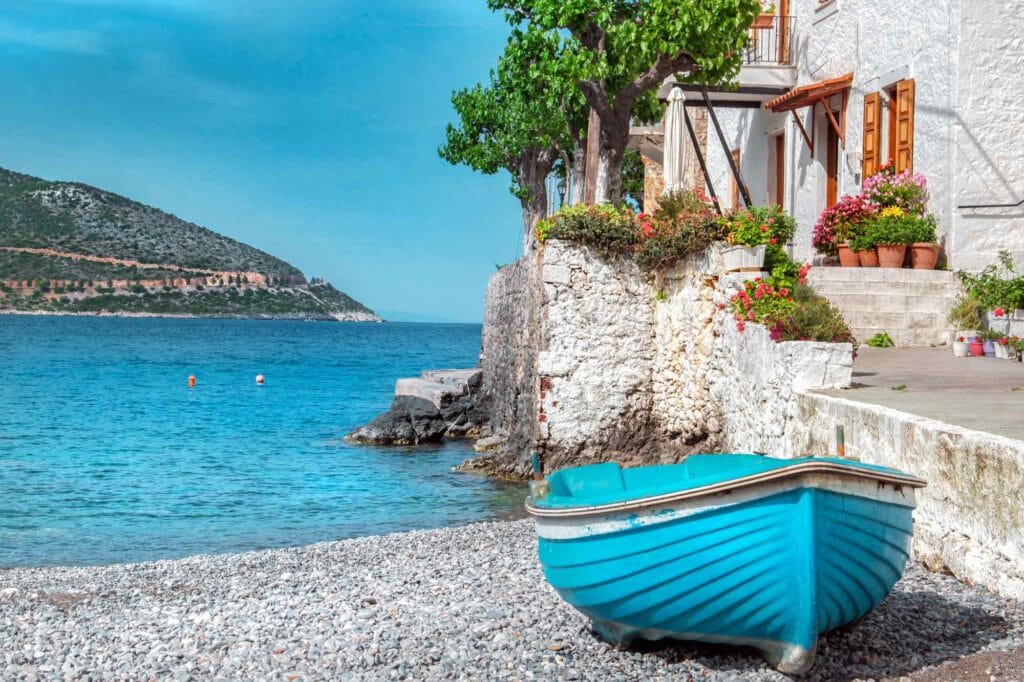
Ask most travel insiders when they visit Greece, and a significant number will say September. The crowds have thinned, prices are dropping, but the sea is at its absolute warmest (still 25–26°C in September), the light is golden, and the islands feel like they belong to you again.
September: The Best of Both Worlds
- Sea temperature at its warmest all year
- Air temperature comfortable: 24–28°C, not as punishing as August
- Hotels and restaurants still fully open, but bookings are easy to get
- Harvest season: olive picking begins in Crete and Peloponnese
- Fewer flights mean slightly better prices on accommodation
October: For the Slower Traveller
October is for those who want Greece almost entirely to themselves. By mid-October, some smaller island businesses start closing for the season, but popular destinations like Crete, Rhodes, Corfu, and Athens are fully operational. You’ll find restaurants genuinely happy to see you rather than processing you at speed.
Rainfall increases in October — a shower or two per week is typical — but it rarely disrupts a full day. The light at this time of year is extraordinary for photography.
Winter (November – March): Off-Season Greece

Most of the smaller islands essentially hibernate from November through March. Ferries run reduced schedules, beach businesses close, and entire villages empty out. But Athens, Thessaloniki, and larger towns like Heraklion and Rhodes Town have genuine off-season character.
What Works in Winter
- Athens: museums, ancient sites, and the Plaka neighbourhood without queues
- Thessaloniki: one of the best food cities in Greece — exceptional winter destination
- Prices are at their lowest — luxury hotels at budget prices
- Christmas and New Year in Athens or Thessaloniki has real local warmth
- Weather in Athens averages 12–15°C — cool but walkable with a jacket
What Doesn’t Work in Winter
- Island-hopping: ferries run 2–3 times per week on many routes instead of daily
- Beach holidays: water temperatures drop to 14–16°C
- Many smaller island businesses (hotels, restaurants, car rentals) are closed
Winter in Greece suits urban explorers and culture travellers far more than sun-seekers. If that’s your travel mode, the off-season value is genuinely remarkable.
Month-by-Month Breakdown: Best Time to Visit Greece
January & February
Athens and Thessaloniki are the main draws. Cold but rarely freezing, occasional rain. You’ll have the Acropolis nearly to yourself. Carnival (Apokries) begins in late February — a genuinely local celebration.
March
Things begin to stir. Days get longer, early flowers appear in the Peloponnese and Crete. Easter preparations begin. Good month for hiking in the south of Greece. Some island businesses reopen.
April
Greek Easter (date varies — can fall in April or May) is the single biggest cultural event of the year. Villages come alive with midnight church services and lamb on the spit. Crowds build on Easter weekend but it’s worth experiencing. Spring travel picks up pace.
May
Arguably the best all-round month for Greece. Comfortable everywhere, sea warming up in the south, everything open, pricing not yet at peak. Ideal for first-time visitors.
June
Summer begins. Warm, sunny, and still manageable crowd-wise in the first half of the month. The sea is warm enough for daily swimming. Book accommodation early — this month fills quickly.
July
Full peak season. Hot, busy, and expensive. The Meltemi winds pick up in the Aegean. Best for those who want the full island energy and don’t mind crowds. Early mornings are the best time for sightseeing.
August
The peak of the peak. Every Greek who can takes a holiday in August, adding domestic travellers to the international crowd. Ferries, beaches, and roads are at maximum capacity. Book 3–4 months ahead if you’re visiting in August.
September
The sea is warm, the crowds thin, and the atmosphere relaxes. Widely considered the ideal month for a Greece trip by those in the know. Still hot enough for proper beach days, cool enough for walking.
October
Quieter and slower. Some island businesses begin closing after mid-October. Athens is excellent. Crete and Rhodes stay open late into the month. Occasional rain, but warm enough for daytime exploring without a heavy coat.
November
Off-season begins in earnest. Island ferries reduce their schedules. Athens and larger cities are normal and lively. Good for budget travellers who want urban Greece without tourist infrastructure.
December
Christmas in Athens is underrated — festive lights in Syntagma Square, good food, and genuine local atmosphere. Cooler but very manageable. A few islands run seasonal holiday events, but most are quiet.
Best Time to Visit Greece by Travel Style

For Couples & Honeymoons
- First choice: May or September
- Why: Romantic atmosphere, warm evenings, good availability at boutique hotels
- Avoid: August (too crowded for the intimate experience you’re after)
For a complete romantic guide, see our Santorini for Couples and Best Greek Islands for Couples
For Families with Children
- First choice: June or late September
- Why: Sea is warm, crowds are manageable, kids’ facilities fully open
- Avoid: August — logistics become stressful, queues are long, temperatures can be too intense for small children
More on this in our Crete with Kids guide
For First-Time Visitors
- First choice: May
- Why: Everything is open, nothing is overcrowded, prices are reasonable, weather is reliable
- Alternative: October (lower cost, quieter, still beautiful)
For Budget Travellers
- Best months: November through March for mainland, October for islands
- Why: Hotel prices drop significantly, restaurants are less busy, flights are cheaper
- Trade-off: Reduced island infrastructure, colder weather
For Party & Nightlife
- First choice: July
- Why: Every beach club, bar, and outdoor event is in full swing
- Islands to target: Mykonos, Ios, Paros
Greece Weather: What to Expect
Greece isn’t one climate — it’s three. The coasts have classic Mediterranean weather. Northern Greece (including Thessaloniki) gets colder, wetter winters. And the mountainous interior of regions like Epirus can even see snow.
Aegean Islands (Cyclades, Dodecanese)
- Summer: Hot and dry, 28–35°C, Meltemi winds reduce humidity
- Winter: Mild but windy, 10–14°C, reduced ferry services
Ionian Islands (Corfu, Zakynthos, Kefalonia)
- More rainfall than the Aegean, even in summer
- Lush and green as a result — different character to the Cyclades
- Storms more likely in October–November
Athens & the Peloponnese
- Hot summers (up to 38°C in Athens in July), mild winters
- Spring and autumn are the ideal seasons for city visits and ancient sites
- The Acropolis bakes in midday summer heat — always visit before 10am or after 5pm
Northern Greece (Thessaloniki, Meteora, Halkidiki)
- Colder winters than the south — can drop to 2–5°C
- Halkidiki beaches are excellent in July and August with slightly fewer crowds than the islands
- Meteora is genuinely stunning in winter fog — one of Greece’s most underrated off-season destinations
Explore More Travel Tips
- Greece Travel Tips for First-Time Visitors
- Getting Around Greece: Ferries, Flights & Cars
- Greek Food Guide: What to Eat & Where
- Greece Packing List: What to Bring for Every Season
- How to Plan a Trip to Greece: Step-by-Step Guide
Ready to Plan Your Trip?
Once you’ve picked your timing, here’s where to start booking:
FAQ: Best Time to Visit Greece
What is the best month to visit Greece?
When it comes to the best time to visit Greece, May and September consistently come out on top for most travel styles. Both offer warm weather, open infrastructure, manageable crowds, and better pricing than the July–August peak.
When is the cheapest time to visit Greece?
The best time to visit Greece on a budget is November through March offers the lowest prices by a significant margin. You won’t get beach conditions, but Athens and Thessaloniki are excellent value and fully functional. October is also substantially cheaper than summer while still delivering good island conditions.
Is Greece hot in April?
April is warm rather than hot — expect 18–22°C in most parts of Greece. The sea is still cool (around 17°C), so swimming is possible but not comfortable for everyone. By May, temperatures climb and the sea warms noticeably.
How crowded is Greece in August?
August is the busiest month of the year. Every Greek holiday falls in August, so domestic and international travellers combine for maximum capacity at all popular destinations. Popular viewpoints like Oia in Santorini can have hundreds of people; ferries book out weeks in advance. If you’re visiting in August, book everything at least 3 months ahead. If crowds aren’t your thing, the best time to visit Greece is May or September instead.
Is Greece worth visiting in winter?
For the mainland — absolutely. Athens in winter is underrated: no queues at ancient sites, genuine local atmosphere, and good hotel prices. Thessaloniki is one of Greece’s best food destinations and is excellent in cooler months. Most Aegean islands, however, see limited services from November to March.
What is the Meltemi wind and does it affect travel?
The Meltemi is a strong, dry northern wind that blows across the Aegean from July through August, occasionally into September. It keeps temperatures from becoming truly oppressive but can cause ferry delays and rough seas. It rarely affects Ionian Islands (Corfu, Zakynthos) which are on the western side of Greece.
When is the best time to visit Greece for island hopping?
June and September are the optimal windows for island hopping. Ferries run on full summer schedules, accommodation is available without frantic advance booking, and the sea is warm enough for swimming on every island you visit.
Can you swim in Greece in October?
In many parts of Greece, yes. The sea temperature in the southern Aegean (Santorini, Crete, Rhodes) stays around 23–24°C through October, which is comfortably warm for swimming. The Ionian Sea and northern Aegean cool more quickly.