Zakynthos Travel Guide: Beaches, Nightlife & What to Do on the Ionian’s Most Dramatic Island
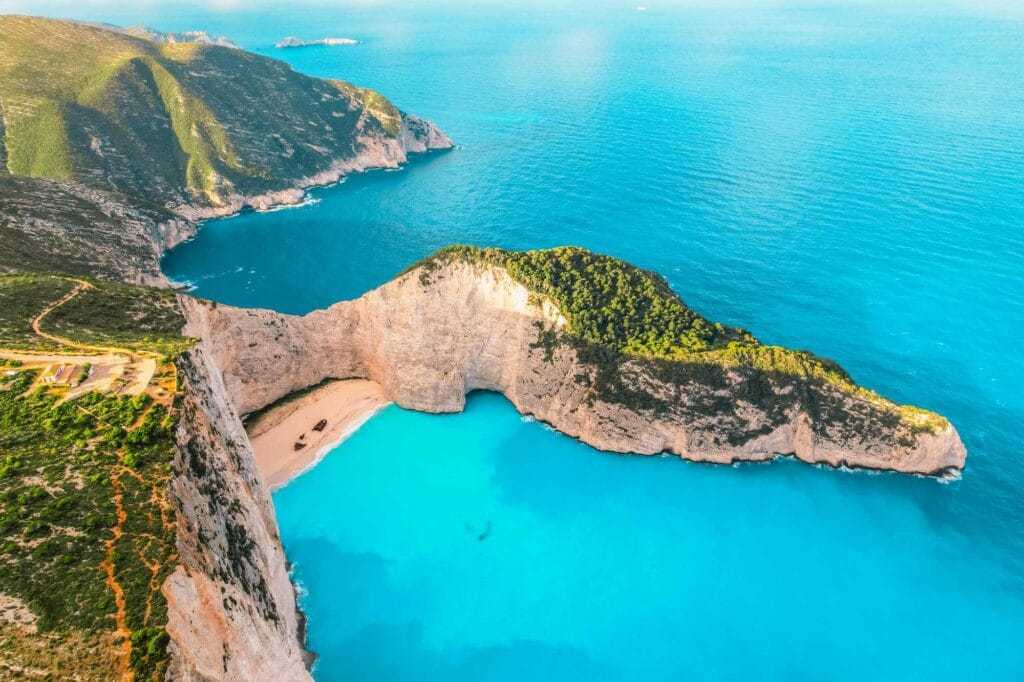
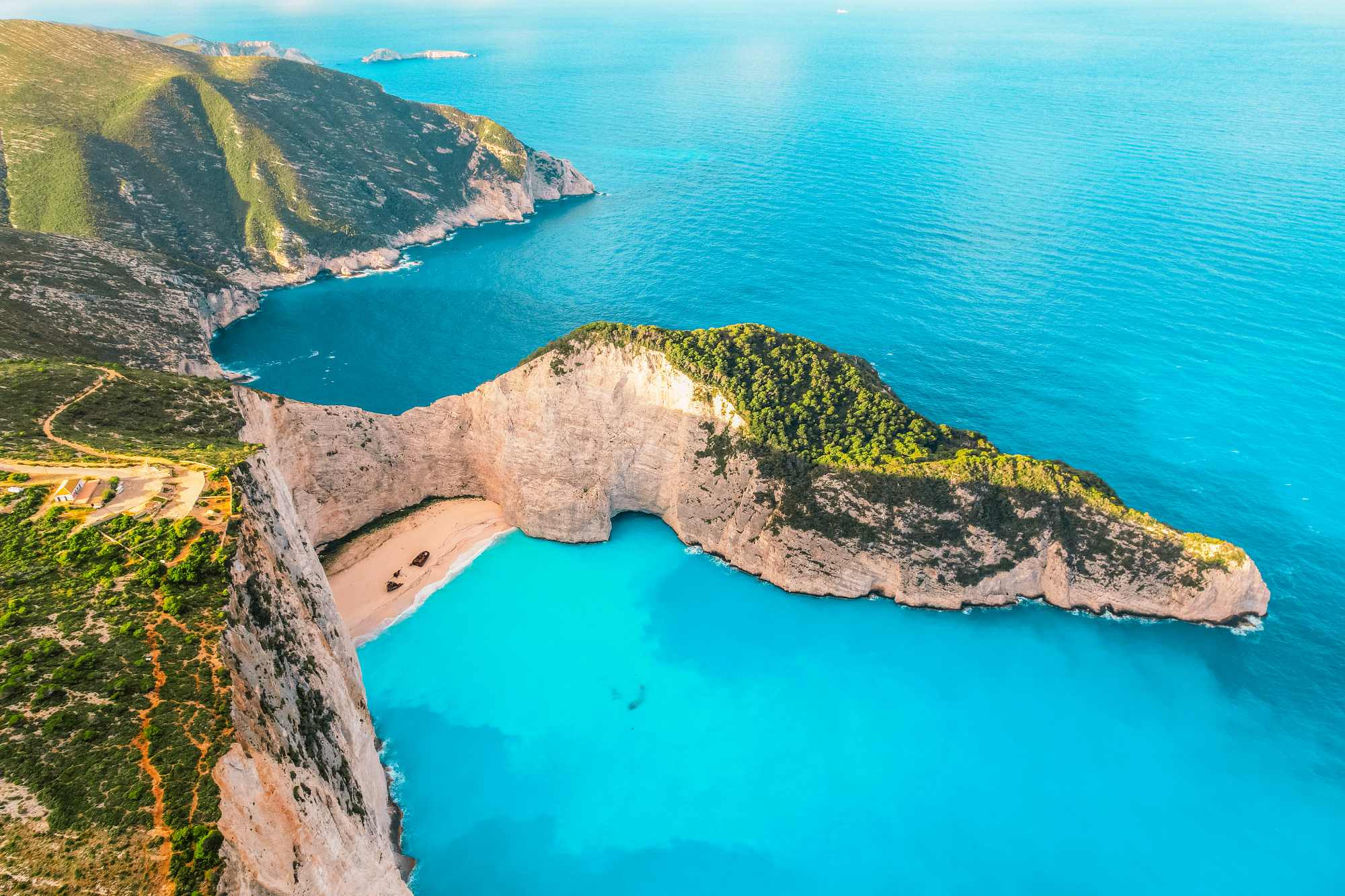
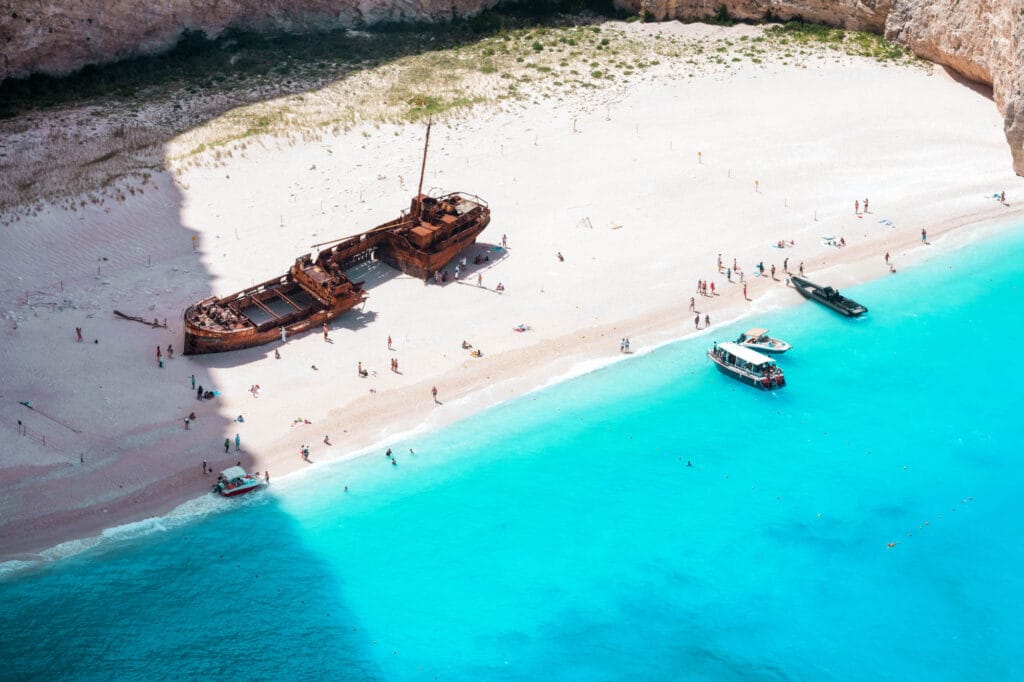
There is one photograph that has come to represent Zakynthos more than any other: a rusted shipwreck lying on a crescent of blindingly white sand, surrounded by vertical limestone cliffs and water so blue it looks digitally altered. Navagio Beach — the Shipwreck Beach — is real, and it is exactly as extraordinary as every photograph suggests. But making Zakynthos only about Navagio would be like making Paris only about the Eiffel Tower. It is the postcard, not the whole story.
Zakynthos — known internationally as Zante — is the southernmost of the main Ionian Islands, sitting off the western coast of the Peloponnese. It is greener, more lush, and more dramatically contoured than most Greek islands, with a mountainous north and west giving way to wide fertile plains in the centre and a southern coast of long, sandy beaches. The combination of striking scenery, clear Ionian water, a lively resort scene, and genuine natural beauty makes it one of the most visited islands in Greece — and one of the most rewarding when you venture beyond the obvious.
This guide covers the full picture: the unmissable sights, the best beaches, where to go for nightlife, the quieter corners most visitors miss, and everything you need to plan a trip that goes beyond the postcard.
Note: This page contains affiliate links. We may earn a small commission at no extra cost to you when you book through our links. This helps us keep creating free travel guides.
Zakynthos at a Glance
| Also known as | Zante (Italian name, widely used internationally) |
| Island group | Ionian Islands |
| Size | 406 km² — about the size of the Isle of Man |
| Capital | Zakynthos Town (also called Zante Town) |
| Best known for | Navagio Beach, Blue Caves, loggerhead sea turtles (caretta caretta) |
| Best time to visit | May–June and September |
| Airport | Zakynthos International Airport (ZTH) — direct flights from major European cities |
| Getting around | Rental car strongly recommended |
| Day trips | Boat trips to Navagio and Blue Caves — the island’s most popular activity |
How to Get to Zakynthos
By Flight
Zakynthos International Airport (ZTH) receives direct charter and scheduled flights from across Europe throughout the summer season, typically May to October. London, Amsterdam, Brussels, Warsaw, Stockholm, and most major European airports have direct connections. The flight from London takes about three hours.
From Athens, domestic flights take around 50 minutes. Olympic Air and Sky Express operate year-round connections. Outside summer, direct European flights drop off significantly — check schedules carefully if travelling in spring or autumn.
By Ferry
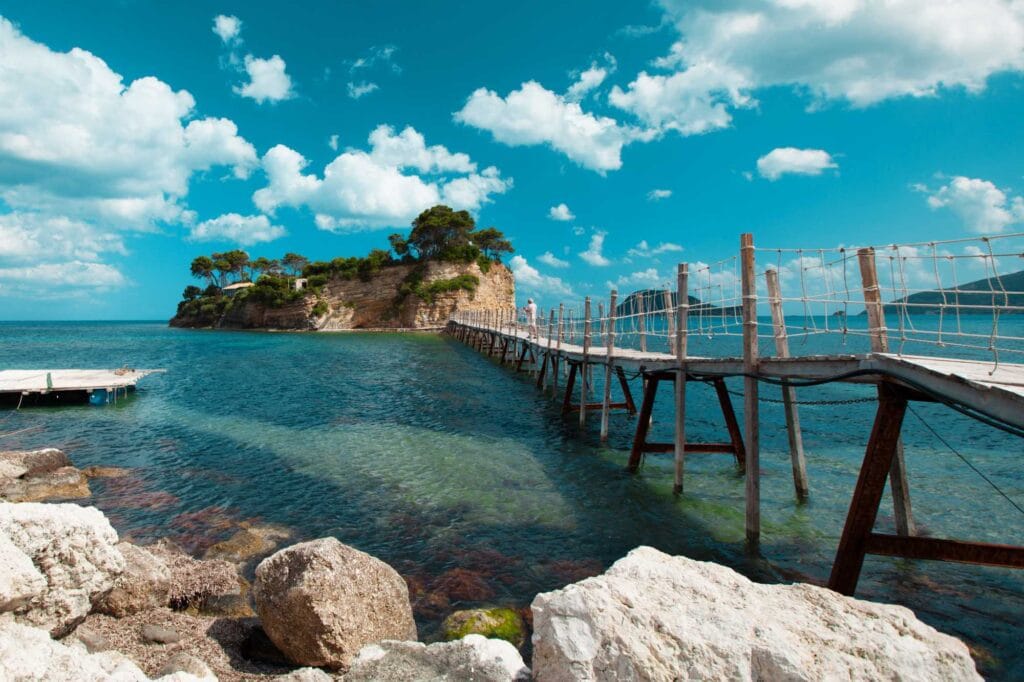
The most common ferry route is Killini (Peloponnese) to Zakynthos Town — a crossing of about 1.5 hours that runs multiple times daily year-round. Killini is about 2.5 hours by road from Athens. Ferries also connect Zakynthos to Kefalonia (about 1.5 hours) and occasionally to Patras.
If you are planning a road trip through the Peloponnese and Ionian Islands, arriving by ferry from Killini is a natural and scenic route.
Getting Around the Island
A rental car is the single best thing you can do for your Zakynthos trip. The island is compact enough to drive across in under an hour, but the most spectacular beaches and viewpoints — including the clifftop lookout above Navagio — require reaching places that buses simply do not serve. The roads are generally in good condition, though the mountain roads in the north can be narrow and steep.
Scooters and quads are popular for shorter trips and work well for the south of the island. For the mountain roads toward Anafonitria and the Navagio viewpoint, a car is safer.
- Public buses (KTEL): Connect Zakynthos Town to the main resort areas — Tsilivi, Laganas, Argasi. Infrequent and not useful for off-the-beaten-track exploration.
- Taxis: Available in Zakynthos Town and main resorts. Reliable for short trips but expensive for longer distances.
- Boat trips: For Navagio Beach and the Blue Caves, a boat trip from the north or west coast is the only practical option. Organised excursions leave from Porto Vromi, Agios Nikolaos, and Zakynthos Town daily in summer.
Navagio Beach & the Blue Caves: What You Need to Know
Navagio Beach (Shipwreck Beach)
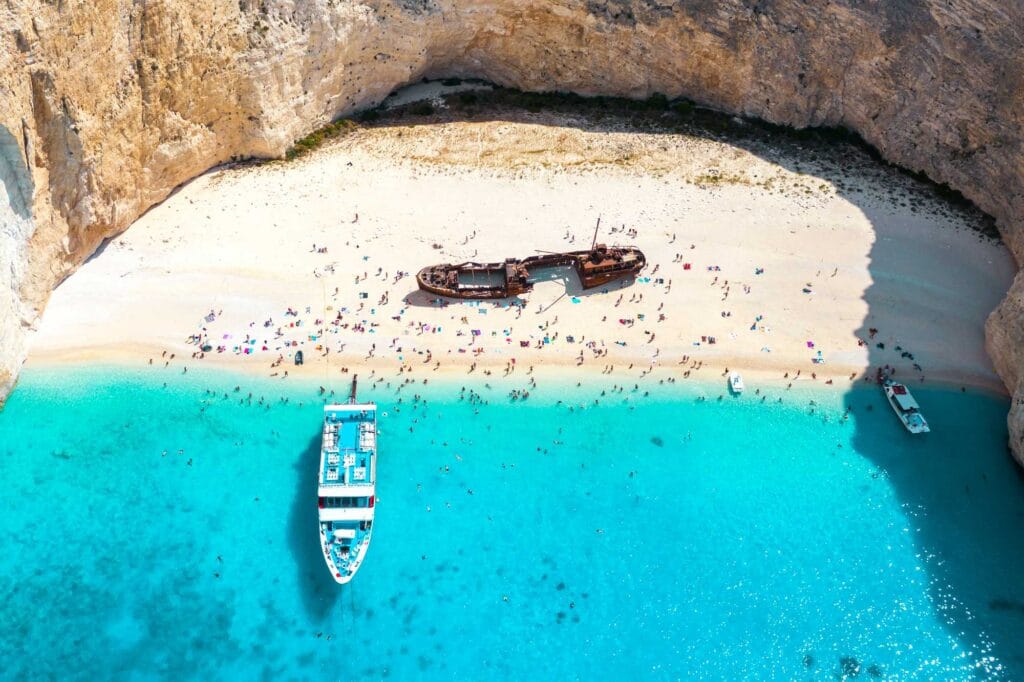
Navagio is inaccessible by land. The only way to reach it is by boat — a short crossing from the northwest coast, typically from Porto Vromi or Agios Nikolaos harbour. The beach itself is enclosed by 200-metre limestone cliffs on three sides and open sea on the fourth. The MV Panagiotis, a smuggler’s ship that ran aground here in 1980, sits rusting in the middle of the white pebble beach, now permanently installed in the landscape like a piece of art.
Organised boat trips run from multiple departure points daily in summer. Most trips combine Navagio with the Blue Caves, typically spending 30–45 minutes at the beach. For longer access, some operators offer full-day charters. The light at the beach is best in the morning before noon, when the sun hits the cliffs directly and the water turns an impossible shade of turquoise.
The clifftop viewpoint above Navagio is accessible by car, near the village of Anafonitria. The view from above — looking straight down into the enclosed bay — is arguably even more dramatic than the beach itself. This is one of the most photographed views in all of Greece. Go early or late to avoid the crowds and the midday haze.
The Blue Caves
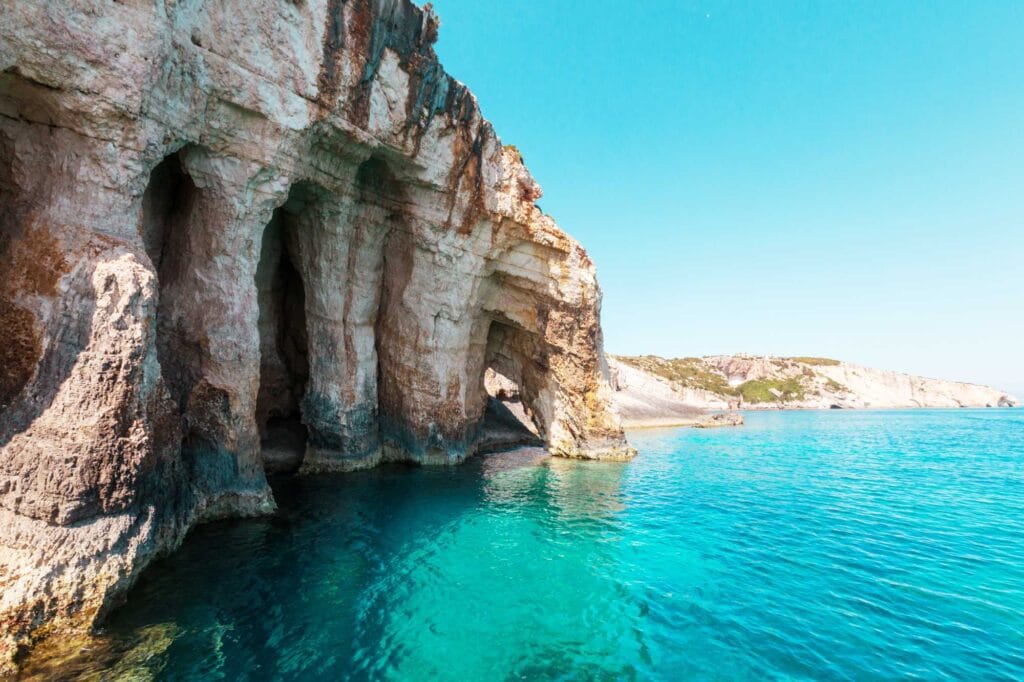
The Blue Caves sit along the northeastern tip of the island near Cape Skinari, carved into the base of the white limestone cliffs by centuries of wave action. When the morning light enters the cave openings at the right angle, the water inside glows a deep, luminescent blue — the result of light refracted through the water and reflected off the white rock beneath. Small wooden boats enter the caves individually, getting close enough to touch the walls.
The caves are best visited in the morning, before 11am, when the light is at the correct angle to create the blue effect. Most organised boat trips from the north of the island combine the caves with Navagio. If you are based in the south, full-day excursions are widely available from Zakynthos Town and the main resorts.
Best Beaches in Zakynthos
Zakynthos has some of the finest beaches in the Ionian — and they vary enormously in character. The north has the dramatic cliff-backed coves. The south has long, sandy, organized resort beaches. The east coast has calmer water and a more local atmosphere. Here are the ones worth knowing.
North & West Coast (Dramatic & Wild)
- Navagio Beach: Covered above. The most famous beach in Greece and fully deserving of its reputation. Access by boat only.
- Porto Vromi: The main departure point for Navagio boat trips. A small, rocky cove with clear water and a handful of tavernas. Worth a swim before or after your boat trip.
- Xigia Beach: A small, rocky beach in the north where natural sulphur springs bubble up from the seabed — the water is warm and slightly milky. An unusual experience, and the swimming is surprisingly good. Easy to miss, worth finding.
- Makris Gialos: A long sandy beach near Tsilivi on the northeast coast. Calm, well-organized, and family-friendly. Good facilities and clear water.
South Coast (Resort Beaches)
- Laganas Beach: The longest beach on the island — about 9 km of sand curving around a wide bay. This is also a protected nesting area for loggerhead sea turtles (caretta caretta). During nesting season (June–August), certain sections are restricted after dark and boat access is limited. The resort town of Laganas behind the beach is the island’s main nightlife hub.
- Gerakas Beach: At the southeastern tip of the island, within the National Marine Park. One of the most important sea turtle nesting beaches in the Mediterranean. Exceptionally beautiful — a wide arc of fine sand with clear shallow water. Strict rules apply: no sunbeds in the nesting areas, no beach access after sunset. The rules are worth respecting.
- Banana Beach (Bananas): Two adjacent beaches — Big Banana and Little Banana — south of Argasi. Well-organized, lively, popular with younger crowds. Little Banana is clothing-optional.
- Dafni Beach: Another turtle nesting beach within the Marine Park, quieter than Gerakas. A long walk from the nearest road but the solitude is worth it.
East Coast (Calmer & Local)
- Argasi Beach: Just south of Zakynthos Town. Long, sandy, and calm. Convenient if you are staying in or near the capital.
- Kalamaki Beach: Between Laganas and Zakynthos Town. A turtle nesting beach with good facilities and calmer water than the fully organised resort beaches. A good balance.
- Alykanas & Alykes: Two adjacent beaches on the northeast coast with shallow, calm water — among the best on the island for families with small children. The nearby salt pans attract flamingos in autumn and spring.
Zakynthos Town: What to See & Do
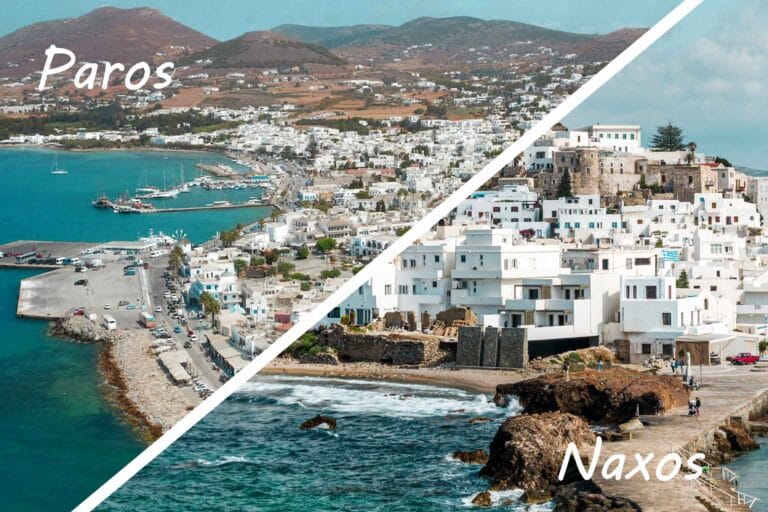
Zakynthos Town (Chora) was almost entirely destroyed by the 1953 earthquake that devastated the Ionian Islands, and rebuilt in a neoclassical style that gives it a more orderly, Italianate feel than most Greek island capitals. The result is a town that lacks the medieval warren of Corfu Old Town or the Cycladic cubism of Naxos, but has its own dignified charm — wide arcaded streets, the elegant Plateia Solomou square, and a seafront promenade that comes alive in the evening.
What to See in Zakynthos Town
- Plateia Solomou: The main square, named after Dionysios Solomos, the Zakynthos-born poet who wrote the Greek national anthem. The square is flanked by the neoclassical Municipal Theatre, the Naval Museum of Zakynthos, and the Church of Agios Nikolaos Molo.
- Museum of Solomos & Eminent Zakynthians: A well-curated museum dedicated to the island’s literary and cultural heritage, including original manuscripts of Solomos. Undervisited and worth an hour.
- Byzantine Museum of Zakynthos: Houses an exceptional collection of post-Byzantine icons and ecclesiastical art rescued from churches destroyed in the 1953 earthquake. One of the finest collections of its kind in Greece.
- Bochali Hill & Venetian Kastro: Above the town, the ruins of a Venetian fortress with sweeping views over the bay and the mainland. A good early morning or evening walk.
- Church of Agios Dionysios: The island’s patron saint is buried here. The silver reliquary containing his remains is carried through the town in procession twice a year. The church itself is a fine example of post-earthquake neoclassical architecture.
Best Things to Do in Zakynthos
- Take the boat trip to Navagio and the Blue Caves: Non-negotiable. This is the Zakynthos experience. Book a morning departure for the best light and the Blue Caves at their most vivid. Full-day and half-day options are widely available.
- Drive to the Navagio viewpoint: Even if you do the boat trip, drive up to the clifftop viewpoint near Anafonitria separately. The overhead view looking down into the enclosed bay is one of the most dramatic perspectives in Greece.
- Visit Gerakas at dawn: Gerakas Beach within the Marine Park opens at dawn in summer. Arriving just after sunrise, before the crowds, with a chance of seeing a loggerhead turtle heading back to sea — this is one of those travel moments that stays with you.
- Watch a sea turtle from a boat: Boat trips from Laganas into the Marine Park allow turtle-watching from a respectful distance. Loggerhead sea turtles are the largest breeding population in the Mediterranean, and Zakynthos is their stronghold. A genuinely moving experience for wildlife lovers.
- Explore the villages of the interior: Machairado, Kiliomeno, Agios Leon — a cluster of villages in the central plain with traditional architecture, Byzantine churches, and almost no tourist infrastructure. Drive through on a weekday morning and you step into a completely different Zakynthos.
- Swim at Xigia sulphur springs: Odd and wonderful. The natural springs make the sea water warm and slightly silky. The smell is mild — less intense than you might expect — and the swimming is genuinely enjoyable.
- Hike in the north: The mountainous northwest around Anafonitria and the Monastery of the Virgin Mary has good walking trails with sea views. Quieter and cooler than the beach areas.
Nightlife in Zakynthos
Zakynthos has a well-established reputation as a party island — largely centred on the resort strip of Laganas in the south. The main strip runs parallel to the beach and comes alive after midnight in July and August, with a mix of beach bars, clubs, and live music venues. It is loud, lively, and enthusiastically international. If this is what you are after, Laganas delivers it without apology.
Tsilivi, on the northeast coast, has a slightly more relaxed nightlife scene — still busy in summer but more mixed in age range and atmosphere. Better for those who want a lively evening without the full resort intensity.
Zakynthos Town itself has the most civilised evening scene. The waterfront promenade is perfect for a slow dinner followed by drinks. Plateia Solomou and the streets around it have good bars that stay busy until late without the volume of the resort areas. This is where locals and visitors who prefer atmosphere over volume tend to congregate.
A Note on Responsible Tourism Near Laganas
The beach at Laganas is a critically important nesting site for loggerhead sea turtles. Noise, artificial light, and disturbance during nesting season (June through August) directly impacts nesting success. The Marine Park authority asks that visitors: do not use torches or phone screens on the beach after dark, do not disturb marked nest sites, stay behind the rope lines near nesting areas, and keep noise levels down near the beach late at night. The turtles and the party scene coexist because visitors generally respect the rules — please do the same.
The Quiet Side: Villages & Nature
The interior and northwest of Zakynthos receive a tiny fraction of the visitors who head straight to the beaches. This is where the island’s older identity survives — in olive groves, Byzantine chapels, and village squares where the kafeneion opens at seven in the morning and stays busy until noon.
Villages Worth Visiting
- Kiliomeno: One of the best-preserved villages on the island. Cobbled streets, old stone houses, and the church of Agios Nikolaos with its distinctive Venetian bell tower — one of the few on the island that survived the 1953 earthquake.
- Macherado: Home to the Church of Agia Mavra, considered the most important pilgrimage church on Zakynthos after Agios Dionysios. The icon of the saint is said to be miraculous. The village square has a good traditional kafeneion.
- Anafonitria: In the northwest near the Navagio viewpoint. The Monastery of the Virgin Mary (Anafonitria Monastery) is one of the oldest on the island and has a well-preserved medieval tower. Quiet and atmospheric.
- Volimes: A cluster of three villages in the far north known for their honey, nougat, and handmade crafts. The road through Volimes leads to the Blue Caves departure point at Cape Skinari — stop at one of the roadside honey stalls on the way.
The National Marine Park of Zakynthos
Established in 1999, the National Marine Park of Zakynthos covers the southern bay of Laganas and the surrounding coastline — the most important loggerhead sea turtle nesting habitat in the Mediterranean. Around 1,200 nests are recorded here each year, producing roughly 100,000 hatchlings.
Within the park, certain beaches are restricted to protect nesting sites. Motorised water sports are prohibited in the bay. Boat access is regulated. These restrictions are not bureaucratic inconveniences — they are the reason the turtles are still here. The park is one of the success stories of Greek conservation, and visiting it responsibly is part of the experience.
Where to Stay in Zakynthos
Where you base yourself in Zakynthos shapes your experience significantly. The island is compact enough that you can drive between zones in 30 minutes, but the atmospheres are genuinely different.
Zakynthos Town
The best base for those who want a mix of culture, convenience, and evening atmosphere without full resort immersion. Good range of hotels from mid-range to boutique. Easy access to the east coast beaches and the ferry port.
Tsilivi (Northeast Coast)
The most family-friendly resort area. Calm beach, good facilities, well-organised. About 5 km from Zakynthos Town. A solid choice for families who want resort comfort with easy access to the rest of the island.
Laganas (South Coast)
The party hub. Ideal for younger travellers who want nightlife and beach facilities together. Note the turtle nesting restrictions on the beach itself — loud late-night beach activity is genuinely prohibited in certain zones.
Vassilikos Peninsula (Southeast)
The most upscale area on the island — a peninsula of pine-forested hills, boutique hotels, and the exceptional beaches of Gerakas and Banana. Quieter than the resort areas, more naturally beautiful, and home to the island’s best luxury accommodation. A car is essential here.
Porto Zoro & Agios Nikolaos (North)
For those who want proximity to Navagio and the Blue Caves. Very limited accommodation but a completely different atmosphere from the south — quieter, more rugged, and genuinely off the resort circuit.
What to Eat in Zakynthos
Zakynthos has a distinct culinary tradition shaped by centuries of Venetian influence — the Ionian Islands were under Venetian rule for over 400 years, and the food reflects it. Dishes are more richly spiced and stew-based than typical Aegean cuisine, with a stronger use of tomatoes, cinnamon, and garlic.
- Sofrito: The island’s signature dish. Thin slices of veal braised in a sauce of white wine, vinegar, garlic, and parsley. Tender, aromatic, and completely unlike anything found on the Aegean islands. Order it anywhere in Zakynthos Town.
- Skordostoumbi: Peppers marinated in garlic and vinegar — a Venetian-influenced side dish found on most traditional menus.
- Zakynthian salami (Loukoumades tou Zante): A local sweet — small deep-fried dough balls drenched in honey and cinnamon, sold at pastry shops throughout the island.
- Nougat (Mandolato): A Zakynthos speciality made with honey, almonds, and egg white. Available at every confectionery shop, particularly in Volimes village.
- Fresh fish and grilled octopus: Best eaten at the waterfront tavernas in Zakynthos Town and the smaller fishing villages of the north coast.
Where to Eat
- Zakynthos Town waterfront: The most concentrated area of good restaurants. Look for places serving traditional Ionian cuisine rather than the standard Greek tourist menu — Sofrito should be on the list.
- Kiliomeno and interior villages: Simple tavernas with local cooking and almost no foreign tourists. Order the daily special.
- Agios Nikolaos (north coast): A small harbour village with excellent fresh fish. Quieter than the resort areas and genuinely good value.
Best Time to Visit Zakynthos
- May – June: Ideal. The island is green, the sea is warming up, and the crowds have not yet arrived. Direct European flights are running. Prices are significantly lower than peak season. Some beach facilities are not yet fully operational in May.
- July – August: Peak season. The island is at full capacity, particularly in Laganas and Tsilivi. Navagio boat trips are busy and should be booked in advance. Sea turtle nesting is active — extra care around the Marine Park beaches is required. The weather is reliably hot and sunny.
- September: The best overall window for most travellers. Still warm, quieter than August, prices dropping. The sea is at its warmest. Sea turtle hatchlings emerge from nests in September — if you are lucky, you might witness this at Gerakas or Dafni.
- October: Quieter still. Some tourist infrastructure starts to close. The landscape turns golden and the island takes on a more authentic rhythm. Good for those who want to experience Zakynthos as the locals do.
- November – April: The island is largely shut down. Most hotels, restaurants, and tour operators close for the winter. Zakynthos in winter is a quiet, agricultural island with genuine local life — interesting for a short visit, but not suitable for a beach holiday.
One specific recommendation: if sea turtles are a priority, plan for mid-August to mid-September. This is when hatchlings emerge and make their way to the sea — a remarkable natural event that happens primarily at night at Gerakas Beach.
Explore More About the Ionian Islands
- Corfu Travel Guide: Greece’s Greenest Island
- Greek Islands: How to Choose the Best Island for Your Trip
- Island Hopping in Greece: The Ultimate Guide
- Best Greek Islands for Couples
- Best Greek Islands for Families
- Getting Around Greece: Ferries, Flights & Cars
- Greece Ferry Guide: How to Book & Navigate Islands
FAQ: Zakynthos Travel Guide
Is Zakynthos worth visiting?
Yes — particularly for those who want a combination of dramatic natural scenery, excellent beaches, and a lively holiday atmosphere. Navagio Beach is one of the genuinely iconic natural sights in Greece. Beyond it, the island has outstanding beaches along both coasts, a unique culinary tradition, one of the most important sea turtle habitats in the Mediterranean, and enough variety in character — from the party resort of Laganas to the quiet villages of the interior — to suit very different types of traveller.
How many days do you need in Zakynthos?
Five to seven days is the ideal window. Three days covers the essentials — Navagio, the Blue Caves, and one or two beaches. A week lets you explore at a slower pace: the interior villages, the Marine Park, the quieter north coast, and an evening or two in Zakynthos Town without rushing.
Can you swim at Navagio Beach?
Yes. The beach itself is accessible by boat and you can swim freely in the enclosed bay. The water is extraordinarily clear and the setting is like nowhere else. Note that the beach is pebble, not sand, so water shoes are useful. Boat trips typically allow 30–45 minutes at the beach — enough for a swim and photographs, but not a full afternoon.
Is Zakynthos good for families?
Yes, with some caveats. The northeast coast beaches — Tsilivi, Alykanas, Alykes — are excellent for families with young children: shallow, calm, well-organised. The Vassilikos peninsula has quieter, high-quality beaches. Laganas is better suited to younger adults. The sea turtle experience at Gerakas is one of the most memorable wildlife encounters families can have in Greece — approach it with the right timing and the right attitude.
Is Zakynthos the same as Zante?
Yes. Zante is the Italian name for Zakynthos, used during the long period of Venetian rule and still widely used in Northern and Western Europe, particularly in the UK. If you search for cheap flights to ‘Zante’, you are looking for Zakynthos. The airport code is ZTH (from Zakinthos, the alternative spelling).
What is Zakynthos best known for?
Primarily Navagio Beach — the shipwreck beach enclosed by white limestone cliffs — and the loggerhead sea turtle (caretta caretta) nesting habitat in the Marine Park. The Blue Caves on the north coast are also widely photographed. Within Greece, Zakynthos is also known as the birthplace of Dionysios Solomos, the poet who wrote the Greek national anthem.
Do I need a car in Zakynthos?
Strongly recommended. The island’s most spectacular sights — the Navagio viewpoint, the Blue Caves at Cape Skinari, the Vassilikos peninsula beaches, and the interior villages — are not accessible by public transport. A rental car turns a pleasant beach holiday into a genuinely comprehensive island experience. Roads are good in most areas, with the exception of some narrow mountain routes in the north.
Are there sea turtles in Zakynthos?
Zakynthos has the largest concentration of loggerhead sea turtle nesting sites in the Mediterranean. The southern bay of Laganas, including beaches at Gerakas, Dafni, and Kalamaki, is a protected Marine Park specifically for this reason. Turtles nest from late May through August; hatchlings emerge and head to sea from August through October. Turtle-watching boat trips from Laganas are available and operate under strict guidelines to protect the animals.
Ready to Plan Your Zakynthos Trip?
Zakynthos rewards the traveller who goes in with open expectations. Yes, Navagio is as extraordinary as every photograph suggests. But the island is more than its most famous image — it is sea turtles at dawn, Sofrito in a waterfront taverna, the light in the Blue Caves at ten in the morning, and a clifftop view that makes you understand why people come back year after year.
Sort your logistics below and start planning.