Greece with Kids: A 7–10 Day Family Itinerary That Actually Works
Greece with kids is one of the best family travel decisions you can make — and one of the most misplanned. The problem isn’t the destination. Greece is extraordinary for families: warm, shallow-entry beaches, food that children genuinely eat, a culture that welcomes kids at restaurants and genuinely means it, and enough ancient history to spark real curiosity without being overwhelming. The problem is the itinerary most families copy from couple-focused travel content.
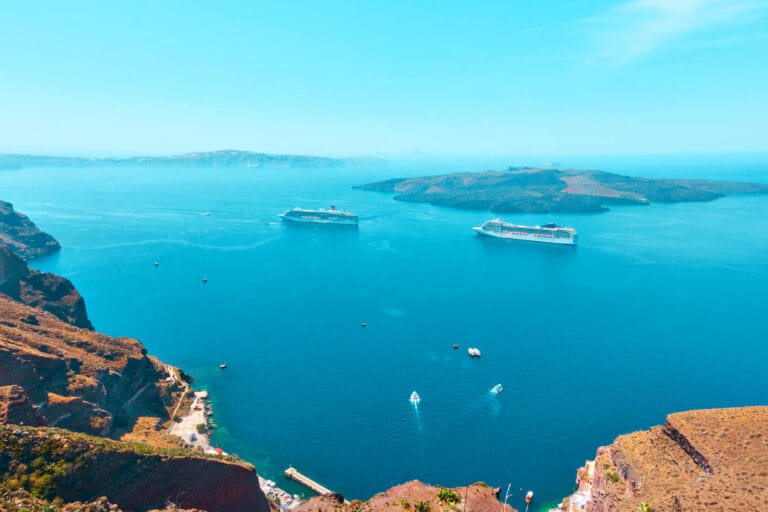
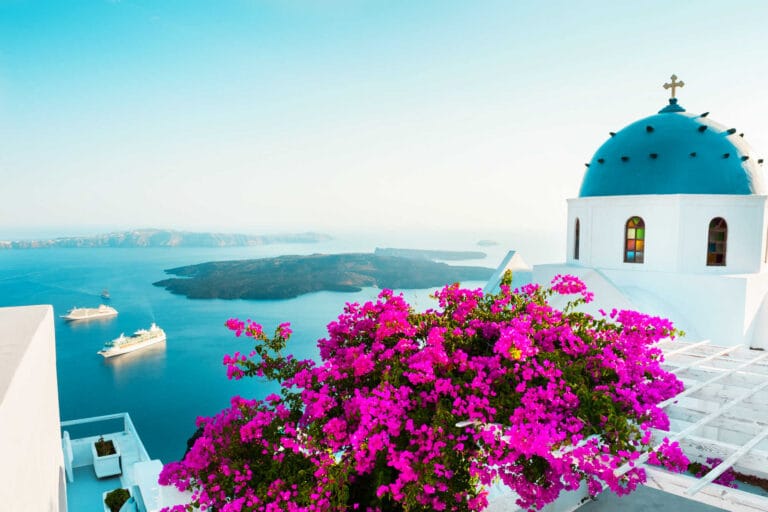
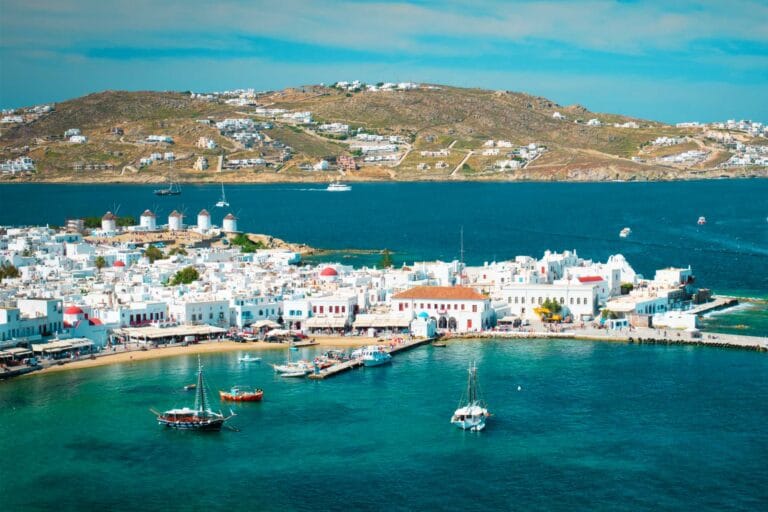
Santorini looks spectacular in photographs. It’s also built on steep cliffs above a volcanic caldera, has almost no accessible beaches, and has cobbled pathways that are difficult with a stroller and exhausting for small legs. Mykonos in peak summer is loud, expensive, and organized almost entirely around nightlife. These are not bad destinations — they’re just not optimized for families with young children.
This itinerary is. It covers Athens for two days of history made genuinely engaging for children, Crete for four or five days of the best family-friendly beaches and ancient sites in the country, and Rhodes as a third option that combines a medieval walled city with excellent shallow-water beaches. The logistics are clean, the accommodation options are strong, and the pace is built around how families actually travel — not how travel magazines suggest they should.
Note: This page contains affiliate links. We may earn a small commission at no extra cost to you when you book through our links. This helps us keep creating free travel guides.
Why These Destinations Work for Families
The three destinations in this itinerary were chosen against specific family travel criteria:
- Shallow, calm beaches with easy water entry for children of all ages
- Family-friendly accommodation with space, pools, and kitchen access
- Ancient sites and activities that engage children rather than exhaust them
- Food that works for kids without requiring a separate children’s menu
- Manageable logistics — no excessive ferry or flight time on a single travel day
- Lower tourist density than Santorini or Mykonos in peak summer
Athens is non-negotiable for families with children old enough to be interested in ancient history — roughly six and above. The Acropolis is a genuine spectacle at any age, and the Acropolis Museum has interactive exhibits designed specifically for younger visitors. Two days in Athens gives you the highlights without wearing anyone out.
Crete is the strongest family island in Greece by almost every measure: large enough to have genuine variety, beaches ranging from organized resort-style to remote and wild, the Palace of Knossos (which connects directly to the Greek myths most children already know), and a food culture built on simple, quality ingredients that children actually eat.
Rhodes works particularly well for families who want a historical dimension alongside beach time. The medieval walled city is compact and navigable, the eastern coast has some of the calmest and shallowest water in the Aegean, and the island has strong family accommodation infrastructure built up over decades of European family tourism.
Days 1–2: Athens with Kids — Ancient History, Hands-On
Athens with children works best when you resist the urge to cover everything and instead choose two or three experiences that can be done slowly and with real engagement. The Acropolis and the Acropolis Museum together form a full-day experience that most children from age six upward find genuinely absorbing. Build the rest of the two days around eating well, walking manageable distances, and leaving room for the unexpected.
Day 1 — Arrive, Plaka & First Impressions
Fly into Athens International Airport (ATH). Take a taxi or pre-booked transfer to the hotel — the X95 express bus is fine without luggage but impractical with children and bags. Check into a hotel in Koukaki or Monastiraki: both are walkable to the Acropolis and Plaka, and both have good restaurants nearby.
First afternoon: Plaka. The oldest neighborhood in Athens, built into the slopes of the Acropolis hill, is well-suited for children — the streets are traffic-free in the core area, the scale is human, and there are ice cream shops and small toy stores at frequent intervals. Walk without a fixed plan. Find a taverna that looks genuinely busy and order the grilled chicken, the Greek salad, the tzatziki. Children eat Greek food. This is not a country where you’ll be hunting for a plain pasta.
Evening: Monastiraki Square. Rooftop restaurants with Acropolis views for a relaxed dinner. The spectacle of the Parthenon lit up at night genuinely impresses children — use it as an introduction to what you’re doing tomorrow morning.
Day 2 — The Acropolis & Museum
Book tickets online in advance. Arrive at the Acropolis entrance by 8:00–8:30 AM, before the tour groups and the heat. The walk up is manageable for children over five; there is a path rather than stairs for most of the ascent, though the surface is uneven stone. Strollers are not practical above the lower entrance gate.
Frame the Acropolis for children before you go: the Parthenon was built as a temple to Athena, goddess of wisdom, and the city below it was named after her. The myths of ancient Greece — Athena and Poseidon’s contest for the city, Theseus and the Minotaur, the stories of Hercules — are things most children already know from books or films. The Acropolis makes those stories physical and real.
Allow 60–90 minutes on the hill itself, then walk directly down to the Acropolis Museum at the base. The museum has a specific children’s program and interactive exhibits on the ground floor designed for younger visitors. The top floor, where original frieze sections are displayed with the caldera and surrounding city visible through glass walls, is extraordinary at any age. Allow two hours.
Afternoon: lunch near Monastiraki, then the rest of the day at whatever pace the children set. The Monastiraki Flea Market is engaging for older children; the Stavros Niarchos Foundation Cultural Center (about 20 minutes by taxi) has a large public park, a children’s library, and a rooftop with panoramic views — good for families who need open space after a morning of ancient monuments.
Evening: pack for tomorrow’s flight to Crete.
For the complete Athens guide, read our Athens Travel Guide.
Days 3–6 (or 3–7): Crete with Kids — Beaches, Myths & Space to Breathe
Crete is the best Greek island for families and it isn’t particularly close. It has the widest variety of beaches in Greece — from shallow, organized resort beaches on the north coast to remote coves on the south — the Palace of Knossos for the Minotaur myth made physical, and enough space that you never feel hemmed in the way you can on smaller islands. Four days is the minimum to do it properly; five is better.
Rent a car at Heraklion Airport on arrival. You’ll need it for every day you’re here. The island is too large and too spread out to navigate without one, and a car gives you the flexibility to drive to quieter beaches when the organized resort ones fill up.
Day 3 — Arrive in Heraklion & Knossos
Morning flight from Athens to Heraklion (HER), about 45 minutes. Pick up the rental car and drive directly to the Palace of Knossos — 15 minutes from the airport.
Knossos is the single best family activity in Greece. The Palace of Knossos is the actual palace where, according to Greek mythology, King Minos kept the Minotaur in the labyrinth beneath it. Theseus, Ariadne, the ball of thread, the monster at the center — children who know these stories will walk through the ruins with a different quality of attention than they give most ancient sites. The scale of the palace is legible — you can see the throne room, the storage jars, the frescoes (reconstructions, but vivid) — and Arthur Evans’ controversial reconstruction actually helps younger visitors understand what they’re looking at.
Book a family-friendly guided tour in advance if your children are old enough to follow a narrative (roughly 7+). A good guide turns Knossos into a story rather than a ruin.
Afternoon: check into your accommodation and let the children swim. North coast beaches near Heraklion — Amoudara, Karteros — are sandy, shallow, and calm. This is the decompression after two days of city and monuments.
For the full family guide to the island, read our Crete with Kids article.
Day 4 — East Coast: Elounda & the Calm Water
Drive east along the north coast to the Elounda area — about 70 km from Heraklion, roughly an hour. The Gulf of Elounda is one of the calmest bodies of water in the Aegean: almost completely enclosed, sheltered from wind, with shallow sandy-bottomed water that stays warm throughout the season and is safe for children who are learning to swim.
The small island of Spinalonga — a Venetian fortress and later a leper colony — is visible from the shore and reachable by a short boat trip from Elounda or Plaka village. The island itself is a fascinating short excursion for older children: the fortifications are intact, the abandoned village is eerie and atmospheric, and the history (the last active leper colony in Europe, which closed in 1957) is accessible without being distressing. Allow two hours for the excursion including the boat.
Lunch at one of the fish tavernas in Plaka village on the shore opposite Spinalonga. Fresh fish, local wine for the adults, the view across the water. Afternoon: more swimming in the gulf.
Drive back to your base or stay overnight on the east coast.
Day 5 — South Coast: Preveli Beach & Something Wild
Today requires a longer drive — about 90 minutes from the north coast to the south, crossing the White Mountains (Lefka Ori). The road itself is part of the experience: the mountains are dramatic, the descent to the Libyan Sea sudden and steep, and the landscape unlike anything on the tourist-facing north coast.
Preveli Beach is one of the most unusual beaches in Greece: a palm-lined river gorge meets a lagoon that meets the open sea. You can swim in the river, in the lagoon, and in the sea within about 200 meters of each other. The access is either by a steep path down the cliff (20 minutes, not practical with very young children or heavy bags) or by boat from the small harbor at Damnoni Beach, 15 minutes away. The boat option is the right call for families.
Lunch at Damnoni or at one of the small tavernas near Preveli. Afternoon: the drive back over the mountains, with a stop in a mountain village — Spili has a famous lion-head fountain in the central square and several good kafeneions for cold drinks and loukoumades.
Day 6 — Chania: The Best Old Town in Crete
Drive west to Chania — about 2 hours from the Heraklion area. Chania has the most beautiful harbor in Crete: a Venetian crescent lined with converted stone warehouses, a lighthouse at the end of the jetty, and the White Mountains framing everything behind the city.
The old town is compact and walkable — excellent for families. The covered market on Halidon Street sells Cretan honey, herbs, cheese, and ceramics; a good place for children to pick one thing to take home. The Naval Museum at the harbor entrance has boats, figureheads, and model ships that engage children who aren’t particularly interested in Byzantine architecture.
Falasarna Beach on the west coast of Crete — about 45 minutes from Chania — is one of the most beautiful beaches on the island: a long arc of pink-tinged sand with clear, shallow water and a gentle gradient into the sea. It’s one of the best beaches in Greece for families by almost every measure. If you have time, make this the afternoon.
Stay the night in Chania. Chania Airport (CHQ) is 15 km east of the city — convenient for a morning flight to Rhodes tomorrow if you’re continuing, or a direct return home.
Days 7–9 (optional): Rhodes — A Medieval City & Calm Waters
Rhodes is the natural extension of this itinerary for families who have ten days and want a third destination. It offers something Crete doesn’t: a fully intact medieval walled city that is extraordinary to walk through, combined with the calmest and shallowest beaches in the Aegean on the eastern coast. The combination of genuine history and excellent family beaches in one place makes it one of the strongest family destinations in Greece.
Fly from Chania or Heraklion to Rhodes (RHO) — direct in summer, or via Athens. The flight is about 45–60 minutes.
Day 7 — Arrive & Rhodes Old Town
Check into a hotel inside or just outside the walled city. Rhodes Old Town is a UNESCO World Heritage Site and one of the best-preserved medieval cities in Europe. The entire old town is enclosed within 4 km of Crusader-era walls, and the interior is a dense layering of Byzantine churches, Ottoman mosques, Gothic archways, and Greek houses built on top of each other across seven hundred years.
The Street of the Knights — the main ceremonial street of the Knights Hospitaller who ruled Rhodes from 1309 to 1522 — is the kind of place that makes children who’ve read about medieval knights stop and pay attention. The scale is right: the street is narrow, the buildings are intact, and the sense of history is immediate.
The Palace of the Grand Master at the top of the old town is the best single building to visit with children: large, well-preserved, with mosaic floors from Kos and displays of medieval armor and weapons that engage younger visitors in ways that most ancient sites don’t. Allow 90 minutes.
Dinner inside the old town: the alleyways are full of good restaurants. Order the local dish — pitaroudia (chickpea fritters) are a Rhodian specialty, along with fresh fish and the island’s excellent local wine.
Day 8 — East Coast Beaches
The eastern coast of Rhodes has the best beaches for families on the island. The water is calmer than the west coast (sheltered from the prevailing wind by the island’s spine), the gradient is gentle, and the sand is soft.
Faliraki, Tsambika, and Anthony Quinn Bay are the main options along the eastern coast:
- Tsambika Beach — a long arc of fine sand at the base of a steep headland. The water is shallow for a long way out and the color is exceptional. One of the best family beaches in the Aegean.
- Anthony Quinn Bay — a small, sheltered cove with crystal-clear water and good snorkeling on the rocky edges. Named after the actor who filmed The Guns of Navarone here and later bought the bay. The water entry is from flat rock rather than sand.
- Faliraki — a larger, more organized resort beach with all facilities. Less scenic than the alternatives but practical for families with very young children who need changing facilities, a beach bar, and sunbed rental.
Rent a car or use the east coast bus service to reach these beaches. Return to Rhodes Town for dinner.
Day 9 — Lindos & Departure
Lindos is the unmissable day trip from Rhodes Town — about 50 km south along the east coast, roughly an hour by car. The village is built on a steep hillside below an ancient acropolis: whitewashed cubic houses, narrow donkey-path lanes (no cars inside the village), and a clifftop view over two bays that is one of the finest panoramas in the Aegean.
The Acropolis of Lindos sits at the top of the cliff and is reached by a steep path or by donkey (the donkeys are a practical option and children universally enjoy them). The site has ancient Greek temple ruins, a Crusader castle built over them, and views in every direction over the sea. Allow 90 minutes.
Swim at St Paul’s Bay below Lindos — a small, sheltered beach in a cove where, according to tradition, St Paul landed during his voyage to Rome. The water is shallow, calm, and clear. Have lunch at one of the tavernas above the bay.
Return to Rhodes Town for your afternoon or evening flight home, or continue to Athens for a final night before your international departure.
For the complete island guide, read our Rhodes Travel Guide.
How to Get Between Destinations
Home → Athens
Athens has the best international connections of any Greek city. Fly in, spend two days, and fly on to Crete from the domestic terminal. Alternatively, fly directly into Heraklion if your home city has a direct connection — check before booking, as this skips Athens entirely and works well for families who have already visited the city.
Athens → Crete (Heraklion)
Domestic flight, 45 minutes. Multiple daily departures from Athens International. Book early for summer travel — this route sells out. The overnight ferry from Piraeus to Heraklion (9–10 hours) is an option for families who enjoy the overnight boat experience; it’s slower but children often find it an adventure, and cabin berths are available.
Crete → Rhodes
Fly from Chania (CHQ) or Heraklion (HER) to Rhodes (RHO) — direct in summer, via Athens out of season. Check schedules before finalizing the itinerary, as connection times vary.
Within Crete and Rhodes
Rental car on both islands. Essential on Crete, practical on Rhodes. Book in advance from the airport on arrival.
For all transport logistics, read our Getting Around Greece guide.
Family Travel Tips for Greece with Kids
Best time to travel with children
Late May through June and September are the best months for families in Greece. The water is warm (20–25°C), the weather is reliable, the beaches are not yet at peak density, and school holiday crowds are absent. July and August are hotter, more crowded, and more expensive — workable, but shoulder season is significantly more comfortable for families with young children.
Accommodation strategy
Apartments and family suites are significantly more practical than standard hotel rooms for families. A kitchen or kitchenette means breakfast and the occasional lunch at the accommodation rather than always eating out — important for managing costs and for families with picky eaters. Book accommodation with a pool where possible on Crete and Rhodes: a pool gives children a contained swimming option for days when the beach trip doesn’t work out.
Food
Greek food is genuinely family-friendly. Grilled chicken and fish, fresh salads, tzatziki, pita bread, spanakopita, loukoumades — most children eat these without complaint. Restaurants in Greece welcome children warmly and genuinely; high chairs are common, service is patient, and the culture of eating together as a family means children at restaurants are not treated as an inconvenience. You will not need a dedicated children’s menu.
Pace and planning
Build more time into the itinerary than you think you need. Families with children under ten should plan for one main activity per day maximum — the rest of the day at the beach, at the hotel pool, or moving slowly through a market or harbor town. The biggest mistake families make in Greece is trying to apply the same pace as a couple-only trip. Greece rewards slow travel at any age; it rewards it even more with children.
Sun and heat
Greek summer sun is more intense than most northern European or North American travelers expect. Sun cream factor 50 minimum for children, reapplied every two hours. Wide-brimmed hats are practical. Plan any outdoor archaeological sites or city walking for the morning — before 11 AM and after 4 PM. Midday is beach or pool time, not monument time.
Beaches for very young children
Prioritize beaches with a gentle gradient, soft sand, and calm water. The Gulf of Elounda in Crete, Tsambika Beach on Rhodes, and the east coast beaches of Rhodes near Faliraki are among the best options in the country for children under five. Avoid beaches on the west-facing coasts of Crete and Corfu in summer — the prevailing wind creates choppy conditions that are fine for adults but uncomfortable for small children.
Best Family-Friendly Beaches in Greece
The beaches in this itinerary were selected specifically for family suitability: shallow water, soft sand or flat rock entry, calm conditions, and manageable access. Here is a summary:
- Elounda Gulf, Crete — the calmest water in the Aegean. Shallow, warm, enclosed. Exceptional for young children learning to swim.
- Falasarna, Crete (west coast) — long arc of pink-tinged sand, gentle gradient, beautiful color. One of the finest beaches in Greece.
- Tsambika Beach, Rhodes — fine sand, shallow for a long way out, calm water on the sheltered eastern coast.
- St Paul’s Bay, Lindos (Rhodes) — small, sheltered, crystal-clear. Best for older children who can manage the rocky edges.
- Preveli Beach, Crete (south coast) — unique palm-river-lagoon setting. Best reached by boat from Damnoni; water is calm inside the lagoon.
- Amoudara Beach, Heraklion (Crete) — long, organized, close to the city. Good for the first afternoon after arrival.
For a complete guide to the best family beaches across the islands, read our Best Greek Islands for Families article.
Explore More About Greece
- Crete with Kids: A Family-Friendly Guide
- Best Greek Islands for Families: Kid-Friendly Picks
- Crete Travel Guide: The Ultimate Island Adventure
- Rhodes Travel Guide: History, Beaches & More
- Athens Travel Guide: Everything You Need to Know
- 7 Days in Greece: The Perfect One-Week Itinerary
- 10 Days in Greece: The Perfect Itinerary
- Getting Around Greece: Ferries, Flights & Cars
- When Is the Best Time to Visit Greece?
FAQ
Is Greece a good destination for families with young children?
Greece is an excellent family destination. The beaches are safe and shallow on the right islands, the food is genuinely child-friendly, the culture warmly welcomes children at restaurants and in public spaces, and the mythology most children already know from books and films makes ancient sites immediately engaging. The key is choosing the right islands — Crete and Rhodes are significantly more practical for families than Santorini or Mykonos.
What is the best Greek island for families?
Crete is the strongest overall family island in Greece: largest range of beaches, best family infrastructure, the Palace of Knossos for the Minotaur myth, and enough space to avoid feeling crowded. Rhodes is an excellent second choice, combining the medieval old town with calm east coast beaches. For families prioritizing peaceful beaches and calm water over ancient sites, Corfu and Zakynthos on the Ionian side are also strong options.
Is Santorini good for families?
Santorini is not an ideal family destination for young children. The island is built on steep volcanic cliffs with almost no accessible beaches at sea level — the black sand beaches require a bus or car and the water entry is steep. The cobbled caldera pathways are difficult for strollers and tiring for small legs. Santorini is spectacular and worth visiting with older children (12+), but families with younger children will find Crete, Rhodes, or Corfu far more practical.
What age is best for a Greece family trip?
Greece works well for children of most ages, but the experience varies. Under five: prioritize beaches with shallow calm water and hotel pools — the archaeological sites are less relevant. Ages 6 to 12: the sweet spot. Children are engaged by the myths and ancient sites, capable of moderate walks, and old enough to appreciate the food and the atmosphere. Teenagers: the islands with nightlife and active beach scenes (Mykonos, Rhodes) become more interesting; Greek mythology and history often become genuinely compelling at this age.
How do I get to Crete with children?
Fly from Athens to Heraklion or Chania — 45 minutes, multiple daily departures. Many European cities have direct summer flights to both Heraklion and Chania. The overnight ferry from Piraeus to Heraklion (9–10 hours) is an option for families who enjoy the experience — cabin berths are available and children often find the overnight boat exciting.
Do I need a car in Greece with kids?
Yes, on Crete and Rhodes. Both islands are too large and spread out to navigate by public transport with children and beach gear. A rental car gives you the flexibility to reach quieter beaches, adjust plans when children are tired, and carry everything you need without depending on bus schedules. In Athens, no — the historic center is walkable. On smaller islands like Hydra or Paros, a car is either impossible (Hydra has none) or unnecessary.
Is Greece expensive for a family trip?
Greece is significantly less expensive than comparable Mediterranean family destinations like the French Riviera or the Balearic Islands. Crete and Rhodes are meaningfully cheaper than Santorini and Mykonos. A family of four (two adults, two children) spending thoughtfully should budget €200–350 per day for accommodation, meals, transport, and activities, with significant variation depending on accommodation choices.
What should I pack for a family trip to Greece?
Factor 50 sun cream (pack more than you think you need — Greek pharmacies stock it but at higher prices). Wide-brimmed hats for all children. Reef shoes or sandals for beaches with rock entry. A lightweight carrier or compact stroller for very young children navigating cobblestone old towns. Snorkeling masks from age five upward — the water clarity in Greece makes snorkeling genuinely exciting even for young children. Light layers for evenings, which can cool quickly in spring and autumn.