Greece Weekend Getaway: The Best 3–4 Day Escapes
Not every Greece weekend getaway needs two weeks and a detailed spreadsheet. Some of the best trips are four days — a long weekend with a direct flight, a focused itinerary, and the discipline not to try to do everything. The mistake most short-trip travelers make is attempting to pack a week’s worth of destinations into three days. The result is a blur of airports and ferry ports with almost no time in any actual place.
This guide takes a different approach. We’ve built four standalone 3–4 day itineraries, each built around a single destination or a tight combination of two. You pick the one that fits your time, your budget, and what you’re in the mood for. Athens for history and food. Santorini for the drama of the caldera. Thessaloniki for a completely different side of Greece. Hydra and the Saronic Gulf for an easy island escape that doesn’t require a domestic flight.
Every option here is genuinely doable in a long weekend from most European cities. Some work from further afield too, if you’re prepared to use most of Friday on the plane.
Note: This page contains affiliate links. We may earn a small commission at no extra cost to you when you book through our links. This helps us keep creating free travel guides.
Option 1: Athens in 3 Days — History, Food & Hidden Streets
Athens is the easiest short-trip destination in Greece. It has an international airport with direct connections from most of Europe, a compact historic center that’s almost entirely walkable, and enough to fill three days without any of it feeling forced. The city rewards the traveler who slows down and pays attention to the texture of it — the way neighborhoods shift character every few streets, the quality of the coffee, the light on the Acropolis at different hours of the day.
Three days is enough to see the Acropolis properly, explore four or five neighborhoods, eat extremely well, and leave with a genuine sense of the city rather than just a photograph of the Parthenon.
Day 1 — Plaka, Monastiraki & the Acropolis by Night
Land at Athens International Airport (ATH) and take the X95 bus or a taxi into the city. Check into a hotel in Monastiraki, Koukaki, or Psiri — all within walking distance of the main sites and all with good restaurant options nearby.
First afternoon: walk through Plaka, the oldest continuously inhabited neighborhood in the city. The streets are narrow and slightly chaotic, built into the lower slopes of the Acropolis hill. Don’t eat at the first taverna that flags you down — keep walking until you find somewhere with a handwritten menu or a kitchen you can see from the street.
Evening: Monastiraki Square and the rooftop bars above it. From the higher terraces, the Acropolis is visible at night, lit against a dark sky. Order a drink, find a spot with a clear view, and take your time. This is the introduction Athens deserves.
Day 2 — The Acropolis, the Museum & the Afternoon
Tickets online, arrival by 8:00–8:30 AM before the crowds build. Walk up through the Beulé Gate to the Parthenon, the Erechtheion, and the Temple of Athena Nike. From the top, Athens spreads out in every direction. Allow 90 minutes.
Walk directly down to the Acropolis Museum at the base of the hill. The building is exceptional — designed with excavated ruins visible through glass floors beneath your feet — and the collection contextualizes everything you just saw on the hill. Budget two hours. The top floor, where original frieze sections sit alongside plaster casts of the pieces held in London, is quietly one of the most affecting museum spaces in Europe.
Afternoon: lunch at a souvlaki counter near Monastiraki (Kostas or Thanasis, both cash-only, both worth the queue). Then the Monastiraki Flea Market for an hour of wandering — antiques, ceramics, old maps, vintage jewelry. Spend the late afternoon in the neighborhood of Thisio, where the cafe terraces face the Acropolis and the pace slows noticeably from the tourist center.
Evening: dinner in Psiri. Order the grilled octopus, the taramosalata, the dakos. The neighborhood is lively, the restaurants are good, and the bill is lower than anything on the caldera rim of Santorini.
Day 3 — Syntagma, Kolonaki & Departure
Morning: Syntagma Square for the Changing of the Guard at the Hellenic Parliament (happens every hour, the full ceremony on Sundays at 11 AM). Walk north into Kolonaki — the upmarket neighborhood on the slopes of Lycabettus Hill. It’s a different Athens from Monastiraki: quieter, more residential, excellent coffee shops and pastry counters.
If time allows: take the funicular up Lycabettus Hill for the view over the city. On a clear day the view stretches to the port at Piraeus and beyond to the islands.
Early afternoon flight home, or extend to a fourth day and add the National Archaeological Museum — one of the genuinely great collections in the world, consistently undervisited on the tourist circuit.
For the complete city guide, read our Athens Travel Guide
Option 2: Santorini in 3–4 Days — The Caldera, Done Right
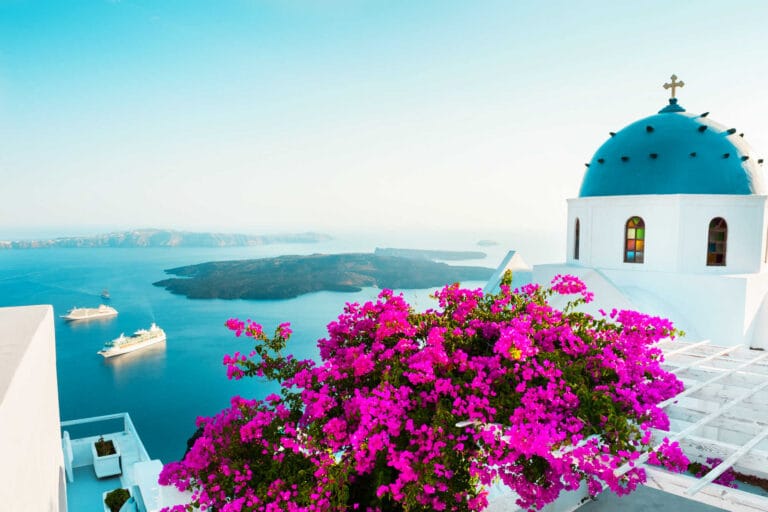
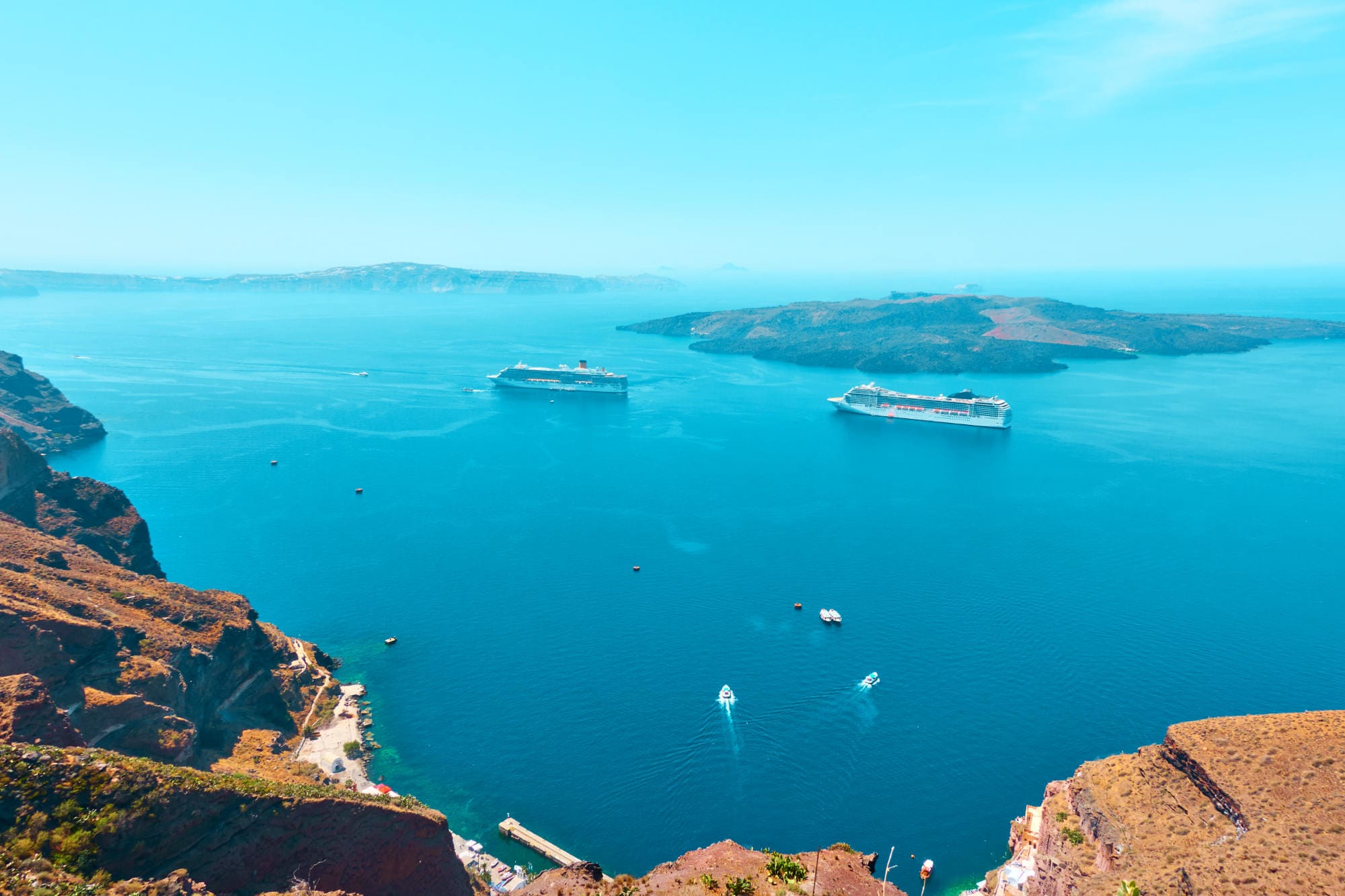
Santorini is one of the most visited islands in the world, and for a reason that no photograph fully prepares you for: the caldera — the circular bay left by a massive volcanic eruption thousands of years ago — is genuinely extraordinary in person. The scale of it, the depth of the blue water, the white and ochre cliffs dropping sheer to the surface below. Three days is enough to experience it without the island feeling like a theme park. Four days is more comfortable.
The key to a good short trip to Santorini is resisting the urge to rush. Pick two or three things to do well each day rather than attempting to cross every attraction off a list.
Day 1 — Arrive in Fira & the Caldera Path
Fly Athens to Santorini (JTR), 45 minutes. Multiple daily departures; book early for summer travel. Transfer to Fira by pre-booked hotel transfer or KTEL bus.
Check in and head straight to the caldera path. Walk north from Fira toward Imerovigli — about 4 km along the rim with unobstructed caldera views the entire route. This is your first real look at what makes the island exceptional: the sheer cliffs, the volcanic islets in the water below, the quality of the Aegean light at this latitude. Most first-time visitors skip this walk and go directly to Oia. Do the walk first. Save Oia for the end.
Dinner in Fira: one caldera-view restaurant for the occasion. The view carries a premium; pay it once and eat at local places for the rest of the trip.
Day 2 — South of the Island
Rent a car or ATV for the day. Head south first, before the heat peaks.
Perissa and Perivolos: black volcanic sand beaches on the southeastern coast. The sand absorbs heat aggressively — sandals are not optional — but the swimming is excellent and the black sand against the blue water is visually striking in a way that standard beach photographs don’t convey.
Drive to Akrotiri next: the Bronze Age settlement preserved under volcanic ash since around 1600 BC. One of the best-preserved prehistoric urban sites in Europe, well-presented under a protective roof, and consistently less crowded than the Acropolis. Allow 90 minutes.
Afternoon: wine tasting at Santo Wines or Estate Argyros, both with caldera views. The Assyrtiko grape from Santorini’s volcanic soil is genuinely distinctive — dry, mineral, unlike anything from the mainland. Stop through Pyrgos on the way back, the island’s highest village, for coffee and views without the Oia crowds.
Day 3 — Oia: Morning & Sunset
Oia before 9 AM is a different village from Oia at noon. Arrive early. The streets are quiet, the light is soft, and you can walk the alleyways and the caldera path along the northern rim without navigating tour groups. Have breakfast somewhere with a view. Browse the small galleries and ceramic shops before they fill up.
Afternoon: prepare to leave tomorrow if it’s a 3-day trip. Pack and settle the hotel bill. Return to Oia by 6:30 PM.
The sunset from the Kastro ruins at the northern end of the village is the scene that defined Santorini’s global reputation. Arrive early, find a position with a clear sightline west, and stay. The sun drops behind the island of Thirassia and turns the caldera walls gold, then orange, then deep red. Book dinner in Oia for 8:30 PM.
Day 4 (optional extension) — Ferry to Paros or Slow Morning
If you have a fourth day: take a morning ferry to Paros (1.5–2 hours) for a completely different Cycladic experience — quieter, more local, excellent beaches. Or simply spend the day more slowly on Santorini: a boat tour of the caldera (volcanic hot springs, the submerged crater, the red and white beaches by sea), a longer walk on the caldera path, a meal you’ve been meaning to revisit.
For everything the island offers, read our Santorini Travel Guide.
Option 3: Thessaloniki in 3 Days — Greece’s Most Underrated City
Thessaloniki doesn’t get the attention it deserves from international travelers, and that’s exactly what makes it a good weekend destination. Greece’s second-largest city sits at the northern end of the Aegean, has a direct international airport with connections to much of Europe, and offers something genuinely different from the Athens–island circuit: a city shaped by centuries of Byzantine, Ottoman, and Jewish history, a food culture that many Greeks consider the best in the country, and a waterfront promenade that’s one of the most pleasant urban walks in the Mediterranean.
Three days here is the right amount to understand the city without rushing it.
Day 1 — The Waterfront, Aristotelous Square & Ano Poli
Fly into Thessaloniki Makedonia Airport (SKG) — direct connections from most European hubs, 20 minutes from the city center by taxi or express bus. Check into a hotel near the waterfront or in the Ladadika district.
First afternoon: the waterfront. Thessaloniki’s promenade stretches for several kilometers along the Thermaic Gulf, anchored at one end by the White Tower — the city’s most recognizable landmark, a 15th-century Ottoman fortification that now houses a Byzantine museum. Walk it, have coffee at one of the seafront cafes, and watch the city go about its business. Thessaloniki moves differently from Athens: slower, more relaxed, more interested in pleasure than efficiency.
Late afternoon: walk up to Ano Poli — the Upper Town, the only neighborhood in Thessaloniki that survived the catastrophic 1917 fire. The streets here are Ottoman-era: narrow, cobbled, lined with timber-framed houses, small churches, and occasional views over the rooftops to the gulf below. The Byzantine walls run along the upper edge of the neighborhood.
Evening: dinner in Ladadika. The old warehouse district near the port has been converted into a restaurant and bar quarter — good food, lively atmosphere, genuinely local crowd.
Day 2 — Byzantine Monuments & the Market
Thessaloniki has the highest concentration of Byzantine monuments of any city in Greece outside Constantinople. Most visitors don’t realize this, which means the sites are often uncrowded.
Morning: the Rotunda (originally a Roman mausoleum, converted to a Byzantine church, then an Ottoman mosque — its mosaics are extraordinary), the Arch of Galerius, and the Agora. These three monuments are within ten minutes’ walk of each other and trace two thousand years of city history in a compact area.
Midday: the Modiano and Kapani markets. Thessaloniki’s covered markets are among the best in Greece — stalls selling local cheese, olives, spices, fresh fish, and the city’s famous bougasta (a warm pastry filled with semolina custard or minced meat, eaten for breakfast and found at small shops throughout the center). The market area is also where you find the best food at the most honest prices.
Afternoon: the Museum of Byzantine Culture, which holds one of the finest collections of Byzantine art in existence. The displays are intelligently curated and the building itself — designed by Kyriakos Krokos, a Pritzker-nominated architect — is worth visiting independently of its contents.
Evening: the neighborhood of Valaoritou for cocktails, then dinner back near the waterfront or in the center. Thessaloniki is known throughout Greece for its meze culture — small plates designed for sharing over long evenings. Order broadly and eat slowly.
Day 3 — Hagia Sophia, the White Tower & Departure
Morning: the Church of Hagia Sophia in the city center — not the one in Istanbul, but its predecessor and namesake, built in the 7th century and still in use as a Greek Orthodox church. The dome mosaic of Christ Pantocrator inside is one of the finest examples of middle Byzantine art in existence.
Walk to the White Tower for the view from the top — the gulf, the city, Mount Olympus on a clear day visible to the south. Then coffee on the waterfront before heading to the airport.
For the complete city guide, read our Thessaloniki Travel Guide.
Option 4: Hydra & the Saronic Gulf — An Island Escape Without the Airport
Hydra is the closest thing to a secret that a Greek island can still manage to be. There are no cars on the island — no cars, no mopeds, no motorized vehicles of any kind except the garbage truck and the fire engine. Transport is by donkey, by water taxi, or on foot. The harbor is one of the most beautiful in Greece: a horseshoe of stone houses climbing the hillsides, the water deep and clear, the only sounds the lapping of the sea and the occasional clip of hooves on stone.
Getting there from Athens takes about 90 minutes by hydrofoil from Piraeus. No domestic flight required. This makes Hydra the ideal long-weekend escape for travelers based in or passing through Athens, and one of the best-value short trips in Greece.
Day 1 — Hydrofoil from Athens & the Harbor
Take the hydrofoil from Piraeus port (Gate E8 or E9). Hellenic Seaways and Aegean Speed Lines both run the route — roughly 90 minutes to Hydra Town. Book tickets in advance for weekend travel; the boats fill up.
The approach to Hydra by sea is one of the finest arrivals in the Greek islands. The harbor opens as you round the headland: stone mansions climbing the hillside, fishing boats in the inner harbor, the clock tower above the main square. The donkeys waiting at the dock for luggage are not a tourist gimmick — they are the logistics system.
Check into your hotel (everything is carried by donkey; pack light and soft-sided). Spend the first afternoon walking the harbor front and the lanes above it. Hydra has a long association with artists — Leonard Cohen lived here for years, as did the painters who formed the core of the Hydra art scene in the 1960s — and small galleries and studios are tucked throughout the upper town.
Dinner at the harbor: fresh fish, local wine, the water right beside your table. Hydra does not have a nightlife scene in the Mykonos sense; it has long evenings over good food with nowhere particular to be.
Day 2 — Swimming, Walking & the Monasteries
Hydra has no sandy beaches in the conventional sense. Swimming is from flat rocks, from small concrete platforms, and from the sea around the harbor walls. The water is exceptionally clear.
The best swimming spots require a walk or a water taxi:
- Vlychos — about 40 minutes on foot from the harbor along the coastal path, with a small beach and a couple of tavernas. The walk itself is worth doing for the views back to the harbor.
- Bisti — on the far western tip of the island, accessible by water taxi. Rocky, remote, excellent water.
- Mandraki — the closest organized beach to town, about 20 minutes on foot, with sunbeds and a small bar.
Afternoon: walk up to the Monastery of the Prophet Elias above the town. The path takes about 40 minutes and the view from the monastery over the island and the Saronic Gulf is the best panorama on Hydra. The monastery is still active — dress appropriately.
Evening: the harbor after sunset. Hydra town in the evening, when the day-trippers from Athens have left on the afternoon boats, is quieter and more itself. The restaurants are less rushed, the harbor is calmer, and the island shows its real character.
Day 3 — Morning on Hydra & Return to Athens
An early morning on Hydra — before the first hydrofoil arrives from Athens and the day begins — is the island at its best. Coffee at the harbor, the water still, the cats on the dock walls, the fishing boats coming in. No cars. No noise. Just the sea.
Take a mid-morning or early afternoon hydrofoil back to Piraeus. You’ll be back in central Athens within two hours of leaving the island — enough time for a final dinner in the city before your flight home.
A 4-day version adds Spetses or Poros — both reachable by ferry from Hydra and offering a slightly different experience. Spetses has more beaches; Poros is almost connected to the Peloponnese mainland and offers easy access to the ancient site of Troezen.
How to Choose the Right Greece Weekend Getaway
Each option suits a different kind of traveler and a different kind of trip. Here’s a quick framework:
- Choose Athens if: this is your first time in Greece, you want the full ancient history experience, or you’re connecting to a longer trip and want to start with the most accessible destination.
- Choose Santorini if: you want the iconic visual experience, you’re traveling as a couple and want something romantic, or you’ve already seen Athens and want to add an island.
- Choose Thessaloniki if: you’re returning to Greece and want something different from the islands circuit, you have a strong interest in Byzantine or Ottoman history, or you’re a serious food traveler.
- Choose Hydra if: you want a genuine island escape without a domestic flight, you prefer quiet over nightlife, or you’re combining it with a couple of days in Athens on either end.
Practical Tips for Your Greece Weekend Getaway
Flights
Athens and Thessaloniki both have good direct connections from most European cities. Santorini has direct international connections in summer (mainly from the UK, Germany, and Scandinavia) but often requires a connection via Athens outside peak season. Check both options before booking — a direct flight to Santorini is significantly more convenient on a short trip than flying Athens and connecting.
Best time for a long weekend
May, June, September, and early October are the strongest months for short Greece trips. The weather is warm and reliable without July–August heat extremes, flights are frequent, and prices — especially for hotels — are more manageable than peak summer. Santorini in particular is worth visiting in shoulder season: the caldera views are identical, the crowds are smaller, and the island has more room to breathe.
Getting around
Athens is almost entirely walkable for the historic center. Santorini requires a car or ATV for at least one day to reach the south of the island. Thessaloniki is compact and flat — the center is walkable and taxis are inexpensive. Hydra requires no transport at all beyond your own feet and the occasional water taxi.
Pack for the length of the trip
A carry-on and a day bag is the practical maximum for a 3–4 day trip. You’re not moving between multiple destinations, so there’s no need to overpack for contingencies. Light layers for evenings, good walking shoes, a swimsuit. That covers most of it.
Book ahead for short trips
On a long weekend, losing half a day to a sold-out museum or a fully booked restaurant is a bigger problem than on a two-week trip. Book the Acropolis tickets in Athens in advance. Book ferry tickets to Hydra for the weekend you’re traveling. Make dinner reservations in Oia for sunset evening. The smaller the window, the more it pays to have the key things locked in before you arrive.
Explore More About Greece
- 7 Days in Greece: The Perfect One-Week Itinerary
- 10 Days in Greece: The Perfect Itinerary
- Athens Travel Guide: Everything You Need to Know
- Athens in 2–3 Days: The Perfect Itinerary
- Santorini Travel Guide: Everything You Need to Know
- Santorini Itinerary: 3–5 Days
- Thessaloniki Travel Guide: Greece’s Second City
- Getting Around Greece: Ferries, Flights & Cars
- When Is the Best Time to Visit Greece?
FAQ
Can you do Greece in a long weekend?
Yes — if you pick one destination and commit to it. Athens, Santorini, Thessaloniki, and Hydra all work well as 3–4 day trips. The mistake is trying to combine multiple islands or Athens plus an island on a short trip. The travel time eats into what little time you have.
Is 3 days in Greece enough?
Three days is enough for a single destination: one city or one island. It won’t give you a complete picture of Greece, but it’s enough to genuinely experience one place rather than rushing through several. Athens in 3 days, for instance, covers the Acropolis, the museum, four or five neighborhoods, and a range of the city’s food. That’s a real trip.
What is the best Greek island for a short break?
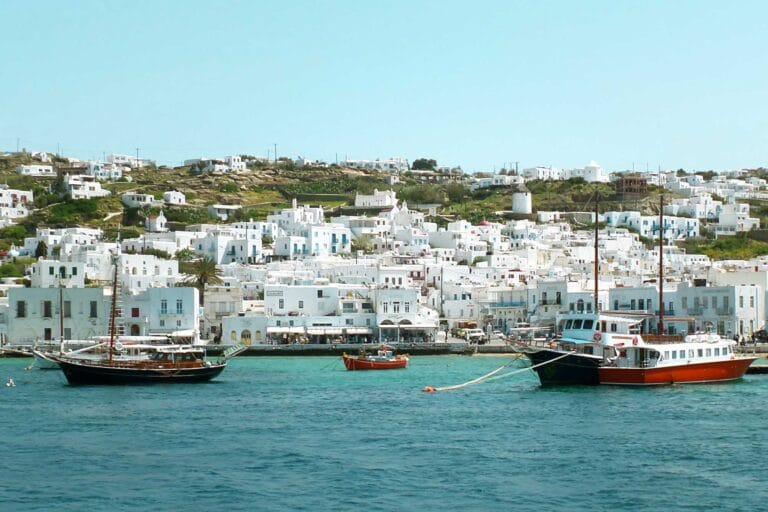
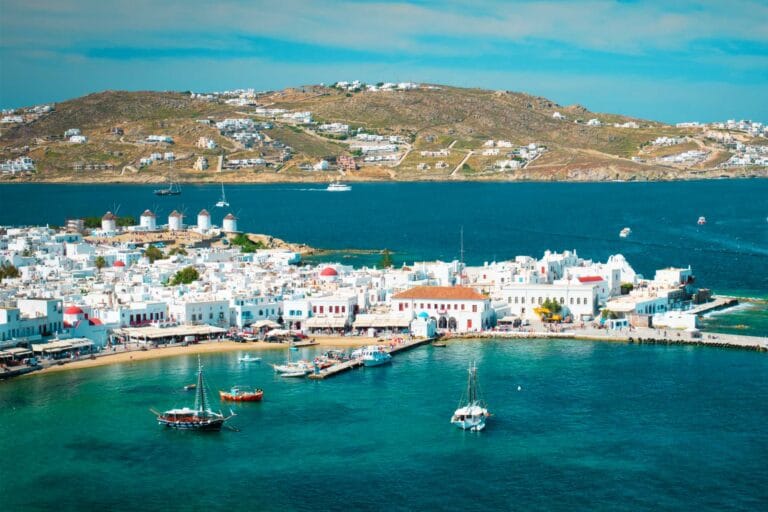
Santorini for drama and romance. Hydra for quiet and authenticity without a domestic flight. Mykonos for beaches and nightlife if that’s the priority. For a short trip specifically, Hydra has a logistical advantage — no domestic flight required, just a 90-minute hydrofoil from Athens Piraeus.
Is Athens worth visiting for just 3 days?
Absolutely. Athens is arguably the best short-break destination in Greece precisely because it’s so compact and accessible. The Acropolis, the museum, Plaka, Monastiraki, Psiri, Koukaki — all within walking distance of each other, all rewarding attention. Three days is the sweet spot: enough to see the major sites and still have time to explore without a schedule.
How far is Hydra from Athens?
Hydra is about 90 minutes from Piraeus port by hydrofoil. Piraeus is about 30–40 minutes from central Athens by metro (line 1, green line) or taxi. Total journey time from central Athens to Hydra: roughly 2 to 2.5 hours door to dock.
Is Thessaloniki worth visiting?
For travelers who want something different from the standard Greece itinerary, Thessaloniki is one of the strongest recommendations in the country. It has extraordinary Byzantine architecture, the best food culture in Greece by many measures, a beautiful waterfront, and a fraction of the tourist traffic of Athens or Santorini. The city is genuinely underrated on the international circuit.
What is the cheapest short trip to Greece?
Thessaloniki and Athens are significantly less expensive than Santorini and Mykonos. Hydra sits somewhere in between — the island itself is not cheap, but the cost of getting there is low compared to a domestic flight to the Cyclades. For a budget-conscious short trip, Athens or Thessaloniki offer the most for the money.
Do I need a car for a weekend trip to Greece?
It depends on the destination. Athens: no — the center is walkable. Santorini: yes for at least one day, to reach the south of the island and Akrotiri. Thessaloniki: no — the city is compact and flat. Hydra: there are no cars on the island at all. Plan transport accordingly and book a car in advance for Santorini.