Romantic Greece Trip: The Perfect Honeymoon Itinerary
Greece earns its reputation as a honeymoon destination not through marketing but through an accumulation of specific moments: the caldera at Santorini from a private terrace at seven in the morning before anyone else is awake. Dinner at a table over the water in a Paros fishing village where the menu is whatever came off the boats that day. Walking through the alleyways of Athens at night with the Parthenon lit above the rooftops. The quality of the Aegean light in the late afternoon, which turns everything gold and makes even a glass of white wine and a view over the water feel like something significant.
This itinerary is built for couples who want the full emotional register of Greece — not just the iconic images but the slower, quieter moments that photographs don’t capture. It runs Athens (two nights) → Santorini (four nights) → Paros (three nights), finishing with a return to Athens for departure. Ten days total: long enough to move unhurriedly between destinations, short enough to stay focused.
We’ve designed this around the choices that make a honeymoon genuinely different from a regular holiday. Private experiences over group tours. Boutique hotels with terraces over large resort pools. Restaurants worth booking a week in advance over anything that works for walk-ins. The details that make the difference.
Note: This page contains affiliate links. We may earn a small commission at no extra cost to you when you book through our links. This helps us keep creating free travel guides.
Why Greece for a Honeymoon
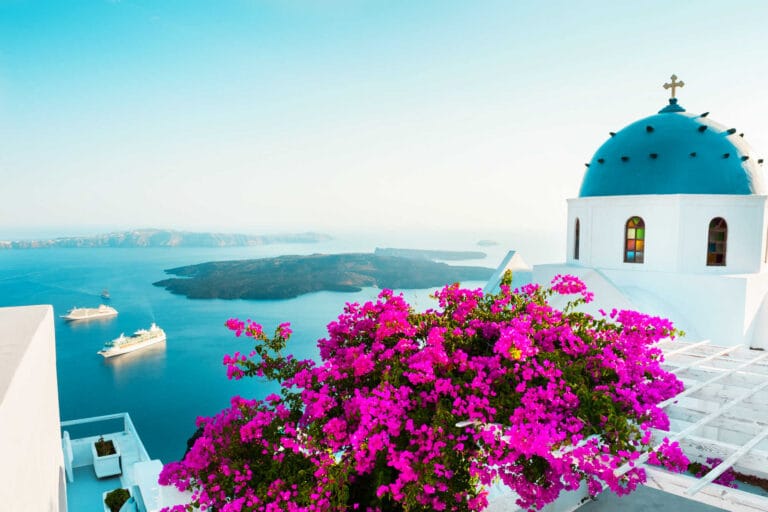
The case for Greece as a honeymoon destination rests on several things that other Mediterranean alternatives don’t offer in the same combination. The physical beauty of the Cyclades is exceptional and immediate — the caldera at Santorini is one of the most dramatic natural landscapes in Europe. The food culture is built around sharing long meals at tables by the water, which is the natural rhythm of a honeymoon. The hotel category of cave houses and cliff-side suites cut into the volcanic rock of Santorini has no equivalent anywhere else. And the Aegean light — the particular quality of late-afternoon sun on whitewashed stone and dark blue water — creates an atmosphere that is romantic without any effort on your part.
The itinerary below pairs Santorini, which offers that dramatic visual experience, with Paros, which offers what Santorini increasingly cannot: genuine quiet, uncrowded beaches, and a pace that lets you forget what day it is. The two islands together make a more complete honeymoon than either one alone.
Athens at the beginning is not an afterthought. Two nights in the city gives the trip a sense of arrival — dinner on a rooftop with the Acropolis lit above you is a particular kind of introduction to Greece that sets the right tone for everything that follows.
Days 1–2: Athens — The City Before the Islands
Athens is rarely the centerpiece of a Greece honeymoon, but treated as the opening act it plays that role well. Two nights in the city gives you time to recover from the flight, experience the Acropolis at the right hour, eat at some genuinely good restaurants, and arrive on Santorini already relaxed rather than still travel-tired.
Day 1 — Arrive & the First Evening
Fly into Athens International Airport (ATH). Take a taxi or pre-booked transfer directly to your hotel — for a honeymoon, skip the express bus and arrive properly. Check into a boutique hotel in Koukaki, Monastiraki, or Psiri. For a honeymoon specifically, look for hotels with rooftop terraces, Acropolis views, or both. The difference between a standard Athens hotel and one of the better boutique options is significant and worth the cost.
No agenda for the first evening. Walk through Plaka in the late afternoon — the oldest neighborhood in Athens, narrow streets, the Acropolis overhead. Find a restaurant by instinct rather than reservation. The quality floor for food in Plaka and Monastiraki is high enough that walking until somewhere looks right is a valid strategy on night one. Save the reservation for tomorrow.
Evening: a drink on your hotel rooftop or at one of the Monastiraki rooftop bars with the Acropolis in view. The Parthenon lit against a dark sky over Athens is one of those images that works in person in a way it doesn’t in photographs — the scale of it, the presence of it above the city, is felt differently when you’re standing in the city below.
Day 2 — The Acropolis & a Proper Dinner
Tickets online, arrival at the gate by 8:00 AM. The Acropolis in the first hour of the morning — before the organized tours arrive, before the heat builds, in the light that comes low and golden from the east — is a different experience from the Acropolis at 11 AM. The Parthenon, the Erechtheion, the view over Athens from the top. Allow 90 minutes on the hill.
Walk down to the Acropolis Museum immediately after. The building is exceptional: designed with excavated ruins visible through glass floors, the top floor open on all sides with the Acropolis itself visible through full-height windows. Two hours here. Then coffee at one of the Koukaki cafés nearby, which have been colonized by an excellent third-wave coffee scene.
Afternoon: slow. The Monastiraki Flea Market for an hour of wandering, then lunch at a proper mezze taverna — order broadly and eat slowly. Spend the late afternoon walking through Thisio or Psiri at your own pace.
Evening: book a table at one of the better restaurants in Psiri or near the Acropolis. Athens has a restaurant scene that goes well beyond tourist-center tavernas — there are genuinely exceptional tasting menus and modern Greek cooking that hold their own against any European capital. This is the night to find one. Pack after dinner.
For more on the city, read our Athens Travel Guide.
Days 3–6: Santorini — Four Nights on the Caldera
Four nights is the right allocation for a honeymoon on Santorini. Three nights feels rushed; five starts to reveal the island’s limitations as a destination for people who have already done most of what it offers. Four nights gives you time to go slowly, see the island on its own terms, and have the Oia sunset experience properly rather than as a checkbox.
Where you stay on Santorini matters more than almost anywhere else in Greece. The caldera-view cave houses cut into the volcanic cliffs — private terraces with plunge pools, whitewashed walls, the caldera dropping away below — are the defining hotel experience of the island. Book one. The difference between a caldera-view cave suite and a standard hotel room on Santorini is the difference between two entirely different trips.
Day 3 — Arrive & the First Caldera View
Morning flight Athens to Santorini (JTR), 45 minutes. Pre-book a hotel transfer — taxis are limited at the small airport and you’ve just started your honeymoon; this is not the moment to queue in the heat. Check in, change, step out onto the terrace.
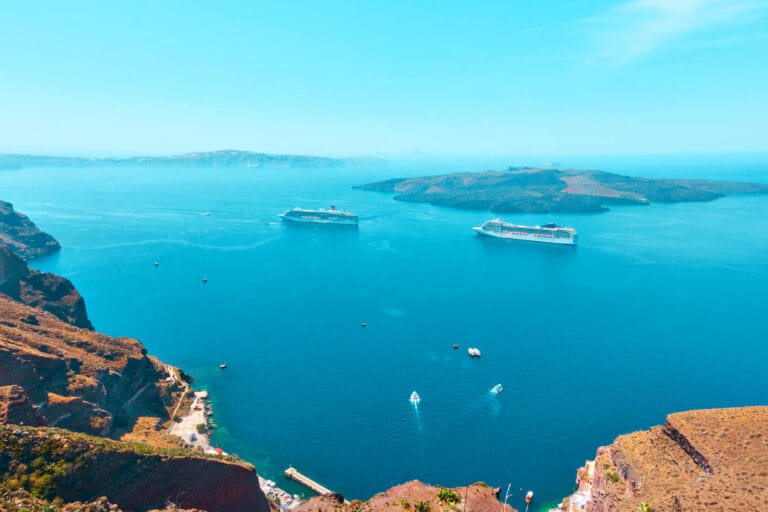
The first look at the caldera from your own private terrace is the moment the island earns its reputation. The scale of the volcanic bay — the width of it, the depth of the water, the sheer cliffs — reads completely differently in person than in any photograph. Take your time with it.
No itinerary for the first afternoon. Order something from the hotel, sit on the terrace, let the jet lag and travel haze clear. This evening: dinner at a caldera-view restaurant in Fira. Pay the view premium once. You’ll eat at more interesting places for the rest of the stay, but the first caldera dinner deserves the setting.
Day 4 — The South: Beaches, Akrotiri & Wine
Rent a car or ATV — essential for reaching the south of the island properly. Leave early, before the heat peaks.
Perissa and Perivolos: black volcanic sand beaches on the southeastern coast. The sand absorbs heat intensely — sandals required — but the swimming is excellent and the visual contrast of black sand against Aegean blue is striking in a way that no other Greek beach replicates. Swim, have a long coffee at a beach bar, let the morning go.
Drive to Akrotiri for the afternoon: the Bronze Age settlement preserved under volcanic ash since around 1600 BC. The site is genuinely fascinating and far less crowded than the Acropolis. The artifacts here — particularly the famous frescoes, now in the Athens Archaeological Museum — are among the finest examples of prehistoric art in Europe. Allow 90 minutes.
Late afternoon: wine tasting at Estate Argyros in Episkopi Gonia or at Santo Wines above Pyrgos. Santorini’s Assyrtiko is one of the most distinctive white wines in Europe — the volcanic soil, the basket-trained vines, the mineral character of the grape. One or two glasses with the caldera in view is the right way to end the afternoon.
Stop through Pyrgos village — the island’s highest point — for sunset views from the Byzantine fortress without the Oia crowds. Dinner in Pyrgos or back at a caldera restaurant.
Day 5 — Slow Day: The Caldera Path & Imerovigli
Today has no fixed schedule. That is the point.
Walk the caldera path north from Fira to Imerovigli — about 4 km with uninterrupted caldera views the entire route. Imerovigli sits at the highest point of the caldera rim: the views from here are wider than from Oia and the atmosphere is quieter. The Skaros Rock — a volcanic promontory that juts out into the caldera from Imerovigli — has a 45-minute walking trail around its perimeter with views that are as dramatic as anything on the island.
Lunch at a caldera-view restaurant in Imerovigli or Firostefani. Afternoon: back at the hotel. This is the day to use the private terrace and the plunge pool properly — to sit with a book or without one, to watch the light change on the caldera, to do nothing in particular with the specific luxury of having nowhere to be.
Book the sailing trip or catamaran excursion for tomorrow morning. If you want a private sunset boat charter tonight instead of the Oia sunset experience, this is the day to do it. A private catamaran at sunset — on the water, the caldera walls rising around you, the hot springs accessible by swimming — is the most completely romantic version of the Santorini experience and worth the cost on a honeymoon.
Day 6 — Oia: Morning & the Sunset
Arrive in Oia by 8:30 AM. Before the cruise ship day-trippers arrive, the village is what it was before tourism remade it: quiet, beautiful, the light on the white buildings extraordinary in the early morning. Walk the alleyways without crowds. Have breakfast at a café with a caldera view. Browse the small galleries — Oia has a genuine concentration of quality art and ceramics.
Spend the day moving slowly between the village, the caldera path, and lunch somewhere with a view.
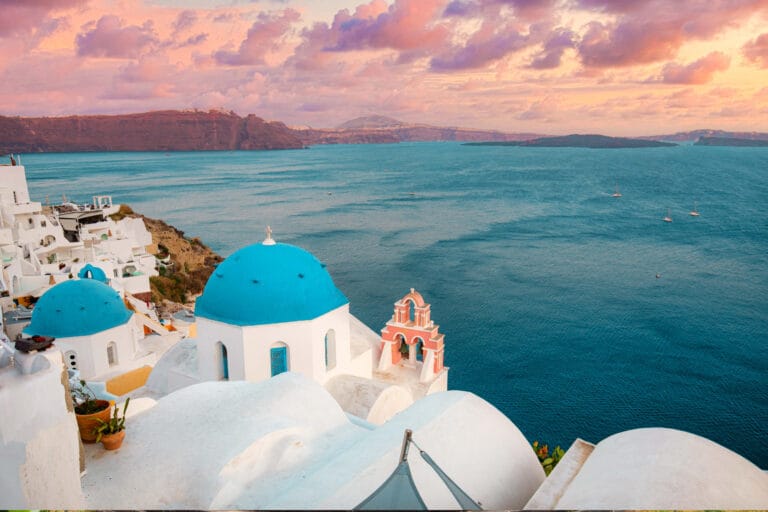
By 6:30 PM: find your position at the Kastro ruins at the northern end of the village. The Oia sunset is one of the most visited moments in European travel, and the crowds are real. Arrive early, secure a spot on the castle wall, and stay. The sun drops behind the island of Thirassia and the light that follows — the caldera walls going from white to gold to amber to deep red in the space of twenty minutes — is exactly what the photographs suggest and more. This is the moment Santorini was built for. Be there for it.
Dinner in Oia afterward. Book your restaurant reservation two or three days in advance. Oia has several genuinely exceptional restaurants — the kind of dinner that belongs in a honeymoon memory and not just the category of ‘good meals we had.’
For everything Santorini offers, read our Santorini Travel Guide and our guide to Santorini for Couples.
Days 7–9: Paros — The Quieter Island
Paros is the second half of this honeymoon, and it plays a different role from Santorini. Where Santorini is dramatic and visual and made for the kind of photographs you frame, Paros is quieter, more local, and better for the kind of days where you don’t take many photographs at all. It has beautiful Cycladic architecture, some of the best beaches in the archipelago, genuinely excellent food, and the kind of unhurried atmosphere that is increasingly hard to find on the islands that have become famous.
Three nights here after four on the caldera resets the pace of the trip. You arrive from Santorini’s organized glamour and find something more like Greece used to feel — or at least closer to it.
Day 7 — Ferry from Santorini & Parikia
Morning high-speed ferry from Santorini to Paros — about 1.5 to 2 hours. The ferry ride between the Cyclades, with the volcanic islands visible behind and the Paros headland appearing ahead, is genuinely pleasant. Sit on deck.
The port at Parikia is the main town, and the old town center is a five-minute walk from the dock. Check into your hotel — for a honeymoon on Paros, look for a boutique guesthouse in the old town or a small design hotel in Naoussa on the north coast. Both options have more character than the island’s larger resort properties.
First afternoon: the Panagia Ekatontapiliani — the Church of a Hundred Doors — in the center of Parikia. One of the oldest and best-preserved Byzantine churches in Greece, built in the 4th century, still in active use. Spend an hour here; the interior is genuinely beautiful and consistently uncrowded.
Walk through the kastro — the old Venetian fortress — and out to the fishing harbor. Lunch at a harbor taverna: the fish is fresh and the tables are over the water. This is the unhurried version of Paros.
Evening: the old town alleyways at night. Paros has a good bar and restaurant scene in the center of Parikia — quieter and more intimate than Mykonos, with a genuinely local crowd mixed in. Have dinner somewhere the kitchen is visible and the menu handwritten.
Day 8 — Naoussa & the North Coast
Drive or take a taxi to Naoussa on the north coast — about 12 km from Parikia. Naoussa is a working fishing village that has absorbed tourism without surrendering its character: a small harbor lined with wooden fishing boats, whitewashed houses climbing behind it, and tavernas that serve whatever came off the boats that morning. The harbor in the late afternoon, when the fishing boats return and the light comes low across the water, is one of the prettiest scenes in the Cyclades.
Beaches near Naoussa for the morning: Kolymbithres, on the bay south of Naoussa, has extraordinary granite rock formations rising from the sea — smooth, rounded, sculpted by erosion into shapes that look designed. The water between the rocks is clear and sheltered. Monastiri Beach, on the northern headland, is quieter and more remote. Santa Maria to the northeast has longer sand and a windsurf scene.
Lunch in Naoussa: at one of the harbor-front restaurants, order the catch of the day grilled simply with olive oil and lemon. This is the Paros version of a perfect lunch — no fuss, exceptional ingredients, the fishing boats in view.
Afternoon: the village of Lefkes in the island’s interior. Paros has a mountainous center that most beach-focused visitors never see — Lefkes is the traditional capital of the island, a whitewashed village at altitude with marble-paved streets and views over the eastern coast. The walk from Lefkes down the Byzantine marble path to the coastal village of Prodromos (about 90 minutes one way) is one of the best short hikes in the Cyclades.
Return to Naoussa for dinner. Book a table at one of the harbor-front restaurants for the evening — the kind of meal that lasts three hours because there is no reason to leave.
Day 9 — Last Beach Day & Evening Departure
A final full day on Paros. Use it for whichever beach most appealed the previous day, or explore the south of the island — Golden Beach (Chrisi Akti) on the southeastern coast is one of the most famous on the island: a long arc of fine golden sand with clear shallow water, popular for windsurfing in the afternoon when the meltemi wind picks up.
Spend the afternoon back in Parikia. The old town in the late afternoon — the light on the whitewashed walls, the cats on the stone steps, the smell of the sea two streets away — is the image of the Cyclades that stays with you long after the Instagram posts have been forgotten.
Evening ferry back to Athens (Piraeus) — about 3.5 to 4 hours on a standard ferry, less on a high-speed service. Or stay the night in Paros and fly back in the morning.
For more on the island, read our Paros & Naxos Guide.
Day 10: Return to Athens & Departure
If you took the overnight ferry, you arrive in Piraeus early morning and have several hours in Athens before your international flight. Use them: a final coffee at a rooftop café with the Acropolis view, a walk through Monastiraki in the morning quiet before the market opens, one last glass of something cold at the airport before the gate.
If you flew back the night before and stayed in Athens, a slow morning in the city is the right ending. Athens Airport (ATH) has good international connections throughout the day.
Romantic Experiences Worth Booking in Advance
These are the experiences that separate a good Greece honeymoon from an exceptional one. All require advance booking.
Private sunset sailing on the Santorini caldera
A private catamaran charter for two — typically 4 to 5 hours, departing late afternoon — takes you around the caldera, to the volcanic hot springs (you swim to them), to the red and white beaches accessible only by sea, and positions you on the water for sunset. With a private charter, you set the pace. This is the most romantic version of the Santorini experience and worth the cost on a honeymoon. Book through the hotel concierge or directly with charter operators in Ammoudi Bay.
Wine tasting at a caldera vineyard
Estate Argyros and Domaine Sigalas both offer private tastings by appointment — not the group experience at the tasting room counter, but a guided visit to the vineyards, an explanation of the volcanic soil and the basket-trained Assyrtiko vines, and a tasting with the caldera or the sea as backdrop. Book directly with the estate at least a week in advance.
Dinner at an Oia restaurant with reserved sunset seating
The best restaurants in Oia have a small number of tables with direct caldera views and sunset sightlines. These tables book weeks in advance in summer. If you want the combination of the Oia sunset and dinner at a genuinely good restaurant, this requires planning. Decide which evening you want it, book two to three weeks ahead, and build the rest of that day around it.
A morning in Parikia before the day-trippers arrive
This one requires no booking — only an early alarm. Parikia old town at 7:30 AM, before the day-trippers from the cruise ships arrive, is a completely different place: quiet streets, cats on the doorsteps, the smell of bread from the bakery, the harbor entirely still. Walk without a plan. This kind of unscheduled morning is what makes the Cyclades worth traveling to, and Paros offers it in a way that Santorini and Mykonos mostly no longer can.
A cooking class or food tour in Athens
Athens has several well-run private food experiences — market tours combined with cooking classes, olive oil and wine tastings, street food walks through neighborhoods the standard tourist circuit misses. A good one takes three to four hours and is a genuinely engaging way to understand the food culture that will be feeding you for the next ten days. Book in advance; the better ones have limited capacity.
Where to Stay: Hotels for a Greece Honeymoon
Athens
Look for boutique hotels with Acropolis views and rooftop terraces. The best options are concentrated in Koukaki, Monastiraki, and around the Thissio area. Prioritize hotels with design character over large chain properties — the boutique hotel category in Athens has improved considerably and the best options hold their own against any European capital.
Santorini
The caldera-view cave house is the defining accommodation of a Santorini honeymoon. These are the whitewashed suites cut into the volcanic cliffs of Oia, Imerovigli, and Fira, most with private terraces and many with private plunge pools. Oia is the most famous location and the most expensive; Imerovigli has equally dramatic caldera views with slightly fewer tourists and often better value. Book at least three to four months in advance for peak summer. For a honeymoon specifically, request a suite or superior room with a private outdoor space — the difference between a room with a shared terrace and a suite with a private plunge pool is significant.
Paros
The strongest honeymoon options on Paros are small boutique guesthouses in Parikia’s old town and design hotels in Naoussa. Both offer more intimacy and character than the island’s larger resort properties. A guesthouse in the old town puts you in the lanes and alleyways that are the best part of Paros; a Naoussa hotel puts you ten minutes from the best harbor scene on the island. Both are worth considering depending on which aspect of Paros you want to center.
Practical Tips for a Greece Honeymoon
Best time to go
May, June, and September are the best months for a Greece honeymoon. The weather is warm and reliable, the light is exceptional, and the islands have more room to breathe than in July and August. Santorini in peak summer — particularly late July and August — is genuinely crowded, which affects the experience of the caldera path, Oia village, and the more scenic restaurants. June and September offer the same scenery and weather with significantly fewer people.
Tell your hotels it’s your honeymoon
This is not a guarantee of an upgrade, but it is noted and often results in small gestures — a bottle of wine, a preferred table at dinner, a room with a better view within the same category. The hospitality culture in Greece is genuinely warm and honeymooners are treated well. Mention it at booking and confirm it on check-in.
Budget
A Greece honeymoon at the level this itinerary targets — caldera cave suites in Santorini, boutique hotels elsewhere, private sailing, quality restaurant meals — is a meaningful investment. A couple should expect to budget €400–700+ per day across the trip, with the highest daily cost on Santorini. Budget by destination: Santorini is the expensive island, Paros is significantly more affordable, Athens sits between the two. Book the Santorini accommodation early — the best cave suites are limited and sell out months ahead of peak season.
Book flights and ferries early
Athens–Santorini is one of the most heavily booked domestic routes in Greece. For June travel, book by February or March at the latest. For September, April. The Santorini–Paros ferry is less competitive but still worth booking in advance for summer travel. All bookings are transferable if your dates shift; the cost of rebooking is lower than the cost of paying late-booking prices.
Pack for the experience
Santorini and Paros both involve a lot of walking on uneven cobblestone surfaces. Bring shoes that are comfortable on stone for several hours at a stretch. One or two dressier outfits for the reservation restaurants. Linen and light cotton cover the rest. A light layer for evenings — even in summer, the Aegean evening can be breezy. Quality sunglasses; the light here is intense and beautiful and you’ll want to actually see it.
Explore More About Greece
- Santorini for Couples: A Romantic Escape
- Best Hotels in Santorini: Where to Stay
- Santorini Travel Guide: Everything You Need to Know
- Santorini Itinerary: 3–5 Days
- Paros & Naxos: A Guide to Two Hidden Gems
- Athens Travel Guide: Everything You Need to Know
- Yacht & Sailing Charters in Greece: Complete Guide
- 2 Weeks in Greece: The Ultimate Trip Plan
- Best Greek Islands for Couples: Romance & Relaxation
- When Is the Best Time to Visit Greece?
FAQ
Is Greece a good honeymoon destination?
Greece is one of the best honeymoon destinations in Europe, particularly for couples who want a combination of extraordinary natural scenery, exceptional food, and genuine privacy. The caldera-view cave suites of Santorini are among the most romantic hotel experiences in the world. Paros offers what Santorini increasingly cannot: quiet, uncrowded beaches and a pace that allows real relaxation. Athens gives the trip a sense of arrival and cultural depth that pure beach destinations lack.
Which Greek island is best for a honeymoon?
Santorini is the iconic choice and earns it: the caldera, the cave suites, the Oia sunset. But it works best when paired with a quieter island — Paros or Naxos — that provides the slower, more intimate experience that Santorini’s popularity makes difficult. If you want a single island rather than a combination, Paros is the insider recommendation: excellent beaches, beautiful village architecture, exceptional food, and none of the mass-tourism crowding of Santorini in peak season.
How many days do you need for a Greece honeymoon?
Ten days is the sweet spot for the Athens–Santorini–Paros itinerary in this guide. Seven days is possible but feels rushed on Santorini; two weeks allows you to add Mykonos, Crete, or the Ionian islands for a completely different landscape and register. Ten days gives you time to go slowly at each stop without sacrificing any of them.
What is the best time of year for a Greece honeymoon?
June and September are the strongest months. Weather is warm and settled, the Aegean light is exceptional, and the islands are significantly less crowded than July and August. September in particular — warm sea, cooler evenings, the summer crowds gone — is the month that regular Greece travelers keep for themselves. Avoid late July and August on Santorini if crowds affect your experience; the caldera views are identical but the queue for the Oia cable car is not.
How much does a Greece honeymoon cost?
At the level described in this guide — caldera cave suites, private sailing, good restaurants — a couple should budget €5,000–10,000+ for ten days including international flights. The wide range reflects accommodation choices: a standard caldera-view room in Santorini sits at a different price point than a suite with a private plunge pool. The rest of the trip — Paros and Athens — is significantly more affordable than Santorini. Book accommodation and the key experiences early; last-minute availability in the premium category essentially doesn’t exist in peak season.
Should I book a private tour or group tour in Santorini?
For a honeymoon: private, always. The caldera sunset sailing, the wine tasting, any organized excursion — the private version costs more and is worth every euro. The difference between a private catamaran at sunset and a group boat with twenty other tourists is the difference between a honeymoon memory and a shared tourist experience. Santorini’s operators all offer private charter options; ask for them specifically.
Is Paros romantic enough for a honeymoon?
Paros is genuinely romantic in a way that is quieter and more sustainable than Santorini’s showier version. The fishing harbor in Naoussa at sunset, a long dinner on the terrace of a harbor restaurant, a morning walk through the Parikia old town before anyone is awake — these are the kinds of moments that define a honeymoon in memory. Paros doesn’t have Santorini’s drama, but it has something more rare: actual peace.
Do I need to rent a car for a Greece honeymoon?
In Athens: no. In Santorini: for one day to reach Akrotiri and the south coast beaches, yes — an ATV or small car for that specific day is useful. In Paros: a scooter or small car for the Naoussa and beach days is helpful but not essential if you’re comfortable with taxis. The ferry connections between islands handle themselves; the car question is mainly about day-trip freedom within each island.