
Plan Your Trip to Greece: All the Resources You Need in One Place
Plan your trip to Greece the right way — because Greece involves more moving parts than most destinations. You are not booking one hotel in one city — you are coordinating flights, ferries between islands, car rentals on larger islands, accommodation across multiple stops, and a handful of experiences that need to be reserved ahead. Done well, the logistics fade into the background. Done carelessly, you spend half your holiday problem-solving instead of sitting on a terrace watching the Aegean turn orange.
This page is your planning hub. Everything you need to organise a Greece trip — from the first ferry booking to travel insurance — is here, with a dedicated guide for each topic. Work through the sections in order if you are starting from scratch, or jump directly to what you need.
Greece rewards preparation. The travellers who build the trip they imagined are almost always the ones who spent an hour with a good guide before they started clicking ‘Book’.
*Note: This page contains affiliate links. We may earn a small commission at no extra cost to you when you book through our links. This helps us keep creating free travel guides.*
Before You Book: Start Here

If this is your first time planning a Greece trip, two things are worth doing before anything else.
First, decide when you are going. The month you choose shapes everything: how much you pay for accommodation, how crowded the islands are, and what the weather actually delivers. September is the most consistently recommended month by experienced Greece travellers — warm sea, thinner crowds, lower prices. But every season has its logic, and the full breakdown is in our timing guide.
→ When Is the Best Time to Visit Greece?
Second, build your itinerary before you book anything else. Ferry schedules, island sequences, and the logic of getting from A to B without wasting a day — all of this needs to be sorted before you start reserving accommodation. Our ready-made itineraries solve this for you across every trip length.
→ Browse All Greece Itineraries
→ How to Plan a Trip to Greece: A Step-by-Step Guide
Car Rentals in Greece
On the larger Greek islands, a car is not a luxury — it is how you actually see the place. Crete, Rhodes, and Kefalonia are all islands where public transport covers the main towns and leaves most of the good beaches, inland villages, and viewpoints unreachable without wheels. On smaller islands like Santorini or Mykonos, a car is less necessary, but an ATV or scooter fills the same role.
What You Need to Know
- Book in advance for July and August. Rental vehicles on popular islands sell out. Leaving it until you arrive means limited choice and inflated walk-up rates.
- Most rentals require a credit card for the security deposit, not a debit card. Confirm this with your chosen company before booking.
- Check the insurance coverage carefully. Collision damage waiver (CDW) is usually included, but excess amounts vary. Supplemental coverage is often worth it for peace of mind on narrow island roads.
- Non-EU visitors should carry an International Driving Permit alongside their national licence. Some rental companies require it; others do not. Bringing it removes any ambiguity.
- Fuel is your responsibility. Return the car with the same fuel level you received it. Rental company refuelling charges are expensive.
On Crete especially, a car unlocks the island entirely — gorge hikes, remote south-coast beaches, mountain villages, Venetian harbours on the western coast. Budget at least 4–5 days on the island if you are renting; anything less and you will leave wishing you had more time.
🚗 Best Car Rentals in Greece: How to Choose & Book
Which companies to trust, what the small print actually means, and how to avoid the most common rental pitfalls — with our top picks by island.
→ Read the guide: Best Car Rentals in Greece
Hotels & Accommodation

Accommodation in Greece is where the trip is won or lost. The right hotel in the right location transforms an island stay. The wrong one — booked in haste because the price looked good — means spending every evening trying to get somewhere worth being.
The range is genuinely extraordinary: cave-cut suites on the Santorini caldera, centuries-old captain’s mansions converted into boutique hotels on Hydra, family-run guesthouses in Cretan olive groves, private villas with infinity pools on Mykonos. Every budget level and travel style has an excellent option in Greece — the key is matching the type of accommodation to the island and to what you are actually there for.
When to Book — by Island
| What | Our Recommendation |
| Santorini caldera hotels | 6–9 months ahead for July–August. The best cliff-edge rooms sell out that far in advance. |
| Mykonos boutique hotels | 4–6 months ahead for peak season. Prices increase sharply closer to the date. |
| Crete, Rhodes, Naxos, Paros | 2–3 months is usually sufficient. Best properties still book early. |
| Athens | 4–6 weeks is fine outside major events. More stock than the islands. |
| Shoulder season (May–June, Sep–Oct) | 2–4 weeks in advance. Far more availability and noticeably lower prices. |
Location within the island matters as much as the hotel itself. On Santorini, the cliff villages of Oia and Fira are where you want to be — not the east-coast beach resorts, which look identical to resorts anywhere in the Mediterranean. Read the map carefully before booking.
🏨 Best Hotels in Greece: Top Picks by Region
Our curated hotel recommendations across Santorini, Mykonos, Crete, Rhodes, and Athens — covering boutique stays, family resorts, and private villa options.
→ Read the guide: Best Hotels in Greece
Tours & Excursions
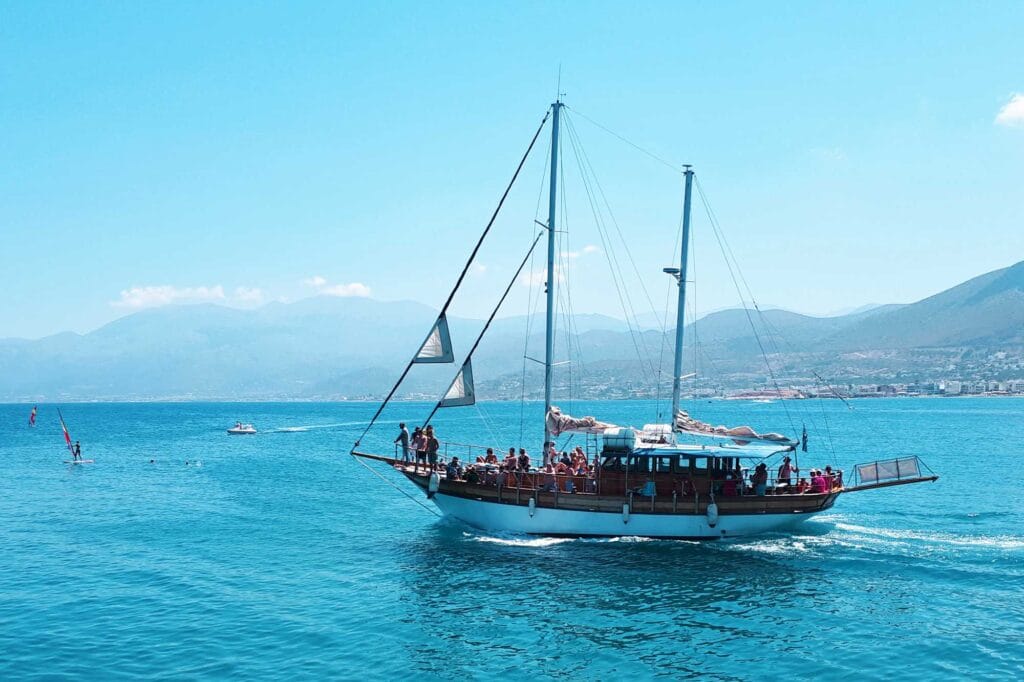
Greece is one of those destinations where some of the best experiences are not things you stumble into — they are things you book. A private catamaran tour around Santorini’s caldera at sunset. A small-group food tour through Athens’s Central Market. A guided hike through the Samaria Gorge in Crete. A sunrise visit to the Acropolis before the tour groups arrive.
None of these are impossible to arrange on the day. But the good operators fill their groups in advance, the small-boat tours in Milos limit passengers, and the private experiences only run if someone has booked them. Leaving it all to chance in peak season means either missing out or booking whatever is left.
What to Book in Advance vs. What to Leave Flexible
- Book ahead: Sunset sailing in Santorini, Acropolis timed entry, Milos sea cave boat tours, any private or small-group experience with capped numbers.
- Leave flexible: Most day trips from larger islands, standard beach club access, restaurant reservations except the very top tier, scooter hire.
- Both options: Wine tours in Santorini and Crete are bookable in advance (recommended) or sometimes available walk-in outside of high season.
🗺️ Best Tours & Excursions in Greece: Must-Try Experiences
From Acropolis morning tours to Santorini catamaran sunsets to Crete food experiences — our top picks across Greece’s best islands and cities.
→ Read the guide: Best Tours & Excursions in Greece
Yacht & Sailing Charters
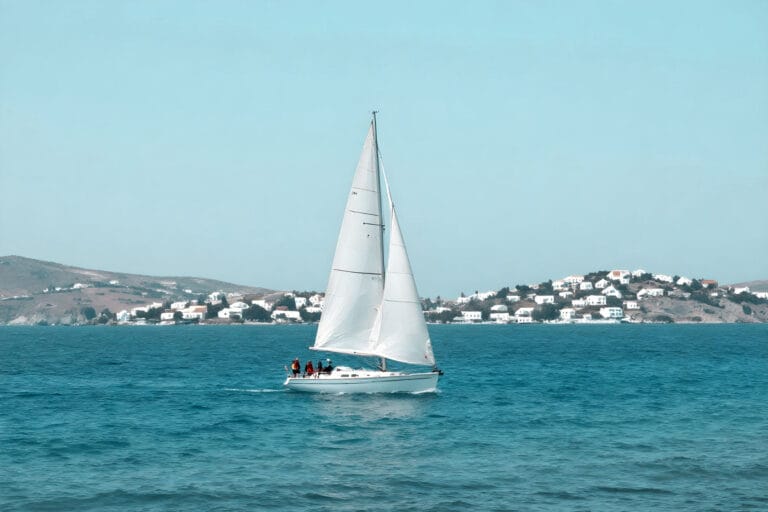
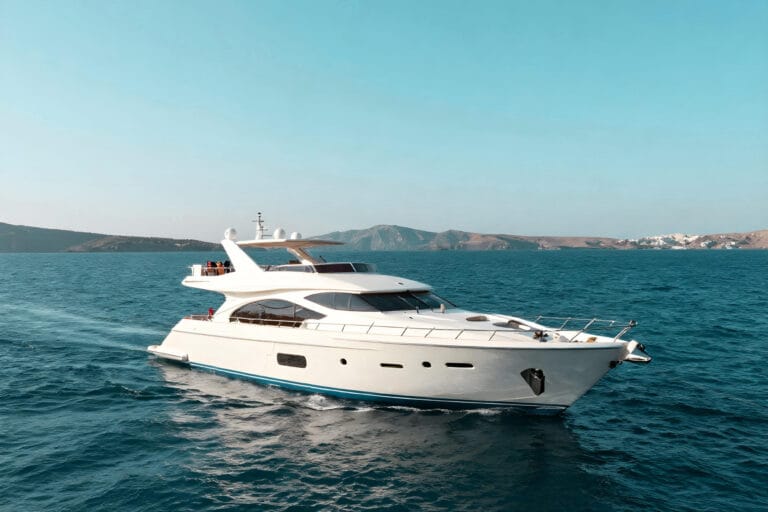
Sailing the Aegean is the one experience that most people put on the ‘one day’ list and then never quite get to. It deserves to be on the actual itinerary. The combination of island density, reliable summer winds, and warm clear water makes Greece one of the world’s great sailing destinations — and a crewed or skippered charter means no sailing experience is required.
A week on a sailing charter in the Cyclades covers more ground than two weeks of conventional island-hopping, moves at your own pace, and delivers swimming spots, anchorages, and village evenings that no tour bus or ferry schedule reaches. Split between a group, the cost is consistently comparable to the hotel-and-ferries equivalent.
Bare Essentials
- Skippered charter: A professional skipper handles all sailing decisions. You and your group are guests who can be as involved or as hands-off as you choose. The right option for anyone who has never sailed or wants to focus on the islands rather than the boat.
- Bareboat charter: You are the skipper. Requires sailing certification (RYA Day Skipper or equivalent) and sea miles. Total freedom, full responsibility.
- Best base ports: Athens (Lavrion / Alimos) for the Cyclades. Rhodes for the Dodecanese. Lefkada or Corfu for the Ionian.
- Best season: June for light conditions and quiet anchorages. July–August for the full Meltemi and busiest islands. September for the best balance of wind, warmth, and fewer crowds.
⛵ Yacht & Sailing Charters in Greece: Complete Guide
How to choose a charter company, what a skippered vs. bareboat charter actually means, and which routes deliver the best Aegean sailing experience.
→ Read the guide: Yacht & Sailing Charters in Greece: The Complete Guide
🌊 Sailing in the Aegean: Best Routes & What to Expect
The Meltemi wind, the best Cyclades and Dodecanese routes, what to pack, and what first-time Aegean sailors consistently wish they had known beforehand.
→ Read the guide: Sailing in the Aegean
Ferry Tickets & Island Transport
Greek ferries are more than logistics — they are part of the trip. Arriving into a small island harbour after a few hours on the water, watching the whitewashed buildings come into focus, is one of the defining moments of a Greece holiday. The ferry network is extensive, affordable, and — once you understand how it works — straightforward to navigate.
The main things to understand before booking:
- Not every island connects directly to every other island. Most routes radiate outward from Piraeus (Athens’s port). The Cyclades are well-connected internally; travelling between island groups often requires going through Athens or taking a flight.
- Ferry types matter. High-speed catamarans halve journey times but are more expensive and more vulnerable to wind cancellations. Conventional ferries are slower, cheaper, and more reliable in strong wind conditions.
- Book ahead for peak season. Popular routes in July and August fill up — particularly if you are bringing a vehicle on board.
- Overnight ferries are a genuine option. The Athens to Crete overnight crossing is comfortable and saves a night’s accommodation. The 8–9 hour Athens to Rhodes crossing is also a reasonable overnight.
The Athens–Santorini fast ferry (5 hours) vs. the flight (45 minutes) debate is real. In shoulder season, the price difference is often small and the ferry experience is worth it once. In peak season when the sea is rougher, the flight wins on practicality.
⛴️ Greece Ferry Guide: How to Book & Navigate Islands
Which ferry companies operate which routes, how to read the timetable, what the different vessel types mean for your journey, and our step-by-step booking walkthrough.
→ Read the guide: Greece Ferry Guide
Flights to Greece
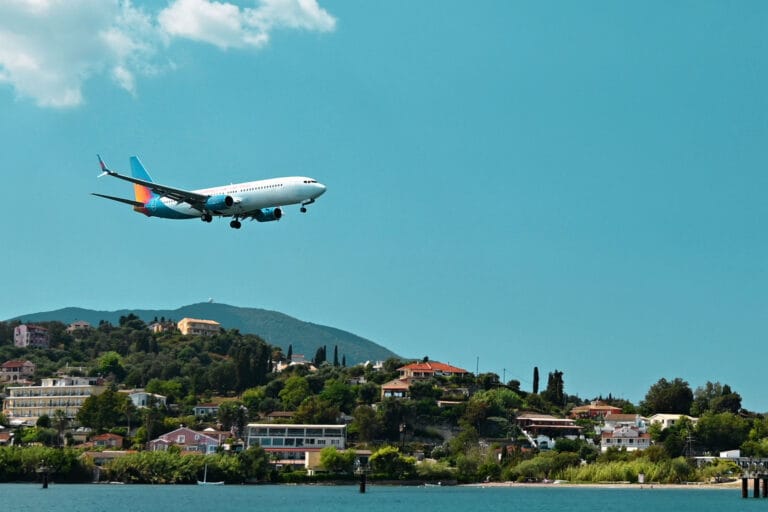
Athens (ATH) is Greece’s main international gateway and the logical starting point for most trips. Beyond Athens, a growing number of direct international routes serve the islands directly — Santorini, Mykonos, Heraklion (Crete), Rhodes, Corfu, and Thessaloniki all receive regular flights from major European cities throughout the season.
For travellers coming from North America or further afield, Athens is almost always the entry point, with connections from New York, Chicago, Toronto, and other hubs on major carriers.
Practical Booking Tips
- Book international flights 3–5 months ahead for summer travel. The best prices disappear quickly on routes to Athens and the island airports.
- Consider open-jaw routing. Flying into Athens and out of Heraklion (or into Santorini and out of Athens) eliminates backtracking and can save a full travel day.
- Domestic flights are worth checking for longer connections — particularly Athens to Rhodes, Athens to Heraklion, or any hop that would otherwise require 8+ hours by ferry. Sky Express and Olympic Air cover the main routes.
- Budget carriers serve many Greek airports from European cities. Ryanair, easyJet, Wizz Air, and Volotea all operate seasonal routes to multiple Greek destinations.
✈️ Greece Flights Guide: How to Get There for Less
The best booking strategies, which airports to fly into for which destinations, domestic connection options, and how to structure open-jaw itineraries.
→ Read the guide: Greece Flights Guide
Travel Insurance
Travel insurance is the one thing on this list that nobody wants to think about and everyone is grateful for when they need it. Greece, specifically, has a few characteristics that make it more important than average.
You are travelling between multiple islands on ferries and small aircraft. Weather can delay or cancel connections. A missed ferry on a small island means waiting for the next one — which may not run until the following day. A medical issue on a remote island requires evacuation to Athens or Crete. Without the right coverage, each of these scenarios becomes expensive and stressful.
What Your Policy Should Cover
- Medical treatment and evacuation — particularly important given the remote location of smaller islands
- Trip cancellation and interruption — if a ferry is cancelled due to weather and you miss a connection
- Flight delays and missed connections
- Lost, stolen, or delayed baggage
- Activities coverage — if you plan to hire scooters, go sailing, or do water sports
Read the activities exclusions carefully. Many standard travel policies exclude moped and scooter riding unless you add it explicitly. Given that ATVs and scooters are the primary transport on many Greek islands, this gap is worth checking before you buy.
🛡️ Greece Travel Insurance: Do You Need It & How to Choose
What a good Greece travel policy covers, which exclusions to watch for, and how to compare options based on your specific trip.
→ Read the guide: Greece Travel Insurance
Quick-Reference Planning Checklist
Use this as a master checklist for your Greece trip. Work through it in roughly this order — the sequence matters, because some bookings depend on decisions made earlier.
3–6 Months Before (or Earlier for Peak Season)
- Decide on travel dates and trip duration
- Choose your islands and build a rough route
- Check ferry schedules to confirm the route is logistically sound
- Book international flights
- Book accommodation — Santorini and Mykonos first, as these fill earliest
- Book sailing charter if this is part of your trip
6–8 Weeks Before
- Book ferry tickets for all inter-island crossings
- Arrange car rental on any island where you will need one
- Book key excursions and experiences (sunset sailing, guided tours, wine tastings)
- Purchase travel insurance
- Check visa and entry requirements for your nationality
2–3 Weeks Before
- Download Google Maps offline data for each island
- Get travel cash (euros) — use airport ATMs or your bank at home
- Check-in online for flights where available
- Confirm all bookings and save copies offline (ferry tickets, hotel confirmations, car rental vouchers)
- Pack: soft bags only for sailing trips, sunscreen, polarised sunglasses, non-marking deck shoes if sailing
On the Ground
- Withdraw cash at the first ATM on any small island (some have only one)
- Check ferry times for the following day’s crossing the evening before
- Ask your accommodation host for the local recommendations — they almost always know the best taverna not on any list
Explore More: Plan Every Part of Your Trip
Plan Your Trip — Full Guide List
- Best Car Rentals in Greece: How to Choose & Book
- Best Hotels in Greece: Top Picks by Region
- Best Tours & Excursions in Greece
- Yacht & Sailing Charters in Greece: Complete Guide
- Greece Ferry Guide: How to Book & Navigate Islands
- Greece Flights Guide: How to Get There for Less
- Greece Travel Insurance: Do You Need It & How to Choose
- Sailing in the Aegean: Best Routes & What to Expect
- How to Plan a Trip to Greece: Step-by-Step Guide
Build Your Itinerary
- Greece Itineraries — All Trip Plans
- 7 Days in Greece: The Perfect One-Week Itinerary
- 10 Days in Greece: Islands, Athens & More
- 2 Weeks in Greece: The Ultimate Trip Plan
- Romantic Greece Trip: A Honeymoon Itinerary
- Greece with Kids: A 7–10 Day Family Itinerary
Essential Travel Tips
- When Is the Best Time to Visit Greece?
- Greece Travel Tips for First-Time Visitors
- Getting Around Greece: Ferries, Flights & Cars
- Greece Packing List: What to Bring for Every Season
Start Planning — Pick Your Next Step
Every great Greece trip starts with the same two decisions: when to go, and which islands to build the route around. If you have not made those calls yet, our itinerary guides do the heavy lifting — each one has already solved the logistics, ferry sequences, and island pairing questions that derail most first-time planners.
If you know your dates and your islands, jump straight to the booking resources above. Everything you need is here.
FAQ: Planning a Trip to Greece
What should I book first when planning a trip to Greece?
Accommodation, not flights. This is counterintuitive but correct — particularly for Santorini and Mykonos, where the best hotels at caldera-view or beach-view locations sell out months ahead of peak season. Find the accommodation you want, check its availability around your preferred dates, and then book flights to match. The reverse approach — booking cheap flights first — often leads to arriving in August when every decent hotel is already full.
Do I need to book ferries in advance?
For July and August, yes — especially on popular routes like Athens to Santorini, Santorini to Mykonos, and Athens to Crete. These routes fill up weeks in advance, particularly if you are travelling with a vehicle. For shoulder season (May–June, September–October), you can generally book ferries a few days before travel, though booking in advance gives you more choice of crossing time and vessel type.
Is it better to rent a car or use taxis and buses in Greece?
It depends entirely on which island. On Crete and Rhodes, a rental car is how you actually see the island — public transport covers the main routes and leaves most of the best beaches and inland villages unreachable. On Santorini, narrow cliff roads and limited parking make a car more hassle than it’s worth — ATVs or taxis are better. On Mykonos, the same logic applies. On Naxos and Paros, a car or scooter significantly extends what you can see. Our car rental guide has island-by-island recommendations.
How do I get between Greek islands?
By ferry for most connections, by short domestic flight for longer hops or time-sensitive connections. The Greek ferry network is extensive — most inter-island routes in the Cyclades and Dodecanese are covered by Blue Star Ferries, SeaJets, and Hellenic Seaways. Ferries range from overnight car ferries to high-speed catamarans. For Athens to Santorini, both a 5-hour fast ferry and a 45-minute flight are valid options — the choice comes down to time and budget. Our ferry guide walks through all the options.
How much should I budget for a one-week trip to Greece?
A mid-range trip (3-star hotels, mix of eating out and self-catering, standard activities) typically costs €1,500–€2,500 per person for a week, excluding international flights. A more comfortable trip with boutique hotels, regular restaurant dining, and a couple of private experiences runs €2,500–€5,000 per person. Santorini in August at the upper end of that range. Naxos in September at the lower end. The biggest variable is always accommodation — everything else (food, ferries, activities) is relatively affordable across most of Greece.
Is it safe to travel solo in Greece?
Greece is consistently rated among the safest countries in Europe for solo travel. Violent crime is rare, locals are warm and helpful, and the island culture is relaxed and social — solo travellers tend to meet people easily in the naturally communal settings of small islands and beach bars. The main practical consideration for solo travellers is budget: hotel rates in Greece are almost always priced per room rather than per person, which makes the cost-per-head higher than travelling as a couple or in a group.
Can I combine a Greece trip with another Mediterranean country?
Yes, and it is a popular option — particularly combining Greece with Croatia, Italy, or Turkey. Athens to Dubrovnik is a short flight. Greece to southern Italy runs via ferry from Igoumenitsa or Patras (the Adriatic ferry route is a classic overland travellers’ crossing). Greece and Turkey share the Aegean — day trips from Rhodes to Marmaris or from Kos to Bodrum are possible, though visa logistics need checking depending on your nationality. Multi-country Mediterranean trips work best when you resist the temptation to pack in too much: one country done properly almost always beats three countries done superficially.
What is the most common mistake people make when planning a Greece trip?
Trying to visit too many islands. It is the single most consistent planning error, and it comes from the same place every time: an Instagram feed full of Santorini sunsets, Mykonos beach clubs, Crete gorges, and Naxos beaches, and the understandable desire to see all of it. The reality is that getting between islands takes time — ferry crossings are not short, ports are not in town centres, and a day of travel is a day of not being anywhere. Two islands explored properly, at a pace that lets you wander without a schedule, is a better holiday than five islands ticked off. Choose fewer places and go deeper.