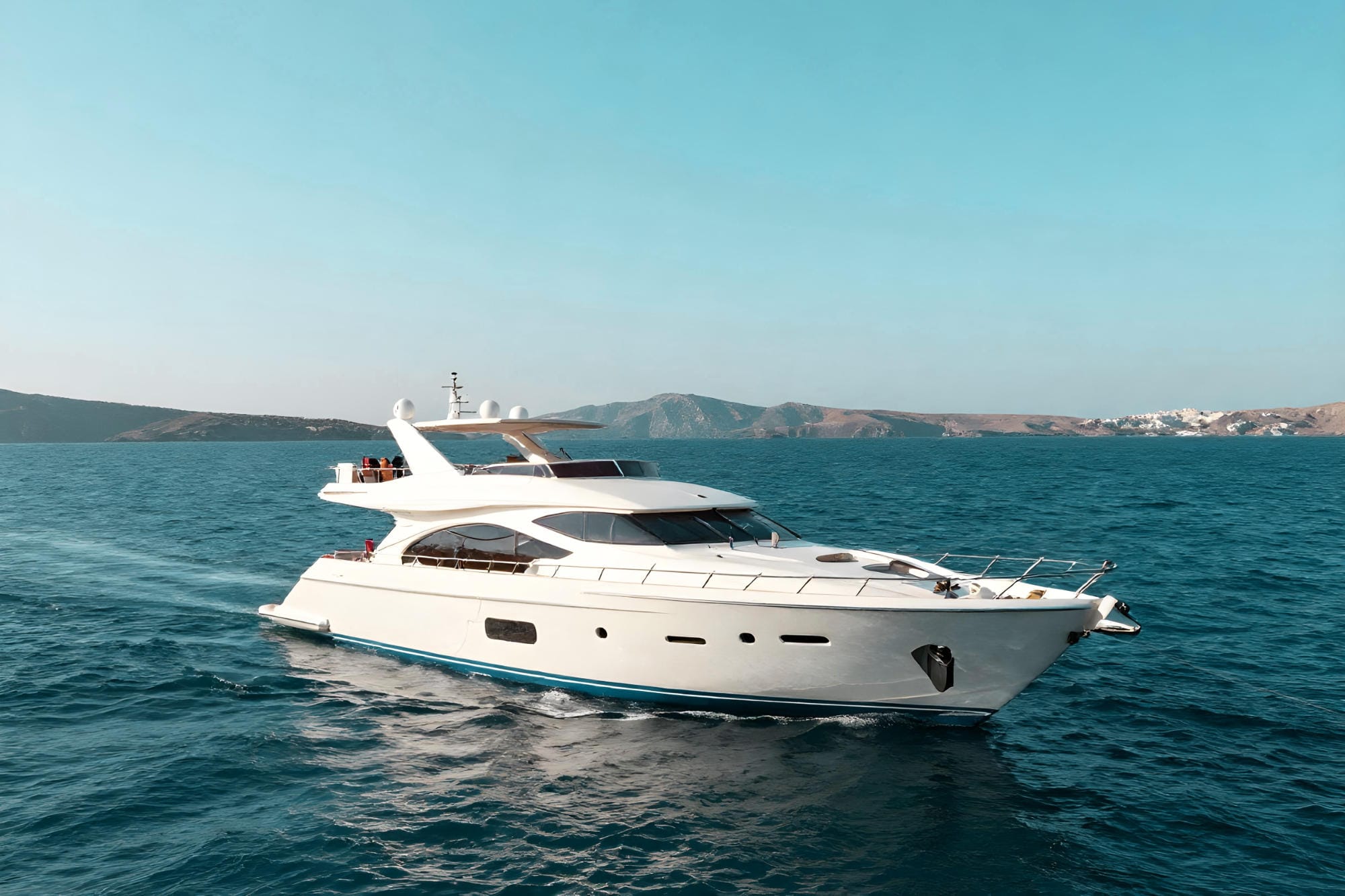
Yacht and Sailing Charters in Greece: The Complete Guide
Yacht and sailing charters in Greece offer something no hotel balcony can replicate — the view of Santorini’s caldera from a yacht at anchor, sailing into the harbour at Hydra on a still morning, or dropping anchor in a deserted cove off the Peloponnese with nothing around you but clear water and pine-covered cliffs.
Greece is one of the world’s premier sailing destinations and has been for decades. Over 6,000 islands and islets, consistent summer winds, well-developed marina infrastructure, and a sailing season that runs from April through October — the conditions for a charter holiday here are genuinely exceptional.
The learning curve is the planning. Charter types, boat categories, insurance requirements, the differences between the Cyclades and the Ionian, what’s actually included in the price — there’s more to navigate than most first-time charterers expect. This guide covers all of it, from choosing the right type of charter to booking with confidence and making the most of your time on the water.
*Note: This page contains affiliate links. We may earn a small commission at no extra cost to you when you book through our links. This helps us keep creating free travel guides.*
Why Greece Is One of the World’s Best Sailing Destinations
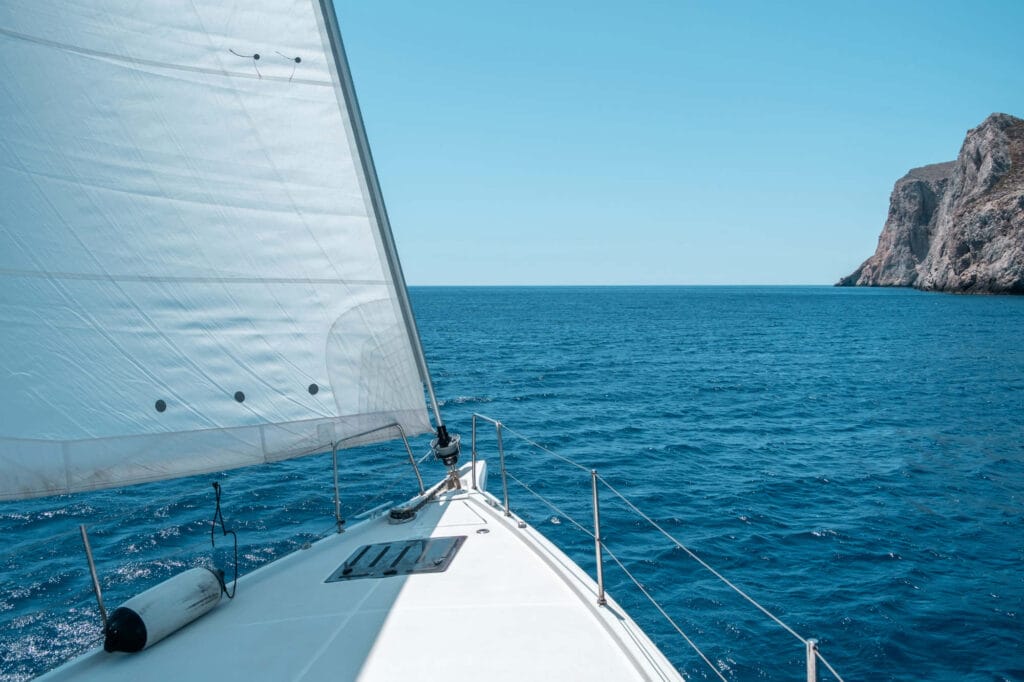
The numbers are straightforward: Greece has more coastline per square kilometre than almost any country on earth, over 6,000 islands, and a summer climate that delivers reliable sun, manageable winds, and warm, clear water from May through October. But the real reasons sailing in Greece is exceptional go beyond the statistics.
The Island Density
The Cyclades and the Ionian Islands are designed — by geological luck — for sailing. Distances between islands are short enough to be genuinely enjoyable day sails (typically 2–6 hours) rather than ocean crossings. You can cover six islands in a week and never have a difficult passage. This gives a Greek sailing holiday a completely different rhythm from sailing in, say, Croatia or Turkey: you actually arrive somewhere meaningful every day.
The Anchorages
Greece has thousands of anchorages that no ferry, no tour bus, and no resort hotel can reach. Hidden coves on the back of uninhabited islands. Village harbours too shallow for anything larger than a sailing yacht. Caves you can only enter by dinghy. The sailing community in Greece has been cataloguing these spots for generations, and the best ones are known only to people arriving by water.
The Infrastructure
Greece has excellent charter infrastructure built up over decades: well-equipped marinas in Athens (Alimos, Zea), Corfu, Rhodes, and throughout the sailing regions; a large and professional charter fleet; clear maritime rules; and experienced local operators who know their waters well. For a first-time charterer, this matters enormously — you’re not pioneering, you’re benefiting from a mature system.
The Culture on the Water
Greek sailing culture is social and welcoming in a way that’s hard to describe until you experience it. Arriving by yacht at a small island harbour changes how locals relate to you. You’re not a tourist from the ferry — you’re a sailor who chose this place. Tavernas reserve the best tables for the people off the boats. Harbour masters are genuinely helpful. It’s a different entry point into Greek life.
Types of Yacht Charter in Greece
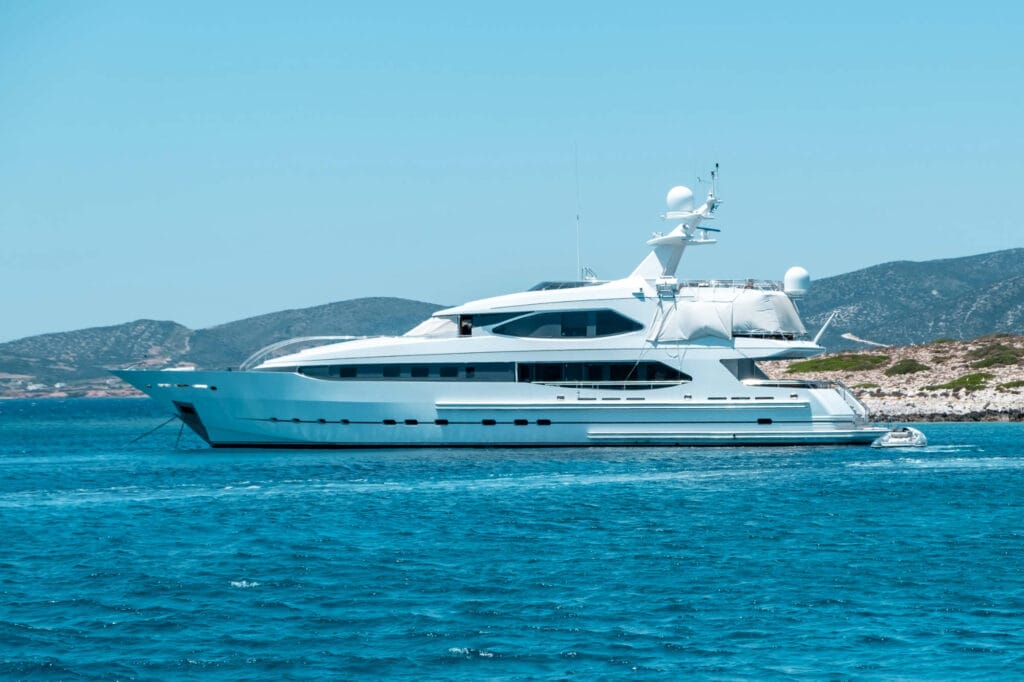
The first decision is what kind of charter you’re booking. The four main categories are meaningfully different in terms of cost, required experience, and what the experience actually feels like.
Bareboat Charter
Best for: Experienced sailors — couples, groups, friends — who want full independence
Crew: You and your group only — no professional crew
Typical cost: €800–€3,500 per week for the boat (excluding expenses)
Pros: Complete freedom, most cost-effective per person, full control of schedule and itinerary
Cons: Requires sailing qualifications (RYA Day Skipper or equivalent), all responsibility falls on you
Skippered Charter (Bareboat + Skipper)
Best for: Groups or couples who want independence without the responsibility of navigating
Crew: Professional skipper included — you provide the rest
Typical cost: €1,200–€4,500 per week for boat + €800–€1,400 per week for skipper
Pros: Expert local knowledge, no qualification required, skipper handles navigation and safety
Cons: Less private than bareboat, skipper cost adds significantly to the budget
Crewed Charter (Luxury)
Best for: Groups, honeymoons, special occasions, those who want a fully catered experience
Crew: Full professional crew: skipper + hostess/cook (sometimes additional crew on larger yachts)
Typical cost: €3,500–€15,000+ per week depending on vessel size and season
Pros: Hotel-level service on the water, exceptional for special occasions, no effort required
Cons: Highest cost, less flexibility, less of a sailing experience and more of a floating hotel
Flotilla Sailing
Best for: First-time charterers, social sailors, families who want community and support
Crew: You skipper your own boat but sail in convoy with a lead boat and support team
Typical cost: €700–€2,500 per week per boat (varies by operator and season)
Pros: Ideal introduction to chartering, built-in community, support available when needed
Cons: Less independent than bareboat, fixed itinerary with the group, social dynamic varies
💡 Catamaran vs Monohull: Catamarans offer more stability, larger deck space, and better performance in light winds — making them popular with families and groups prioritising comfort. Monohulls have a more traditional sailing feel, are easier to handle in tight harbours, and tend to be cheaper to charter at equivalent sizes. For Greece’s generally benign summer sailing conditions, both work well.
Best Sailing Routes in Greece
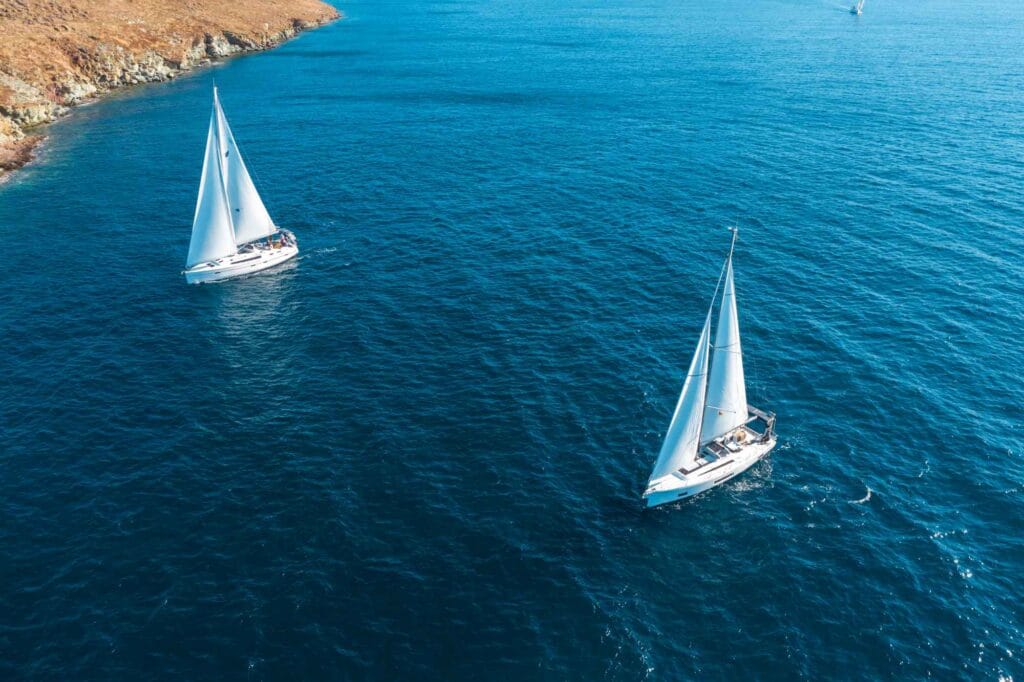
Greek sailing divides naturally into two main regions: the Aegean (Cyclades, Dodecanese, Saronic Gulf) and the Ionian (western islands: Corfu, Lefkada, Kefalonia, Ithaca, Zakynthos). Each has a distinct character. Within those regions, a handful of routes consistently deliver the best combination of scenery, anchorages, and practicality.
1 . The Classic Cyclades: Santorini to Mykonos
Base ports: Athens (Alimos Marina) or Paros · Duration: 7–10 days
The benchmark Cyclades route. Covers Paros, Naxos, Ios, Santorini, and Mykonos with anchorages that range from famous caldera views to deserted coves on the back of uninhabited islands. The meltemi wind (July–August) runs north, meaning this route works best southward (Athens → Santorini → Mykonos) or with careful timing.
Sailing difficulty: Moderate — meltemi can be strong in July/August; comfortable in May/June and September
2. The Saronic Gulf: Athens to Spetses
Base ports: Athens (Alimos or Zea Marina) · Duration: 5–7 days
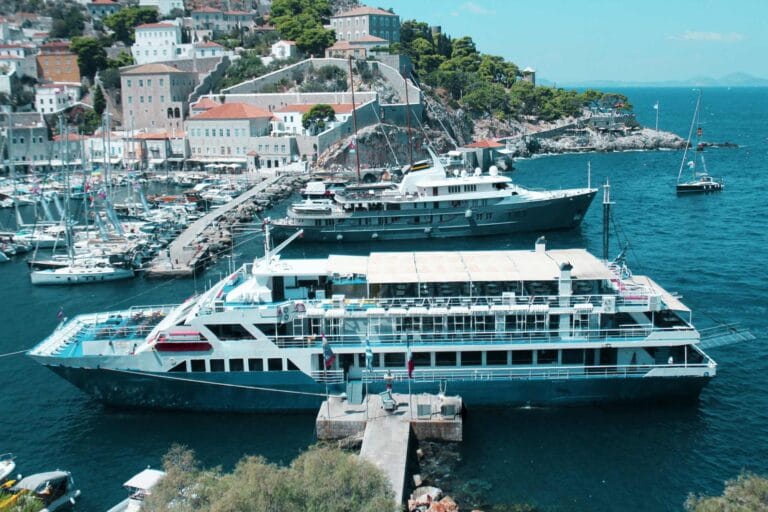
The most accessible sailing region from Athens. Aegina, Poros, Hydra, and Spetses form a classic circuit that’s less dramatic than the Cyclades but quieter, less crowded, and ideal for first-time charterers. Hydra alone — car-free, beautifully preserved, donkeys on the waterfront — justifies the trip. Distances are short and the sailing is forgiving.
Sailing difficulty: Easy — ideal for beginners and first-time charterers
3. The Ionian Islands: Lefkada to Zakynthos
Base ports: Lefkada or Preveza · Duration: 7–10 days
The Ionian is greener, calmer, and less frequented than the Cyclades. The combination of Lefkada, Meganisi, Kefalonia, Ithaca, and Zakynthos covers some of the most beautiful water in the Mediterranean. The Ionian wind (the meltemi’s gentler western equivalent) is reliable and manageable. Zakynthos’s Navagio Beach — the famous shipwreck — is one of the great sailing arrivals in Greece.
Sailing difficulty: Easy to moderate — Ionian winds are generally gentler than Aegean meltemi
4. The Dodecanese: Rhodes to Kos
Base ports: Rhodes or Kos · Duration: 7–10 days
Turkey-facing islands with a completely different character — Ottoman and Byzantine heritage, dramatic landscapes, and turquoise water. Covers Rhodes, Symi, Tilos, Nisyros (volcanic island with an active crater), Kos, and Kalymnos. Less crowded than the Cyclades and with the option of day-crossing to Turkish ports (requires additional paperwork).
Sailing difficulty: Moderate — can be windy between islands, good infrastructure throughout
5. Northern Sporades: Skiathos, Skopelos & Alonissos
Base ports: Volos or Skiathos · Duration: 5–7 days
The Sporades are densely forested — pine trees down to the water’s edge — and feel nothing like the bare-rock Cyclades. Skiathos has excellent beaches, Skopelos is the most authentically Greek of the group, and Alonissos sits within Greece’s first marine national park with exceptional snorkelling and some of the clearest water in the Aegean. Significantly less crowded than the southern islands.
Sailing difficulty: Easy to moderate — good for families and those seeking a quieter experience
Cyclades vs Ionian: Which Region to Choose?
This is the most common question first-time charterers ask, and the honest answer is: they’re different trips, not better or worse versions of the same thing.
Choose the Cyclades if:
- You want the iconic Greek island aesthetic — white-washed villages, volcanic rock, deep blue caldera
- Santorini and Mykonos are on your list
- You’re comfortable with stronger winds (the meltemi can run 20–30 knots in July and August)
- You prefer a more social, lively harbour scene
- You’re travelling May, June, or September when the meltemi is manageable
Choose the Ionian if:
- You want lush, green landscapes and calmer sailing conditions
- It’s your first charter or you’re sailing with less experienced crew
- You’re travelling with families or children — the gentler conditions make it far easier
- You want to explore the fascinating literary geography of Homer’s Odyssey (Ithaca, Kefalonia)
- You prefer a quieter, less touristy atmosphere
One important practical note: the Ionian bases (Lefkada, Preveza) require a longer journey from Athens. Budget extra travel time if you’re flying into the capital.
What to Expect on a Sailing Holiday in Greece
For those who haven’t chartered a yacht before, the rhythm of a Greek sailing holiday is worth understanding — because it’s genuinely unlike any other type of travel.
A Typical Day
Wake up in an anchorage or harbour. Swim off the back of the boat before breakfast. Sail for 2–5 hours — sometimes motor in light winds, sometimes reach under full sail. Arrive at the next destination in early afternoon. Spend the afternoon swimming, exploring the village on foot, or doing nothing at all. Have dinner at a harbourside taverna. Sleep well.
That simplicity is the appeal. The sea does something to the pace of time that no land-based holiday replicates.
Life Onboard
Even a well-equipped charter yacht is more compact than a hotel room. Cabins are functional rather than spacious. The galley (kitchen) is small. Heads (bathrooms) require some adaptation. The trade-off is the deck: most of your waking hours will be spent outside — on the foredeck in the sun, in the cockpit, at anchor — and the space question becomes irrelevant.
For a week aboard, pack light: swimwear, a light fleece for evening passages, deck shoes or sandals with a sole that doesn’t mark, and far less than you think you need. Everything gets downsized on a boat.
Eating and Drinking
Most charterers eat breakfast and lunch aboard and eat dinner ashore at tavernas. Provisioning (buying food and drinks for the boat) is done before departure and supplemented at island supermarkets. Waterside tavernas in Greece tend to be excellent and affordable — fresh fish, grilled octopus, local wine, cold beer. Eating dinner on a taverna terrace after a day’s sailing is one of the great simple pleasures of this type of trip.
Weather and Wind
Greek summer sailing weather is predictable to a degree that’s rare in other sailing destinations. The main consideration is the meltemi — the prevailing north-northwesterly wind in the Aegean that typically runs from mid-July through August. It’s reliable (good for sailing downwind) but can be strong (25–35 knots on bad days), which makes upwind passages uncomfortable and occasionally forces a change of plan. May, June, and September have lighter and more variable winds — generally more pleasant sailing, particularly for beginners.
How Much Does a Yacht Charter in Greece Cost?
The honest answer is: a wide range, depending on the boat, the season, the region, and the type of charter. Here’s a realistic breakdown.
The Boat (Charter Fee)
Small sailing yacht (32–36ft, sleeps 4–6): €700–€1,800 per week
Mid-range yacht (38–44ft, sleeps 6–8): €1,500–€3,500 per week
Larger yacht (46–52ft, sleeps 8–10): €3,000–€6,000 per week
Catamaran (38–45ft, sleeps 6–10): €2,500–€7,000 per week
Luxury crewed yacht or gulet: €5,000–€20,000+ per week
The Skipper (if required)
A professional skipper for a skippered charter costs approximately €800–€1,400 per week plus their food and expenses (usually a fixed daily food allowance of €30–€50 per day). This is separate from the boat cost.
The Additional Costs
The charter fee is never the total cost. Budget realistically for:
- Fuel: €100–€400 per week depending on motoring vs sailing and distances covered
- Marina fees: €20–€80 per night in marinas (anchorages are free)
- Provisioning: €40–€80 per person per week for food and drinks aboard
- Eating out: Budget €25–€50 per person per day for island taverna dinners
- End-of-season clearance (APA — Advance Provisioning Allowance): applies mainly to crewed charters
- Travel to the base port: flights, transfers
Real Cost Per Person
For a group of 6 on a bareboat charter (mid-range yacht, one week, shoulder season): total cost including all expenses typically works out to €1,200–€2,000 per person. For a skippered charter, add roughly €300–€400 per person for the skipper. For peak July/August, add 30–50% to the boat rate.
Split across a group, a sailing charter is often more cost-effective per person than staying in a comparable-quality hotel in Santorini for the same duration — and covers multiple destinations rather than one.
What’s Included in a Charter — and What Isn’t
This is where first-time charterers most often get caught out. The charter fee covers a specific and limited set of things.
Typically Included
- The vessel, fully equipped for sailing (sails, engine, navigation equipment, life safety equipment)
- Basic inventory: cooking equipment, bedding, navigation charts
- Third-party liability insurance (check the policy — excess varies significantly)
- First maintenance of any mechanical failure during the charter
Typically NOT Included
- Fuel
- Marina fees and harbour taxes
- Skipper or crew (unless on a skippered/crewed charter)
- Food and provisions
- Damage deposit (held as a credit card hold, released on return without damage — typically €1,500–€5,000)
- Outboard motor for the dinghy (sometimes extra)
- Transit log / cruising permit if required (for certain charter areas)
- Personal travel insurance
The Security Deposit
Every bareboat and skippered charter requires a security deposit — held against accidental damage to the vessel. This is a credit card authorisation (not charged unless damage occurs) and is returned at the end of the charter if the boat is returned in the same condition. The amount varies by vessel size and operator: typically €1,500–€5,000 for a standard sailing yacht. Some charterers purchase charter excess insurance to cover this exposure for a fixed daily fee — worth considering for peace of mind.
Do You Need Sailing Experience to Charter in Greece?
For a Bareboat Charter
Yes — and you need to be able to demonstrate it. Most reputable charter companies require the skipper (the person responsible for the vessel) to hold a recognised sailing qualification: an RYA Day Skipper, an ICC (International Certificate of Competence), or an equivalent national licence. You’ll also need to show a logbook of sailing experience — typically a minimum of 100–200 hours at sea and documented experience in similar vessel sizes.
If you’re a confident sailor but don’t have a formal qualification, an RYA Day Skipper practical course takes around 5 days and can be done in the UK, Greece, or many other countries. It’s worth doing properly — not just for the charter, but because the skills genuinely matter when you’re responsible for a vessel and its crew.
For a Skippered Charter
No sailing experience is required. The skipper handles all navigation, anchoring, docking, and safety. You’re essentially a passenger who can get involved as much or as little as you like. Many people use their first skippered charter as a learning experience — most skippers are happy to teach.
For a Flotilla
Basic sailing competence is required — enough to handle the boat safely — but formal qualifications are not always mandatory. Flotilla operators usually ask about experience and match you to an appropriate vessel. The lead boat provides practical support and instruction throughout.
For a Crewed Charter
No experience needed. Everything is handled for you.
Best Time of Year to Charter a Yacht in Greece
May and June — Ideal for Most Charterers
The meltemi hasn’t arrived yet, so winds are light and variable — excellent for comfortable sailing. Water is warm enough for swimming from late May. Marinas are quieter, prices are lower, and the islands haven’t yet hit peak season. The light in June is extraordinary. Our top recommendation for first-time charterers and families.
July and August — Peak Season
The meltemi is active — reliably strong northerlies across the Aegean, particularly in the central and southern Cyclades. Experienced sailors can plan routes to use it effectively (sailing downwind south through the Cyclades is fast and exhilarating). For less experienced sailors or those with children, the Ionian (where the meltemi has less impact) or the Saronic Gulf is a better choice during these months. Charter prices are at their highest; book 4–6 months in advance.
September and October — The Locals’ Secret
Arguably the best sailing months in Greece. The meltemi fades in September, sea temperatures are at their highest (warmer than early summer), the islands are quieter, prices drop, and the light takes on a golden quality that photographers talk about for years. October is possible but the sailing window shortens and weather can be less predictable toward the end of the month.
April and November
Charter companies begin and end their season here. April can be excellent — quiet, beautiful, mild — but the water is cold and some facilities aren’t yet open. November sailing is for the experienced and adventurous; weather is unpredictable and some bases close for the winter.
How to Find and Book a Reputable Yacht Charter in Greece
Charter Brokers vs Direct Booking
You can book a charter directly with a local Greek company, through an international charter company (Sunsail, Moorings, Navigare), or via a charter broker who works across multiple fleets.
Direct with local operators — often the best price and the most knowledgeable service for specific regions. Greek companies like Vernicos Yachts, Kiriacoulis, and Hellenic Charters have decades of experience and excellent fleets.
International charter companies — consistent standards and reliable booking processes. Good for first-timers who want the reassurance of a known brand. Sunsail and The Moorings are the market leaders.
Charter brokers — companies like YachtCharterFleet, Boatsetter, or GetMyBoat aggregate inventory across multiple operators and can find boats across a wider price range. Useful for comparison.
What to Check Before Booking
- The boat’s age and last refit date — aim for a vessel under 8 years old or with a documented recent refit
- What’s included vs additional costs — get a fully itemised quote
- The cancellation and refund policy — especially relevant given Greek weather and travel disruptions
- The security deposit amount and how it’s held
- Reviews from previous charterers — look for consistent recent feedback
- Whether the company provides 24/7 support during the charter period
When to Book
For July and August, book 4–6 months in advance — the best boats in prime locations are gone by March. For May, June, September, and October, 6–12 weeks ahead is generally sufficient, though popular routes and specific boat models sell out faster than the general market.
Tips for First-Time Yacht Charterers in Greece
Assemble the Right Group
A sailing holiday is immersive. You’re in a confined space with the same people for 7+ days. The group dynamic matters more than almost any other factor in the quality of the trip. Experienced charterers will tell you: choose people who are flexible, curious, and low-maintenance over people who sound exciting on land. Four compatible people on a small boat are happier than eight on a larger one with one difficult personality.
Understand the Meltemi Before You Go
If you’re sailing the Aegean in July or August, read about the meltemi. Understand that it typically builds through the day, is strongest in the afternoon, and can pin you in a harbour for a day if it’s blowing hard. Build this flexibility into your itinerary — the charterers who get frustrated are the ones who planned too tightly. The ones who love it are the ones who expected occasional delays and discovered the best taverna on the island as a result.
Don’t Over-Plan the Itinerary
Plan your start point, your end point, and a general direction. Leave significant flexibility for the days in between. The best discoveries in Greek sailing are the unexpected ones — the cove your skipper knows that isn’t in any guide, the village festival you stumble into, the perfect windless morning when you anchor somewhere you hadn’t planned to stop. A fixed daily itinerary fights against everything that makes sailing in Greece special.
Take a Sailing Course Before Your First Bareboat Charter
Even if you already know the basics, an RYA Day Skipper course builds confidence in a structured way. The anchoring, the docking in confined spaces, the passage planning — these are the moments that create anxiety for first-time bareboat charterers, and preparation removes most of it.
Provision Properly and Simply
The temptation is to provision elaborately. The reality is that you’ll eat most dinners ashore and the best boat meals are the simplest ones: good bread, local cheese, tomatoes, olives, cold drinks. Stock the essentials, buy fresh fish at island markets when you find them, and don’t spend your first day loading the boat with food you’ll return unused.
Protect Yourself from the Sun
Sailing in Greece means hours on the water with reflected light, wind, and high UV. Sunscreen, a good hat, UV-protective sunglasses, and a long-sleeved light shirt are not optional — they’re essential. Severe sunburn on day two of a seven-day charter is a significant problem. The sun on the water is far stronger than it feels.
Explore More: Plan Your Trip to Greece
Sailing in the Aegean: Best Routes & What to Expect
Greece Ferry Guide: How to Book & Navigate Islands
Best Tours & Excursions in Greece
Island Hopping in Greece: The Ultimate Guide
Best Greek Islands for Couples
Santorini for Couples: A Romantic Escape
FAQ: Yacht Charters in Greece
How much does it cost to charter a yacht in Greece for a week?
A bareboat charter for a group of 6 on a mid-range sailing yacht (38–42ft) typically costs €1,500–€3,000 per week for the boat, plus €500–€1,200 per person in additional expenses (fuel, marina fees, food, eating out). Total per-person cost for a week is usually €1,500–€2,500 depending on season and spending habits — comparable to or less than a week in a quality hotel in Santorini, while covering multiple destinations.
Do I need a licence to charter a yacht in Greece?
For a bareboat charter: yes. The skipper (the person responsible for the vessel) must hold a recognised sailing qualification — an RYA Day Skipper, an ICC, or a national equivalent. You’ll also need to provide a sailing logbook. For a skippered or crewed charter, no licence is required — the professional skipper holds responsibility for the vessel.
What is the best sailing region in Greece for beginners?
The Saronic Gulf (Athens to Spetses circuit) and the Ionian Islands (Lefkada, Kefalonia, Ithaca) are the most forgiving sailing regions for first-time charterers. Short distances between anchorages, protected waters, good infrastructure, and gentler winds than the Cyclades make both ideal starting points. The Ionian in particular is specifically recommended for families and first-time charterers.
When is the best time to charter a yacht in Greece?
May, June, and September are the sweet spots — warm enough for swimming, manageable winds, lower prices, and fewer crowds than peak summer. July and August offer reliable (though sometimes strong) winds in the Aegean and are excellent for more experienced sailors. Avoid the Aegean in August if you’re a beginner — the meltemi can be intimidating and significantly limits your routing options.
What is a bareboat charter?
A bareboat charter means renting the boat without a professional skipper or crew — you and your group are responsible for sailing and navigating the vessel. It’s the most independent and cost-effective form of charter, but requires sailing qualifications and documented experience. The term ‘bareboat’ refers to the boat being chartered without crew, not without equipment — the vessel is fully equipped for sailing.
Can I sail from Greece to Turkey on a charter yacht?
Yes — some charter companies permit this, particularly on Dodecanese-based charters (Rhodes, Kos). Sailing to Turkey requires a transit log, advance customs clearance, and the charter company’s explicit permission. Not all companies allow cross-border sailing. If Turkey is part of your plan, confirm this before booking and ensure it’s written into the charter agreement.
What’s the difference between a gulet and a yacht charter in Greece?
A gulet is a traditional Turkish wooden motorsailor — larger than most sailing yachts, very stable, with wide decks and spacious cabins. They’re common in the Dodecanese and southern Aegean, popular for groups of 8–12 people. They motor more than sail and offer a more comfortable, less athletic experience than a sailing yacht. If you want the sailing experience rather than the comfort of a floating villa, a conventional sailing yacht is the right choice. If you want space, comfort, and island-hopping without the sailing, a gulet charter is worth considering.
Is sailing in Greece safe?
Greece is one of the safest sailing destinations in the world. The waters are well-charted, the infrastructure is excellent, maritime search and rescue is efficient, and the local sailing community is experienced and helpful. The main risks are the typical ones of any sailing: the meltemi can create rough conditions, anchoring in exposed spots during changing weather carries risk, and mechanical failures happen on any vessel. These risks are entirely manageable with proper preparation, good judgement, and a thorough pre-charter briefing. Thousands of first-time charterers sail in Greece every season without incident.
Ready to Plan Your Greece Sailing Charter?
Whether you’re looking for a bareboat adventure, a skippered charter with local expertise, or a fully crewed luxury experience — Greece has the right boat, route, and season for your trip. Start by exploring available vessels and comparing charter options for your dates.