
Athens to Santorini: How to Plan the Perfect Trip
Almost every trip to Greece passes through Athens. It is the main international gateway — the airport that receives the long-haul flights, the hub from which the islands radiate outward. Santorini, meanwhile, is the destination that draws people to Greece in the first place: the caldera, the white villages on the cliff edge, the sunsets that have become one of the most recognisable images in travel photography. Getting from one to the other is the first decision most visitors face.
There are two ways to do it — by ferry or by plane — and the right choice depends entirely on your priorities. There is also a third option that most people overlook: spending two or three days in Athens before heading south. Athens is not just a transit point. It has one of the finest collections of ancient sites in the world, a food scene that has quietly become one of Europe’s best, and neighbourhoods that reward the kind of slow, unhurried exploration that airport layovers never allow.
This guide covers all of it: how to get from Athens to Santorini, the best ways to combine both cities into a single trip, and how to structure your days at each end so that neither feels rushed. Whether you have a week or two, this is how to make it work.
Note: This page contains affiliate links. We may earn a small commission at no extra cost to you when you book through our links. This helps us keep creating free travel guides.
Athens to Santorini: Ferry vs. Flight
This is the central question for most travellers, and there is no single right answer. Here is the honest breakdown.
The Ferry
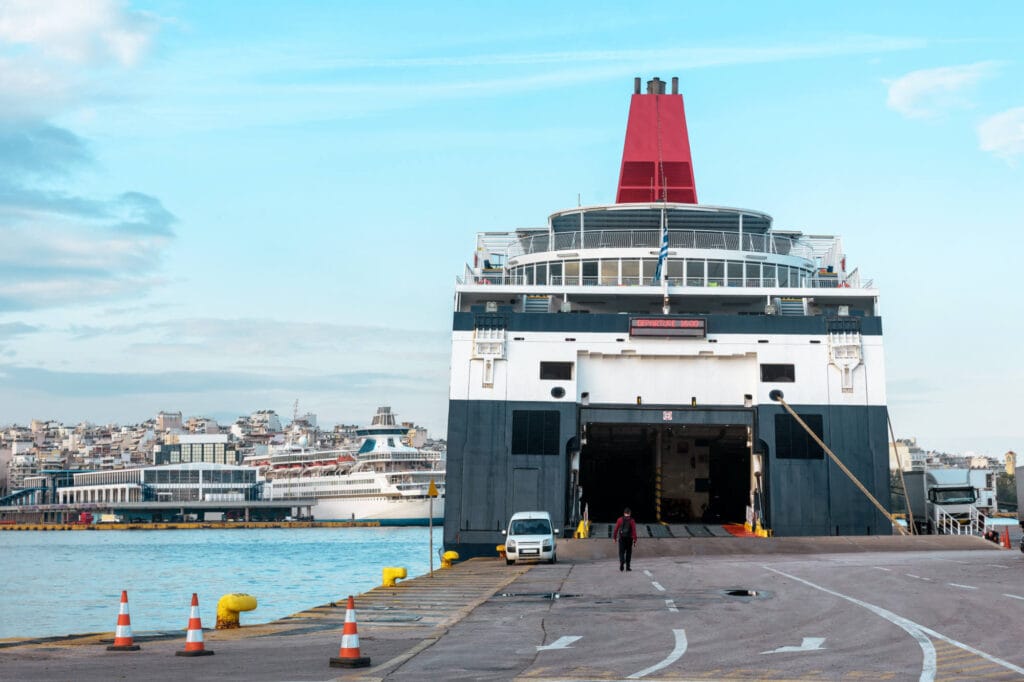
The ferry from Piraeus port (Athens) to Santorini is one of the most scenic sea crossings in the Mediterranean. The conventional overnight ferry takes 8–9 hours and arrives in the early morning — you step off the boat into the crisp Aegean air with the caldera ahead of you, which is a genuinely memorable way to arrive. Fast ferries and high-speed catamarans cut the journey to around 4.5–5 hours but are seasonal and more expensive.
- Conventional ferry: 8–9 hours, overnight option available, most economical, very comfortable in cabin class
- High-speed ferry / catamaran: 4.5–5 hours, seasonal (mainly May–October), costs roughly twice the conventional fare
- Departure port: Piraeus, not Athens city centre — allow 45–60 minutes from the centre by metro or taxi
- Arrival port: Athinios (main car ferry port) or Skala Fira (for some smaller vessels)
- Best for: travellers who enjoy sea crossings, those doing an island-hopping circuit, anyone wanting to save on transport costs
The Flight
The flight from Athens International Airport (ATH) to Santorini (JTR) takes approximately 45 minutes. Olympic Air and Sky Express operate multiple daily routes in season. It is the fastest option and the most practical if your time in Greece is limited to a week or less.
- Journey time: 45 minutes in the air, plus transfers and check-in — allow 3–4 hours door to door
- Frequency: multiple daily flights in peak season, reduced in shoulder months
- Cost: typically €50–150 each way depending on how far in advance you book
- Best for: travellers with tight itineraries, those with luggage that makes ferry travel impractical, anyone who prioritises maximising time on Santorini
Which Should You Choose?
If time is not a constraint and you want the experience of the journey as well as the destination, take the overnight ferry at least one way — the morning arrival into Santorini is worth the hours on board. If you are working within a week-long trip and every day matters, fly both ways and use the saved hours on the islands themselves.
Option 1: Taking the Ferry from Athens to Santorini

Getting to Piraeus
Piraeus is Athens’ main port, located about 10 kilometres southwest of the city centre. The easiest way to get there from the city is the Metro Line 1 (Green Line) — direct from the centre to Piraeus station in around 30 minutes, and a short walk from there to the ferry terminals. From Athens airport, take the Metro to Monastiraki and change to Line 1. A taxi or rideshare from the city centre takes 20–40 minutes depending on traffic.
Give yourself at least 45 minutes at the port before departure. The terminals are spread across a large area — check your specific terminal number when you book your ticket.
Overnight Ferry: The Practical Reality
The overnight ferry from Piraeus typically departs in the early evening (around 18:00–21:00 depending on the operator and season) and arrives in Santorini the following morning. Booking a cabin is strongly recommended — not just for comfort but because arriving well-rested makes a meaningful difference to your first day on the island. Cabins range from basic two-berth inside cabins to more comfortable outside options with portholes.
- Blue Star Ferries is the most reliable operator on this route with consistent schedules and comfortable cabin options
- Deck seating is possible in warm months but not advisable for overnight crossings
- The onboard restaurant and bar are serviceable — bring snacks if you are particular about food
- The Meltemi wind in July and August can make the crossing rougher; if you are prone to seasickness, take precautions
Fast Ferry: The Daytime Option
High-speed catamarans typically depart in the morning and arrive mid-afternoon, which means you get a proper first evening in Santorini rather than a bleary-eyed morning arrival. The downside is cost — fast ferry tickets can be two to three times the price of a conventional cabin — and availability, since catamarans operate on a more limited seasonal schedule and sell out quickly in summer.
Option 2: Flying from Athens to Santorini
Athens Airport to Santorini Airport
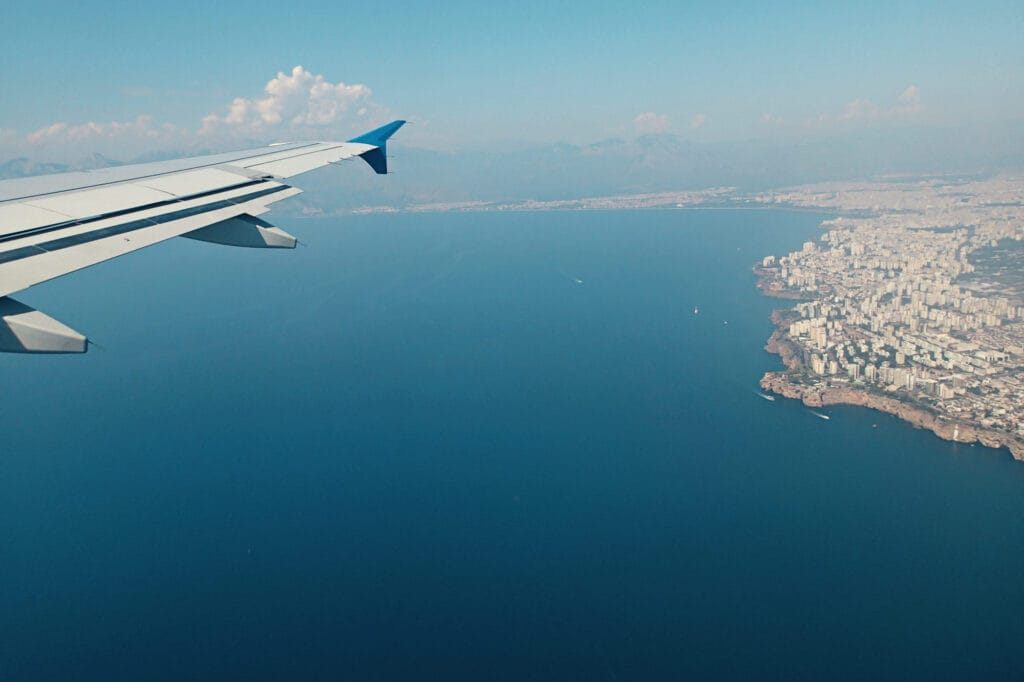
Athens Eleftherios Venizelos Airport (ATH) has direct flights to Santorini Thira Airport (JTR) operated primarily by Olympic Air and Sky Express, with additional options from budget carriers in peak season. The flight itself is 45 minutes — short enough that the boarding and disembarking process takes longer than the time in the air.
Booking Tips for This Route
Book early. The Athens–Santorini route is one of the most popular domestic flights in Greece and prices rise sharply as the date approaches, particularly for summer travel. Booking six to eight weeks in advance typically secures the most reasonable fares. The airport on Santorini is small — arrivals and baggage claim are fast, and taxis and buses into the main villages are available immediately outside.
- Olympic Air and Sky Express: the two main domestic operators; both reliable
- Check-in: online check-in is available and recommended to avoid queues
- Baggage: standard domestic allowances apply; check your specific fare class
- From Santorini airport to Fira: approximately 15 minutes by taxi, 30 minutes by local bus
The Best Combined Itinerary: Athens + Santorini
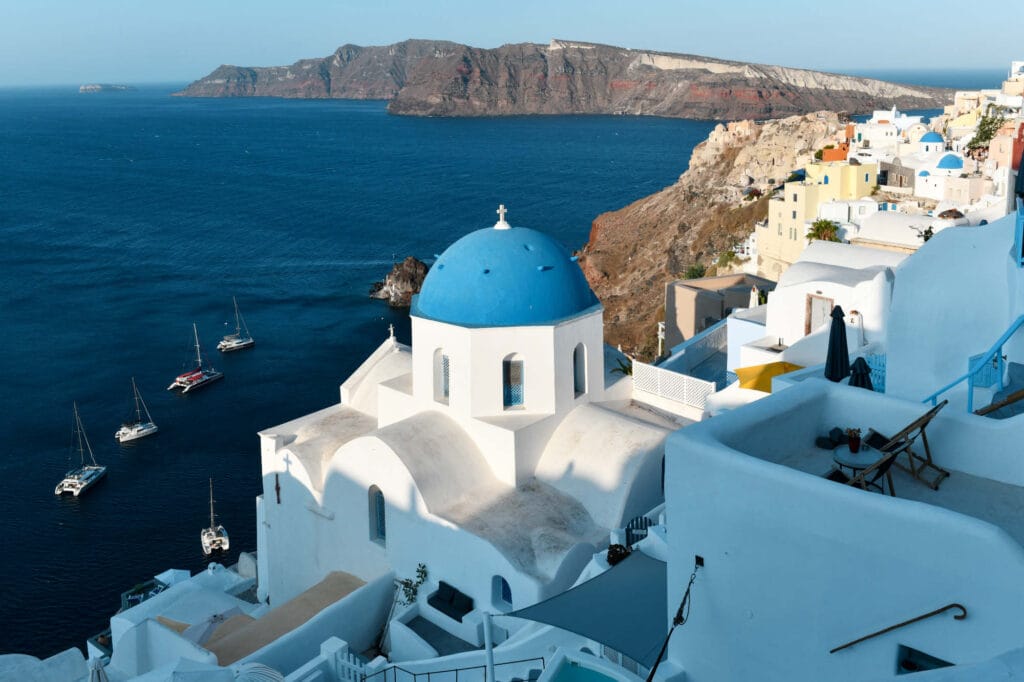
The most satisfying version of this trip combines two nights in Athens with three to four nights on Santorini. This gives Athens the time it genuinely deserves — not just the Acropolis but the neighbourhoods, the food market, the rooftop bar culture — while leaving Santorini with enough days to find its rhythm beyond the famous viewpoints.
Suggested total trip length: 6–7 days
Best transport split: fly to Santorini, return by overnight ferry (or fly both ways if time is tight)
Day-by-Day Overview
- Arrive in Athens. Check in, walk Monastiraki and Plaka in the evening, dinner in Thissio with Acropolis views.
- Athens full day: Acropolis and Acropolis Museum in the morning (arrive at opening to beat the heat and crowds), afternoon in the National Archaeological Museum or Monastiraki flea market, evening in Koukaki or Psyrri.
- Fly or take the fast ferry to Santorini. Arrive by early afternoon. Check in, first caldera walk, dinner in Fira.
- Santorini: Oia in the morning, caldera boat trip or volcanic island hike in the afternoon. Oia sunset in the evening.
- Santorini: beaches — Perissa, Perivolos, or Red Beach near Akrotiri. Visit Akrotiri archaeological site.
- Santorini: final morning for anything missed, afternoon departure by ferry or flight back to Athens for onward connection.
Athens in 2 Days: What to Prioritise
Athens has a tendency to be underestimated. Most visitors treat it as a transit point on the way to the islands, which means they see the Acropolis, eat one meal in Plaka, and leave. That is a version of Athens, but not the best one.
Day 1: The Ancient City
The Acropolis is the centrepiece and rightly so — the Parthenon is one of the most extraordinary surviving buildings from the ancient world, and the views over the city from the summit are remarkable. Arrive at opening time (08:00) to avoid both the crowds and the worst of the heat in summer. Directly downhill, the Acropolis Museum houses the original sculptures and is essential context for what you have just seen.
Spend the afternoon in Monastiraki — the flea market, the Roman Agora, the Tower of the Winds. The neighbourhood of Psyrri, just north, has some of Athens’ best street food and coffee. For dinner, walk west to Thissio: several rooftop restaurants with direct Acropolis views that are better experienced than described.
Day 2: Neighbourhoods and Museums
The National Archaeological Museum on Patission Street holds the finest collection of ancient Greek art in the world — Mycenaean gold, classical bronzes, the Antikythera mechanism. Give it at least two hours. In the afternoon, explore Kolonaki (the upmarket hill neighbourhood with good cafes and galleries) or walk south to Koukaki, which has become one of the city’s most interesting areas for food and independent shops.
The covered central market (Varvakios Agora) on Athinas Street is worth a morning visit if you are in Athens on a weekday — fish, meat, spices, olives, cheese in quantities and variety that remind you this city still functions as a living Mediterranean capital, not just a tourism destination.
For a full Athens guide, read our Athens Travel Guide and Athens in 2–3 Days: The Perfect Itinerary.
Santorini in 3–4 Days: The Right Pace
Santorini rewards a slower pace than most visitors give it. Three nights is the minimum to feel the island properly; four allows you to cover the main areas without rushing and to find at least one quiet corner that belongs entirely to you.
Day 1: Arrive and Find Your Bearings
Check in, walk Fira, take the caldera path toward Firostefani in the late afternoon when the light turns amber and the crowds on the main drag thin slightly. Dinner in Fira or Imerovigli — the latter has fewer tourists and arguably better caldera views from its restaurants.
Day 2: Oia and the Caldera
Oia is the village everyone comes for, and for good reason. The blue-domed churches, the windmills, the narrow lanes above the sea — it is genuinely beautiful. Go in the morning, before the tour groups arrive. If you want to watch the famous Oia sunset, stake your position at least 45 minutes in advance in July and August; the main sunset viewpoints fill completely. The caldera hike from Fira to Oia (approximately 10 km) takes 2–3 hours and passes through Firostefani and Imerovigli — the views are continuous and extraordinary.
Day 3: Beaches and Akrotiri
Santorini’s beaches are unlike any others in Greece — volcanic black and red sand that absorbs heat, dramatic cliff backdrops, water that shifts from clear turquoise to deep indigo. Perissa and Perivolos on the southeast coast are the most swimmable: long stretches of black sand with tavernas and loungers. Red Beach near Akrotiri is smaller but dramatically beautiful — rust-red cliffs dropping to the sea.
The Akrotiri archaeological site nearby deserves at least two hours. This is the Bronze Age settlement preserved under volcanic ash from the eruption around 1600 BCE — sometimes called the Minoan Pompeii. The frescoes, the multi-storey buildings, the evidence of an advanced civilisation that simply disappeared one afternoon: it is one of the most compelling ancient sites in Greece.
Day 4 (Optional): Wine, Villages, and the East Coast
Santorini produces some of the most distinctive wine in the Mediterranean — Assyrtiko from volcanic soil, with a minerality that is impossible to replicate elsewhere. The main wine route runs through the village of Megalochori and up toward Pyrgos, the highest village on the island with panoramic views in every direction. A morning of wineries and the afternoon on a less-visited eastern beach rounds the trip out well.
Read our full guide to the island: Santorini Travel Guide and Santorini for Couples: A Romantic Escape.
Extending the Trip: Adding More Islands
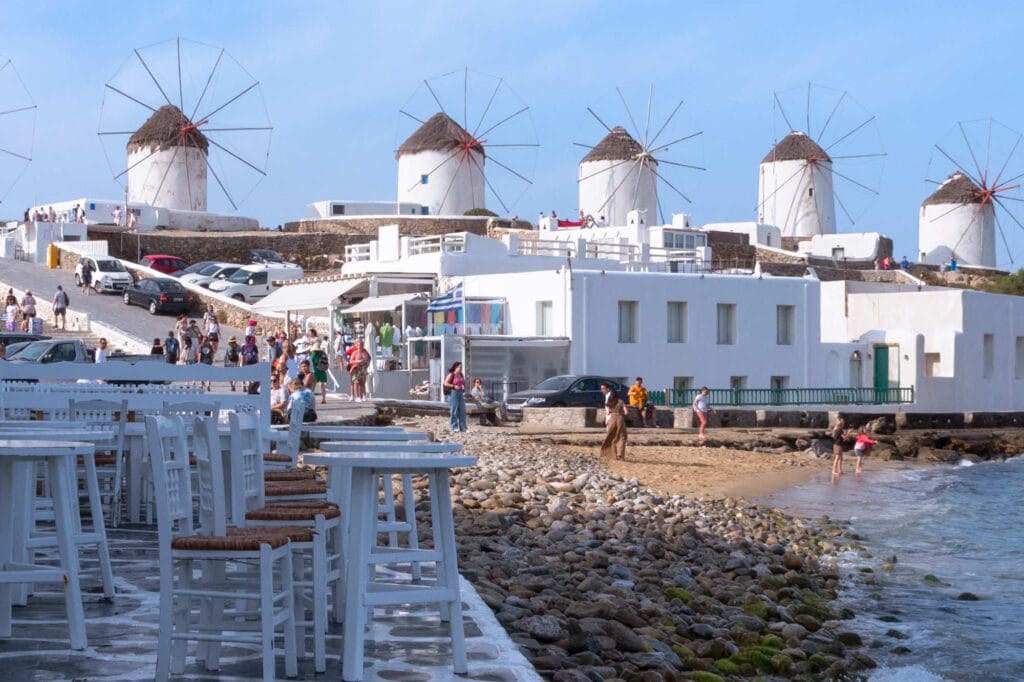
Athens and Santorini form a natural pairing, but if you have ten days or more, the obvious next step is to add one or two islands from the central Cyclades before or after Santorini.
Santorini → Paros → Mykonos
The most popular extension. From Santorini, a fast ferry to Paros takes about 1.5–2 hours. Paros offers quieter beaches, better village life, and significantly less commercial pressure than Santorini or Mykonos. From Paros, Mykonos is another 2-hour ferry ride north. Fly home from Mykonos (JMK), which has direct international connections in summer.
Santorini → Naxos
Naxos is Santorini’s calmer, larger neighbour — the biggest island in the Cyclades, with long sandy beaches, a substantial interior of mountain villages, and a food culture built on its own produce. The ferry crossing from Santorini takes about 2 hours. Two nights in Naxos before returning to Athens makes a complete, unhurried trip.
Add Ios Between Athens and Santorini
Ios sits directly on the Piraeus–Santorini ferry route and can be added as a one or two night stop between the two main destinations. It is less visited than Santorini and has a quieter, more local atmosphere outside its main town.
Our Cyclades island hopping guide covers all combinations in detail: Cyclades Island Hopping Itinerary.
Where to Stay in Athens
Athens’ hotel landscape has improved substantially in recent years — boutique properties in renovated neoclassical buildings, rooftop pools with Acropolis views, and a wider range of well-designed mid-range options than the city used to offer.
Best Neighbourhoods for Visitors
- Monastiraki and Plaka: central, walkable, closest to the main ancient sites. Expect some noise from bars and cafes in the evenings. Best for first-time visitors who want everything within walking distance.
- Koukaki: immediately south of the Acropolis, quieter than the tourist centre, with good independent restaurants and a local feel. Slightly better value than Monastiraki.
- Thissio: west of the Acropolis, good restaurant strip with views, residential and calm. Slightly further from the main sites but very pleasant.
- Kolonaki: upmarket, hilly, good for those who want design hotels and proximity to the National Gallery and museums. Less central for ancient sites.
Where to Stay in Santorini
Where you stay on Santorini shapes the entire experience. The island is long and narrow, and the different areas have genuinely different characters.
Oia
The most sought-after location on the island. Cave hotels carved into the caldera cliff, extraordinary views, romantic atmosphere. Also the most expensive and, in peak season, the most crowded during sunset hours. Book four to six months ahead for summer stays in any good property. Worth it for a special occasion or honeymoon trip.
Imerovigli
Perched on the highest point of the caldera rim, Imerovigli is quieter than either Fira or Oia, with some of the best caldera views on the island. A small selection of boutique hotels and cave houses, mostly mid-to-high range. The 10-kilometre caldera walk to Oia starts here.
Fira
The island’s capital and the most practical base — all ferry connections, restaurants, shops, and the cable car to the old port are within walking distance. More lively than Oia or Imerovigli, with a broader range of accommodation at various price points. Good choice if you want to be central rather than secluded.
Perissa and Kamari (East Coast)
The beach towns on the east coast are more affordable and more family-friendly. No caldera views, but direct beach access and a noticeably more relaxed atmosphere. A good choice if your priority is swimming and you are happy to drive or bus to the caldera villages.
Practical Tips for the Athens–Santorini Trip
Getting from Athens Airport to the City
The Metro Line 3 (Blue Line) connects Athens airport directly to the city centre — Syntagma Square and Monastiraki are the most useful stops for most visitors. The journey takes about 40 minutes and runs frequently. Taxis and rideshares (Beat is the main local app) are available outside arrivals and take a similar amount of time depending on traffic.
Getting from Athens Airport to Piraeus
If you are taking an overnight ferry and arriving at Athens airport on the same day, take the Metro to the city centre first (Line 3 to Monastiraki), then switch to Line 1 (Green Line) to Piraeus. The total journey is about 70 minutes. Alternatively, a taxi from the airport to Piraeus port takes 40–60 minutes depending on traffic and costs roughly €40–55.
Santorini Without a Car
Santorini is one of the few Greek islands where you can manage without a car, at least for a short stay. The local bus (KTEL) connects Fira to Oia, the beaches, and Akrotiri on a regular schedule in season. The cable car connects Fira town to the old port below. For more flexibility — particularly if you want to reach smaller beaches or wine villages — renting a quad bike, ATV, or small car for one or two days makes sense.
Crowd Management on Santorini
The island receives several million visitors a year, most of them concentrated into three or four months. Three strategies make a real difference: visiting Oia in the morning rather than at sunset, booking restaurants with caldera views for lunch rather than dinner, and staying at least one extra night on the island to find the quieter hours — early morning along the caldera path, late afternoon on the east coast beaches — that most visitors never experience.
Explore More
- Athens Travel Guide: Everything You Need to Know
- Athens in 2–3 Days: The Perfect Itinerary
- Best Hotels in Athens: From Budget to Luxury
- Best Restaurants in Athens: Where to Eat Like a Local
- Santorini Travel Guide: Everything You Need to Know
- Santorini Itinerary: 3–5 Days
- Santorini for Couples: A Romantic Escape
- Cyclades Island Hopping Itinerary
- Greece Ferry Guide: How to Book & Navigate Islands
FAQ: Athens to Santorini
How do you get from Athens to Santorini?
There are two main options: fly or take the ferry. The flight from Athens International Airport (ATH) to Santorini (JTR) takes 45 minutes and is operated by Olympic Air and Sky Express. The ferry from Piraeus port takes 8–9 hours on a conventional vessel (overnight option available) or 4.5–5 hours on a high-speed catamaran, which runs seasonally. Both options have their advantages depending on your priorities and available time.
Is it better to fly or take the ferry from Athens to Santorini?
Flying is faster and more practical for short trips — the whole journey door to door takes about 3–4 hours. The overnight ferry is a more immersive experience: you sleep on board and wake up arriving into Santorini, which is a memorable way to begin an island stay. For a week-long trip where time is limited, flying makes sense. For a longer trip or an island-hopping circuit, the ferry fits more naturally.
How long is the ferry from Athens (Piraeus) to Santorini?
The conventional ferry from Piraeus to Santorini takes approximately 8–9 hours depending on the operator and the number of intermediate stops. High-speed catamarans reduce this to around 4.5–5 hours but are seasonal and more expensive. The overnight conventional ferry is a practical option — book a cabin, depart in the evening, and arrive the following morning.
How many days should I spend in Athens before Santorini?
Two full days is the minimum to experience Athens properly — enough for the Acropolis, the Acropolis Museum, the National Archaeological Museum, and a few neighbourhood walks. If you have three days, you can explore more deeply, take a day trip to Cape Sounion or Delphi, and settle into the city’s pace. For a week-long Greece trip, we recommend two nights in Athens and three to four on Santorini.
Is Santorini worth it as part of a one-week trip to Greece?
Yes — for most first-time visitors, the combination of Athens and Santorini covers both the cultural and the island dimensions of Greece in a way that works well within a week. Athens gives you the ancient history; Santorini gives you the Aegean. If this is a return trip and you have already done both, consider diverting to less-visited Cyclades islands like Paros, Naxos, or Folegandros.
How far in advance should I book ferries and flights for this trip?
For July and August travel, book both flights and ferries at least six to eight weeks ahead. The Athens–Santorini domestic flight and the Piraeus–Santorini fast ferry route both sell out early in peak season. For shoulder season travel (May–June, September–October), two to four weeks ahead is generally sufficient, though securing accommodation and transport before you arrive is always preferable.
Can I do Athens and Santorini in 5 days?
Yes, just about — one night in Athens, three nights in Santorini, and a travel day works as a minimum itinerary. Fly both ways to maximise time. You will not see Athens in depth, but you will get the essential experience of both destinations. If you can stretch to seven days, you will feel significantly less rushed at both ends.
What is the best area to stay in Santorini for first-time visitors?
Fira is the most practical base for first-time visitors — central, well-connected, with the widest range of accommodation and easy access to ferries and buses. Oia is the most romantic option if budget allows, though it requires planning around the crowds. Imerovigli sits between the two in both geography and atmosphere: quieter than Fira, more accessible than Oia, with outstanding caldera views.
Ready to Book Your Athens to Santorini Trip?
The Athens–Santorini combination is one of the most satisfying ways to experience Greece — ancient and modern, city and island, history and sea. With the logistics sorted in advance, both destinations open up in ways that rushed day trips never allow.