Cyclades Island Hopping Itinerary: Santorini, Mykonos, Paros & More
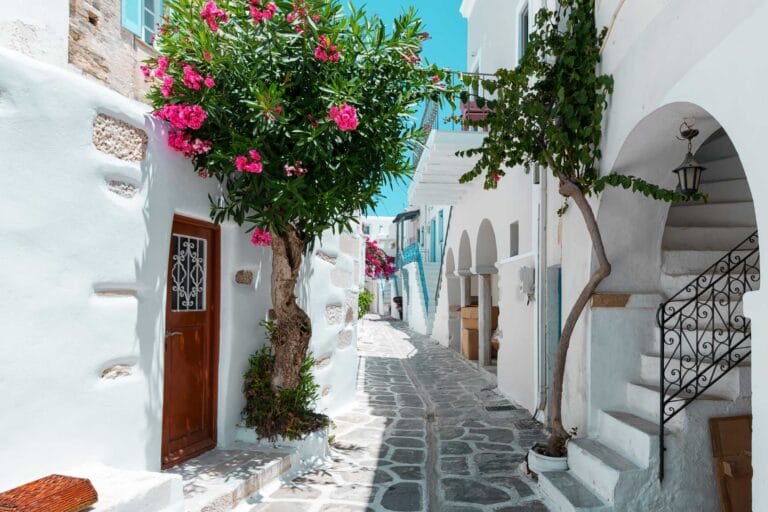
The Cyclades are a scattered constellation of islands in the Aegean — white cube houses, deep blue domes, ferries cutting across aquamarine water, and an atmosphere that manages to feel both timeless and intensely alive. Island hopping through the Cyclades is, for many people, the Greek experience they had in mind when they first thought about coming here.
But doing it well takes some planning. The ferry network is dense and the choices are many: which islands to combine, how many nights each deserves, which routes actually connect, and how to avoid spending half your holiday in transit. This Cyclades island hopping itinerary is built for a 10–14 day trip — long enough to feel each island properly, short enough to keep the whole thing from becoming logistically exhausting.
The route moves from Santorini in the south through the central Cyclades — Paros, Naxos — and up to Mykonos in the north. You can run it in either direction depending on your flights, but south-to-north tends to work most naturally with Aegean flight hubs.
Note: This page contains affiliate links. We may earn a small commission at no extra cost to you when you book through our links. This helps us keep creating free travel guides.
How to Plan a Cyclades Island Hopping Trip
Before you commit to any particular route, a few fundamentals are worth settling. They will shape everything else.
How Many Islands Is the Right Number?
Four islands over 10–14 days is the sweet spot for most travellers. With fewer, you miss the variety that makes island hopping worthwhile. With more, you spend too much time on ferries and not enough time actually arriving anywhere. Three nights on the main islands, two on the smaller ones, is a rhythm that works.
The Direction of Your Route
The classic direction is Santorini to Mykonos, south to north. Most visitors fly into Athens and take a short domestic flight or fast ferry to Santorini, then exit via Mykonos — both islands have direct international flights in summer, which makes logistics clean. The reverse (Mykonos to Santorini) works equally well if your flights align that way.
Booking Ferries in Advance
For travel in July and August, book ferries at least four to six weeks ahead. Popular routes — especially Santorini to Paros and Paros to Mykonos — sell out on fast catamarans well in advance during peak season. Slower conventional ferries have more capacity and are easier to secure last-minute, but the time difference matters on longer crossings.
Luggage
Travel light if you can. Ferries involve boarding and disembarking across gangways and sometimes small tenders to shore. Oversized luggage is a liability on cobblestone alleyways. A single bag you can carry up a flight of stairs without collapsing is worth its weight in ease.
The Classic Route: Santorini → Paros → Naxos → Mykonos
This route covers the four most compelling islands in the Cyclades, in an order that makes geographical and logistical sense. Each island offers something distinct from the others — the caldera drama of Santorini, the village life and beaches of Paros, the scale and depth of Naxos, the energy and glamour of Mykonos. Together, they give you the full Cyclades range.
Suggested duration: 10–14 days total
Best season: Late April to early June, September to October
Santorini: 3 Nights
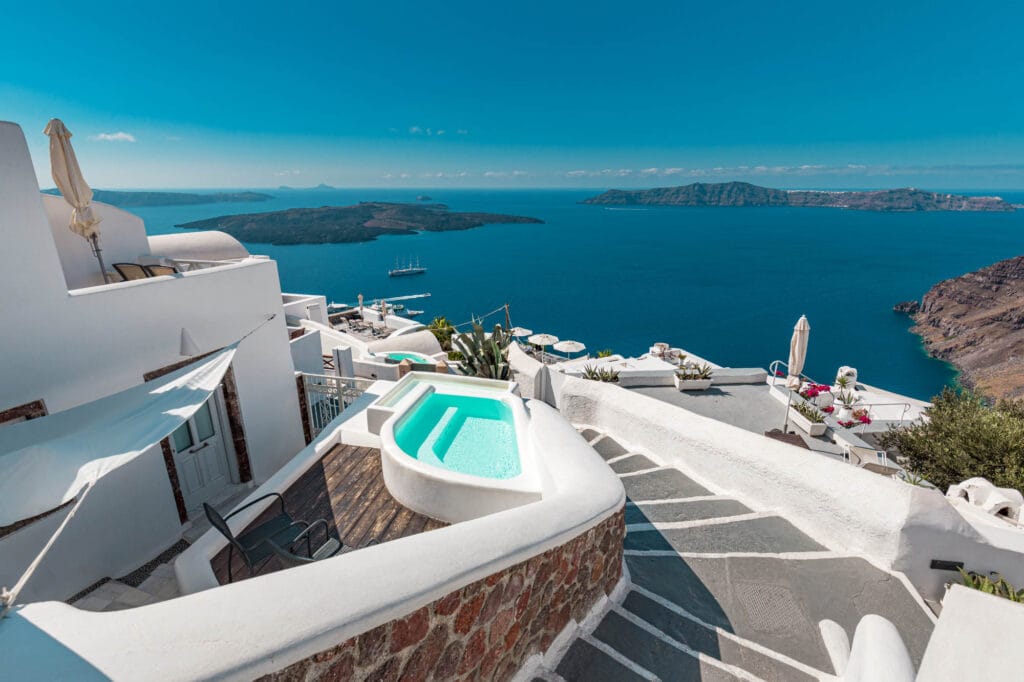
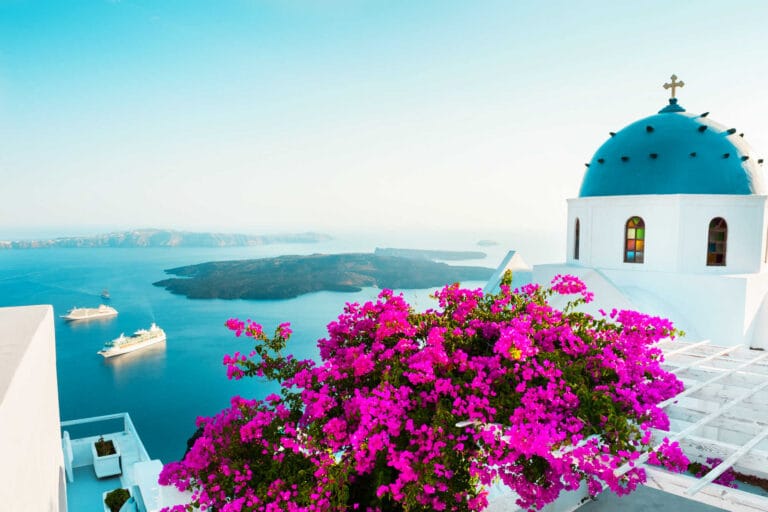
Santorini is unlike any other island in the Cyclades — or anywhere else in Greece. The entire western edge of the island is a caldera, a collapsed volcanic crater that drops 300 metres to the sea. The villages of Fira and Oia cling to the rim. The sunsets here are genuinely one of the great visual experiences in the Mediterranean, which is why the island draws the crowds it does — and why arriving outside of July and August makes such a difference to how it all feels.
- Day 1: Arrive, check in, walk Fira. The cliff-edge path between Fira and Firostefani is one of the best easy walks on the island.
- Day 2: Oia in the morning (before the tour groups arrive), caldera boat tour or hike in the afternoon. The hike from Fira to Oia along the caldera rim takes 2–3 hours and has exceptional views the entire way.
- Day 3: The beaches. Santorini’s beaches are volcanic — red, black, and white sand depending on where you go. Perissa and Perivolos on the south coast are the most swimmable. Red Beach near Akrotiri is dramatic but small. Combine a beach day with a visit to the Akrotiri archaeological site — a Bronze Age settlement preserved under volcanic ash, often called the ‘Minoan Pompeii’.
- Ferry to Paros on day 4 morning. The crossing takes approximately 1.5–2 hours on a fast catamaran.
For a complete breakdown of the island, read our Santorini Travel Guide — it covers everything from where to stay to what to skip.
Paros: 2–3 Nights
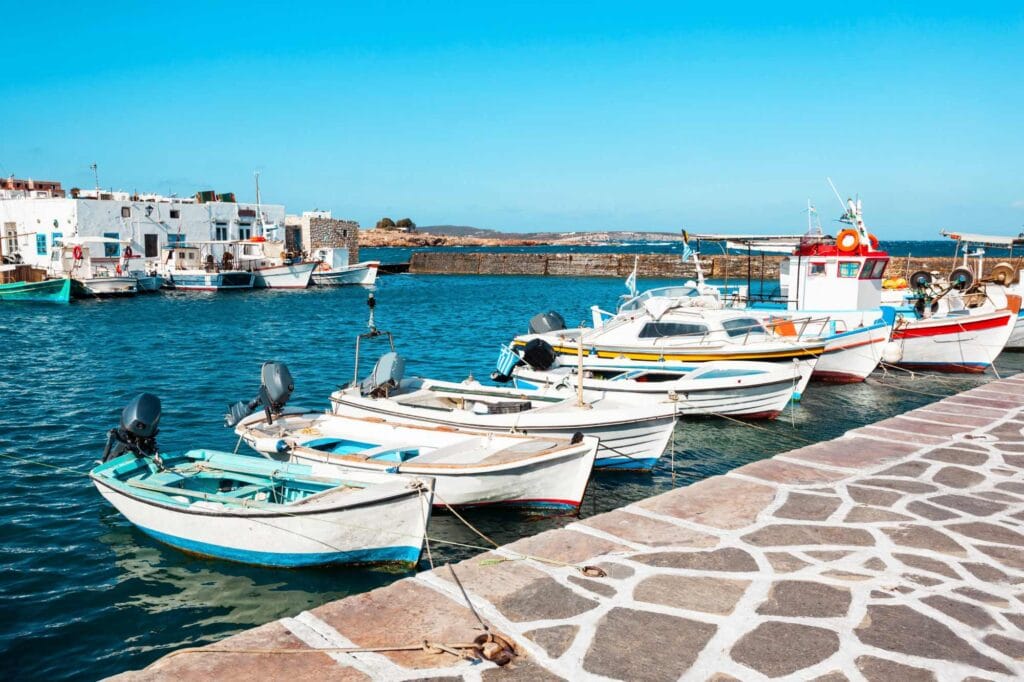
Paros is the island that consistently surprises people who expect it to be a lesser version of its famous neighbours. It is not. Paros has its own strong identity: a proper working fishing port in Parikia, the exceptionally beautiful village of Naoussa in the north, some of the best beaches in the Cyclades, and a sense of proportion that Santorini and Mykonos have long since lost. It is busy in August, genuinely lovely in every other month.
- Parikia: the main port town, worth an hour on foot — the old kastro quarter, the Church of Panagia Ekatontapiliani (one of the oldest churches in Greece, dating to the 4th century), the harbour front.
- Naoussa: take a local bus or rent a scooter and head north. This small fishing village has transformed into one of the Cyclades’ most charming spots — good restaurants, a working harbour, boutique accommodation. Arrive for lunch and stay through sunset.
- Beaches: Golden Beach on the southeast coast has the best conditions for windsurfing in the Aegean. Kolymbithres in the north, near Naoussa, has extraordinary sculpted granite rock formations. Santa Maria is calmer and family-friendly.
- Day trip option: the small island of Antiparos is 10 minutes by ferry from Paros and offers a noticeably quieter pace — a whitewashed village, a cave with impressive stalactites, and uncrowded beaches.
- Ferry to Naxos on departure morning. The crossing is roughly 45 minutes.
We cover both islands in detail in our Paros & Naxos: A Guide to Two Hidden Gems.
Naxos: 2 Nights
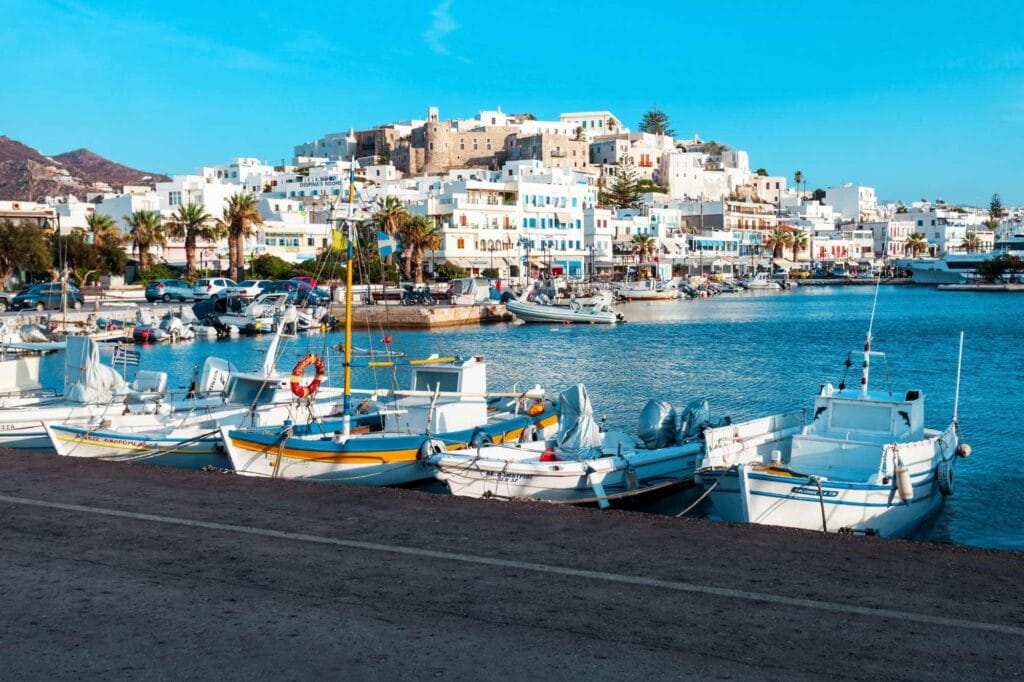
Naxos is the largest island in the Cyclades and, in many ways, the most self-sufficient. Unlike Santorini or Mykonos, it does not depend on tourism for its character — it produces its own food (the cheese, the potatoes, the citrus liqueur), has an interior of mountain villages and Byzantine churches, and offers a coastline that includes some of the longest sandy beaches in the Aegean. Two nights is enough to scratch the surface; three would let you breathe.
- Naxos Town (Chora): the Portara — the marble doorway of an unfinished ancient temple on the small islet at the harbour entrance — is one of the most iconic images in the Cyclades. Best seen at sunset, with the ferries passing behind it.
- The interior: rent a car for a day and drive into the mountain villages — Halki, Apiranthos, Filoti. Halki has a Byzantine church and an old Venetian tower. Apiranthos is built from marble and has a small museum. The drive alone, through terraced valleys and olive groves, is worth the detour.
- Beaches: the west coast has a continuous stretch of beach running south from Naxos Town — Agios Prokopios, Agia Anna, Plaka, Mikri Vigla. Plaka is the best: 4 kilometres of unspoilt sand with almost no development behind it.
- Ferry to Mykonos on departure day. Approximately 2 hours on a fast ferry.
Mykonos: 2–3 Nights
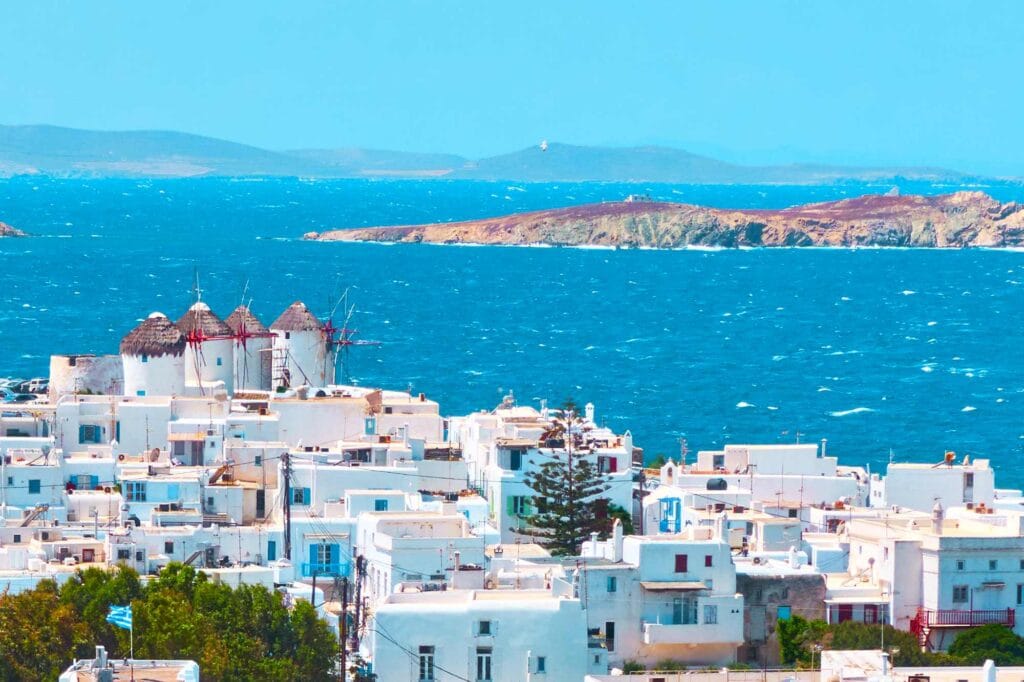
Mykonos has a reputation — nightlife, fashion, celebrity appearances, prices that make your eyes water. All of that is real. But Mykonos also has one of the most beautiful old towns in the Cyclades, extraordinary beaches, and a coastal light that photographers come specifically to work with. Two to three nights is enough to enjoy it on your own terms without feeling like you are merely observing someone else’s holiday.
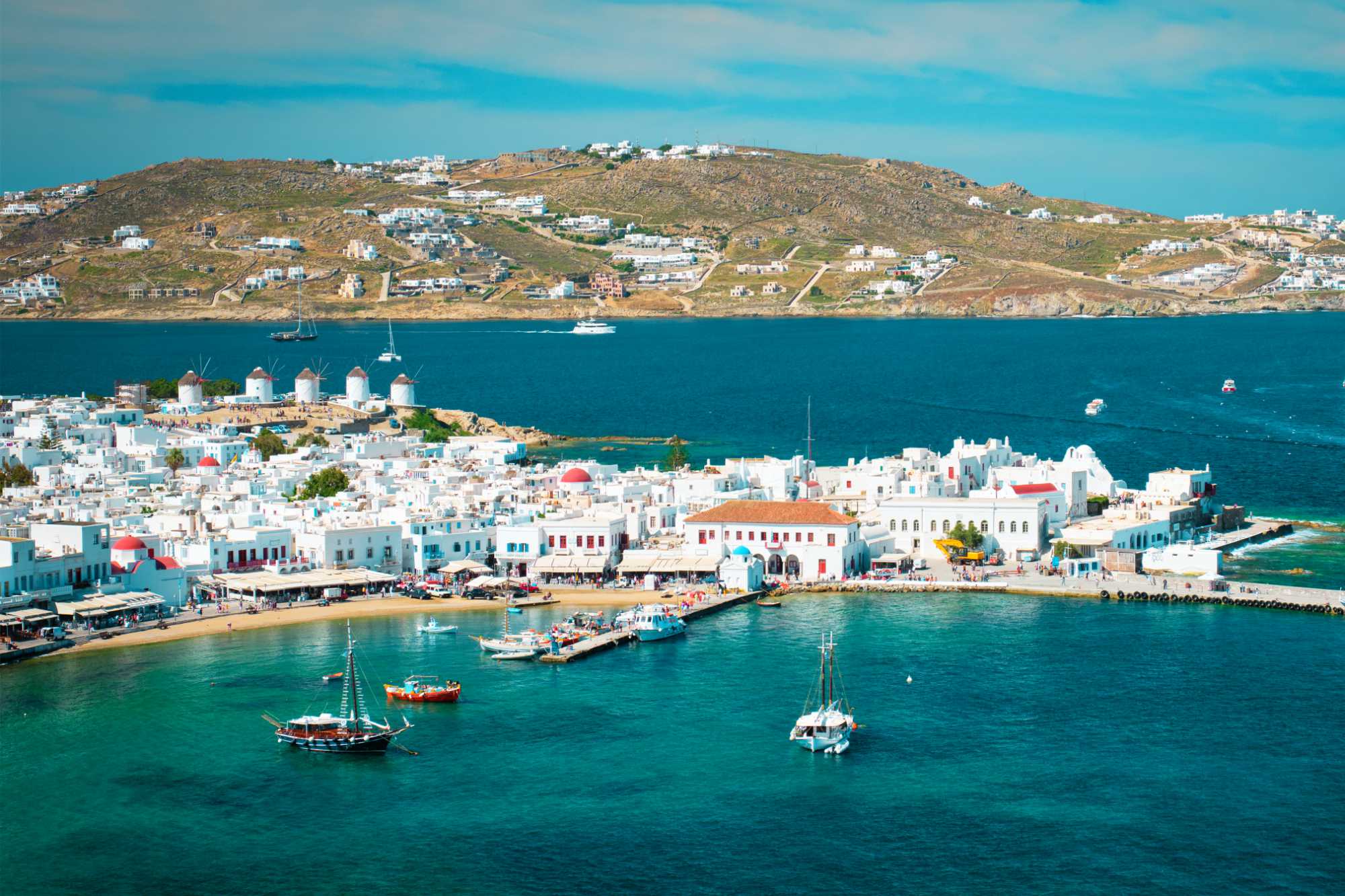
- Mykonos Town (Chora): the windmills above Little Venice are the island’s most photographed sight. Worth the walk at golden hour. The narrow streets of the old town reward aimless wandering — jewellery workshops, old churches, cats sleeping in doorways.
- Little Venice: the waterfront neighbourhood where the balconied houses extend directly over the sea. This is where to be for sunset — the light here is extraordinary and the bars are accordingly crowded. Arrive 30 minutes early to get a seat.
- Beaches: Psarou and Ornos are calmer and more sheltered — good for families and those who want a relaxed swim. Paradise and Super Paradise on the south coast are the famous party beaches — music, sun loungers, peak-season crowds.
- Delos: the uninhabited sacred island just 30 minutes by boat from Mykonos is one of the most significant archaeological sites in Greece — the mythological birthplace of Apollo and Artemis, a UNESCO World Heritage Site, and absolutely worth a half-day trip if ancient history interests you at all.
- Fly home from Mykonos (JMK) or take a ferry back to Athens.
For everything about the island, read our Mykonos Travel Guide and Best Hotels & Boutique Stays in Mykonos.
Optional Add-Ons: Ios, Milos, Folegandros
If your trip is 14 days or longer, or if you want to substitute one of the main islands for something less visited, these three deserve serious consideration.
Ios
Ios sits between Santorini and Paros and is easily added as a one or two night stop. It had a long reputation as a party island for young backpackers, and that scene still exists in Ios Town, but the rest of the island is calm and beautiful. Mylopotas Beach is one of the best in the Cyclades. Homer’s alleged tomb is on the northern hills, which gives Ios a cultural footnote that surprises most people.
Milos
Milos is in the western Cyclades, slightly off the main ferry circuit, but worth the extra routing. The island is volcanic and dramatically varied — sea caves, coloured cliffs, the famous Sarakiniko lunar beach, and the catacombs where the Venus de Milo was discovered in 1820. Two or three nights here justifies any detour from the main route.
Folegandros
Folegandros is a small, steep island between Milos and Santorini with no airport, limited ferry connections, and a strong reputation among travellers who value atmosphere over infrastructure. The main village (Chora) is perched dramatically on a cliff. It is one of those places that feels genuinely apart from the rest of the Cyclades — quieter, older, more itself.
Ferries: How to Book & What to Expect
Which Ferry Company?
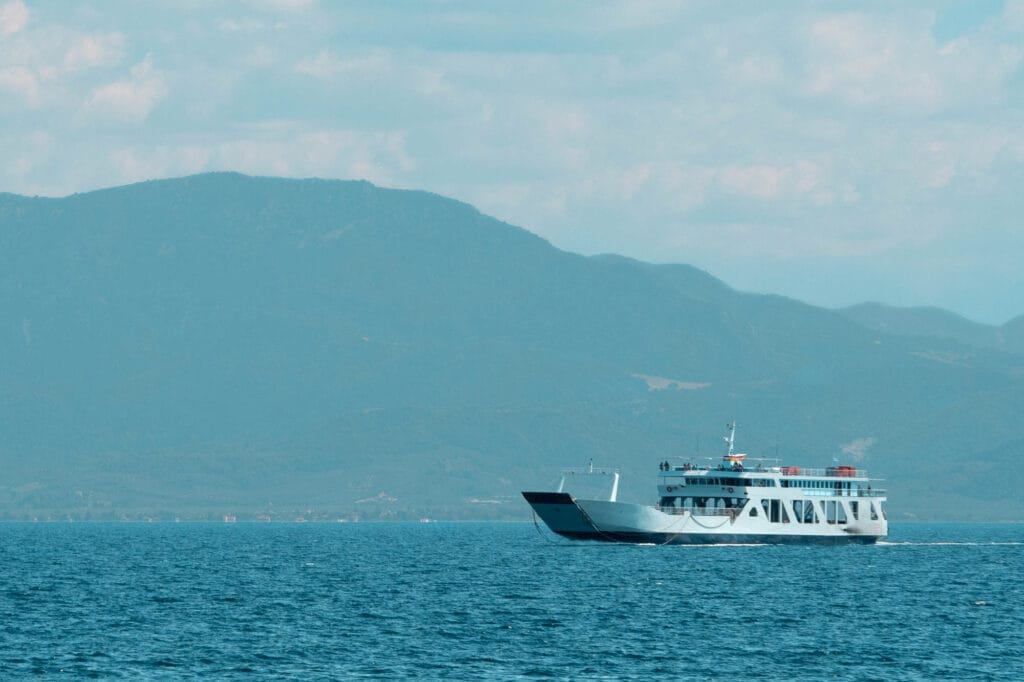
SeaJets and Golden Star Ferries operate the fastest catamarans on the main Cyclades routes. Hellenic Seaways and Blue Star Ferries run larger, slower conventional ferries that carry cars and have more deck space — useful if you prefer a leisurely crossing or are travelling with heavy luggage.
Key Routes & Approximate Journey Times
- Santorini (Thira) to Paros: 1.5–2 hours (fast catamaran) / 4–5 hours (conventional)
- Paros to Naxos: 40–50 minutes (fast) / 1.5 hours (conventional)
- Naxos to Mykonos: 1.5–2 hours (fast) / 3.5 hours (conventional)
- Athens (Piraeus) to Santorini: 5–8 hours (conventional overnight) / 4.5 hours (fast ferry, seasonal)
- Mykonos to Athens (Piraeus): 2.5–3 hours (fast) / 5 hours (conventional)
Booking Tips
Use a single booking platform for all legs — it keeps everything in one place and makes changes easier. Book the most popular routes (particularly anything involving Santorini or Mykonos in July and August) as early as possible. Always check the departure port carefully — some islands have more than one.
When to Go
Late April to Early June
The optimal window for island hopping. The weather is warm but not brutal, the sea is becoming swimmable, and crowds are manageable. Ferries run to full summer schedules from mid-May. Accommodation prices are significantly lower than peak season.
July and August
Peak season in every sense. The Meltemi wind blows strongly across the Cyclades in July and August — it keeps temperatures bearable but can cause ferry delays and cancellations, particularly for smaller catamarans. Santorini and Mykonos are very crowded. If you travel now, book everything months ahead and adjust your expectations accordingly.
September and October
The best months for beaches — the sea is at its warmest (26–28°C), the crowds have thinned noticeably after mid-September, and the light has softened from the harsh summer glare. October is quieter still, but some businesses begin to close toward the end of the month, particularly on smaller islands.
For the full seasonal breakdown, read our When Is the Best Time to Visit Greece? guide [LINK: /travel-tips/best-time-to-visit/].
Where to Stay on Each Island
Accommodation styles vary considerably across the Cyclades. A few general principles worth knowing before you book.
Santorini
Caldera-view properties in Oia and Imerovigli are the most sought-after on the island — expect high prices and the need to book months ahead in summer. If caldera views matter to you, book early and treat them as a genuine experience, not a backdrop. Fira is cheaper and more central. Perissa and Kamari on the east coast have the most budget-friendly options and are good bases if beach access is your priority.
Paros
Naoussa has some of the best boutique hotels in the Cyclades — small, carefully designed properties with a personal atmosphere. Parikia offers the most practical base for ferry connections. Both are well-served.
Naxos
Naxos Town is the best base: the old town is atmospheric and you are within walking distance of the first beaches. The beach strip south of town (Agios Prokopios, Agia Anna) has resort-style accommodation with direct beach access.
Mykonos
Mykonos Town is the most expensive area but gives you walkable access to everything. Ornos and Psarou are quieter beach-side alternatives with good family-friendly options. Super Paradise and Paradise Beach have resort hotels aimed squarely at the party end of the market.
Explore More About the Greek Islands
- Santorini Travel Guide: Everything You Need to Know
- Best Hotels in Santorini: Where to Stay
- Mykonos Travel Guide: Everything You Need to Know
- Best Hotels & Boutique Stays in Mykonos
- Paros & Naxos: A Guide to Two Hidden Gems
- Island Hopping in Greece: The Ultimate Guide
- Best Greek Islands for Couples: Romance & Relaxation
- Greece Ferry Guide: How to Book & Navigate Islands
FAQ: Cyclades Island Hopping Itinerary
How many days do you need to island hop in the Cyclades?
Ten to fourteen days is the ideal range for a Cyclades island hopping trip covering four islands. With ten days you can cover Santorini (3 nights), Paros (2 nights), Naxos (2 nights), and Mykonos (2 nights) comfortably. Fewer than seven days makes island hopping feel rushed; more than fourteen allows you to add smaller islands like Milos, Ios, or Folegandros.
What is the best island hopping route in the Cyclades?
The most practical and rewarding route for most travellers is Santorini → Paros → Naxos → Mykonos. It runs south to north, aligns with the main ferry connections, and allows you to exit from Mykonos — which has direct international flights in summer. The route can be reversed if your flights work better that way.
Do I need to book ferries in advance?
For travel in July and August, yes — book at least four to six weeks ahead, particularly for fast catamarans on the Santorini–Paros and Paros–Mykonos routes. Outside peak season, booking one to two weeks ahead is generally sufficient, though it is always worth securing your tickets before you arrive at the port.
How expensive is island hopping in the Cyclades?
The Cyclades cover a wide cost range. Santorini and Mykonos are among the most expensive destinations in Greece — accommodation, food, and beach services all carry a premium. Paros and Naxos are significantly more affordable. Budget roughly €150–250 per person per night for mid-range accommodation across the route in peak season, and less in shoulder season. Ferry tickets between islands typically cost €20–50 per person for fast ferries.
Can you island hop in the Cyclades without planning?
In shoulder season (May–June and September–October), spontaneous island hopping is possible — ferries are less crowded and accommodation easier to find on short notice. In July and August, arriving at a port without a booking is a gamble that rarely pays off. Key routes sell out and popular accommodation is gone months before peak season.
Is the Meltemi wind a problem for island hopping?
The Meltemi is a dry northern wind that blows across the Cyclades from mid-June through August. It keeps temperatures manageable and makes outdoor dining in the evenings pleasant. The downside: it can cause delays and cancellations on high-speed catamaran services, particularly on open-water crossings. Conventional ferries are less affected. Build flexibility into your schedule during these months.
Which Cyclades islands are best for couples?
Santorini is the obvious answer for romance — caldera sunsets, intimate cave hotels, candlelit dinners. But Folegandros, Paros (particularly Naoussa), and Ios in low season offer similar intimacy with fewer crowds. Mykonos has a strong couples scene too, though the atmosphere is livelier and less secluded.
Is it worth visiting Delos from Mykonos?
Yes, emphatically. Delos is one of the most important archaeological sites in the entire Aegean — the mythological birthplace of Apollo and Artemis, a major ancient trading centre, and remarkably well preserved. The boat from Mykonos takes 30 minutes. Plan three to four hours on the island. It is closed on Mondays. If you have any interest in ancient history, this is not optional.
Start Planning Your Cyclades Trip
A Cyclades island hopping itinerary rewards the planning you put into it. Sorted ferries mean relaxed crossings. Booked accommodation means you step off each boat into something that is already yours. The islands themselves take care of the rest.