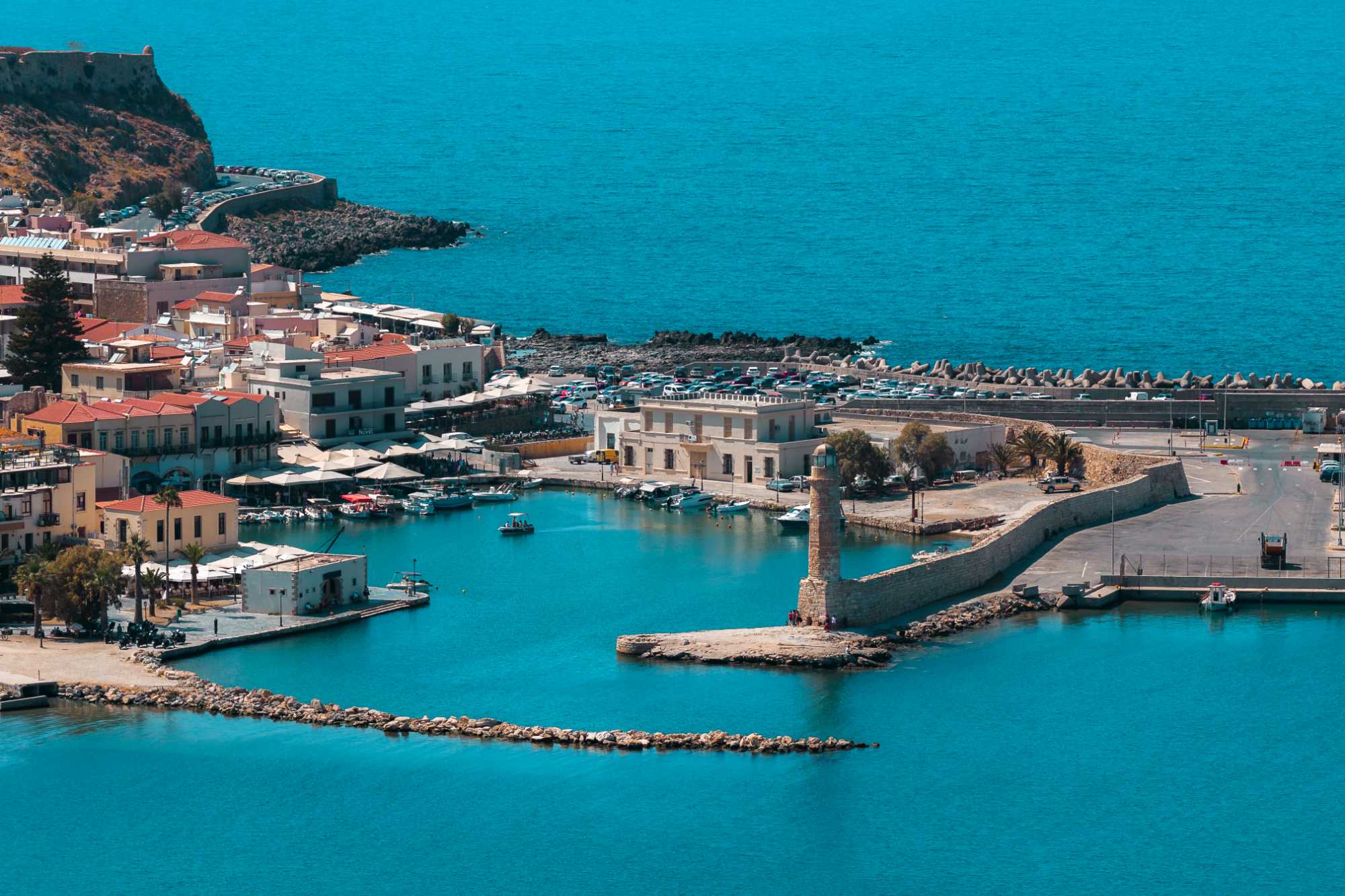
7 Days in Crete: The Perfect Island Itinerary
Crete is not a destination you can rush. It is Greece’s largest island, and it plays by its own rules — a wild, layered place where ancient Minoan palaces sit a few kilometres from Europe’s deepest gorge, and where the beaches shift from soft pink sand to dramatic sea caves within the same coastline. Seven days is exactly enough time to feel all of it without spending your holiday in a car.
This itinerary is built around the island’s natural geography: you move west to east, spending the first half exploring the rugged coast and mountain villages of the Chania region, then pivoting toward the central and eastern reaches — Rethymno, Heraklion, and the quieter bays beyond. Each day has a clear focus, which means less decision fatigue and more actual experience.
Whether you are travelling as a couple, arriving solo, or navigating the trip with kids in tow, this guide gives you the structure — and the flexibility to make it your own. Let’s start from day one.
Note: This page contains affiliate links. We may earn a small commission at no extra cost to you when you book through our links. This helps us keep creating free travel guides.
What to Know Before Your 7-Day Crete Trip
A few logistical things worth sorting before you land — they will make the rest of the week genuinely easier.
Renting a Car is Non-Negotiable
Crete’s best places are not on bus routes. Balos Lagoon, the Samaria Gorge trailhead, the villages of the White Mountains, the eastern coast — none of these are properly accessible without your own wheels. Rent a car from the airport on day one and return it on day seven. Budget at least €25–40/day for a compact; SUV or 4WD is worth it if you plan to reach remote beaches.
When to Go
Late April through June and September through October are the sweet spots. The gorge is open, the heat is manageable, and the beaches are not overrun. July and August are intense — temperatures push above 35°C, Samaria is extremely crowded, and coastal roads get congested. Winter closes many attractions and most accommodation.
Where to Base Yourself
For a 7-day trip, a split stay works best: three nights in or near Chania, one night in Rethymno, and the final nights in Heraklion or the eastern region. This avoids long daily drives and lets each region breathe. If you prefer simplicity, Chania is the most comfortable base for the first half; Heraklion works for the second.
Day 1 — Arrive in Chania, Get Oriented
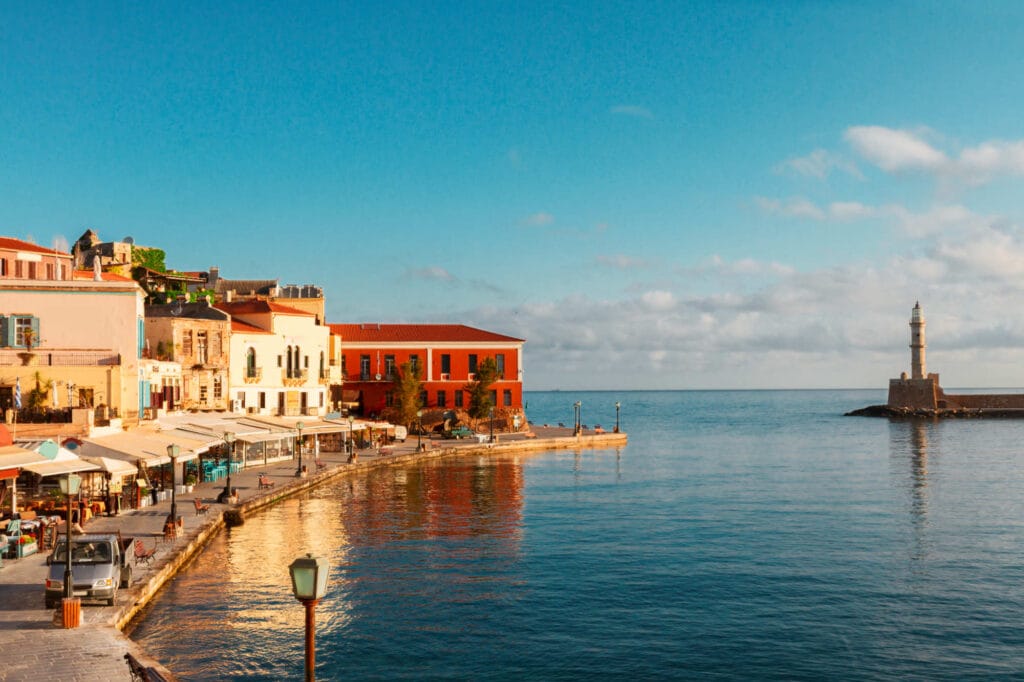
Most international flights into Crete land at Heraklion (HER), but a growing number connect directly to Chania (CHQ) — check both options when booking. If you arrive at Heraklion, the drive to Chania takes about 90 minutes along the E75; it is a straightforward highway run and a fine way to ease into island life.
- Collect your rental car at the airport and head straight to Chania.
- Check into your accommodation; aim for the Old Town or Nea Chora neighbourhood for easy walking access.
- Spend the afternoon on foot: the Venetian Harbour, the lighthouse, the covered market on Tsouderon Street.
- Dinner in the Old Town — the streets behind the harbour have some of Crete’s most reliable tavernas. Order dakos (barley rusk with tomatoes and mizithra), lamb slow-cooked in a wood oven, and local wine from the Heraklion plateau.
- Early night — tomorrow is a long one.
Day 2 — Old Town, Balos Lagoon Day Trip
Dedicate the morning to Chania’s streets — this is one of the best-preserved Venetian harbour towns in the Mediterranean, and it rewards slow exploration. Then in the afternoon, drive north to Balos.
- Morning: explore the Byzantine walls, the Etz Hayyim synagogue, and the Archaeological Museum of Chania.
- Grab lunch at a local spot near the central market — ask for souvlaki or a fresh Greek salad.
- Early afternoon: drive to the Balos trailhead (approx. 45 minutes from Chania centre). The access road is unpaved and rough — a 4WD or high-clearance car is helpful, but a standard rental can usually manage slowly.
- Hike down to the lagoon (about 20 minutes each way). The colour of the water here — white sand meeting turquoise shallows and a deeper cobalt beyond — is one of those sights that lives up to every photo you have ever seen.
- Return to Chania for dinner. The walk along the harbour at sunset, with the old lighthouse lit up across the water, is the kind of moment you will keep returning to mentally for years.
Day 3 — Samaria Gorge (The Big Hike)
The Samaria Gorge is one of Europe’s longest walkable gorges — 16 km end to end, dropping from 1,227 metres at the top to sea level at the small village of Agia Roumeli. It is a serious undertaking, but not a technical one. You do not need climbing experience or specialist gear; you do need good shoes, water, and a reasonably early start.
- Leave Chania by 7:00 am to reach the Xyloskalo trailhead (Omalos Plateau) before the main crowds.
- The descent takes 4–6 hours depending on your pace. The narrow section, called the Iron Gates, is the gorge’s most dramatic passage — sheer walls just 3–4 metres apart, river stones underfoot.
- The trail ends at Agia Roumeli, a tiny village accessible only on foot or by boat. Lunch here, swim at the pebble beach, recover.
- Take the ferry from Agia Roumeli to Sfakia (Chora Sfakion) — runs several times in the afternoon. From Sfakia, a bus or taxi returns you to the trailhead to collect your car.
- Rest evening back in Chania. Your legs will know what they did.
For the full trail logistics and everything you need to know before the descent, read our Samaria Gorge & Best Hikes in Crete guide.
Day 4 — Sougia, Sfakia & the Southwest Coast
The southwest coast of Crete is the least developed stretch of shoreline on the island — and intentionally so. There are no big resort towns here, just small fishing harbours, dark pebble beaches, and the feeling that most visitors never make it this far.
- Drive south from Chania through the White Mountains to Sougia — a low-key village with a long pebble beach and a handful of tavernas. Swim in the morning.
- Continue east along the coastal road to Loutro — a car-free village accessible only by ferry or foot. Even a short stop justifies the detour.
- Sfakia (Chora Sfakion) for lunch: fresh fish, fried kalitsounia (local cheese pastries), cold beer.
- Afternoon: drive east toward Rethymno. Check in before dinner.
- Evening in Rethymno’s old town. This is one of those places where you wander without a plan and end up sitting at a table in a narrow alley, and it all feels entirely right.
Day 5 — Rethymno: Old Town, Fortezza & the Beach
Rethymno sits midway between Chania and Heraklion, and it has the feel of both without entirely belonging to either. The old town is Venetian and Ottoman in equal measure — minarets beside church bells, carved wooden balconies, fountain squares. The Fortezza, the great Venetian fortress above the harbour, is the best viewpoint on the north coast.
- Morning: Fortezza di Rethymno — arrive early before the heat. The views over the harbour and the mountains inland are exceptional.
- Walk down through the old town: the Venetian loggia, the Rimondi Fountain, the mosque-turned-exhibition-space.
- Lunch: the fish tavernas on the inner harbour are the most reliable bet in Rethymno.
- Afternoon: the town beach stretches east of the old town — long, relatively uncrowded compared to Heraklion, good for a relaxed swim.
- Drive to Heraklion in the late afternoon (90 minutes). Check into your hotel.
Day 6 — Heraklion: Knossos & the Archaeological Museum
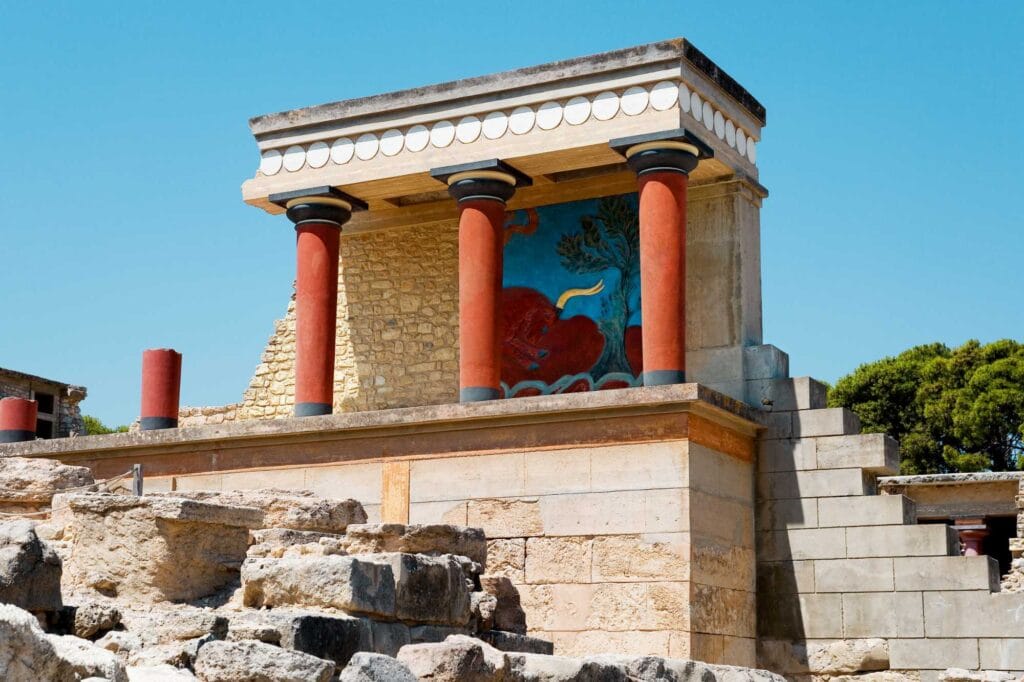
Heraklion is the island’s capital and its most historically dense city. On day six, you are here for two things above all else: the Palace of Knossos and the Heraklion Archaeological Museum. Together they form the most complete picture of Minoan civilisation available anywhere in the world.
- Start at the Palace of Knossos (arrive at opening time, 08:00, to avoid both crowds and midday heat). The site is the centre of Minoan civilisation — a 20,000 m2 palace complex dating to 1700 BCE. The frescoes, the labyrinthine layout, the sheer scale of it.
- Return to the city centre for the Archaeological Museum on Xanthoudidou Street. This is arguably the most important collection of Minoan artefacts in the world — the original frescoes from Knossos, the Phaistos Disc, the Bull’s Head rhyton. Allow two hours minimum.
- Lunch in the old city near the Lions Square (Plateia Venizelou). The area has changed significantly in recent years — more cafes, better food than the tourist traps of the past.
- Afternoon: Koules Fortress at the entrance to the old harbour, and a walk along the old walls.
- Dinner: Heraklion has a better restaurant scene than most visitors expect. The neighbourhood around Daedalou Street has a solid range.
If you want to extend your time in the capital, our Heraklion Guide: Gateway to Crete covers the city in full detail.
Day 7 — Elounda, Spinalonga & a Relaxed Farewell
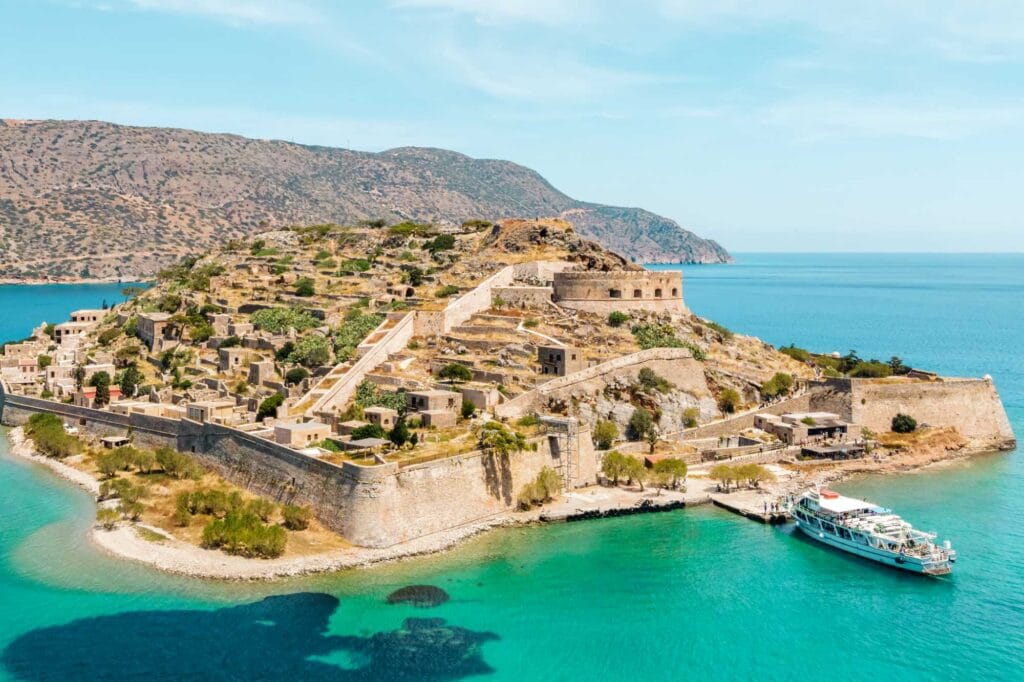
The eastern coast of Crete, particularly the Elounda Bay area, has the island’s most famous luxury resort strip — but also one of its most compelling historical sites. Spinalonga, the small fortified islet in the middle of the bay, served as one of Europe’s last active leper colonies until 1957. It is a strange, haunting, beautiful place.
- Drive from Heraklion to Elounda — about 70 kilometres along the north coast road. The drive itself is scenic.
- Take the short boat trip to Spinalonga from Elounda or the nearby village of Plaka. The boats run frequently from spring through autumn. Walk the full circuit of the island — the Venetian fortifications, the abandoned hospital buildings, the small church.
- Lunch back in Elounda — the bay views from the waterfront tavernas are among the best on the island.
- Afternoon: swim at one of the pebbly beaches around Plaka or Schisma before driving back.
- Return to Heraklion airport. Return the rental car, and carry with you the distinct feeling that seven days was both enough and not nearly enough.
Getting Around Crete: Practical Notes
Driving
A rental car is the only practical way to follow this itinerary. The road network is extensive, mostly in good condition on main routes, and variable on mountain tracks. Give yourself extra time whenever you leave the north coast highway. GPS navigation is reliable; download offline maps as a backup.
Ferries
Crete is connected to Athens by overnight ferries (Piraeus) — a useful option if you plan to include Athens in a longer trip. Within Crete, short ferry hops along the southwest coast (Sfakia, Agia Roumeli, Loutro, Sougia) are part of how that coastline works — budget time for them and they become highlights rather than logistics.
Flights
Heraklion (HER) has more international connections; Chania (CHQ) is smaller but convenient if your itinerary starts in the west. Budget carriers serve both airports from most major European cities from spring through autumn.
Where to Stay: Accommodation by Region
Crete’s accommodation spectrum runs from backpacker-friendly rooms to some of the Aegean’s most celebrated boutique hotels. Here is a region-by-region quick guide aligned with this itinerary:
Chania (Nights 1–3)
The Old Town offers the most atmospheric options: small boutique hotels inside restored Venetian buildings, with stone walls, roof terraces, and harbour views. Book early — good properties in the historic centre sell out months in advance for summer. Nea Chora, just west of the old town, has apartments and studios at better price points with a short walk to the harbour.
Rethymno (Night 4)
The old town has a handful of excellent boutique options. Alternatively, the resort strip east of the city offers all-inclusive hotels with beach access — practical if you are travelling with children.
Heraklion / East Crete (Nights 5–7)
Heraklion itself has reliable business-class hotels near the centre. For the eastern coast (Elounda, Agios Nikolaos), the region hosts some of Crete’s — and Greece’s — finest luxury properties. The Elounda Peninsula area in particular is worth knowing about if budget allows.
For family-friendly hotel picks and accommodation tips specific to Crete, check our Crete with Kids: A Family-Friendly Guide.
Explore More About Crete
- Crete Travel Guide: The Ultimate Island Adventure
- Crete with Kids: A Family-Friendly Guide
- Best Beaches in Crete: From Elounda to Falasarna
- Samaria Gorge & Best Hikes in Crete
- Best Car Rentals in Greece: How to Choose & Book
- Greece Ferry Guide: How to Book & Navigate Islands
FAQ: 7 Days in Crete
Is 7 days enough time for Crete?
Seven days is enough to experience the main regions — the west (Chania, Balos, Samaria), the centre (Rethymno, Heraklion, Knossos), and the east (Elounda, Spinalonga). You will not see everything, but you will not feel rushed either. A second visit invites deeper exploration of the east and the Lasithi Plateau.
Do I need to rent a car for a week in Crete?
Yes, for this itinerary a car is essential. Public buses connect the major north coast towns, but the southwest coast, Balos Lagoon, the Samaria trailhead, and most beach destinations are not accessible without your own transport. Rent from the airport on arrival.
Can I do the Samaria Gorge without a guide?
Yes. The gorge is a well-marked, self-guided trail — no guide required. You do need good walking shoes, plenty of water (at least 2 litres), sun protection, and a realistic fitness level. The distance is 16 km with significant descent. Children under 8 are not permitted on the trail.
What is the best base for a week in Crete?
For a week-long trip, a split base works better than staying in one place. Three nights in Chania for the west, one in Rethymno, two to three in Heraklion or the east. If you strongly prefer a single base, Chania covers the west more comfortably than Heraklion covers the east.
When does the Samaria Gorge open and close?
The gorge typically opens in early May and closes in October, depending on weather and water levels. In winter, the river running through the gorge makes passage impossible and the trail is closed. Always check current status before planning your day around the hike.
How far in advance should I book accommodation in Crete?
For travel between June and August, book at least three to four months ahead — especially for Chania Old Town properties, which have limited rooms and high demand. Outside peak season, two to four weeks ahead is generally sufficient, though the best boutique options fill quickly year-round.
Is Crete suitable for families with children?
Crete is one of Greece’s most family-friendly islands. Many north coast beaches have gentle entry, shallow water, and facilities. The archaeological sites engage children who have any interest in ancient history. The Samaria Gorge is not suitable for young children, but plenty of other activities are.
What should I eat in Crete that I cannot find elsewhere?
Dakos (barley rusk topped with fresh tomato, olive oil, and mizithra cheese), kalitsounia (small pastries with soft cheese or wild greens), lamb or goat slow-cooked with herbs, fresh seafood along the south coast, and Cretan thyme honey. Washing all of it down with local raki (tsikoudia) served at the end of a meal is practically obligatory.
Ready to Start Planning Your Crete Trip?
The week outlined above gives you a real framework — not a rigid script. Adjust the days to suit your pace, add an extra beach afternoon if that is what the day calls for, and don’t feel obliged to follow every kilometre of the suggested route.
When you are ready to lock in the details, these resources will help: