2 Weeks in Greece: The Ultimate Trip Plan
2 weeks in Greece changes the way you experience the country. With seven days you’re making sacrifices; with ten you’re moving efficiently. With fourteen, you can finally travel the way Greece deserves — slowly enough to sit in a village square for an hour and notice what changes, to take a boat to a beach no bus reaches, to eat somewhere twice because the food was that good.
This itinerary covers the full circuit: Athens for history and food, Santorini for the dramatic caldera landscape, Paros as the quieter Cycladic alternative most travelers skip, Mykonos for its iconic town and beaches, and Crete for five days because the largest Greek island rewards the extra time more than any other destination on this list.
The route runs in a logical arc — no backtracking, clean connections, a mix of flights and ferries. We’ve built it around how real travelers move, not how travel brochures suggest they should.
Note: This page contains affiliate links. We may earn a small commission at no extra cost to you when you book through our links. This helps us keep creating free travel guides.
Days 1–2: Athens — History, Food & Neighborhoods
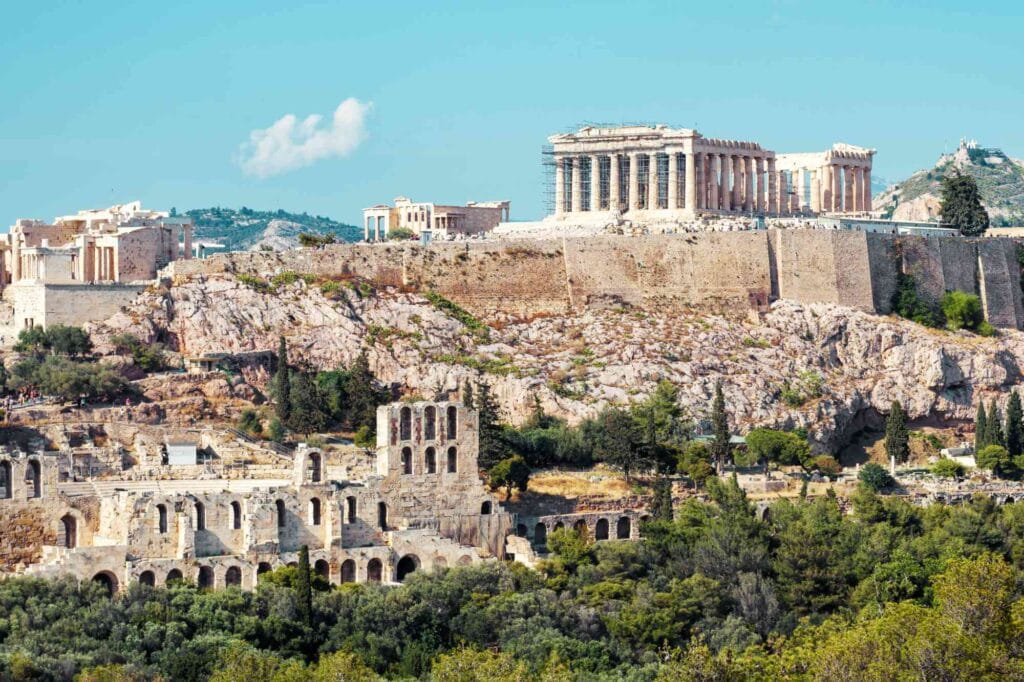
Athens is better than its reputation among travelers who’ve never been. Most people fly through it en route to the islands and assume two days is more than enough. It is — but only if you use them deliberately. The city holds one of the world’s great archaeological collections, an underrated food scene built on genuine ingredients, and neighborhoods that shift character every few blocks.
Day 1 — Land, Orient, Explore Plaka
Fly into Athens International Airport (ATH). Take the X95 express bus to Syntagma Square (about an hour, inexpensive) or a taxi (30–40 minutes, more comfortable with luggage). Check into a hotel in Monastiraki, Koukaki, or Psiri — all walkable to everything that matters.
The first afternoon belongs to Plaka: the oldest neighborhood in continuous habitation in Athens, built into the lower slopes of the Acropolis hill. Walk without a fixed route. The streets are narrow and slightly chaotic, the tavernas spill onto the pavement, and the Acropolis appears at the end of unexpected alleys. Don’t eat at the first place that flags you down with an English menu — keep walking until you find somewhere with a handwritten board or a kitchen visible from the street.
Evening: Monastiraki Square. Rooftop bars and restaurants overlook the Acropolis lit up against the night sky. It’s a deliberately beautiful introduction to the city, and it works every time.
Day 2 — The Acropolis & What Comes After
Tickets online, arrival by 8:00 AM. The Acropolis opens early and the difference between arriving at 8 AM and 10 AM is the difference between a contemplative walk and a crowd management exercise. The Parthenon, the Erechtheion, the Temple of Athena Nike — allow 90 minutes on the hill itself.
Walk directly down to the Acropolis Museum at the base of the hill. The building is exceptional — designed by Bernard Tschumi with excavated ruins visible through glass floors — and the collection puts every stone you just saw into narrative context. Two hours minimum.
Afternoon: Monastiraki Flea Market for an hour of wandering, then lunch at one of the souvlaki counters near the square (Kostas or Thanasis, both cash-only, both worth the queue). Spend the late afternoon in Syntagma or push to the National Archaeological Museum if you have the energy — it’s genuinely world-class and consistently undervisited.
Evening: dinner in Psiri or Thisio. Order the grilled octopus, the taramosalata, the dakos. Tomorrow you leave for the caldera.
For a deeper look at the city, read our Athens Travel Guide.
Days 3–5: Santorini — Caldera, Beaches & the Oia Moment
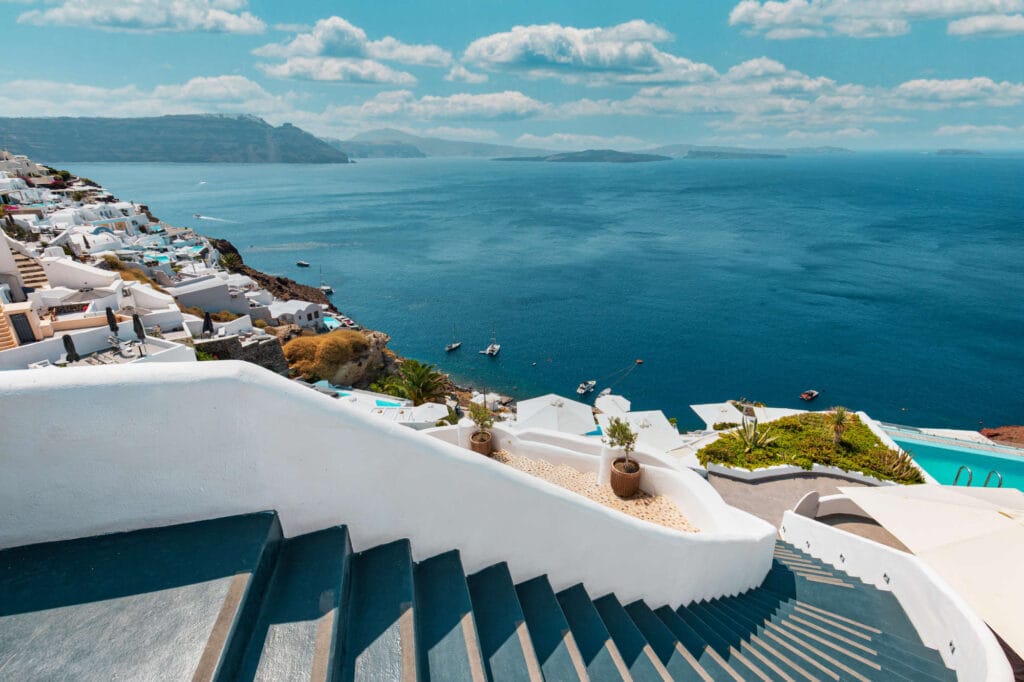
Three days is the right amount for Santorini. One day is a rushed disappointment. Two works but leaves you feeling like you’ve only seen the surface. Three gives you time to absorb the caldera, explore the south of the island properly, and earn the Oia sunset rather than simply chase it.
Day 3 — Arrive & the Caldera Path
Morning flight Athens to Santorini (JTR), 45 minutes. Transfer to Fira by pre-booked hotel transfer or KTEL bus. Check in and head out.
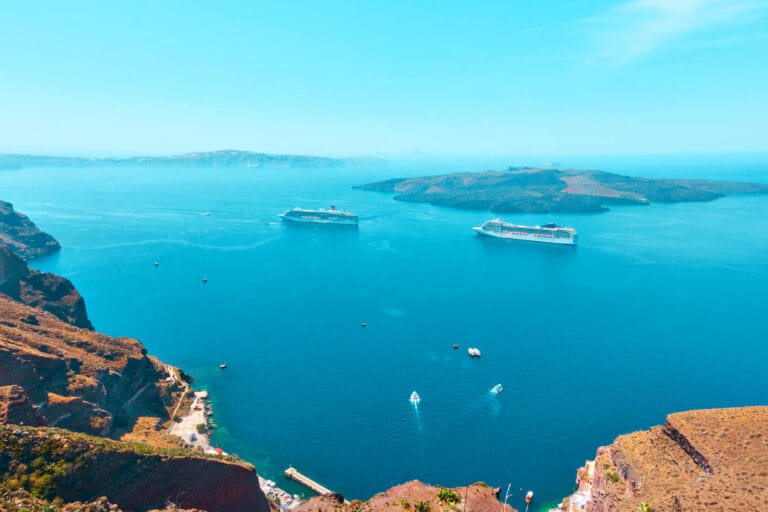
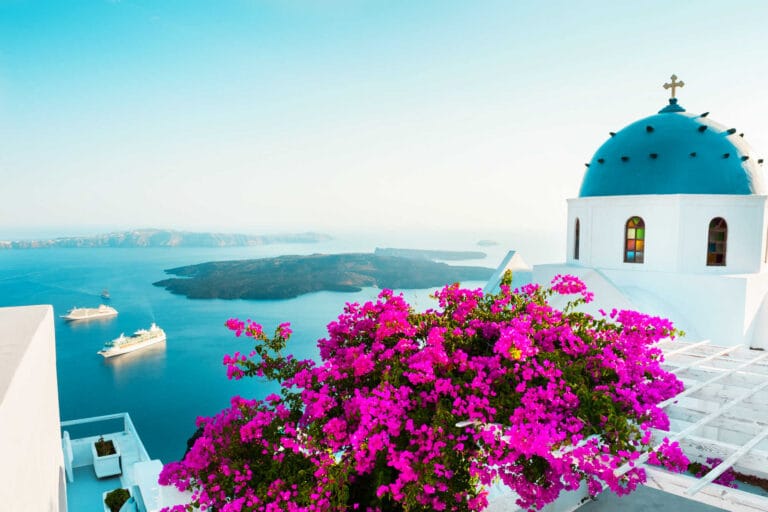
Walk the caldera path north from Fira toward Imerovigli. This 4 km path along the rim is one of the best walks in the Cyclades — the caldera drops to the left, whitewashed buildings cling to the cliffs, and the volcanic islets sit in deep blue water far below. Most first-time visitors skip this and go straight to Oia. That’s a mistake. Save Oia for Day 5 when you can do it properly.
Dinner in Fira tonight: one caldera-view restaurant for the experience, then local spots for the rest of the trip.
Day 4 — South of the Island
Rent a car or ATV and head south. Perissa and Perivolos beaches have black volcanic sand — dramatic, hot underfoot, worth a morning swim. From there, drive to Akrotiri, the Bronze Age settlement preserved under volcanic ash since around 1600 BC. It’s one of the best-preserved prehistoric sites in Europe and significantly less crowded than the Acropolis. Allow 90 minutes.
Afternoon: wine tasting at Santo Wines or Estate Argyros, both on the caldera rim with exceptional views. The Assyrtiko grape grown in Santorini’s volcanic soil is unlike anything from the mainland — distinctive, mineral-driven, worth understanding. Stop through Pyrgos village afterward — the island’s highest point, quieter than the caldera towns, with a Byzantine fortress at the summit.
Day 5 — Oia Morning & Sunset
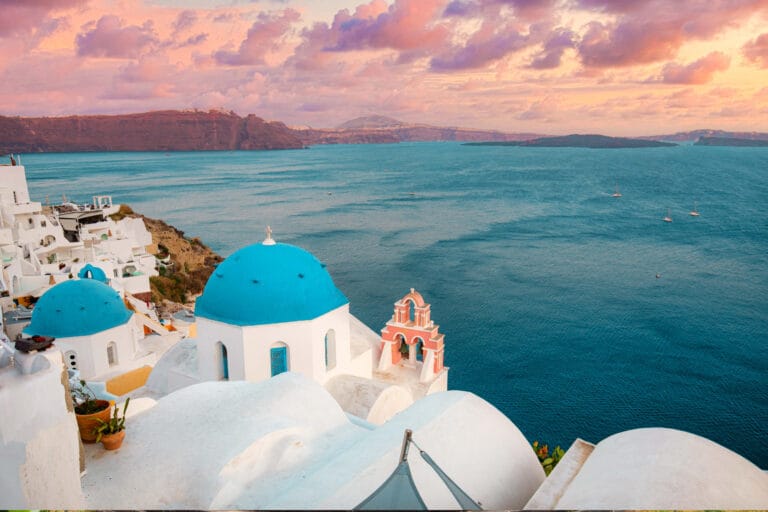
Arrive in Oia before 9 AM. The village before the cruise ship day-trippers arrive is a different place — quiet streets, soft morning light, the windmills visible from the northern end of the path. Walk the alleyways, have coffee over the caldera, browse without anyone in your way.
Afternoon: prepare for tomorrow’s ferry to Paros. Book if you haven’t (standard ferry, roughly 1.5–2 hours). Return to Oia by 6:30 PM for sunset at the Kastro ruins. Arrive early, find a spot, and stay. The light here as the sun drops behind Thirassia island is the scene that built Santorini’s reputation — see it once properly.
For the full island guide, read our Santorini Travel Guide.
Days 6–7: Paros — The Cyclades at Their Quietest
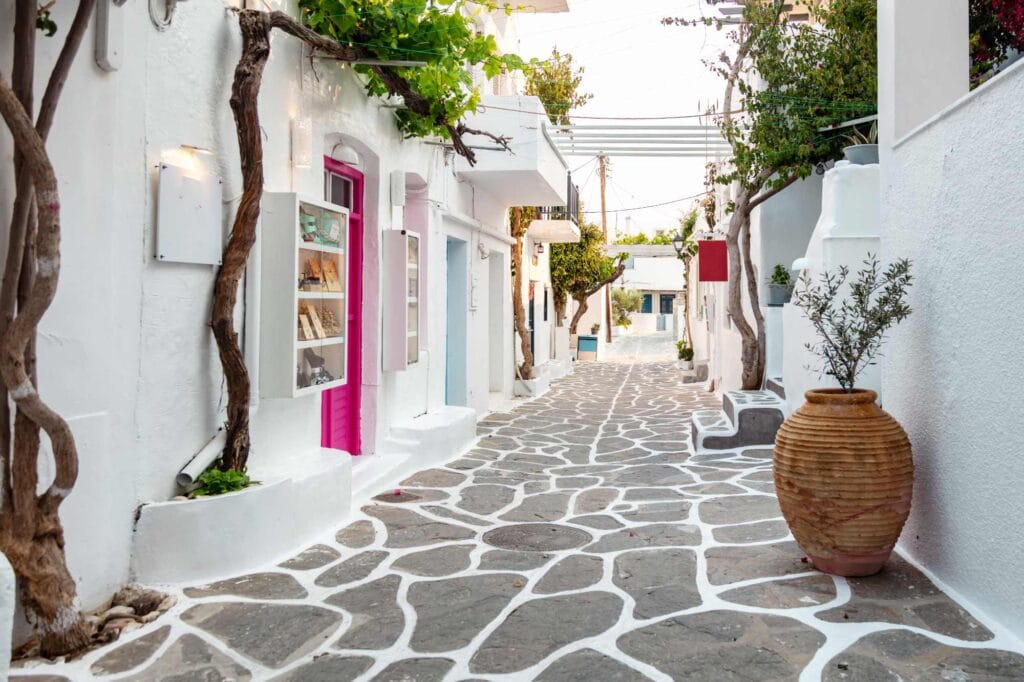
Paros is the island that regular Greece travelers recommend to each other. It doesn’t have Santorini’s drama or Mykonos’s reputation, and that’s precisely the point. What it has is a beautiful Cycladic old town (Parikia), some of the best beaches in the archipelago, excellent seafood, and the kind of atmosphere that’s getting harder to find on the more famous islands. Two days here resets the pace of the trip.
Day 6 — Ferry from Santorini & Parikia
Morning ferry from Santorini to Paros — roughly 1.5–2 hours on a standard ferry, less on high-speed. The port at Parikia is the main town, and the old town center is a five-minute walk from the dock.
Parikia old town is built around the Panagia Ekatontapiliani — the Church of a Hundred Doors — one of the oldest and best-preserved Byzantine churches in Greece, dating to the 4th century. It’s genuinely remarkable and consistently undervisited given its quality. Spend an hour here.
Afternoon: walk through the kastro (the old Venetian fortress built with marble from ancient temples — you can still see column drums in the walls) and out to the fishing harbor. Lunch at one of the harbor tavernas: grilled fish, fresh from that morning.
Evening: Parikia has a good bar and restaurant scene concentrated in the old town alleyways. Quieter than Mykonos, better for conversation, more genuinely local.
Day 7 — Naoussa & the Beaches
Rent a scooter or small car and head to Naoussa on the north coast — about 12 km from Parikia. Naoussa is a working fishing village that has managed to absorb tourism without losing its character: a small harbor lined with wooden boats, whitewashed houses, and tavernas that serve what the boats brought in that morning.
Beaches near Naoussa are excellent: Kolymbithres has distinctive granite rock formations and clear water; Santa Maria on the northeastern tip is windsurfing territory with a long stretch of sand; Monastiri is quieter, tucked below a headland. Pick one based on mood.
Return to Parikia in the evening for dinner and the overnight ferry or early morning boat to Mykonos. (Paros to Mykonos is roughly 1–1.5 hours by high-speed ferry.)
For more on the island pair, read our Paros & Naxos guide.
Days 8–9: Mykonos — The Town, the Beaches, the Windmills
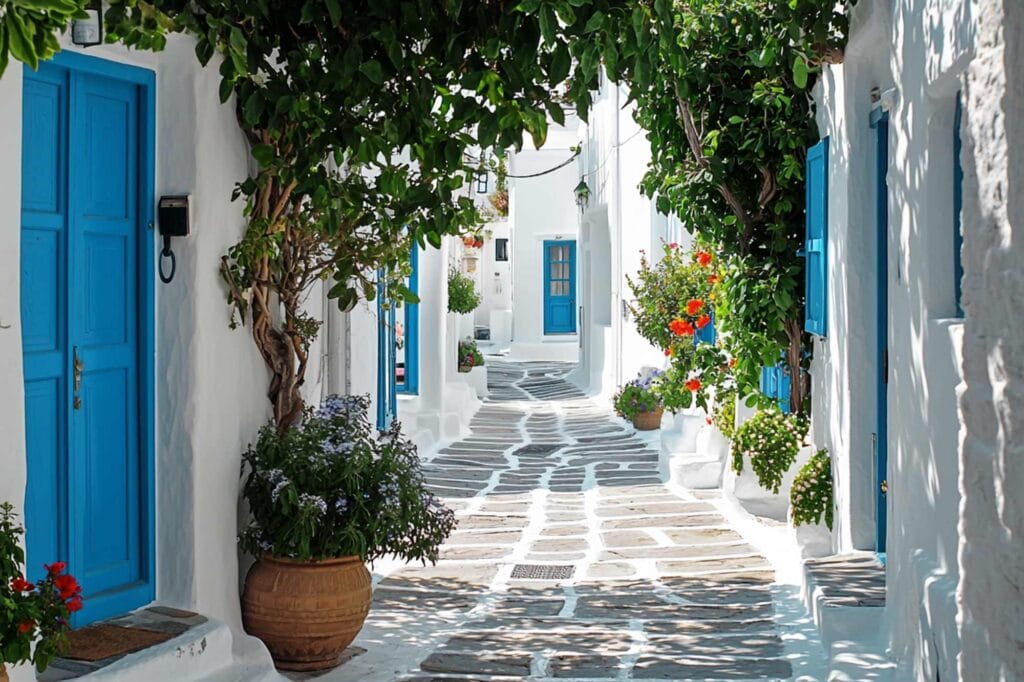
After two days on quiet Paros, Mykonos feels like a gear change — louder, busier, more expensive, and more visually polished. The contrast is part of what makes putting these two islands back-to-back work well. Mykonos has the most photogenic town in the Cyclades and some genuinely excellent beaches once you get away from the organized beach clubs. Two days is the right allocation: enough to see it properly, not so much that the energy becomes exhausting.
Day 8 — Arrive & Hora
Ferry from Paros to Mykonos, 1–1.5 hours. The Old Port or New Port depending on the departure — both are a short walk or taxi from the town center.
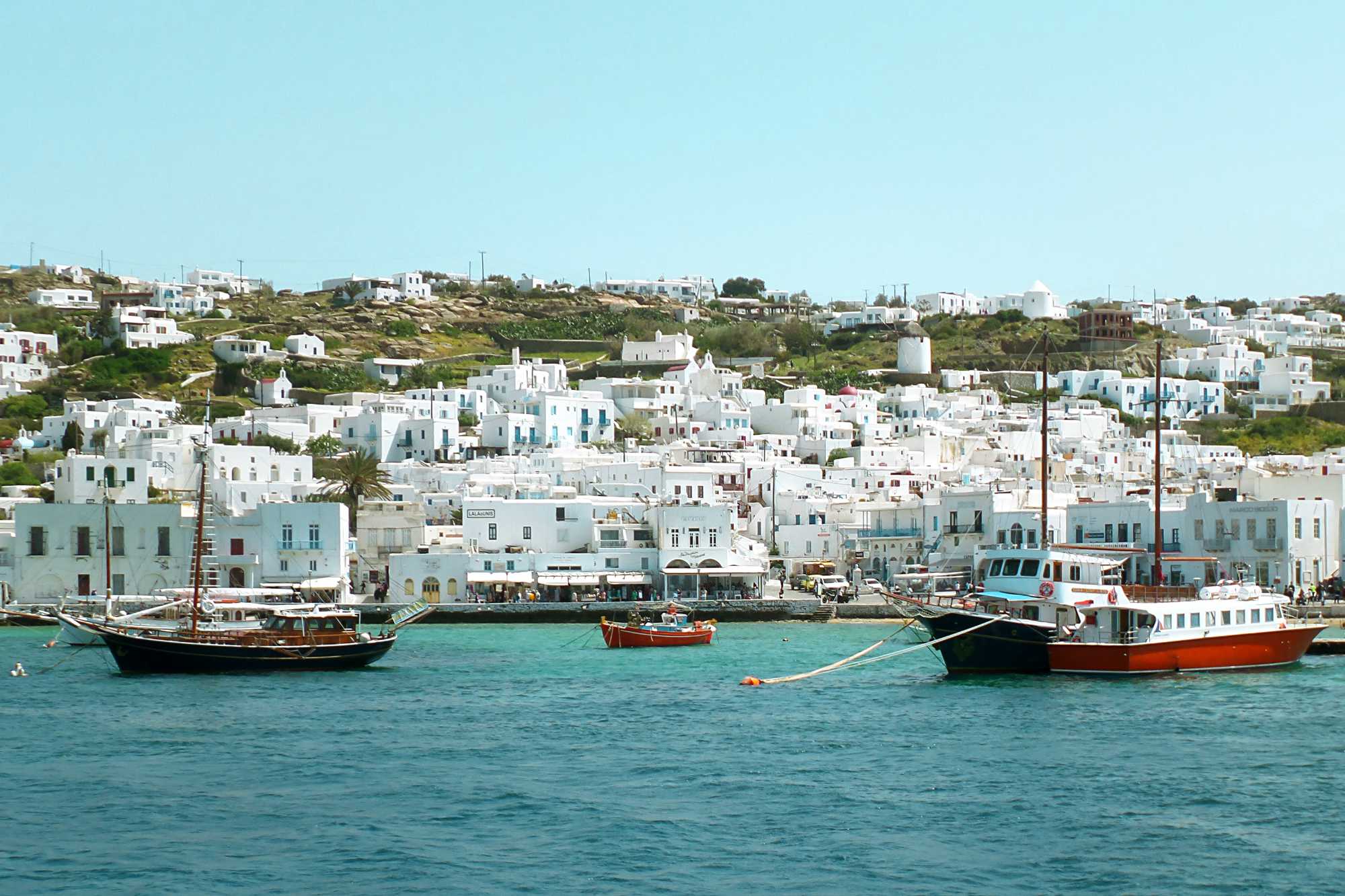
Mykonos Town (Hora) is the reason people come here. The streets are deliberately labyrinthine — designed to confuse raiding pirates, which works equally well on tourists. Whitewashed cubic architecture, bright blue doors, bougainvillea cascading over whitewashed walls, tiny Orthodox chapels appearing at unexpected corners. Get lost in it.
Little Venice: the cluster of medieval houses built directly over the water at the western edge of town. The buildings appear to float. Best in late afternoon when the Aegean light drops low and turns everything golden. Have a drink here. The Kato Mili windmills on the hill above frame the view.
Dinner: fresh fish at a harbor-front restaurant, or mezze at one of the spots one street back from the seafront. The further from the obvious tourist drag, the better the food-to-price ratio.
Day 9 — Beaches & Last Evening
Mykonos has beaches for every disposition:
- Agios Sostis — no sunbeds, no music, no beach bar. A remote crescent of clear water popular with Greeks. The quiet option.
- Platis Gialos — organized and family-friendly, with sunbeds and a boat taxi service that connects to other south coast beaches.
- Elia Beach — one of the longest on the island, calmer than Paradise, good facilities, less of a scene.
- Paradise Beach — the famous party beach. Active from noon. Commit fully or avoid entirely.
Return to town in the late afternoon. Walk up to the windmills before dinner for the view over the harbor. Mykonos Town in the evening — after the day-trippers clear out around 6 PM — is more atmospheric than at any other hour. The nightlife here is genuine and the town doesn’t sleep early.
For the full island breakdown, read our Mykonos Travel Guide.
Days 10–14: Crete — Five Days on the Big Island
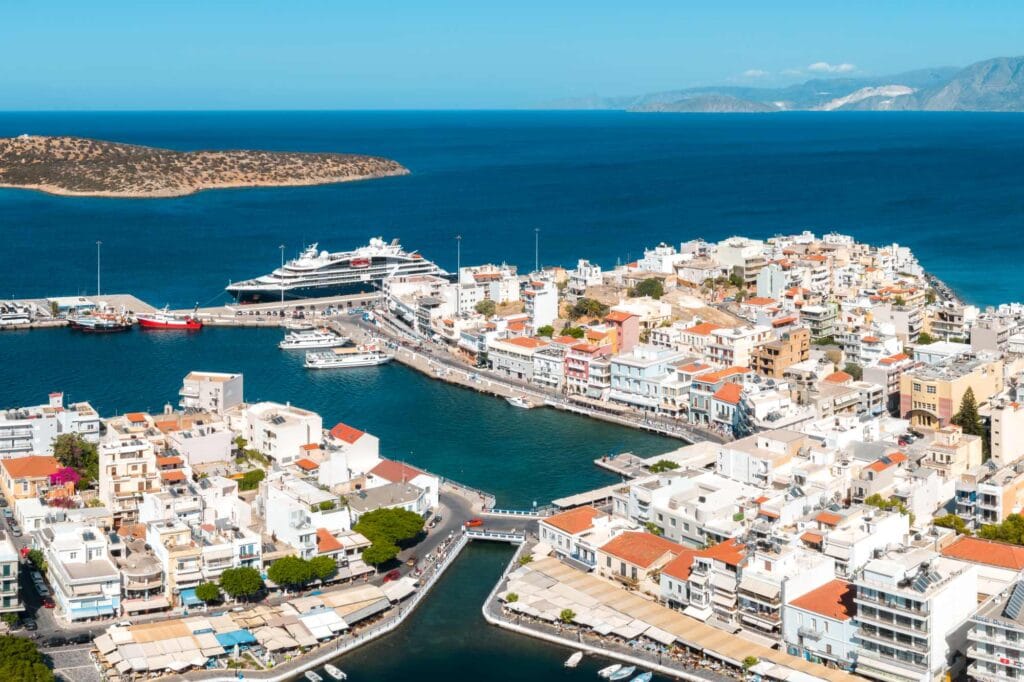
Crete is the reward at the end of this itinerary — and a reminder that Greece is more than its famous Cycladic islands. The largest Greek island is a country within a country: distinct dialect, its own food culture built on olive oil and mountain herbs and slow-cooked meat, a history that runs from Minoan civilization through Venetian occupation to fierce WWII resistance. Five days gives you enough time to move across it without rushing.
This section covers the western half of the island, which concentrates the most interesting combination of sites, landscapes, and food within a manageable range.
Day 10 — Fly to Heraklion & Knossos
Fly Mykonos to Heraklion (HER) — direct in summer (about 40 minutes), or via Athens if no direct connection is available. Pick up a rental car at the airport. You’ll need it for the next five days.
Go directly to the Palace of Knossos if you arrive in the morning — the largest Bronze Age archaeological site in Greece, center of Minoan civilization, and genuinely one of the most significant ancient sites in Europe. Arthur Evans’s early 20th-century reconstruction using reinforced concrete is controversial among archaeologists but makes the site unusually readable for non-specialists. Allow two hours.
Check into a hotel in Heraklion or just west of the city. The Heraklion Archaeological Museum in the city center holds the original Knossos artifacts — the Bull-Leaping Fresco, the Snake Goddess figurines, the Phaistos Disc — and is excellent. If you arrive in the afternoon, reverse the order: museum first, Knossos the next morning.
Dinner in Heraklion: the city has a strong food scene. The market street (1866 Street) near the center is the right direction — small restaurants, Cretan specialties, local wine.
Day 11 — Drive West: Rethymno
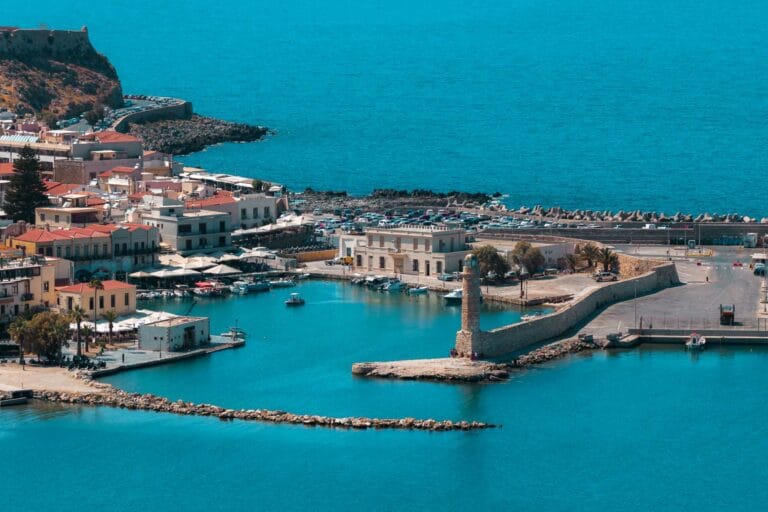
Drive west along the north coast highway toward Rethymno — about 80 km, under an hour. Rethymno is one of the best-preserved Venetian old towns in Greece, and significantly less touristed than Chania. The Fortezza fortress above the harbor was built in the 16th century to defend against Ottoman raids; the old town below it is a dense layering of Venetian stone doorways, Ottoman fountains, and Greek Orthodox churches.
Spend the morning in the old town and the Fortezza. Lunch at a harbor taverna — the seafood here is excellent and the harbor setting is among the most attractive in Crete.
Afternoon: drive south through the White Mountains (Lefka Ori) to the south coast. The road from Rethymno to Plakias takes about 45 minutes and crosses the mountain range at altitude — the descent to the south coast is sudden and dramatic. Plakias has a long, quiet beach and a fishing village atmosphere that the north coast lost decades ago. Swim, walk, eat simply.
Stay the night in Plakias or a village in the surrounding hills — Myrthios above the bay has excellent small guesthouses and views over the Libyan Sea.
Day 12 — Samaria Gorge (Optional) or South Coast Beaches
This day splits depending on physical inclination and weather.
Option A — Samaria Gorge: Europe’s longest gorge, 16 km from the Omalos plateau to the coastal village of Agia Roumeli on the Libyan Sea. The hike takes 4–6 hours depending on pace. You descend; a ferry then takes you to Hora Sfakion, where you return by car or bus. It’s a full-day commitment and genuinely demanding in heat, but one of the more extraordinary walking experiences in the Mediterranean. Book early in summer — the gorge has daily capacity limits.
Option B — South Coast: if the gorge doesn’t suit, spend the day on the south coast instead. Preveli Beach — where a palm-lined river meets a lagoon that meets the sea — is one of the most unusual beaches in Greece. The access requires a short hike down or a boat from Plakias. Frangokastello, a 14th-century Venetian fortress standing alone on a flat coastal plain, is 30 minutes east along the coast road and worth the detour.
For the full hiking guide, see our Samaria Gorge & Crete Hikes article.
Day 13 — Chania: The Best Old Town in Crete
Drive to Chania — about 60–70 km from Rethymno, one hour. Check into a hotel in or near the old town.
Chania’s Venetian harbor is the most beautiful in Crete. The crescent-shaped port is lined with stone warehouses converted into restaurants and bars, a lighthouse stands at the far end of the jetty, and the White Mountains are visible in every direction from the harbor front. Walk it in the morning before the heat builds.
The old town behind the harbor is a dense layering of Venetian and Ottoman architecture — minarets alongside church towers, stone arches over narrow lanes, the covered market on Halidon Street that has been selling Cretan produce since 1913. Spend the morning exploring without a fixed agenda.
Afternoon: the Cretan House Folklore Museum for context on traditional island life, or the Byzantine and Post-Byzantine Collection in the Firkas Fortress at the harbor entrance. Both are small and excellent.
Dinner in the old town tonight. Cretan cuisine at its best: slow-cooked lamb with wild herbs, fresh cheese, the extraordinary local olive oil, and a carafe of local wine from somewhere in the Apokoronas hills.
Day 14 — Chania Morning & Departure
A final morning in Chania before your flight. The harbor at 7:30–8:00 AM — before the restaurants open and the tourist boats start running — is as quiet as the island gets. Coffee at the lighthouse end of the jetty, a last walk through the alleyways, one more look at the mountains behind the city.
Chania Airport (CHQ) is 15 km east of the city and has direct flights to Athens and several European capitals. If you’re flying home from here, this is your exit. If you need to connect through Athens, allow at least two hours for the connection at ATH.
For everything Crete offers, read our Crete Travel Guide.
How to Get Between Destinations
Athens → Santorini
Fly. 45 minutes vs 5–8 hours by ferry from Piraeus. On a 14-day trip, flying is always worth the cost on this leg. Book early — this is one of the busiest domestic routes in Greece.
Santorini → Paros
Ferry, 1.5–2 hours. Standard and high-speed options available. Book in advance for summer travel. Morning departures work best to give you a full afternoon in Parikia.
Paros → Mykonos
High-speed ferry, 1–1.5 hours. Runs multiple times daily in season. One of the easiest inter-island connections in the Cyclades.
Mykonos → Crete (Heraklion)
Fly, usually via Athens if no direct seasonal connection. Total journey 2–3 hours depending on connection timing. Check schedules in advance — direct Mykonos–Heraklion flights exist in summer but not year-round.
Within Crete
Rental car. Non-negotiable on this island. The north coast highway is fast and well-maintained; mountain and south coast roads are narrow but manageable. Book from Heraklion Airport on arrival for the best rates.
Full logistics detail in our Greece Ferry Guide and Getting Around Greece.
2 Weeks in Greece: Practical Tips for Your Trip
Best time to go
Late May through June and September through mid-October are the strongest windows for this route. Weather is reliable, light is exceptional, crowds are manageable, and prices are below peak-summer levels. July and August are the busiest and most expensive months — particularly on Santorini and Mykonos. Crete handles peak season better than the Cyclades due to its size.
Budget
Two weeks across this itinerary is not inexpensive. Santorini and Mykonos carry a significant premium; Athens, Paros, and Crete are considerably more affordable. A couple traveling comfortably should expect €250–450 per day across the full trip, with higher daily spend on Santorini and Mykonos and lower in Crete. Booking flights and key hotels early significantly affects total cost.
Book before you travel
- International flights into Athens and out of Chania (or Athens)
- Domestic flights: Athens–Santorini, Mykonos–Heraklion
- All ferry tickets (book 2–3 months ahead for July–August travel)
- Santorini hotels — caldera-view rooms are limited and sell out early
- Mykonos old town hotels — same situation
- Car rental in Heraklion (and Santorini for Day 4)
- Acropolis tickets in Athens
- Samaria Gorge permit if taking Option A on Day 12
- Dinner reservations in Oia
Pack light
Fourteen days across five destinations means you’re moving luggage frequently. A carry-on and a day bag is the practical limit. The islands are hot; linen and light cotton cover everything. Good walking shoes matter for the Acropolis, the Samaria Gorge, and the cobblestone streets of Chania and Oia.
Slow down when you can
This itinerary is designed to be followed, but it’s not designed to be rushed. If Paros grabs you and you want to stay an extra day, stay. If Crete is absorbing all your attention, extend. The structure exists to give the trip shape, not to turn it into a checklist.
Explore More About Greece
- 7 Days in Greece: The Perfect One-Week Itinerary
- 10 Days in Greece: The Perfect Itinerary for Islands, Athens & More
- Romantic Greece Trip: A Honeymoon Itinerary
- Santorini Travel Guide: Everything You Need to Know
- Paros & Naxos: A Guide to Two Hidden Gems
- Mykonos Travel Guide: Everything You Need to Know
- Crete Travel Guide: The Ultimate Island Adventure
- Athens Travel Guide: Everything You Need to Know
- Island Hopping in Greece: The Ultimate Guide
- Greece Ferry Guide: How to Book & Navigate Islands
- When Is the Best Time to Visit Greece?
FAQ
Is 2 weeks enough for Greece?
Two weeks is one of the best lengths for a Greece trip — long enough to move slowly, short enough to stay focused. You can cover Athens, three or four islands, and Crete without rushing. What you won’t see is everything. Greece rewards return visits; use two weeks to fall in love with it rather than trying to tick every box.
What is the best 2-week Greece itinerary?
The route in this guide — Athens, Santorini, Paros, Mykonos, Crete — balances iconic and underrated destinations with logical connections and varied experiences. If you’ve already done Santorini and Mykonos, swap them for Naxos, Rhodes, or the Ionian islands for a completely different register.
How much does a 2-week trip to Greece cost?
Budget varies widely depending on accommodation choices and travel style. A couple traveling comfortably — mid-range hotels, restaurant meals, occasional splurges — should expect €4,000–7,000+ for the full trip including international flights. Santorini and Mykonos are the expensive days; Crete brings the average down considerably.
How do I island hop in Greece for 2 weeks?
The key is using a combination of domestic flights and high-speed ferries. Fly the longer legs (Athens–Santorini, Mykonos–Crete) to save time. Take ferries between nearby Cycladic islands (Santorini–Paros, Paros–Mykonos) where distances are short and the journey is part of the experience. Book all tickets before you leave.
Should I visit Paros or Naxos on a 2-week Greece trip?
Both are excellent alternatives to the Santorini–Mykonos circuit. Paros has a slightly more polished old town and better connections; Naxos is larger, greener, has the best beaches in the Cyclades by some measures, and is significantly less expensive. If this is your first trip to Greece and you want to include a quieter island, Paros is slightly easier to fit into the schedule; Naxos rewards travelers who want more time and less tourism.
What is the best order to visit Greek islands?
Move in a logical geographic arc to avoid backtracking. Athens → Santorini → Paros/Naxos → Mykonos → Crete runs southwest to northeast to northwest in a clean line. The reverse also works if you’re flying into Crete (Heraklion or Chania) and want to end in Athens. Avoid routes that require retracing your route by ferry.
Is Crete worth 5 days on a Greece trip?
Yes — easily. Crete is the most underestimated island on most Greece itineraries. Five days gives you the Minoan sites near Heraklion, the Venetian old towns of Rethymno and Chania, the wild south coast, and the option of the Samaria Gorge hike. It’s a destination that rewards every additional day you give it.
What should I not miss on a 2-week Greece trip?
The Acropolis at 8 AM before the crowds. Sunset from the Kastro in Oia. A swim off a quiet beach reached only by boat. Lunch at a Cretan family taverna where the menu changes with what’s in season. A morning in Chania’s harbor before the restaurants open. Getting genuinely lost in the alleyways of Mykonos Town. And at least one afternoon with no schedule at all — Greece is at its best when you stop optimizing it.