7 Days in Greece: The Perfect One-Week Itinerary
7 Days in Greece feels generous — until you start mapping the country. The country spans two seas, dozens of inhabited islands, and thousands of years of history packed into every square kilometer. Done wrong, a week turns into a blur of rushed meals and missed ferries. Done right, it’s one of the most complete travel experiences you’ll have anywhere in Europe.
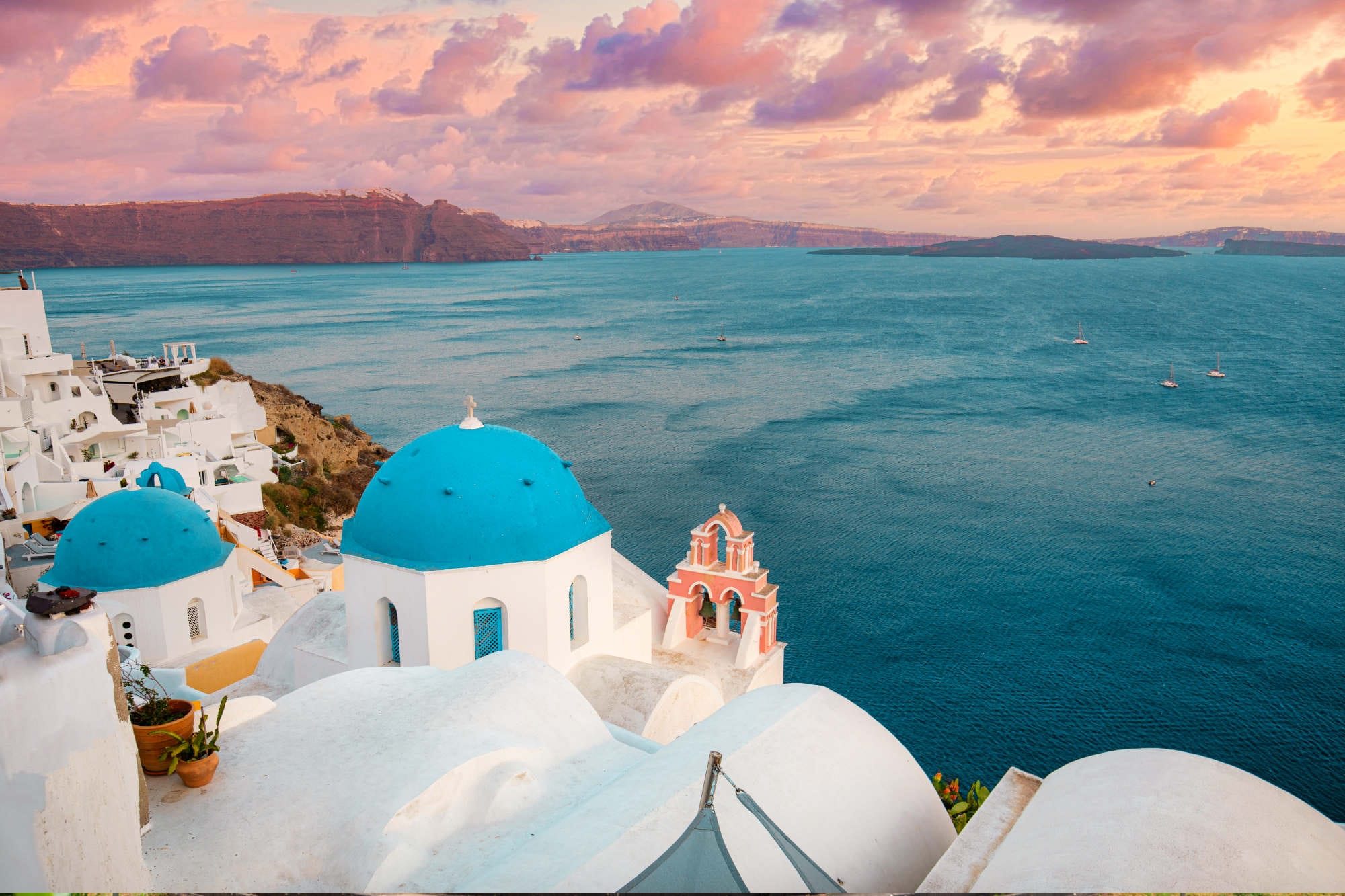
This itinerary covers what we consider the strongest one-week combination for first-time visitors: two days in Athens to ground yourself in Greek history and food, then a flight to Santorini for the dramatic caldera views and slower pace, finishing with Mykonos for beaches and a livelier atmosphere before heading home. It’s a classic route — and it’s classic because it works.
We’ve built this around realistic travel times, actual ferry and flight logistics, and places worth spending money on. You won’t be racing through museums or wasting half a day at a ferry port. Every day has a clear shape.
Note: This page contains affiliate links. We may earn a small commission at no extra cost to you when you book through our links. This helps us keep creating free travel guides.
Day 1: Arrive in Athens — First Impressions & Plaka
Land at Athens International Airport (ATH), grab a taxi or the X95 express bus into the city, and resist the urge to do too much on arrival day. Athens rewards slow attention.
Check into your hotel in or near Monastiraki or Koukaki — both neighborhoods put you within walking distance of everything that matters. Drop your bags, splash cold water on your face, and head out.
Your first afternoon:
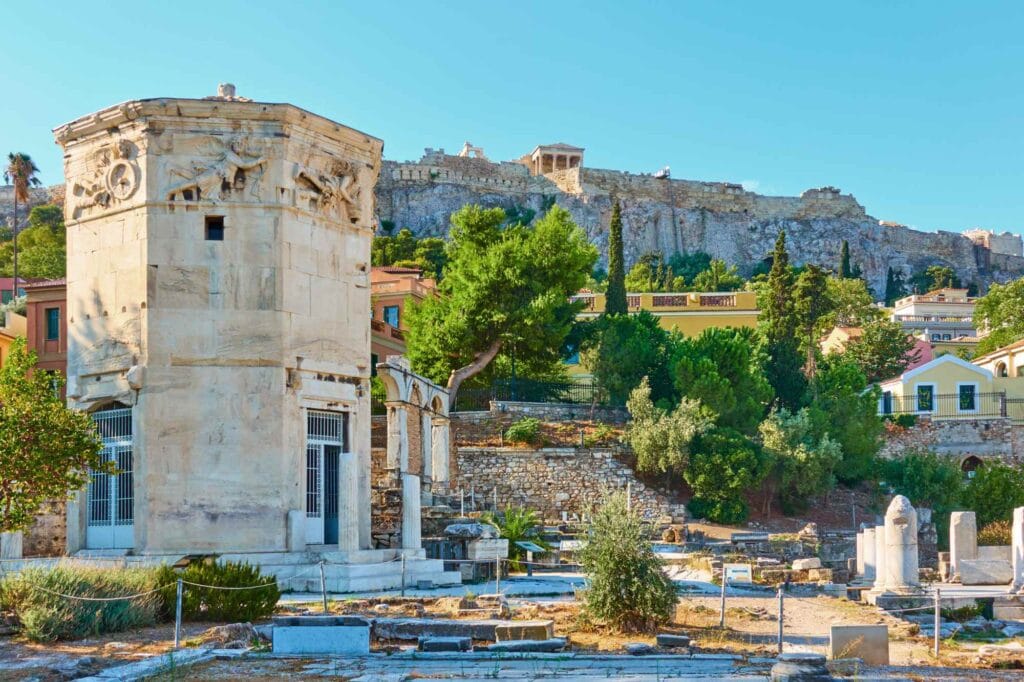
Walk through Plaka, the oldest neighborhood in Athens, tucked at the foot of the Acropolis hill. The streets are narrow, slightly chaotic, and full of small tavernas spilling onto the pavement. Don’t eat at the first place that waves a laminated menu at you — keep walking until you find somewhere with a handwritten board or a queue of locals.
For dinner, Monastiraki Square comes alive in the evening. Grab a table at one of the rooftop restaurants overlooking the Acropolis, lit up against the night sky. It’s a soft introduction to Athens — and one you won’t forget.
Where to stay in Athens:
Day 2: Athens — The Acropolis, Monastiraki & a Farewell Dinner
Set your alarm. The Acropolis opens early, and you want to be there before the cruise ship crowds arrive — ideally by 8:00 or 8:30 AM.
Morning: The Acropolis & Acropolis Museum
Buy your tickets online in advance. The Acropolis itself takes about 90 minutes to walk through properly, including the Parthenon, the Erechtheion, and the views south toward the sea. From the top, Athens spreads out in every direction — chaotic, sprawling, and somehow still beautiful.
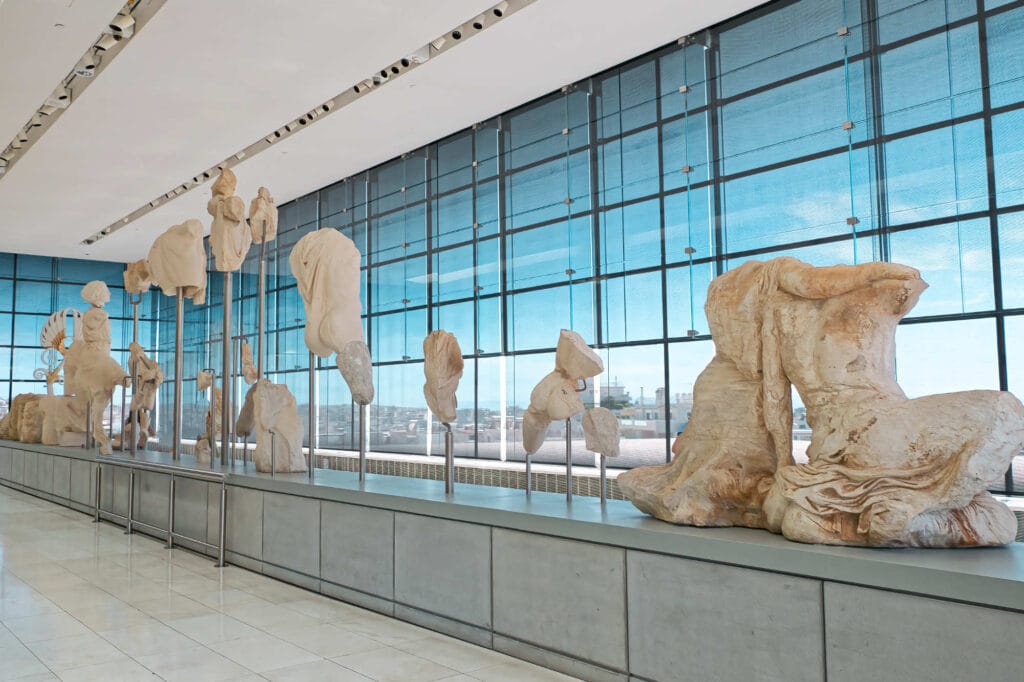
After the hill, walk directly down to the Acropolis Museum. It’s one of the best-designed museums in Europe and puts everything you just saw into context. Budget two hours.
Afternoon: Monastiraki Flea Market & Street Food
The Monastiraki Flea Market is worth an hour of wandering — antiques, vintage jewelry, hand-painted ceramics. Lunch here means souvlaki standing up at Kostas (a tiny counter near the square, cash only, lines out the door for a reason).
Spend the afternoon in Syntagma if you want to see the Changing of the Guard at the Hellenic Parliament, or head to the National Archaeological Museum if ancient artifacts are your thing. Both are worthwhile; both are impossible to combine without feeling rushed.
Evening: Dinner & Packing
Tonight is your last night in Athens. Book a table at a proper mezze restaurant in Psiri or Thisio — order the grilled octopus, the taramosalata, the dakos. Tomorrow you’re flying south.
Day 3: Fly to Santorini — Fira, Oia & the Caldera
Morning flights from Athens to Santorini (JTR) run frequently and take about 45 minutes. Book early — prices on this route move fast, especially in peak season.
Arrive in Santorini:
The airport is tiny. Taxis exist but are limited — if your hotel offers a transfer, take it. If not, there’s a public bus (KTEL) that connects to Fira, the island’s capital.
Afternoon in Fira:
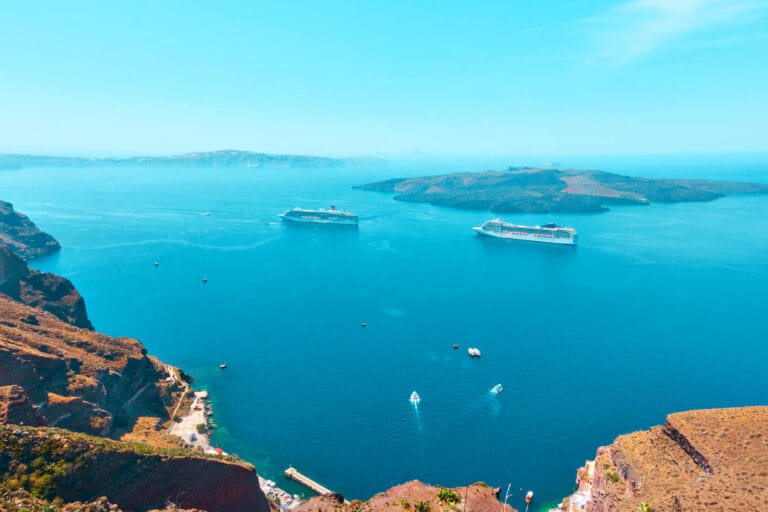
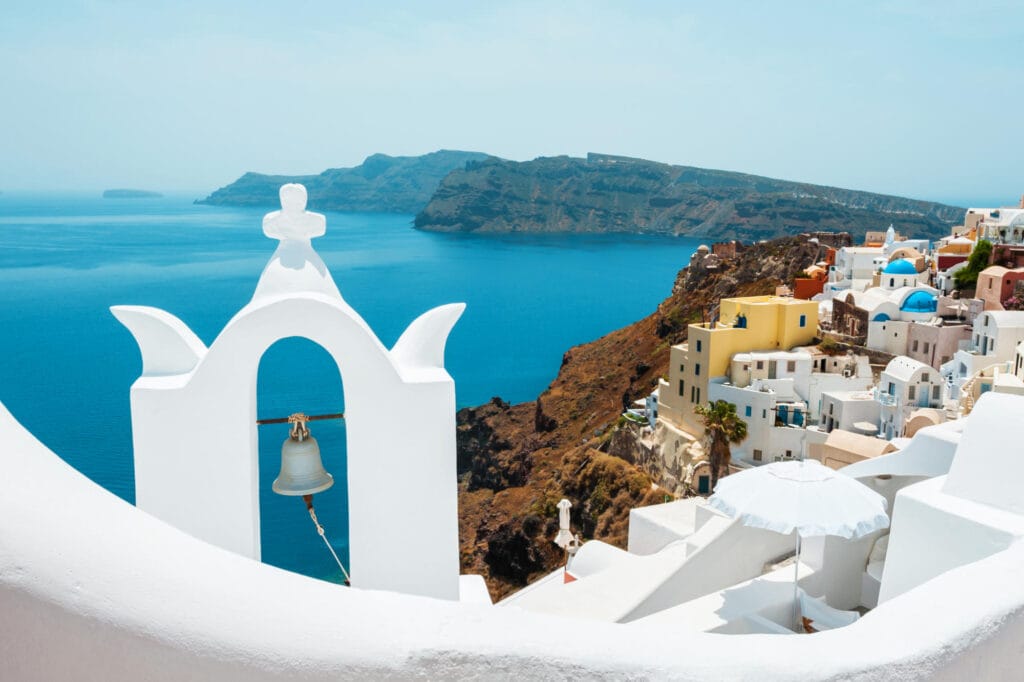
Fira sits on the caldera rim with dramatic views of the volcanic islands below. It’s busier and more commercial than Oia, but that’s not a flaw — it has better restaurants, more authentic energy, and easier connections to the rest of the island. Check in, settle, and walk the caldera path north.
First sunset — from the path between Fira and Imerovigli:
Most visitors sprint to Oia for sunset on day one. Don’t. The path from Fira toward Imerovigli offers caldera views without the crowds, and the light hits the whitewashed cliffs at an angle that photographs beautifully. Save Oia for tomorrow.
Dinner tonight: a table at one of the caldera-view restaurants in Fira. The view costs extra in every sense — worth it once.
Where to stay in Santorini:
Cave houses and cliff-side suites make this island special. Even a mid-range option with a partial caldera view changes the experience entirely.
Day 4: Santorini — Beaches, Villages & Sunset from Oia
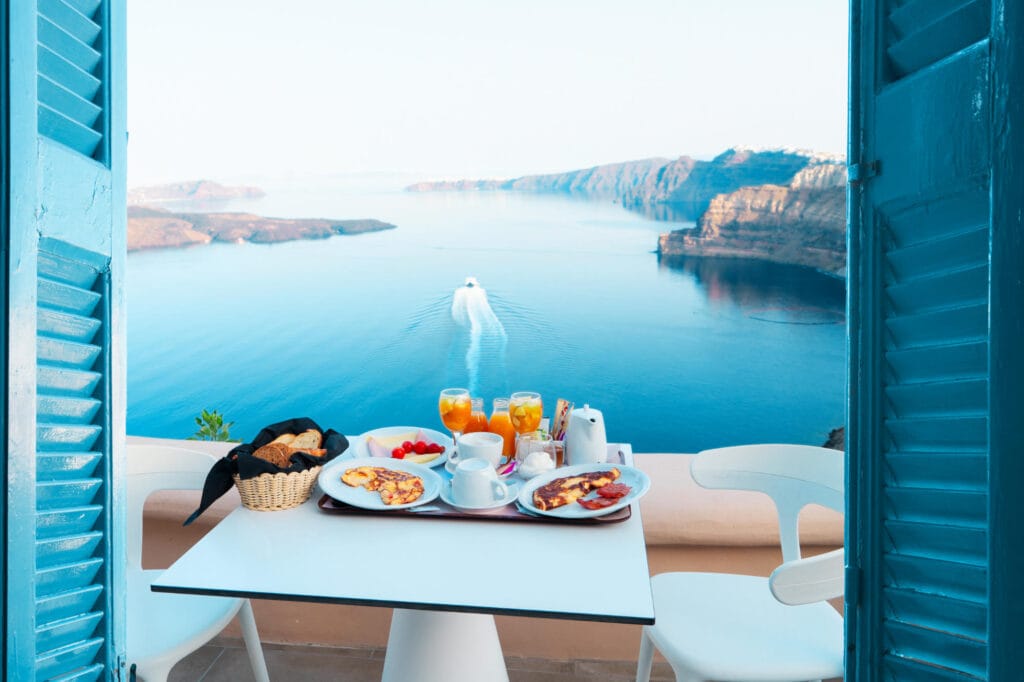
Today is your full day on the island, and it has two very different rhythms — active in the morning, slow in the afternoon.
Morning: Rent a car or ATV
Santorini is manageable by ATV or small car, and renting one gives you the freedom to reach places the buses don’t serve well. Head to the south of the island first.
Perissa and Perivolos — black sand beaches on the southeastern coast — are worth an hour of swimming before the heat peaks. The sand absorbs heat aggressively; sandals are not optional.
From there, drive to Akrotiri, the Bronze Age settlement buried by the volcanic eruption around 1600 BC. It’s one of the best-preserved prehistoric sites in the Mediterranean, and far less crowded than the Acropolis.
Afternoon: Wine & Villages
The island has a surprising wine culture built around the Assyrtiko grape, which thrives in the volcanic soil. Santo Wines and Estate Argyros both offer tastings with caldera views. One glass, two at most — you have an evening ahead.
Stop through Pyrgos, the highest village on the island, for coffee and views without the Oia crowds. The maze of alleyways and Byzantine castle ruins are genuinely peaceful.
Evening: Oia Sunset
Get to Oia by 6:30 PM minimum. The famous sunset draws hundreds of people to the castle ruins — arrive early, find your spot, and stay. The light here, as the sun drops behind Thirassia island, is the reason people travel across continents.
Dinner in Oia afterward. Book in advance — every restaurant is full by 8 PM.
For everything you need to know about the island, check our Santorini Travel Guide.
Day 5: Santorini to Mykonos — Ferry Day & Afternoon Arrival
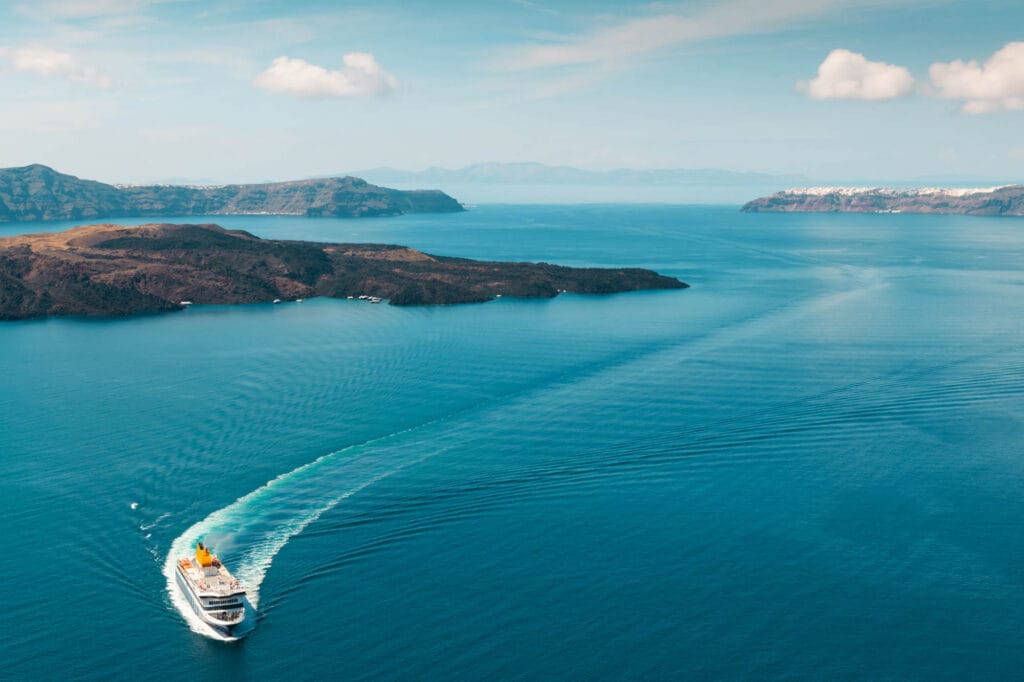
This is your travel day. The high-speed ferry from Santorini to Mykonos takes around 2–3 hours depending on the route and season. Morning departures are common; book tickets before the trip, not the night before.
On the ferry:
Sit outside on the upper deck if the weather allows. The Aegean between the Cyclades islands — water that shade of blue with nothing on the horizon — is worth staying awake for.
Arriving in Mykonos:
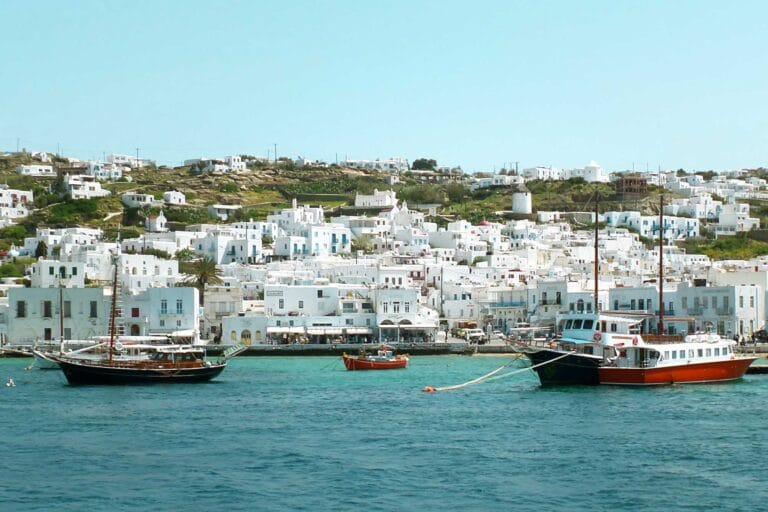
The port in Mykonos town (Hora) is a five-minute walk from the old town center. Check into your hotel, orient yourself, and take the afternoon slow.
First afternoon: Mykonos Town (Hora)
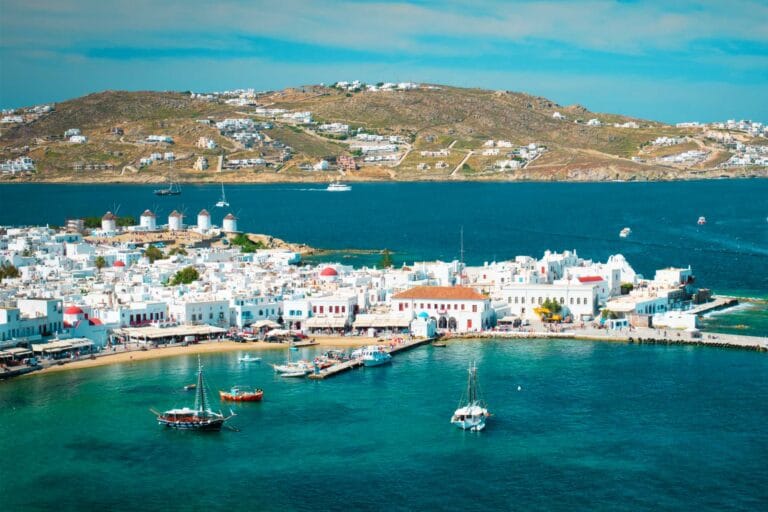
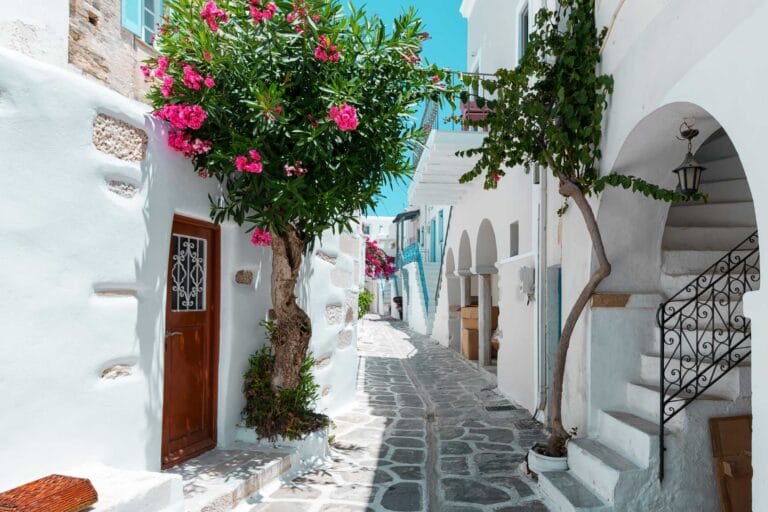
Mykonos Town is one of those places that earns its reputation. The streets are deliberately labyrinthine — supposedly designed to confuse pirates. Today they confuse tourists equally well, but in a way that’s pleasant rather than frustrating. White cubic buildings, bougainvillea in every alley, tiny churches at unexpected turns.
Little Venice — the row of buildings that hangs directly over the water at the western edge of town — is best in the late afternoon when the light comes low across the Aegean. Have a drink here. Watch the windmills on the hill above.
Dinner in town tonight: fresh fish at a harbor-front restaurant, or mezze at one of the spots tucked one street back from the waterfront (better food, lower prices).
Day 6: Mykonos — Beaches, Little Venice & Windmills
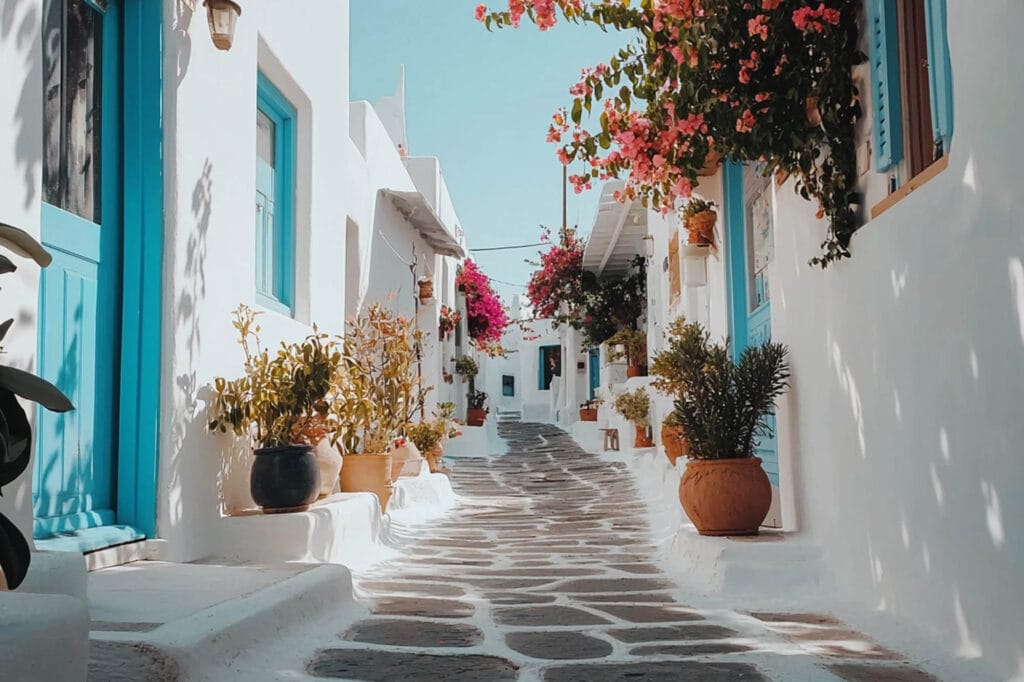
Your one full day on Mykonos. The island is smaller than Santorini but packs in a remarkable variety — quiet family beaches, lively beach clubs, excellent local food, and the most photogenic town center in the Cyclades.
Morning: Choose your beach
Mykonos has beaches for every mood. We suggest picking based on what kind of day you want:
- Agios Sostis — remote, no sunbeds, no music. Just a crescent of clear water and a few locals. This is the quiet version.
- Platis Gialos — organized, family-friendly, with sunbed rental and a decent beach bar. The boat taxi from here to other beaches is worth taking.
- Paradise Beach — the famous party beach. Goes hard from noon onward. Skip it if you’re not into that; commit to it if you are.
Afternoon: Back to town
Return to Mykonos Town in the afternoon when the cruise ship day-trippers start clearing out. The town feels more like itself in the late afternoon — locals reappear, the streets get calmer, and the light becomes extraordinary.
Walk up to the Windmills (Kato Mili) above Little Venice. They’re on every postcard for a reason, and the view over the town from up there makes the climb worth it.
Evening: Dinner & a last night out
Mykonos has the best nightlife of this itinerary’s three destinations. That can mean cocktails at a rooftop bar overlooking the harbor, dinner at one of the island’s better restaurants, or a full night out if that’s your style. The island doesn’t sleep early.
For a complete breakdown of what to do here, read our Mykonos Travel Guide.
Day 7: Last Morning in Mykonos & Departure
Morning flights from Mykonos back to Athens (then onward to your home country) are the most common departure route. Check your flight time — if you have an early departure, keep the previous evening reasonable.
If you have a late morning flight:
A final walk through Mykonos Town before the crowds arrive — around 7:30–8:00 AM — is as peaceful as the island gets. Coffee at a bakery, a quiet circuit through the back alleys, one last look at the windmills. Then taxi to the airport.
If you’re flying via Athens:
Athens Airport has good connections throughout Europe. If you have a few hours between flights, the airport lounge situation is decent and the duty-free area is genuinely good for Greek olive oil, honey, and wine.
Practical Tips for This Itinerary
Flights:
- Athens has the best international connections; most one-week travelers fly in and out of Athens.
- The Athens–Santorini and Mykonos–Athens legs are short domestic flights (45 min). Book early — these fill fast in summer.
- Alternatively: fly Athens–Santorini and take the ferry back from Mykonos to Athens (Piraeus), then fly home from Athens. This adds a ferry leg but avoids doubling back.
Ferries:
- Book ferry tickets in advance, especially July–August. Operators include SeaJets, Minoan Lines, and Blue Star Ferries.
- High-speed ferries cost more but cut travel time significantly. Worth it on this route.
For detailed advice on getting between islands, read our Greece Ferry Guide.
Budget for this itinerary:
This route (Athens + Santorini + Mykonos) sits at the higher end of Greek travel costs. Santorini and Mykonos are premium destinations. A couple spending thoughtfully should budget €250–400/day for accommodation, meals, and activities — more if you’re adding beach clubs, wine tastings, or boat tours.
Renting a car:
In Athens, skip it — the city is walkable and traffic is chaotic. In Santorini, an ATV or small car is genuinely useful. In Mykonos, the local bus system covers the main beaches reasonably well.
What to book in advance:
- Flights (domestic legs fill fast in summer)
- Ferry tickets
- Hotels — especially in Santorini, where caldera-view rooms are limited
- Acropolis tickets (Athens)
- Dinner reservations in Oia and Mykonos Town
[CTA BUTTON: Browse Tours & Experiences in Greece] LINK: /plan-your-trip/tours-excursions/
Explore More About Greece
- Santorini Travel Guide: Everything You Need to Know
- Best Hotels in Santorini: Where to Stay
- Mykonos Travel Guide: Everything You Need to Know
- Athens Travel Guide: Everything You Need to Know
- Athens in 2–3 Days: The Perfect Itinerary
- 10 Days in Greece: Islands, Athens & More
- Greece Ferry Guide: How to Book & Navigate Islands
- Getting Around Greece: Ferries, Flights & Cars
FAQ
How many days do you need in Greece?
Seven days is enough for a solid first visit — Athens plus one or two islands. It’s not enough to see everything, which is exactly why people come back. If you have 10 or 14 days, you can add Crete, Paros, or slower pace throughout.
Is 7 days in Greece enough for Athens and the islands?
Yes — if you fly between destinations rather than relying only on ferries. The Athens–Santorini leg is 45 minutes by air and about 8 hours by ferry. Flying is worth the cost on a short trip.
What is the best time of year for a 7-day Greece trip?
Late May through June and September through early October are the strongest windows. The weather is warm, the light is exceptional, and the crowds are thinner than in July and August. Prices are also slightly lower in shoulder season.
Should I rent a car in Greece?
Depends on where you are. In Athens, no — the city center is walkable and parking is a headache. On Santorini and Crete, yes — a small car or ATV significantly expands what you can reach. On Mykonos, the bus system covers the main beaches adequately.
How do I get from Athens to Santorini?
The fastest option is a 45-minute domestic flight (multiple daily departures). The alternative is a ferry from Piraeus port — about 5–8 hours depending on the vessel. For a 7-day trip, flying saves you a full day of travel.
How do I get from Santorini to Mykonos?
High-speed ferry is the standard route — roughly 2–3 hours depending on the connection. There’s usually no direct flight between the two islands, so the ferry is your best option.
Can I do this itinerary on a tight budget?
Santorini and Mykonos are among the most expensive destinations in Greece. You can manage costs by booking accommodation away from the caldera rim, eating at local tavernas rather than view restaurants, and skipping beach clubs. But if serious budget travel is the goal, Crete, Paros, or Naxos offer better value.
What should I not miss on a one-week Greece trip?
The Acropolis in Athens, sunset in Oia, a swim in the Aegean on a quiet beach, grilled octopus at a harbor taverna, and at least one morning of doing nothing in particular in a village that hasn’t been fully discovered. Greece rewards the unscheduled hours as much as the planned ones.