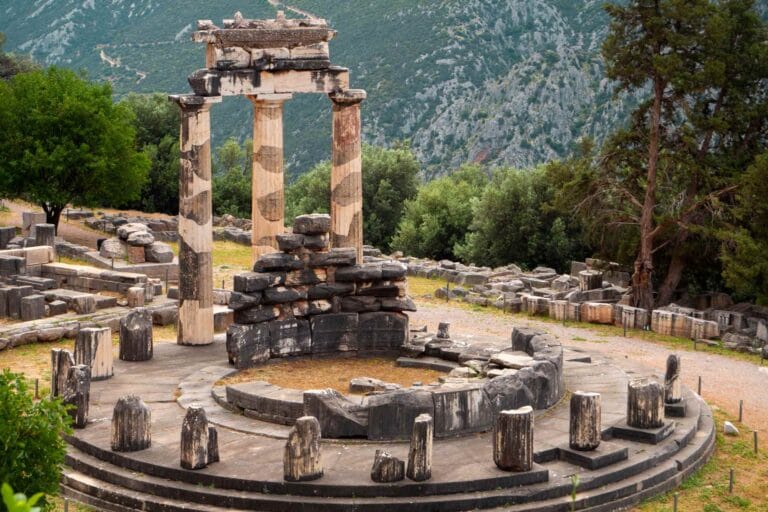
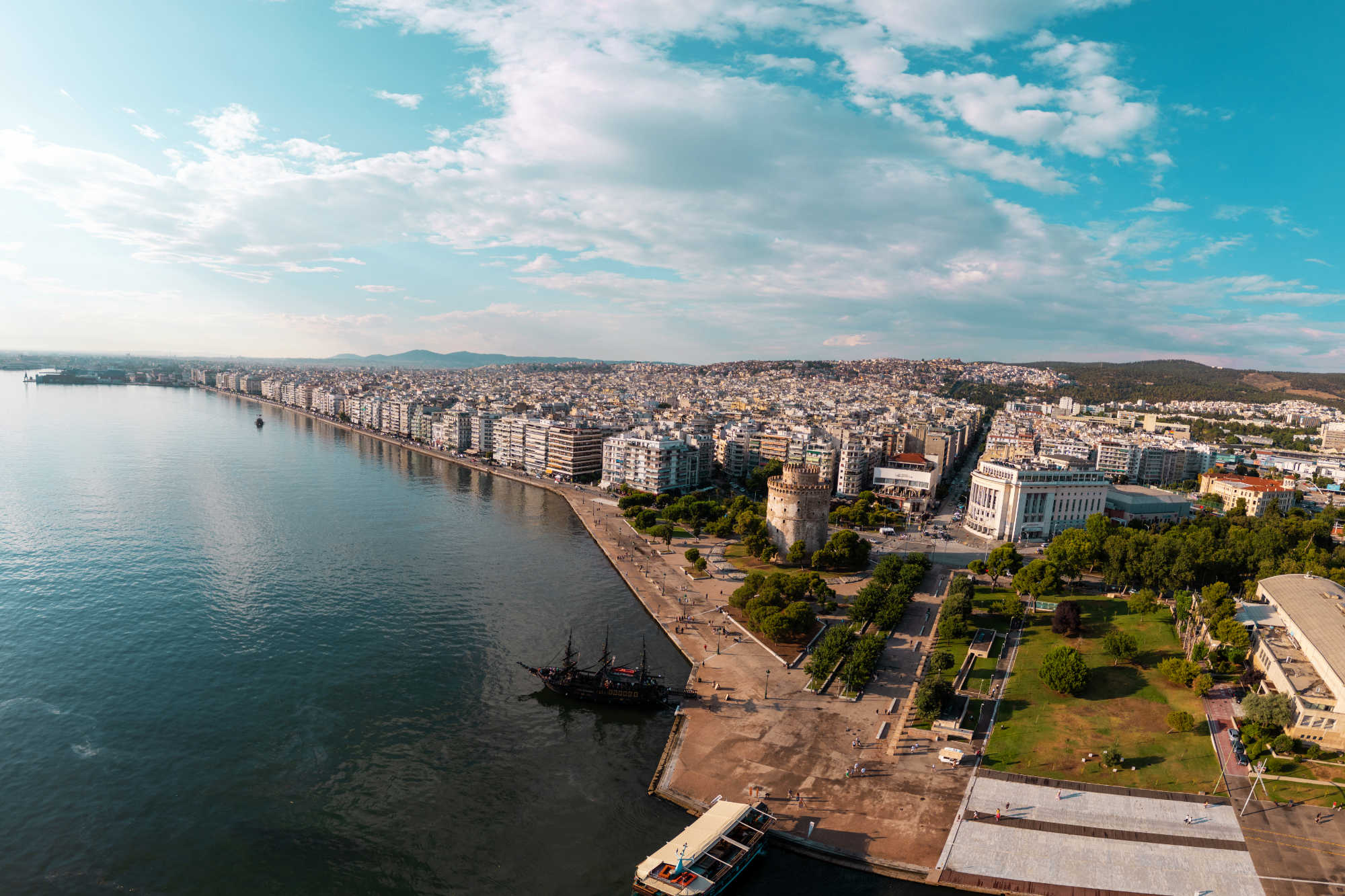
Greek Cities Guide: Athens, Thessaloniki, Rhodes & More
Greece isn’t just islands. Behind the famous caldera sunsets and turquoise coves, there’s a country with some of the most compelling cities in Europe — places where ancient history sits beside modern café culture, where street food rivals anything you’d find in a major food capital, and where neighborhoods feel lived-in and genuine rather than dressed up for tourism.
The challenge isn’t finding great Greek cities to visit. It’s deciding which ones belong in your trip, given that each is genuinely different from the others. Athens is dense, layered, and endlessly complex. Thessaloniki is louder, younger, and arguably better for food. Rhodes Town is a medieval world unto itself. Heraklion is the gateway to Crete’s ancient civilization.
This guide gives you an honest overview of each city — what makes it worth visiting, who it suits best, and how to fit them into your itinerary. Use it as your starting point, then dive into the individual city guides for everything you need to plan each stop.
Why Greek Cities Deserve More Attention
The standard Greece itinerary looks something like this: fly into Athens, spend one night, take a ferry to Santorini, add Mykonos, go home. It works. It’s beautiful. But it misses most of what Greece actually is.
Greek cities are where the country’s intellectual and culinary life plays out. They’re where you’ll have the most interesting conversations, eat the best food, and get a sense of how Greeks actually live — not how they perform hospitality for visitors at a cliffside bar. Cities also offer the historical depth that islands, with a few exceptions, simply can’t match. The Acropolis in Athens, the Byzantine churches of Thessaloniki, the Venetian fortifications of Rhodes, the Minoan palace complex outside Heraklion — these are among the most significant historical sites in the world.
The good news: Greek cities are easy to combine with island time. Most major islands have ferry or flight connections to the mainland cities, and a two-day city stop adds almost nothing to your total travel time while adding enormous depth to your experience.
Athens — The Anchor of Any Greece Trip
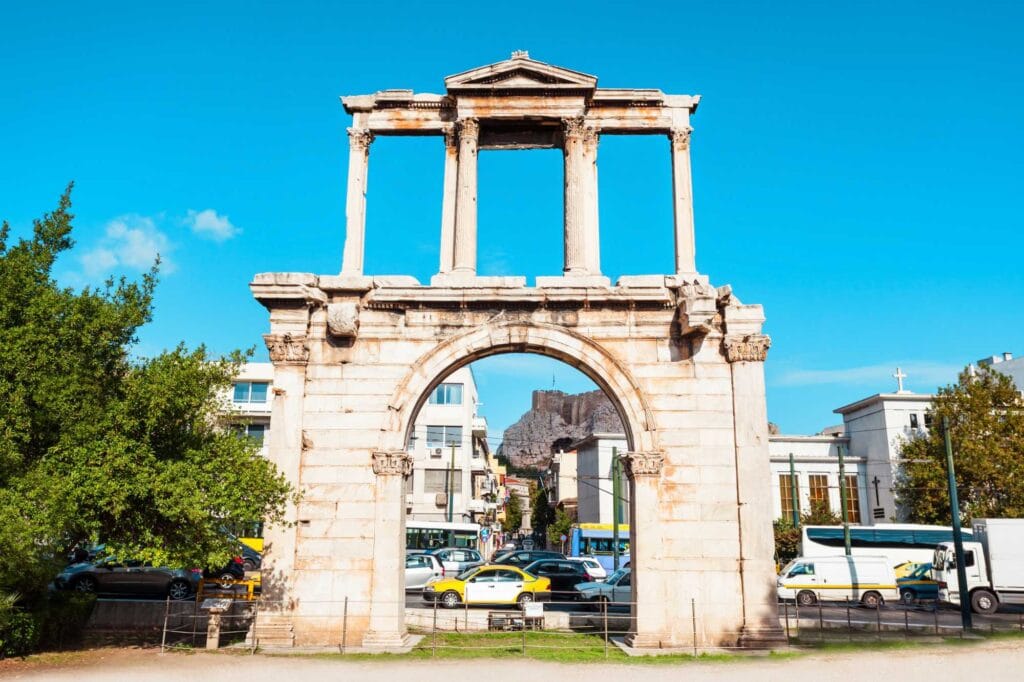
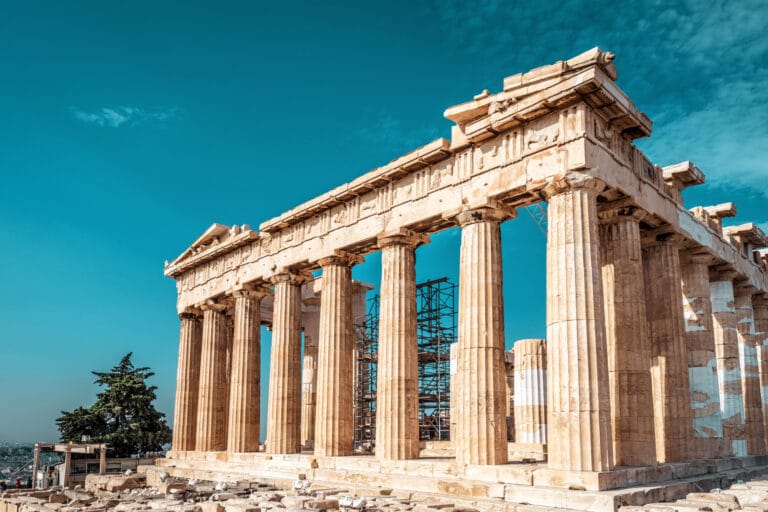
Athens is where Greece’s story begins — and where it’s still being written. The city is home to the Acropolis (the defining image of Western civilization), one of the world’s great archaeological museums, and a food and nightlife scene that most first-time visitors are completely unprepared for.
It’s also a city that rewards patience. Athens can feel chaotic and overwhelming on arrival, particularly in summer heat. The traffic is dense, the neighborhoods are uneven, and the tourist infrastructure around the main sites is relentless. But push past the first impressions — find a table in Monastiraki at dusk, walk up to Filopappou Hill at sunrise, eat lunch in a neighborhood taverna in Koukaki — and the city reveals itself as something genuinely special.
Athens Is Best For
- First-time visitors to Greece — the Acropolis and National Archaeological Museum alone justify the stop
- History and culture travelers who want context for everything else they’ll see
- Food lovers — Athens has one of the most dynamic restaurant scenes in Southern Europe
- Anyone combining Greece with other European destinations — Athens has excellent international flight connections
- Couples and solo travelers comfortable navigating a large, busy city
How Much Time You Need
Two to three days covers the highlights without rushing. Three days lets you include a day trip to Cape Sounion or Delphi. Less than two days means you’re skimming.
For everything you need to plan your Athens visit, see our Athens Travel Guide.
Thessaloniki — Greece’s Most Underrated City
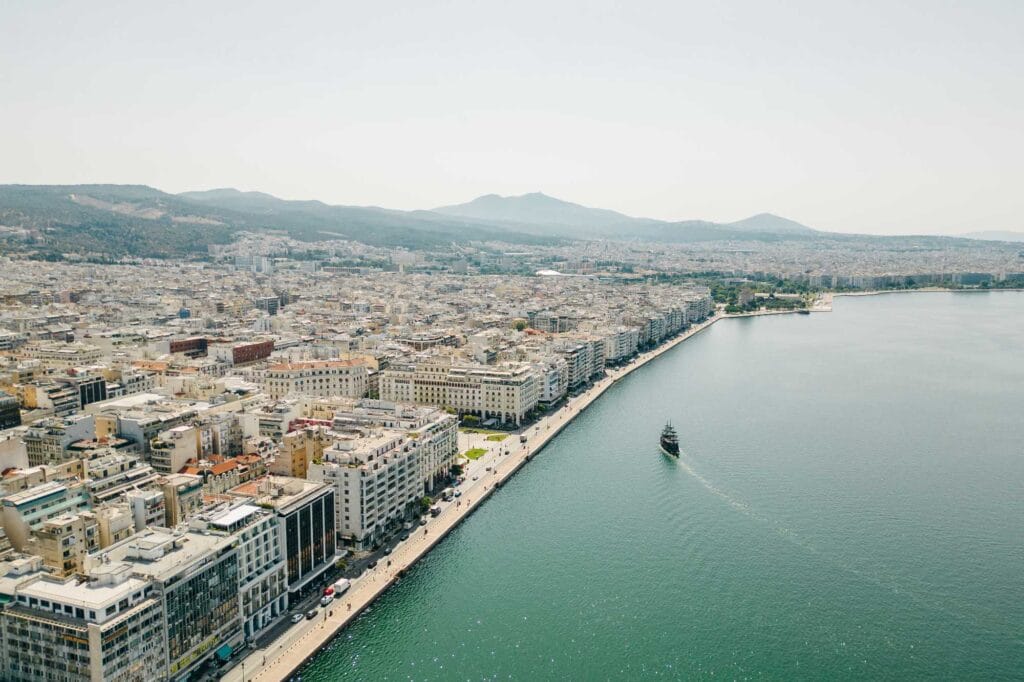
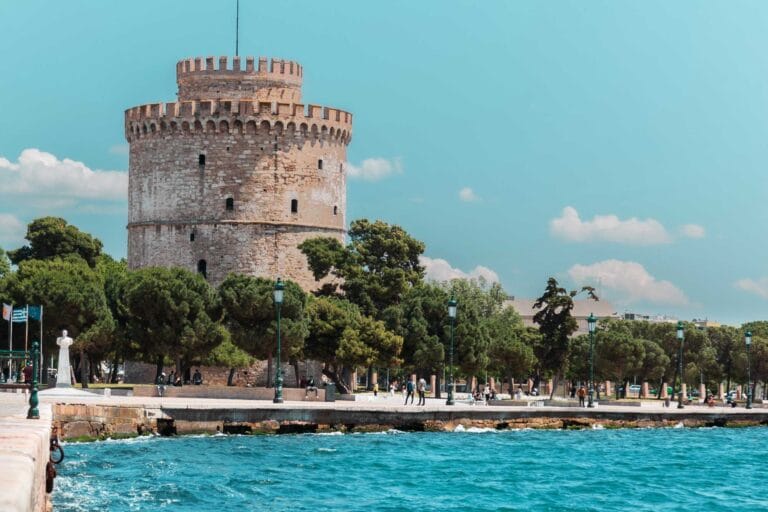
Thessaloniki is the kind of city that travel writers have been calling ‘underrated’ for twenty years, which by now should tell you that the secret is widely known — and yet it still feels less crowded with tourists than it deserves. Greece’s second city sits on the Thermaic Gulf in northern Greece, with a compact waterfront, a spectacular Byzantine and Ottoman heritage, and a food culture that Athenians will privately admit is better than their own.
The city has a different energy from Athens — younger, more student-dominated (multiple universities are based here), and with a stronger sense of local identity. The central market area (the Modiano and Kapani covered markets) is one of the best food markets in Greece. The Byzantine monuments — 15 of which are UNESCO World Heritage Sites — form a remarkable constellation of churches, towers, and walls.
Thessaloniki is also the most logical base for exploring northern Greece: the archaeological site at Vergina (burial site of Philip II of Macedon, Alexander the Great’s father), the monasteries of Mount Athos (for male visitors), and the lakes and gorges of central Macedonia are all within reach.
Thessaloniki Is Best For
- Travelers who have already done Athens and want a different Greece
- Food and market lovers — the city’s eating culture is exceptionally strong
- History enthusiasts interested in Byzantine and Ottoman heritage (an underexplored angle in Greece)
- Those traveling in northern Greece or combining with Balkans destinations
- Anyone who prefers a more local, less overtly touristy atmosphere
How Much Time You Need
Two days minimum, three is better. One full day for Byzantine sights and the Ano Poli (Upper Town), one for the waterfront, markets, and eating your way through the city.
For a complete overview, see our Thessaloniki Travel Guide.
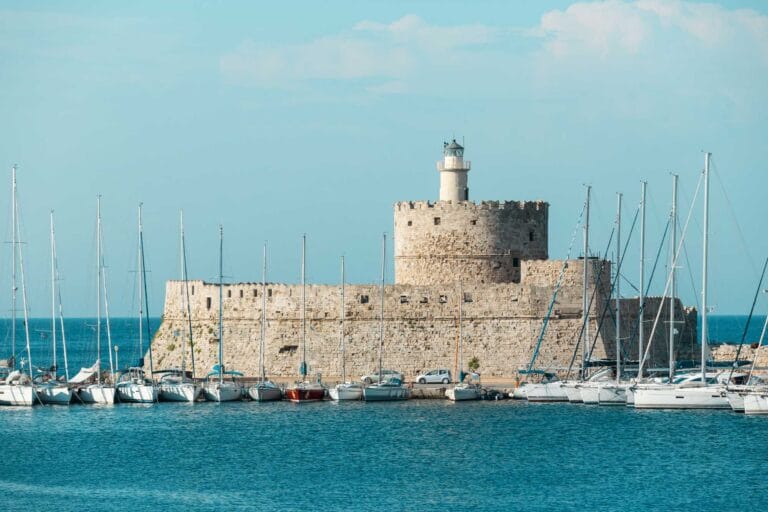
Rhodes Town — Europe’s Most Intact Medieval City
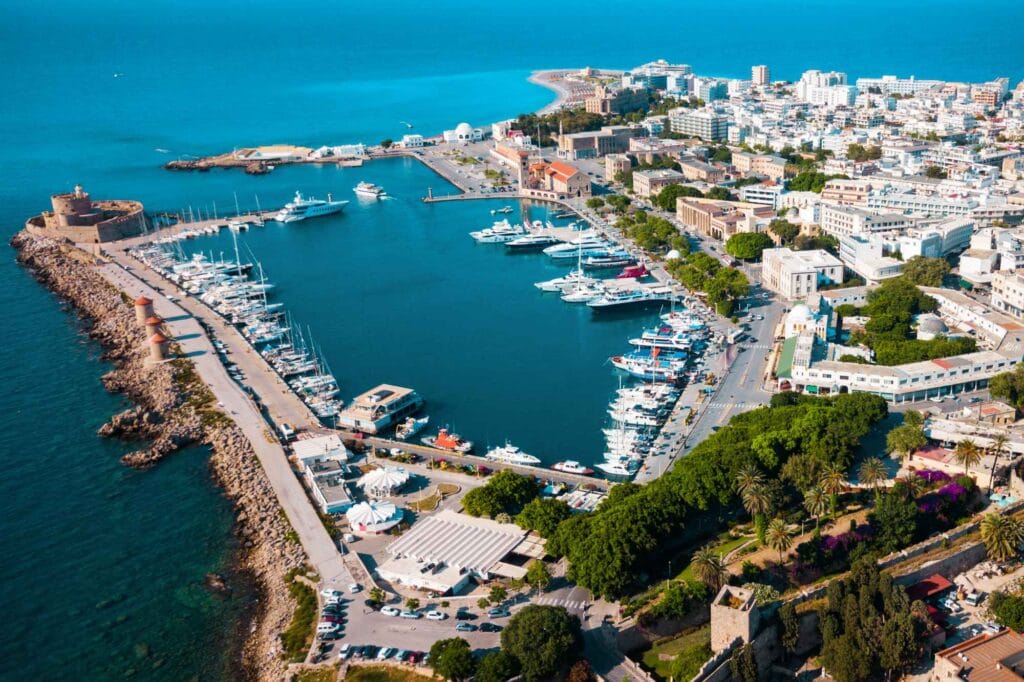
Rhodes Town belongs to a different category from Athens and Thessaloniki. It’s smaller, more self-contained, and its appeal is more focused — but within that focus, it’s extraordinary. The Old Town is the largest and most completely preserved medieval city in the Mediterranean, a UNESCO World Heritage Site where the Knights Hospitaller built their fortress capital in the 14th century and the streets have barely changed since.
Walking inside the medieval walls is one of the genuinely transporting experiences in Greek travel. There are no cars, no modern facades, no breaks in the stone-and-cobblestone atmosphere. The Palace of the Grand Masters, the Street of the Knights, the Archaeological Museum in the old Hospital of the Knights, the Turkish Quarter with its mosque and hammam — each layer of history sits visibly on top of the last.
Rhodes Town is also the practical capital of one of Greece’s most rewarding islands, with excellent connections to the rest of the island and ferry links to other Aegean destinations.
Rhodes Town Is Best For
- History and architecture enthusiasts — the medieval city is in a category of its own
- Couples looking for atmosphere and romance alongside beach time
- Travelers combining city culture with island exploration on Rhodes
- Anyone interested in the Crusader period and the Knights Hospitaller
- Visitors who want a walkable, contained city experience rather than a sprawling metropolis
How Much Time You Need
Two full days for the city itself — one for the main monuments, one for slower exploration of the Chora and quieter corners. Add more days if you’re using Rhodes Town as a base for the island.
For the full city guide, see our Rhodes Town Travel Guide.
Heraklion — The Gateway to Ancient Crete
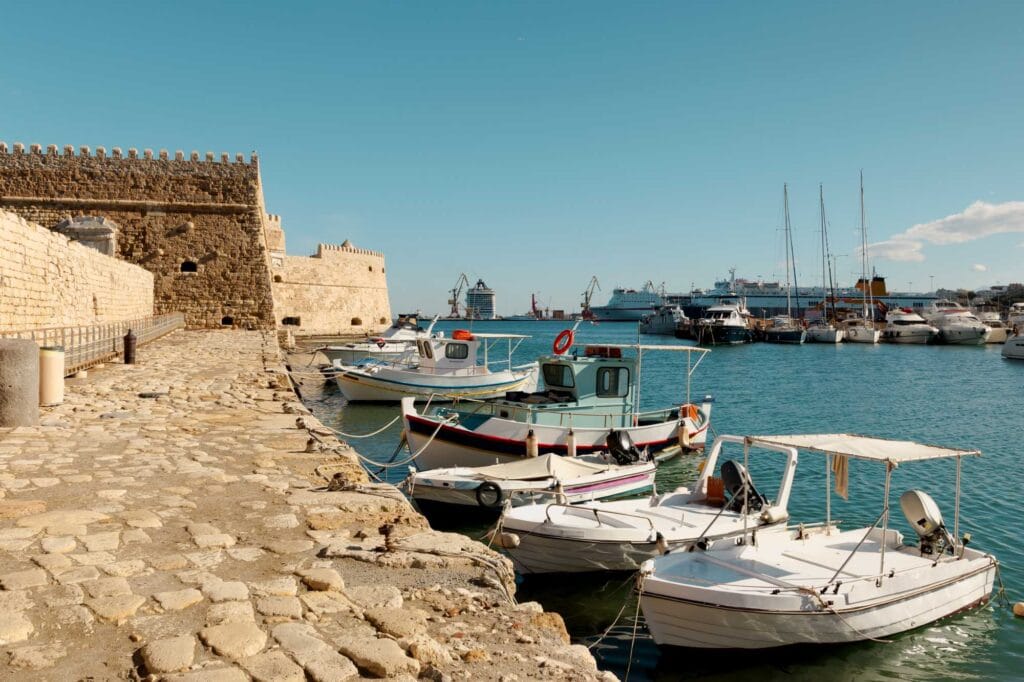
Heraklion is the most misunderstood of Greece’s major cities — consistently underestimated by visitors who fly in, pick up a rental car, and head straight for the coast. That’s a mistake worth correcting. The city has a world-class Archaeological Museum (the finest collection of Minoan art anywhere), the Palace of Knossos just 5 km from the center, a beautiful Venetian harbor, and a food scene rooted in what many consider Greece’s strongest regional cuisine.
It’s not a city that announces itself immediately. Heraklion takes a little effort to appreciate — the commercial center is busy and not particularly beautiful, and the waterfront has been obscured by a busy road. But the Old Town behind the Venetian walls, the market on 1866 Street, the evening atmosphere around Koronaiou Square — these repay the patience.
Heraklion Is Best For
- Anyone visiting Crete — it’s the natural entry and exit point, and the sights justify at least two days
- History and archaeology enthusiasts — Knossos and the Archaeological Museum are among the most significant ancient sites in Europe
- Food lovers interested in Cretan cuisine, widely regarded as the finest in Greece
- Travelers who want a genuine city experience on what is otherwise a beach-and-nature island
How Much Time You Need
One to two days is the right amount before continuing to explore the rest of Crete.
For a full overview, see our Heraklion Travel Guide.
Athens vs Thessaloniki: How to Choose
This is one of the most common questions for Greece travelers with limited time. The honest answer is that they’re different enough that ‘choose’ is the wrong frame — ideally, you’d visit both. But if you have to pick one:
Choose Athens If…
- This is your first trip to Greece and you want the essential historical context
- The Acropolis and the National Archaeological Museum are on your list
- You’re flying in internationally and want maximum sightseeing value from your arrival city
- You’re combining Greece with other Southern European destinations and need good flight connections
Choose Thessaloniki If…
- You’ve been to Athens and want something different
- Food culture and local atmosphere matter more to you than landmark sights
- You’re traveling in spring or autumn and want a city that feels genuinely alive outside tourist season
- You’re exploring northern Greece, Macedonia, or combining with Balkans travel
- You want Byzantine history specifically — Thessaloniki’s collection of Byzantine monuments is unmatched
Can You Do Both?
Yes, and it’s easier than most people expect. Athens and Thessaloniki are connected by fast domestic flights (55 minutes), regular Intercity trains (roughly 4 hours), and buses. A Greece itinerary that includes two nights in Athens, two in Thessaloniki, and a week on an island is entirely manageable and far more satisfying than one that treats the mainland as mere transit.
How to Combine Greek Cities with the Islands
The most rewarding Greece trips balance city depth with island relaxation. Here are the combinations that work best:
Athens + Santorini or Mykonos
The classic combination — and for good reason. Fly into Athens, spend two to three days, then take a domestic flight or ferry to the Cyclades. Athens and Santorini are connected by daily ferries (roughly 5 hours by high-speed, 8 hours by standard) and frequent short flights.
See our Athens to Santorini guide for logistics and planning.
Athens + Crete (via Heraklion)
Two nights in Athens followed by overnight ferry to Heraklion (one of the great ferry journeys in Greece) gives you the best of both worlds. Athens for history and urban culture, Crete for beaches, food, and more ancient history. This combination suits travelers who want depth over breadth.
Thessaloniki + Northern Islands
Thessaloniki is the natural gateway to the lesser-known northern Aegean islands — Thassos, Samothrace, Lemnos — that most visitors never reach. If you want a Greece itinerary genuinely off the standard tourist circuit, Thessaloniki as your northern base with a northern island or two is a strong option.
Rhodes Town + Dodecanese Hopping
Rhodes Town makes an excellent base for exploring the Dodecanese island chain — Kos, Symi, Patmos, and others are all within ferry range. Spend two days in the city, then hop between islands for the rest of your trip.
For full planning support, see our guide to Getting Around Greece.
Practical Notes for City Travel in Greece
- Public transport within Greek cities is improving but uneven — Athens has the best metro system, Thessaloniki has good buses, Rhodes Town and Heraklion are best explored on foot
- Summer heat in Greek cities can be intense, particularly in Athens — plan early mornings and evenings for outdoor sightseeing, midday for museums and air-conditioned spaces
- Most major museums are closed on Mondays — build your itinerary around this if you’re visiting multiple sites
- Greek cities eat late: restaurants rarely fill up for dinner before 9pm, and the evening promenade (volta) in Thessaloniki and Rhodes starts around 8pm
- Tipping is not obligatory but appreciated: rounding up or leaving 5–10% is standard in restaurants
- City centre accommodation books quickly in peak season (July–August) — reserve in advance, particularly for Athens and Rhodes Old Town
Explore the City Guides
- Athens Travel Guide: Everything You Need to Know
- Athens in 2–3 Days: The Perfect Itinerary
- Thessaloniki Travel Guide: Greece’s Second City
- Rhodes Town: History, Culture & What to See
- Heraklion Guide: Gateway to Crete
- Getting Around Greece: Ferries, Flights & Cars
FAQ: Greek Cities Guide
What are the best cities to visit in Greece?
The four cities that belong on most itineraries are Athens (essential for history and culture), Thessaloniki (for food, Byzantine heritage, and local atmosphere), Rhodes Town (for its extraordinary medieval Old Town), and Heraklion (as the gateway to Crete and the Minoan world). Athens is the only non-negotiable for first-time visitors; the others depend on your interests and how much time you have.
Is Athens worth visiting, or should I go straight to the islands?
Athens is worth visiting — emphatically. The Acropolis and National Archaeological Museum alone justify two to three days. The city also has an excellent food scene and vibrant neighborhoods that most visitors are surprised by. Treating Athens as a transit stop is one of the most common mistakes in Greece travel.
How does Thessaloniki compare to Athens?
Athens is larger, more historically dense, and more internationally famous. Thessaloniki is more compact, more relaxed, and generally considered to have stronger local food culture. Athens has the marquee ancient sites; Thessaloniki has a deeper collection of Byzantine heritage. Most travelers who visit both prefer Thessaloniki for daily life — it feels less like a tourist city and more like a place where people actually live.
Can you visit multiple Greek cities in one trip?
Yes, and it’s easier than it sounds. Athens and Thessaloniki are 55 minutes apart by domestic flight. Rhodes and Heraklion are served by frequent ferries from Piraeus (Athens’ port). A two-week trip could comfortably include Athens, Thessaloniki, and one or two islands — or Athens, a Cycladic island, and a few days in Rhodes.
Which Greek city has the best food?
Thessaloniki has the strongest claim to the best urban food scene in Greece — a city-wide obsession with eating well, strong market culture, and distinctive local dishes like bougatsa (custard or cheese-filled pastry) and trigona (honey-cream pastry from Panorama). Cretan cuisine, accessible in Heraklion, is considered the finest regional cuisine in Greece. Athens has the most diverse and internationally-influenced restaurant scene.
How much time should I spend in Greek cities vs islands?
There’s no formula, but a rough guide: for a two-week trip, three to four days in cities and ten to eleven on islands works well. For a one-week trip, two days in Athens and five on an island is a common and satisfying split. The most common regret from Greece travelers is not having spent more time on the mainland.
Is it easy to travel between Greek cities?
Yes. Athens to Thessaloniki: 55 minutes by flight, 4 hours by Intercity train. Athens to Heraklion: overnight ferry (8–9 hours) or 50-minute flight. Athens to Rhodes: 50-minute domestic flight or ferry. The domestic flight network is well-developed and affordable when booked in advance.
Ready to Plan Your Greek City Trip?
Whether you’re spending your entire trip in one city or weaving several into a longer itinerary, each of these cities offers something that the islands simply can’t match. Start with the individual city guides to plan your days in detail.