Things to Do in Thessaloniki: Food, Culture & History
The best things to do in Thessaloniki don’t come with a queue. That’s the first thing to understand about Greece’s second city — the Byzantine churches and the White Tower are extraordinary, but you won’t fight crowds to see them. You’ll have space to actually look, think, and take it in.
Thessaloniki rewards a particular kind of traveller: one who wants history without the scripted experience, food without the tourist markup, and a city that lives fully for itself. The things to do in Thessaloniki range from walking Ottoman-era covered markets at 8am to eating bougatsa at a counter that’s been serving nothing else for decades, to watching the sun drop behind Mount Olympus from the waterfront promenade.
This guide covers all of it — sightseeing, food experiences, nightlife, markets, and day trips — with enough detail to actually use it on the ground.
Note: This page contains affiliate links. We may earn a small commission at no extra cost to you when you book through our links. This helps us keep creating free travel guides.
Top Things to Do in Thessaloniki: Sights & Landmarks
1. The White Tower
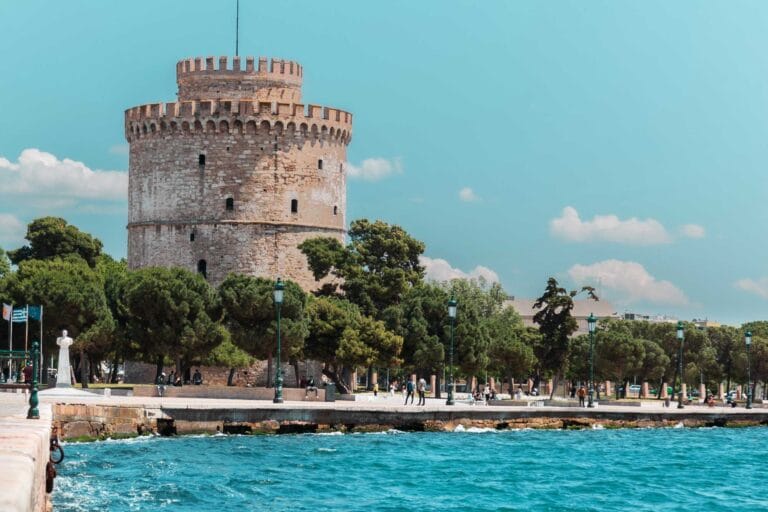
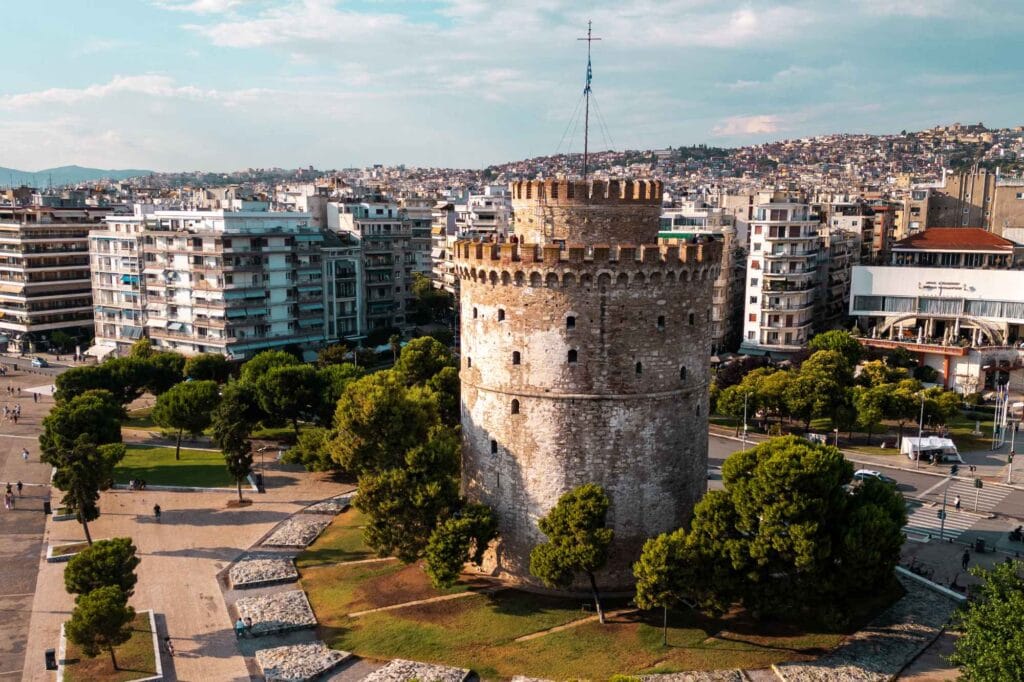
The defining symbol of Thessaloniki — a 15th-century Ottoman tower sitting directly on the waterfront. The interior museum tells the city’s full history across five floors: Byzantine origins, Ottoman rule, the catastrophic 1917 fire, the population exchanges, and modern Thessaloniki. The rooftop gives a 360° panorama over the city, the Thermaic Gulf, and on clear days, the outline of Mount Olympus on the southern horizon.
- Entry: €6 standard; free on Sundays (November–March)
- Time needed: 1–1.5 hours including the museum floors
- Best time: Late afternoon for the light on the water
2. Walk the Waterfront Promenade
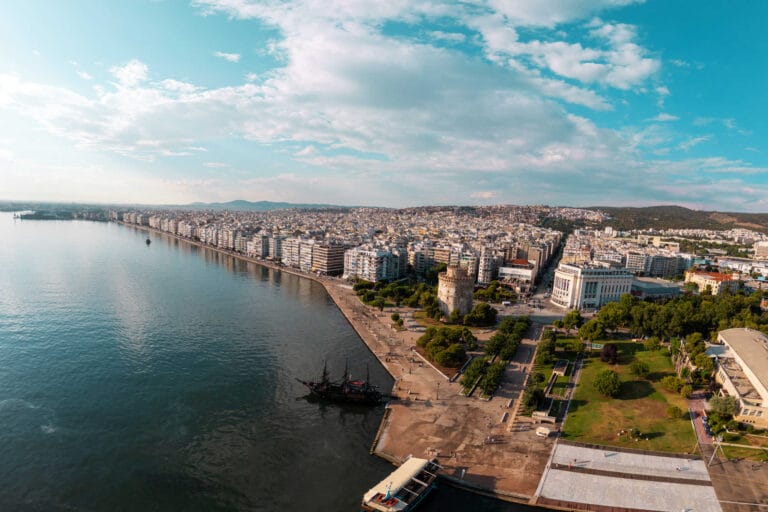
The 3km promenade along the Thermaic Gulf is the living room of Thessaloniki. Every evening the city comes out to walk here — families, students, couples, older residents. Sculptures by Giorgos Zoggolopoulos mark the route, and Mount Olympus appears on clear evenings across the water. Walk it at sunset. Walk it again in the morning with a koulouri from a street cart. It costs nothing and tells you everything about how the city works.
3. Explore Ano Poli (The Upper Town)
The upper town is one of the most underrated neighbourhoods in Greece. It survived the 1917 fire that destroyed most of historic Thessaloniki — so its Ottoman-era timber-framed houses, cobblestone lanes, and Byzantine city walls are still intact. Walk the remains of the ancient walls, visit the Eptapyrgio citadel at the top of the hill, and find a cafe terrace with views over the city. Go in the morning before the heat builds, and allow 2–3 hours to wander without a plan.
4. Aristotelous Square
The grand central square of Thessaloniki, designed after the 1917 fire by French architect Ernest Hébrard. Neoclassical arcades frame a wide space that flows directly to the waterfront. The outdoor tables are occupied at every hour of the day and evening. This is the best place to sit with a coffee and watch Thessaloniki go about its business — one of the most pleasant city-centre experiences in Greece.
5. Archaeological Museum of Thessaloniki
One of the finest archaeological museums in Greece — and one of the least crowded for its quality. The collection covers the Neolithic to the Roman period with a strong focus on ancient Macedonia: gold jewellery, royal tomb objects, and the Derveni Krater, a 4th-century BC bronze wine vessel considered one of the masterpieces of ancient Greek metalwork. Budget 2 hours.
- Entry: €8; combined ticket with the Museum of Byzantine Culture: €15
- Time needed: 2 hours minimum
6. Museum of Byzantine Culture
Arguably the best museum of Byzantine art outside Istanbul — and it sits quietly in Thessaloniki, almost unknown to most international visitors. Frescoes, mosaics, icons, and sacred objects spanning the 3rd to the 15th century, displayed in a purpose-built award-winning building. Allow 2 hours, go with the combined ticket from the Archaeological Museum.
Byzantine Churches & UNESCO Monuments
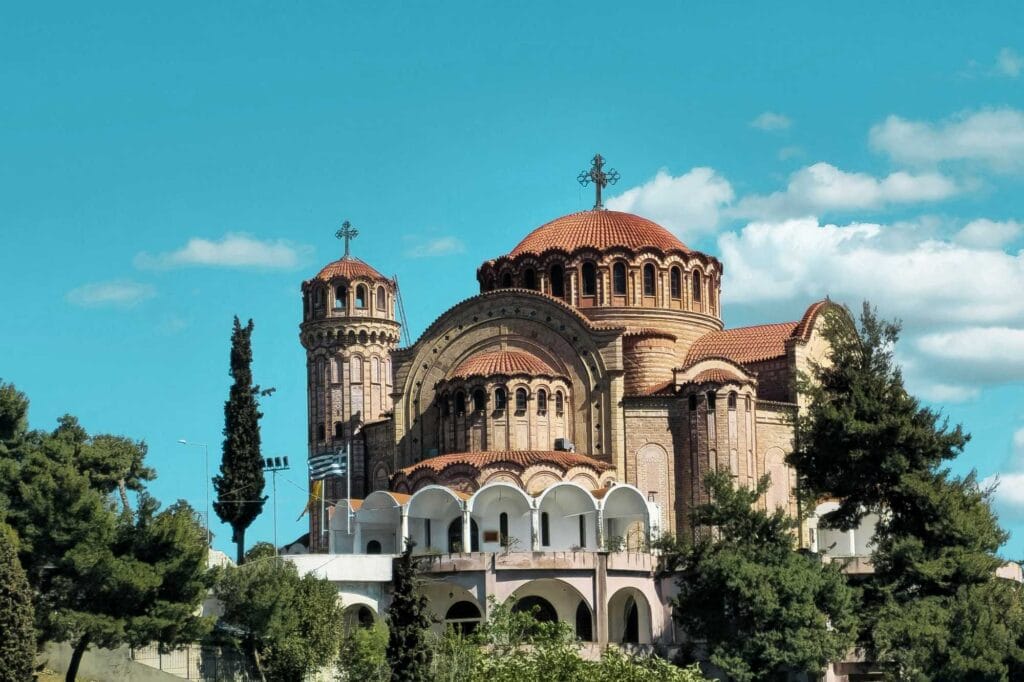
Thessaloniki has 15 UNESCO-listed Early Christian and Byzantine monuments — more than any city outside Constantinople. Most are free or low-cost, scattered throughout the city, and several are still active churches you can enter on any ordinary afternoon. These are the essential ones:
The Rotunda (Agios Georgios)
Built in 306 AD as a Roman mausoleum, converted to a church, then a mosque (the minaret still stands). The interior — a vast circular space 24 metres high — contains extraordinary 4th and 5th-century mosaic fragments in the dome. One of the most powerful ancient spaces in Greece. Entry €4.
Hagia Sophia (Thessaloniki)
Built in the 8th century on the site of a 5th-century basilica — predating the more famous Istanbul version. Still an active church. The dome mosaic of the Ascension is one of the finest Byzantine mosaics in existence. In the city centre, 5 minutes from Aristotelous Square. Free entry.
Agios Dimitrios Basilica
The largest church in Greece — a vast 5th-century basilica dedicated to the patron saint of Thessaloniki. The interior is enormous and atmospheric, the original marble columns still standing after rebuilds following the 1917 fire. The crypt below holds early Christian mosaics and the site of the saint’s martyrdom. Free entry.
Osios David (Latomou Monastery)
A small oratory in Ano Poli containing one of the finest early Byzantine mosaics in the world — the 5th-century Vision of Ezekiel, showing Christ in a radiant mandorla. Hidden in a narrow lane, kept locked except for specific hours. Ask a local or check at the tourist office for opening times.
Acheiropoietos Basilica
A 5th-century three-aisled basilica in the city centre with original Byzantine column capitals and mosaic fragments intact. One of the oldest continuously used churches in the world. The name means ‘not made by human hands’. Free entry, open most days.
Practical tip: The combined Byzantine monument ticket (€15) covers multiple paid sites and is valid for several days. Buy it at the Rotunda on your first visit.
Markets & Shopping in Thessaloniki
Modiano Market
The most beautiful covered market in northern Greece — a 1922 iron-and-glass structure filled with stalls selling fresh fish, seafood, spices, cheeses, olives, and cured meats. The surrounding Kapani market streets extend the experience into the open air. Go on a weekday morning for the full atmosphere. What to bring back: pastourmas and kavourmas (the city’s distinctive spiced cured meats), local honey, aged mountain cheese, and dried herbs.
Bit Bazaar (Bezesteni)
The covered Ottoman bazaar in the city centre — a 15th-century structure originally built for fabric trading, now housing antique dealers, bookshops, vintage clothing stalls, and small cafes. The building itself is the attraction. Good for browsing on a slow afternoon: old coins, vintage maps, and Greek objects with genuine history.
Tsimiski Street
The main shopping street of Thessaloniki, running parallel to the waterfront through the city centre. International brands and Greek chains alongside better independent stores. Thessaloniki has a reputation across northern Greece as the best place to shop — the pedestrianised stretches around Tsimiski are why.
Food Experiences You Cannot Skip in Thessaloniki
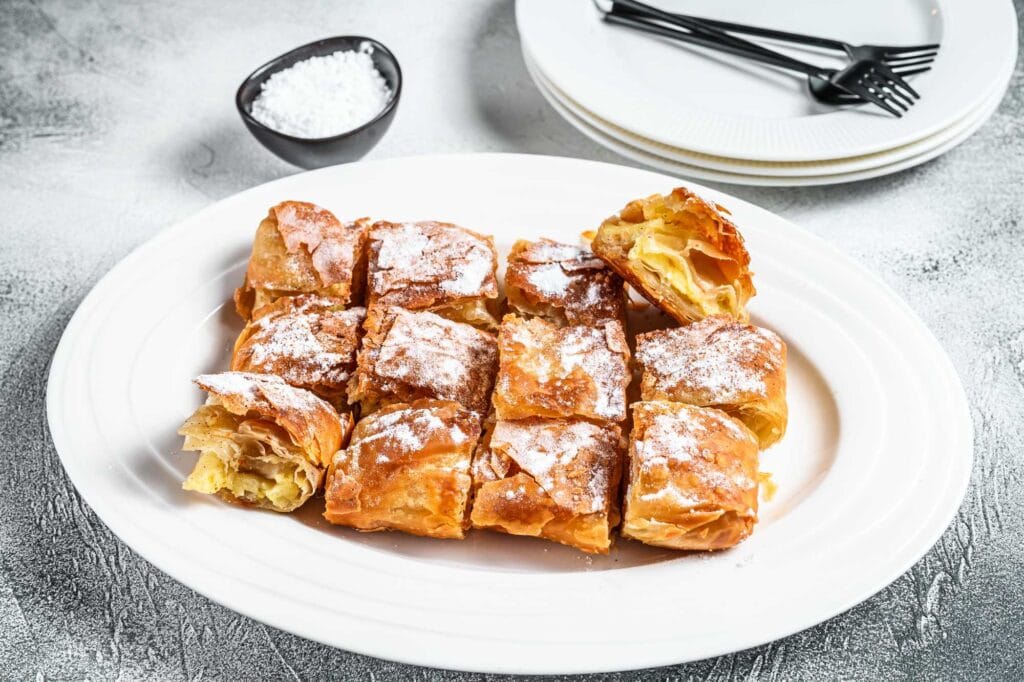
If the things to do in Thessaloniki had a ranking, food experiences would lead it. The city has a food culture shaped by Byzantine, Ottoman, Sephardic Jewish, and refugee traditions that arrived with the 1923 population exchange — richer and more layered than anywhere else in Greece.
Bougatsa at a Specialist Shop
The defining Thessaloniki food experience. Bougatsa is a warm phyllo pastry filled with semolina custard cream, sliced at the counter, dusted with powdered sugar and cinnamon. A real specialist shop (not a generic bakery) opens before dawn and serves nothing else. Go before 10am — the fresh batches sell out.
- Bantis (near Modiano market): The most celebrated counter in the city centre.
- Trigono Panoramatos (Panorama neighbourhood): Crispy phyllo triangles filled with cream — technically trigona, not bougatsa, but essential. Worth the short taxi ride uphill.
- Giannis (near Aristotelous Square): Central, consistent, open from early morning.
Tsipouro with Mezedes in Ladadika
The quintessential Thessaloniki evening. Tsipouro is a clear grape spirit — served ice-cold in small glasses alongside small plates of food that arrive automatically with each round. You don’t order food separately; it’s part of the drinking ritual. The mezedopoleia (mezedes restaurants) of Ladadika — the converted olive oil warehouse district near the port — are the best place for this. The streets fill up after 9pm and the evenings run long.
Fresh Mussels at a Waterfront Taverna
Thessaloniki sits on the Thermaic Gulf and mussels are a genuine local speciality. Order them steamed with white wine, garlic, and herbs, with crusty bread to soak the broth. Tavernas near the waterfront and in Ladadika serve them fresh and inexpensive — a kilo runs €8–12.
Koulouri from a Street Cart
The sesame bread ring sold from street carts throughout the city — thicker and more flavourful than the Athenian version. Buy one from a cart for €0.50 and eat it walking the promenade. The simplest pleasure Thessaloniki offers.
A Guided Food Tour
A good guided food tour covers the market, the bougatsa shops, the tsipouro culture, and the Sephardic and Ottoman food traditions that most independent visitors miss entirely. A 3–4 hour tour costs €40–60 per person and covers more cultural ground than a full day of eating alone.
Best Restaurants in Thessaloniki
The restaurants that earn Thessaloniki its food reputation:
Ta Nea Ilysia — Ladadika
One of the most consistently loved mezedopoleia in the city. Excellent tsipouro service, seasonal menu, and the fried mussels and saganaki here are benchmarks. Book ahead for Friday and Saturday evenings.
€€ | Mezedes + tsipouro
Myrovolos Smyrnis — Ladadika
Named after Smyrna (modern İzmir), reflecting the deep connection between Thessaloniki and the 1923 refugee population that shaped so much of the city’s food culture. Traditional recipes, excellent mackerel, and a atmosphere that feels like eating history.
€€ | Traditional
Tottis — City Centre
The most famous souvlaki counter in Thessaloniki. Pork skewers over charcoal, pita, tomato, onion. Simple, perfectly done, inexpensive. Queue at lunchtime is the only inconvenience.
€ | Souvlaki
O Arhontis — Near the Market
A neighbourhood taverna near Modiano that has been feeding the same streets for 40 years. Fish, mezedes, grilled meats, barrel wine. No pretension, honest prices, the real thing.
€€ | Taverna
Extravaganza Patisserie
The most celebrated pastry shop in Thessaloniki — a city that takes its patisserie seriously. Trigona, custard bougatsa, and seasonal confections with loyal followings across northern Greece. Go for afternoon coffee.
€ | Pastry + coffee
Nightlife & Evening Culture in Thessaloniki
Thessaloniki has a reputation as one of the best nightlife cities in Greece. Aristotle University’s enormous student population and the city’s deeply social cafe and bar culture make it genuinely alive after dark.
Ladadika District
The converted olive oil warehouse district near the port — the most concentrated nightlife area in the city. Streets dense with mezedopoleia, bars, and live music venues. Starts filling up around 9pm, runs until 2–3am. The best introduction to Thessaloniki evenings for first-time visitors.
Valaoritou Street
Behind Aristotelous Square, Valaoritou has become the city’s cocktail bar and late-night street. Smaller, more design-conscious venues attracting a mixed crowd. Good for cocktails after dinner, before deciding how late the evening goes.
Cafe Culture
Thessaloniki claims to have the highest cafe density per capita in Europe — a statistic that may be embellished, but feels true on the ground. Sitting in a cafe for two or three hours over one coffee is the social norm here. The main cafe strips run around Navarinou Square and the streets off Aristotelous. The frappe (iced coffee) was invented in Thessaloniki in 1957 at the Thessaloniki Trade Fair — a fact locals are quietly proud of.
Thessaloniki International Film Festival (November)
One of the most important film festivals in southeastern Europe, held every November across venues throughout the city. It transforms the cultural atmosphere for two weeks — screenings, events, industry visitors, and a city-wide buzz that makes November one of the best months to visit Thessaloniki.
Day Trips from Thessaloniki
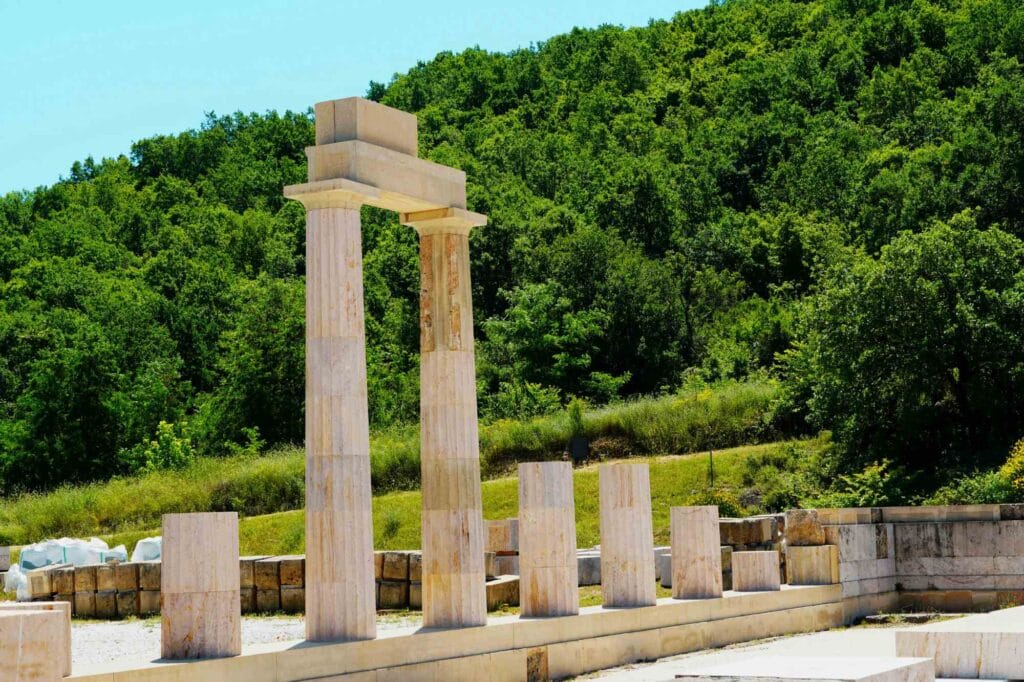
Some of the best things to do in Thessaloniki are actually outside it. The city’s position in northern Greece makes it the best base for day trips to ancient sites, mountains, and beaches.
Vergina — 1.5 hrs by car
The royal tombs of the ancient Macedonian kingdom — where Philip II, father of Alexander the Great, was buried in 336 BC. The gold artifacts are displayed in situ inside the burial mounds. Remarkable, uncrowded, and genuinely moving. Best reached by car or organised day trip.
Pella — 40 mins by car
Birthplace of Alexander the Great, ancient capital of Macedonia. The site museum contains the finest ancient Greek pebble mosaics in existence. Easy half-day by car.
Halkidiki Beaches — 1 hr by car
Three peninsulas stretching south into the Aegean. Sithonia (second finger) has the most beautiful scenery: pine forests meeting transparent water. A full day of beach and seafood. Car essential.
Mount Olympus — 1.5 hrs by car
Greece’s highest mountain and home of the gods. The national park offers hiking from gentle forest trails to the full summit (serious, two days). Even a half-day in the lower gorges is spectacular.
Edessa — 1.5 hrs by car
A small Macedonian highland town known for spectacular waterfalls dropping 70 metres into a gorge. A pleasant half-day trip, especially in spring at full volume.
Practical Tips for Getting the Most from Thessaloniki
- Eat bougatsa before 10am. Not optional. The specialist shops sell out of fresh batches and close by early afternoon.
- Buy the combined Byzantine monument ticket (€15) at the Rotunda on your first day. It covers multiple sites and is valid for several days.
- Go to Ano Poli in the morning. Take the bus up (Line 22 from Aristotelous), then walk back down through the lanes at your own pace.
- The waterfront promenade is always free. Walk it morning and evening — it’s a completely different experience at each time of day.
- Tsipouro is sipped slowly with food over 2–3 hours. Order a carafe and let the mezedes come with each round. It’s not a shot culture.
- Thessaloniki restaurants start filling up at 9–10pm. Arriving early gets you a table and faster service; arriving at 9:30pm gets you the atmosphere.
- Rent a car for day trips. Vergina, Halkidiki, and Olympus are technically accessible by bus but the logistics are frustrating. A car makes them straightforward.
Explore More About Thessaloniki & Greece
- Thessaloniki Travel Guide: Everything You Need to Know
- Athens Travel Guide: Everything You Need to Know
- Greek Food Guide: What to Eat & Where
- Getting Around Greece: Ferries, Flights & Cars
- Best Car Rentals in Greece: How to Choose & Book
- 7 Days in Greece: The Perfect One-Week Itinerary
FAQ
What are the top things to do in Thessaloniki?
The White Tower and waterfront promenade are the starting points. Add the Byzantine churches (especially the Rotunda and Agios Dimitrios), Modiano market, Ano Poli, and the Archaeological Museum. For food: bougatsa in the morning, koulouri from a street cart, mussels at a waterfront taverna, and tsipouro with mezedes in Ladadika in the evening.
How many days do you need in Thessaloniki?
Two full days covers the main sights and gives you time to eat properly. Three days is better if you want to add a day trip to Vergina or Halkidiki. If combining with Athens, two days in each city is a natural structure.
Is Thessaloniki good for food?
Most Greeks would say it’s the best food city in the country — with some reluctance if they’re from Athens. The combination of Byzantine, Ottoman, Sephardic Jewish, and refugee culinary traditions produces a food culture more varied and layered than anywhere else in Greece. The four pillars: bougatsa, tsipouro culture, the mezedopoleia of Ladadika, and fresh Thermaic Gulf seafood.
What is Ladadika in Thessaloniki?
Ladadika (from ladi, meaning olive oil) is the old warehouse district near the port, converted into the city’s main food and nightlife neighbourhood. Dense with mezedopoleia and bars in restored 19th-century buildings — the best place in Thessaloniki for the tsipouro-with-mezedes evening experience.
What is bougatsa and where do I get it in Thessaloniki?
Bougatsa is a warm phyllo pastry filled with semolina custard cream, sliced at the counter and served with powdered sugar and cinnamon. The best versions come from specialist shops that open before dawn and serve nothing else. Bantis (near the Modiano market) is the most celebrated. Go before 10am.
Are the Byzantine churches free to visit?
Most are free or very low-cost. Hagia Sophia, Agios Dimitrios, and Acheiropoietos are all free. The Rotunda costs €4. The combined Byzantine monument ticket (€15) covers the Rotunda and several other paid sites and is worth buying if you plan to visit more than two.
What day trips can I do from Thessaloniki?
Vergina (royal Macedonian tombs, 1.5 hrs), Pella (Alexander the Great’s birthplace, 40 mins), Halkidiki beaches (1 hr), Mount Olympus (1.5 hrs), and Edessa waterfalls (1.5 hrs). All are best done by car. Vergina is the most significant historically; Halkidiki is best for a beach day.
What is tsipouro and how is it served in Thessaloniki?
Tsipouro is a clear grape-based spirit produced in northern Greece, served ice-cold alongside mezedes that arrive automatically with each round. In Thessaloniki, it’s a slow, sociable ritual over 2–3 hours — not a shot to be rushed. Order tsipouro me mezes at any mezedopolio and the experience takes care of itself.
Ready to Explore Thessaloniki?
Find your base, then let the city unfold. The best things to do in Thessaloniki reward slow travel and a good appetite.