Best Greek Islands for Families: Kid-Friendly Picks for Every Age
Family holidays in Greece have a particular rhythm. Mornings at a beach where the water is shallow and warm and the kids can see their feet on the sandy bottom. Lunch at a taverna where the owner brings extra bread without being asked and doesn’t mind when someone spills their juice. Afternoons that stretch out slowly — a nap, a walk, an ice cream, another swim. Dinner as the sun goes down, the children exhausted in the best possible way.
Greece is genuinely one of the best countries in Europe for families — the culture is welcoming to children in a way that feels natural rather than performed, the food is fresh and adaptable, and the islands offer enough variety that everyone in the group finds something that’s theirs. But not every island is equally suited to a family trip. Some are built for beach clubs and late nights. Others are built for exactly what you need.
This guide covers the best Greek islands for families — ranked by what matters most when you’re travelling with children: safe beaches, practical logistics, family-friendly accommodation, and enough to keep kids genuinely engaged. We’ve also included what to avoid on each island, because that’s just as useful.
*Note: This page contains affiliate links. We may earn a small commission at no extra cost to you when you book through our links. This helps us keep creating free travel guides.*
What Makes a Greek Island Family-Friendly
When you’re travelling with children, the criteria shift significantly compared to a couples trip. Here’s what we look for:
Shallow, calm beaches: Sandy shores with gentle entry, no rocks underfoot, and calm water that doesn’t knock small children over. The Aegean can have surprising chop — not all beaches are equal.
Easy logistics: Good road infrastructure, reliable taxis and buses, proximity of accommodation to the beach. Islands where you need a boat to reach every beach are beautiful but exhausting with small children.
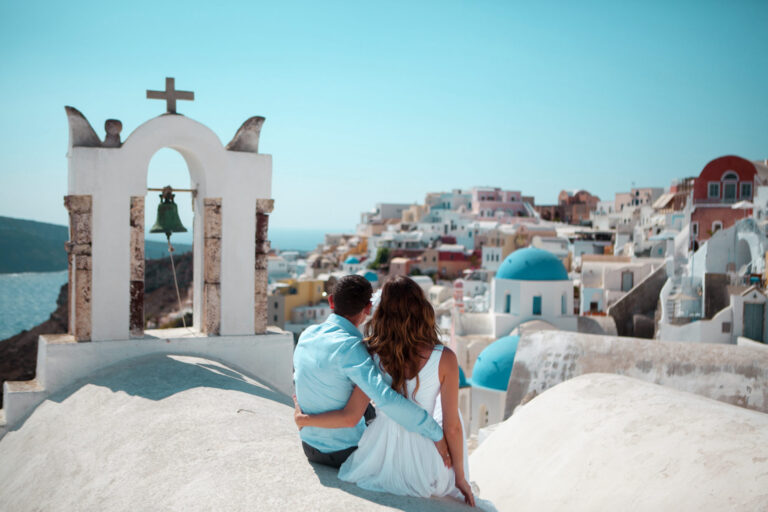
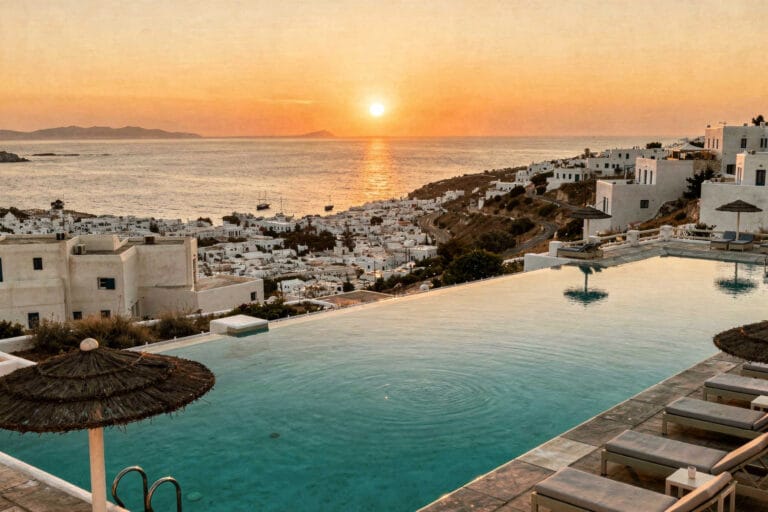
Family-friendly accommodation: Apartments with kitchenettes, family rooms, pools, and flexible check-in. Not every boutique cave hotel in Santorini is suitable for a toddler.
Things for kids to do: History sites they can actually explore (not just look at), boat trips, water parks, snorkelling, go-karts. The best family islands have enough activities that children aren’t bored after day two.
Good food options: Greece is generally excellent for this — fresh fish, grilled meat, pasta, pizza, salads. But some islands have more tourist infrastructure (and therefore more adaptable menus) than others.
Medical facilities: Larger islands have hospitals or clinics. Smaller islands may have only a basic health centre. Worth knowing before you go.
The Best Greek Islands for Families
1. Crete — The Best All-Round Family Island
Best for: families with children of all ages, first-time visitors, longer stays
Beach type: Sandy, long, shallow — ideal for all ages
Budget level: €€
Crete is the answer to almost every family travel question about Greece. It’s Greece’s largest island, which means it has the infrastructure, variety, and space to accommodate families properly — without feeling like a theme park. The northern coast has some of the longest, safest sandy beaches in the country. The Cretan food culture is outstanding. There are ancient ruins that genuinely excite children (the Minoan palace at Knossos feels like stepping into a myth). And there’s enough variety across the island that a week or ten days never runs dry.
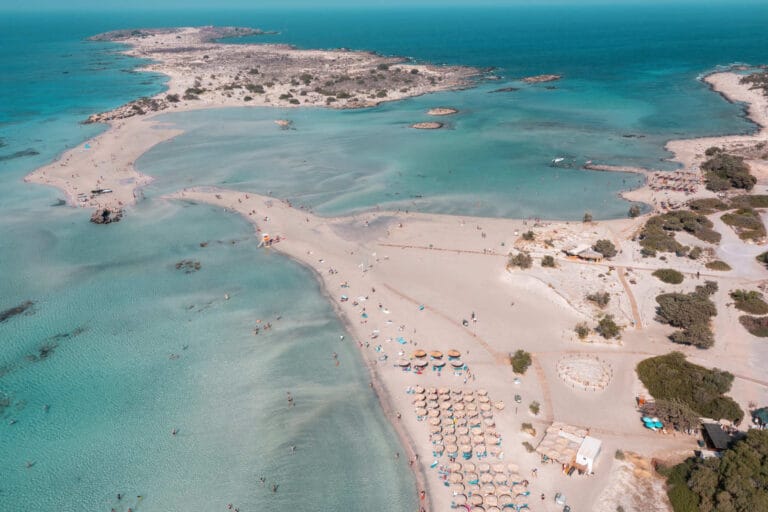
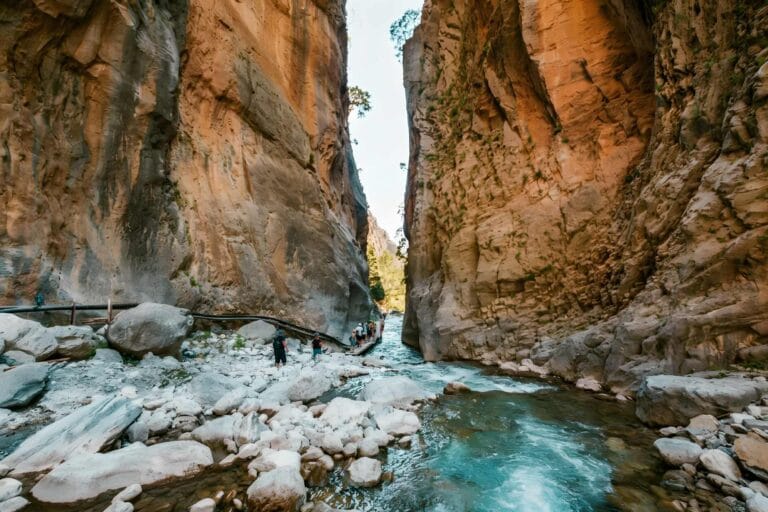
The beaches around Chania and Rethymno are particularly good for families — wide, sandy, with calm water and plenty of nearby amenities. Elafonissi beach on the southwest coast has shallow pink-tinted water that children find magical, though it gets crowded in August. The Samaria Gorge is doable with older kids (10+) and makes for a brilliant adventure day.
Crete also has the best medical infrastructure of any Greek island outside Athens — useful to know if anyone in your group has health needs.
What to do with kids in Crete
- Knossos Palace — Europe’s oldest civilization, genuinely fascinating for children who’ve had even a brief introduction to Greek myths
- Elafonissi beach — shallow, warm, pink-tinged sand, snorkelling-friendly
- Acqua Plus Water Park near Heraklion — a full day out for kids of all ages
- Boat trip along the coast from Chania to the Balos lagoon — spectacular and accessible
- Samaria Gorge — for families with children 10 and over, a proper adventure
- Explore the old Venetian harbour in Chania — beautiful for an evening walk, gelato included
→ Full guides: Crete Travel Guide | Crete with Kids: A Family-Friendly Guide
2. Rhodes — History, Beaches & Easy Logistics
Best for: families with children 5+, history lovers, those wanting beach + culture mix
Beach type: Mix of sandy and pebbly — Faliraki and Lindos Bay are sandy and family-friendly
Budget level: €€
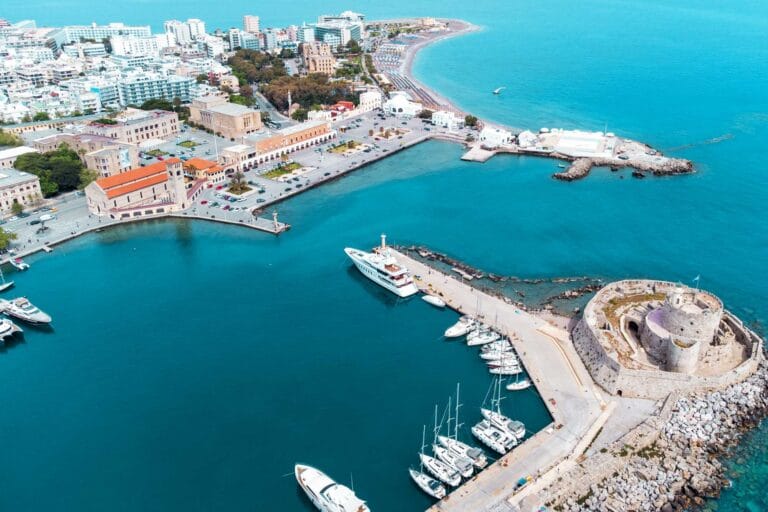
Rhodes is one of the most complete family destinations in Greece. The island is large enough to have excellent infrastructure — good roads, reliable taxis, a range of family hotels — but compact enough that you can reach most things without long drives. The UNESCO medieval Old Town is one of the most impressive in Europe and genuinely captures children’s imaginations: cobblestone lanes, a working drawbridge, a palace that looks exactly like a castle should.
The beaches on the east coast — Faliraki, Anthony Quinn Bay, Tsambika — are sandy, well-organised, and calm enough for children to swim safely. Faliraki has a water park directly adjacent, which buys you at least one full day of uncomplicated happiness. Lindos, with its ancient acropolis above a beautiful bay, is one of the most visually striking spots on any Greek island and worth the visit even with younger children.
What to do with kids in Rhodes
- Rhodes Old Town — walk the Street of the Knights, explore the Palace of the Grand Masters
- Faliraki Water Park — one of the largest in Greece, brilliant for a full family day
- Lindos — take the donkey ride up to the acropolis (kids love this), swim at Lindos Bay below
- Valley of the Butterflies — a short drive from Rhodes Town, thousands of butterflies in a forested valley
- Anthony Quinn Bay — snorkelling, clear water, manageable for children
- Boat trip to the Blue Lagoon — a half-day excursion that works well for all ages
→ Full guides: Rhodes Travel Guide | Best Hotels in Rhodes
3. Corfu — Lush, Green & Genuinely Relaxed
Best for: families with younger children, nature lovers, those wanting a quieter pace
Beach type: Mix of sandy and pebbly — north coast has excellent sandy beaches
Budget level: €€
Corfu has a gentler, more forested character than most Greek islands — olive groves, cypress trees, and a Venetian Old Town with wide promenades that are a pleasure to walk with a pushchair. The island is well set up for families, with a good range of accommodation from small apartments to larger resort hotels, and beaches spread across the island at manageable distances.
The north coast — Sidari, Roda, Acharavi — has some of the best family beaches in Greece: long, sandy, with calm and shallow water. Glyfada and Agios Gordios on the west coast are also excellent. Paleokastritsa, while stunning, has mainly pebbly beaches and is better suited to older children and adults. The Corfu Town itself is a UNESCO World Heritage Site and genuinely enjoyable to explore — the Liston promenade is particularly good for evening strolls with ice cream.
What to do with kids in Corfu
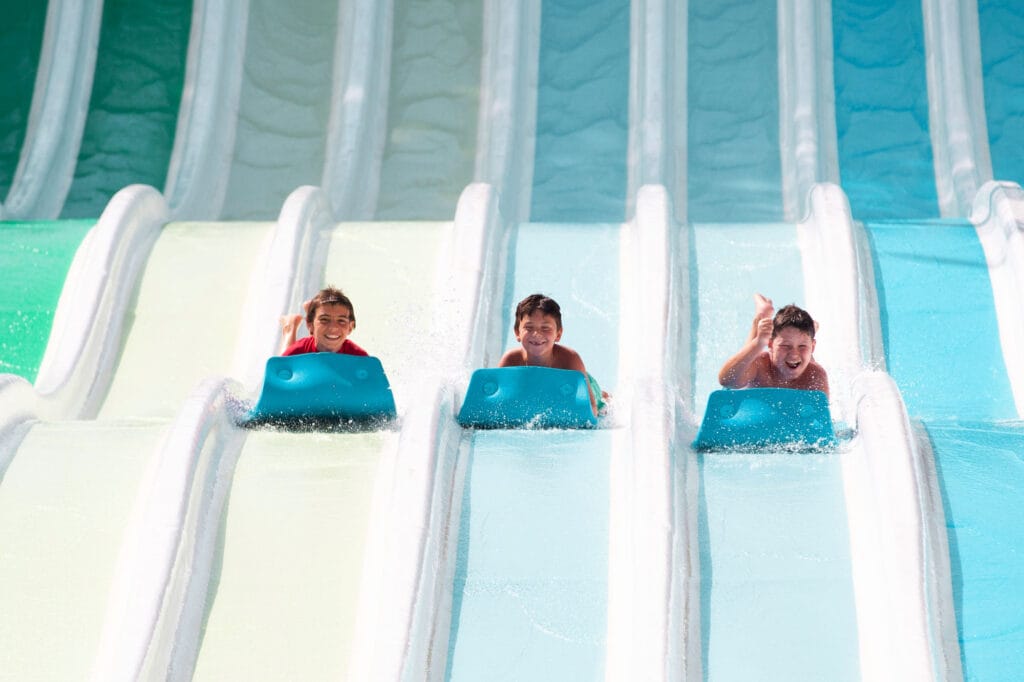
- Aqualand Water Park — one of the best in Greece, located in the centre of the island
- Boat trip around the north coast to see the Diapontia islands and hidden caves
- Corfu Town and the Old Fortress — history without being overwhelming for younger children
- Canal d’Amour in Sidari — swimming through a natural rock channel, kids find it magical
- Horse riding through the olive groves — several stables offer family-friendly rides
- Achilleion Palace — a 19th-century palace in the hills with beautiful gardens and sea views
→ Full guide: Corfu Travel Guide
4. Kos — The Underrated Family Choice
Best for: families with children of all ages, cycling enthusiasts, beach-focused trips
Beach type: Long, sandy, calm — Tigaki and Paradise Beach are excellent
Budget level: €–€€
Kos doesn’t always appear on the romantic shortlist — but for families, it’s one of the most practical and enjoyable islands in Greece. The island is relatively flat (unusual for Greece), which makes cycling a genuine option — the cycle paths connecting Kos Town to the main beaches are excellent and children can manage them easily. The beaches are long, sandy, and consistently calm.
Kos Town itself is charming and walkable, with ancient ruins literally integrated into the modern town — a Roman agora next to a cafe, a medieval castle at the harbour entrance. Tigaki beach on the north coast is shallow for a long distance into the sea, making it ideal for young children. The island also has direct international flights, which simplifies arrival considerably.
What to do with kids in Kos
- Cycle the coastal path from Kos Town to Tigaki beach — flat, safe, and children can manage it
- Tigaki beach — extraordinarily shallow water, perfect for toddlers and early swimmers
- Asklepion ruins — ancient medical sanctuary set in pine forest above the town, surprisingly engaging for children with a guide
- Waterpark Lido — located near Mastichari, good for a full day
- Glass-bottom boat tour — children can see the seabed without getting wet
- Explore Kos Town’s ancient agora — ruins you can actually walk through, not just look at
5. Naxos — The Cyclades Island That Works for Families
Best for: families who want Cycladic beauty without the Santorini crowds and prices
Beach type: Long sandy beaches with calm water — best in the Cyclades for families
Budget level: €–€€
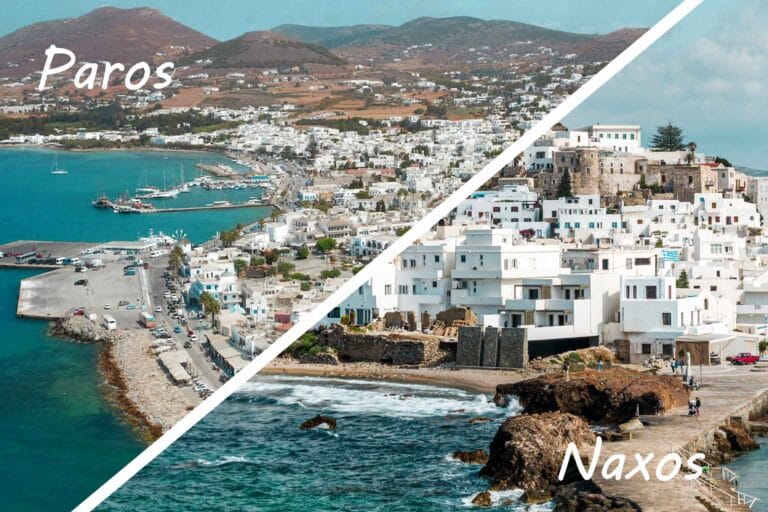
Most Cyclades islands aren’t ideal for families — too rocky, too party-focused, or too logistics-heavy. Naxos is the exception. The island has the longest, most family-friendly beaches in the Cyclades: Agios Prokopios, Agios Georgios, and Plaka are all sandy, shallow, and calm. The water is some of the clearest in Greece. And because Naxos is the largest of the Cyclades, it has the infrastructure to support family travel properly.
The Naxos Town Chora is lovely for evening walks — the Portara (ancient marble gateway) at sunset is one of those moments that children remember years later. The island also produces exceptional local food — cheese, potatoes, kitron liqueur for the adults — and the village of Halki in the interior is genuinely beautiful and takes less than an hour to explore.
What to do with kids in Naxos
- Agios Prokopios beach — fine sand, calm water, shallow for a long distance, windsurfing lessons available for older kids
- Naxos Town and the Portara at sunset — a short walk from the harbour, free, spectacular
- Rent a car and drive to Halki village — Byzantine church, local sweets shop, very manageable with children
- Kitesurfing and windsurfing lessons at Mikri Vigla — for teenagers and older children
- Visit the Marble Quarries at Apollonas — an unfinished ancient kouros statue lying in a quarry, genuinely memorable
→ Full guide: Paros & Naxos: A Guide to Two Hidden Gems
6. Zakynthos — For Families Who Want Drama & Wildlife
Best for: families with children 6+, nature enthusiasts, boat trip lovers
Beach type: Mix — Navagio is dramatic but not swimmable for young kids; Laganas and Kalamaki are flat and sandy
Budget level: €€
Zakynthos has one image that everyone knows — the shipwreck at Navagio Beach. And yes, seeing it from a boat with your children is a genuine wow moment. But the island offers more for families than that single photograph. The loggerhead sea turtle (Caretta caretta) nests on the beaches of Laganas Bay — Zakynthos is one of the most important turtle nesting sites in the Mediterranean, and watching a turtle in the wild is the kind of experience that shapes a child’s relationship with nature.
The south coast beaches around Laganas and Kalamaki are wide, sandy, and calm — well-suited for younger children. The Blue Caves on the north coast require a boat trip but are extraordinary — the light effects inside the caves create an almost fluorescent blue that children find genuinely magical.
What to do with kids in Zakynthos
- Boat trip to Navagio (Shipwreck Beach) — the view arriving by boat is unforgettable
- Blue Caves boat trip — the light inside is electric blue, children are consistently amazed
- Loggerhead turtle watching at Laganas Bay — guided tours available, ethical operators only
- Kalamaki beach — flat sandy entry, shallow water, calm sea, good for young swimmers
- Zante Waterpark near Tsilivi — a solid half-day for families
→ Full guide: Zakynthos Guide
Quick Comparison: Best Greek Island by Age Group
Toddlers & Under 5s
Best choices: Crete (Chania area), Corfu (north coast), Kos (Tigaki beach)
Priority: ultra-shallow water, sandy entry, pushchair-friendly resort areas, family apartments with kitchenettes. Avoid: Santorini (steep stairs everywhere, rocky beaches, expensive and not child-friendly), smaller Cyclades islands with limited infrastructure.
Children 5–10
Best choices: Crete, Rhodes, Corfu, Kos, Naxos
Priority: mix of beach time and activities (ruins, boat trips, water parks). This age group is the most flexible — they can handle more logistics, enjoy history sites with some context, and are strong enough swimmers for most beaches.
Tweens & Teenagers (11–16)
Best choices: Crete, Rhodes, Zakynthos, Naxos
Priority: activities beyond the beach — hiking, water sports, boat trips, exploring old towns. Teenagers respond well to islands with variety. Crete’s Samaria Gorge hike is a particular winner for this age group.
Mixed Ages (Multi-Generational)
Best choice: Crete or Rhodes
Both islands have enough variety that grandparents, parents, and children can all find something that works. Crete in particular has excellent accessibility in the main resort areas and a food culture that suits everyone.
Best Family Beaches in Greece
Not all Greek beaches are equal for families. Here are the ones that consistently deliver on all the criteria that matter:
Elafonissi, Crete: Shallow lagoon, pink-tinged sand, warm and calm water — magical for children. Gets crowded in August, go early.
Agios Prokopios, Naxos: Fine white sand, shallow entry, Blue Flag certified, windsurfing school on site for older children.
Tigaki, Kos: Exceptionally shallow water for a long distance — one of the safest beaches in Greece for young children.
Faliraki, Rhodes: Long sandy beach, well-organised, water sports, adjacent water park. Works for all ages.
Glyfada, Corfu: Sandy, west-facing (beautiful sunsets), calmer than the open east coast, family tavernas nearby.
Kalamaki, Zakynthos: Flat sandy entry, calm water, turtle nesting area nearby (respect the markers).
Tsambika, Rhodes: Beautiful sandy bay, shallow and calm, accessible by steps or donkey — children love both options.
Practical Tips for Travelling to Greece with Kids
Getting There
Crete, Rhodes, and Corfu all have direct international flights from most European cities, which eliminates the Athens connection and makes arrival considerably simpler. Kos also has direct flights. For families, direct routes are worth paying a premium for — the difference between a 3-hour direct flight and a 6-hour journey via Athens with small children is significant.
→ See: Greece Flights Guide
Renting a Car
On larger islands like Crete, Rhodes, and Corfu, a rental car is almost essential for families. It gives you the freedom to reach quieter beaches, do day trips to ruins and villages, and manage nap times without depending on bus schedules. Book in advance — family-size vehicles (7-seaters, larger SUVs) go quickly in July–August.
→ See: Best Car Rentals in Greece
When to Go
June and September are the best months for a family holiday in Greece. The sea is warm, the beaches are manageable, and the heat isn’t as extreme as August. July is fine but crowded. August is busy everywhere and the heat (35°C+) can be hard on young children — plan beach time in the morning and early evening, with a long midday break.
→ Full guide: When Is the Best Time to Visit Greece?
Where to Stay
For families, self-catering apartments or family suite hotels beat boutique hotels almost every time. A kitchenette means you can prepare breakfast and simple meals, which matters enormously when you have children who won’t always want to eat at a restaurant. Look for properties with pools, proximity to the beach (under 10 minutes walk), and flexible room configurations.
Food for Kids in Greece
Greece is one of the easier European countries for children’s food. Greek tavernas almost always have grilled chicken, pasta, pizza, fresh bread, and chips alongside the main menu. Fresh fruit is excellent and cheap everywhere. The one adjustment: Greek meal times run late — dinner at 9pm is normal. Either adapt to the rhythm (children often do, especially if they’ve had a long beach day) or eat early at tourist-oriented restaurants.
→ See: Greek Food Guide: What to Eat & Where
Health & Safety
Crete and Rhodes have the best medical facilities of any Greek islands — actual hospitals with emergency departments. Smaller islands have health centres but limited capacity. Pack a solid first aid kit, bring any prescription medications in sufficient supply (some are hard to find on smaller islands), and consider travel insurance that covers medical evacuation for remote areas.
→ See: Greece Health & Safety: What You Need to Know | Greece Travel Insurance: Do You Need It?
Sun Safety
The Greek sun is significantly stronger than most northern European families expect. Factor 50 sunscreen, UV-protective swim shirts for children, and a beach umbrella are non-negotiable. Apply sunscreen before going to the beach and reapply every 90 minutes. The hottest part of the day (12–3pm) is best spent in the shade or back at the accommodation.
Explore More
- Crete with Kids: A Family-Friendly Guide
- Crete Travel Guide
- Rhodes Travel Guide
- Best Hotels in Rhodes
- Corfu Travel Guide
- Zakynthos Guide
- Greece with Kids: A 7–10 Day Family Itinerary
- Getting Around Greece: Ferries, Flights & Cars
- Best Car Rentals in Greece
- Greek Islands Hub: How to Choose Your Island
FAQ: Greek Islands for Families
Which is the best Greek island for families with toddlers?
Crete and Kos are the top picks for toddlers. Both have beaches with extremely shallow, calm water, good family accommodation options including apartments with kitchenettes, and the infrastructure to handle the logistics of travelling with very young children. Corfu’s north coast (Sidari, Roda) is also excellent for this age group.
Is Santorini suitable for families?
Santorini is generally not the best choice for families with young children. The island is built into steep volcanic cliffs — many hotels require navigating stairs, the beaches are volcanic rock rather than sand, and the accommodation style (cave hotels, cliff-edge terraces) isn’t designed for small children. Older teenagers who appreciate the views and the atmosphere would enjoy it. For families with children under 12, other islands serve better.
How many days do you need for a family holiday in Greece?
For a single island, 7–10 days is ideal for families. It gives you enough time to find your rhythm, try different beaches, do a couple of day trips, and not feel rushed. Crete genuinely rewards 10–14 days if you want to see the whole island. For island hopping with children, keep it to two islands maximum — moving more frequently is logistically tiring with kids.
Which Greek island is easiest to get to with children?
Crete, Rhodes, and Corfu all have direct international flights from most European cities, making them the simplest to reach without connections. Kos also has direct flights. Direct routes significantly reduce travel stress with children — the difference between a 3-hour direct flight and a 6-hour journey via Athens is real.
Are Greek ferries suitable for families?
Yes, particularly the larger Blue Star Ferries that operate on routes like Piraeus to Crete. These have cafeterias, seating areas, and outdoor decks — children generally enjoy the experience. Fast catamarans are quicker but can be uncomfortable in rough seas and the interior is more confined. For families, prioritise comfort over speed on longer routes.
→ Full guide: Greece Ferry Guide: How to Book & Navigate Islands
What’s the water temperature in Greece for children?
The Aegean Sea reaches 24–27°C by July and August — comfortably warm for children. By September it’s at its warmest (up to 28°C in some areas) having been heated all summer. Even in June the water is warm enough for confident swimmers. The Ionian Sea (Corfu, Zakynthos) tends to be slightly cooler than the Aegean.
Should we rent a car for a family holiday in Greece?
On larger islands — Crete, Rhodes, Corfu, Kos — a rental car makes the holiday significantly better. You can reach quieter beaches, do day trips on your own schedule, and manage the logistics of nap times and meal times without depending on public transport. On smaller islands, taxis and buses are usually sufficient.
Is Greece safe for children?
Greece is very safe for families. Crime against tourists is low, the culture is extremely welcoming to children, and the main risks are the typical holiday ones — sun exposure, minor injuries at the beach, upset stomachs from unfamiliar food. The main islands all have adequate medical facilities for non-emergency situations. Pack travel insurance and a basic first aid kit and you’ll be well covered.
Ready to Plan Your Family Holiday in Greece?
The right island is waiting. Here’s what to sort next.
*Note: This page contains affiliate links. We may earn a small commission at no extra cost to you when you book through our links. This helps us keep creating free travel guides.*