Island Hopping in Greece: The Complete Guide to Planning Your Route
There’s a moment on every Greek ferry when you realize you made the right decision. The engine hums, the coast behind you shrinks, and somewhere ahead is another island you’ve never set foot on. That feeling — that particular mix of anticipation and salt air — is what island hopping in Greece is all about.
Greece is one of the few places on earth where the journey between destinations is as good as the destinations themselves. The Aegean connects, rather than separates. With the right route and a bit of planning, you can move between wildly different worlds — volcanic cliffs, pine forests, medieval towns, hidden coves — all within a few days.
This guide covers everything you need to plan your island-hopping trip: the best routes by trip length, how ferries work, what to pack, when to go, and how to avoid the most common mistakes first-timers make.
*Note: This page contains affiliate links. We may earn a small commission at no extra cost to you when you book through our links. This helps us keep creating free travel guides.*
How Island Hopping Works in Greece
Island hopping is exactly what it sounds like — moving from one island to the next, spending a few days on each, using ferries as your transport. Greece’s ferry network is well-developed and connects most major islands reliably from April through October.
The key thing to understand: the islands are grouped into chains, and hopping is easiest within the same chain. The Cyclades are the most connected group — you can move between Santorini, Mykonos, Paros, Naxos, and Milos with regular daily ferries in summer. Mixing chains (say, Cyclades + Ionian) requires routing through Athens or flying, which adds time.
Ferry Types
High-speed catamarans: Fast (2–3 hours between islands), more expensive, can be uncomfortable in rough seas. Operated by Seajets and Golden Star Ferries.
Conventional ferries: Slower (4–8 hours), cheaper, more comfortable for overnight crossings. Operated by Blue Star Ferries and ANEK Lines. Great for longer routes.
Small local ferries: Connect smaller or nearby islands. Usually inexpensive, no advance booking needed.
Best Island Hopping Routes by Trip Length
5–6 Days: The Mini Cyclades Loop
Short on time but want the Cyclades experience? This is the most efficient route.
- Athens (1 night — explore the Acropolis, fly or ferry out next morning)
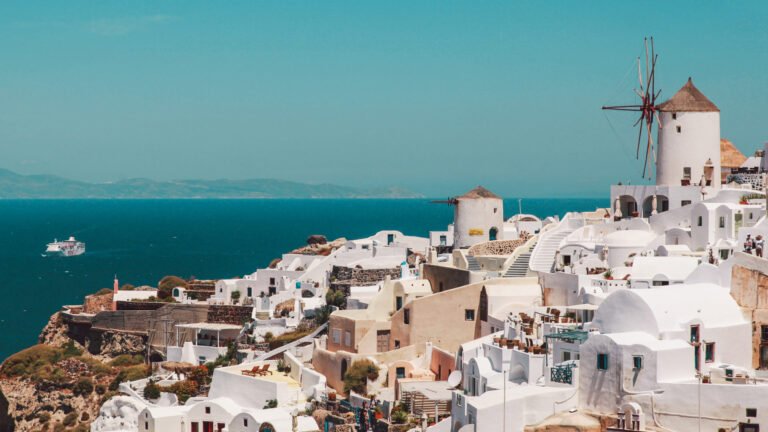
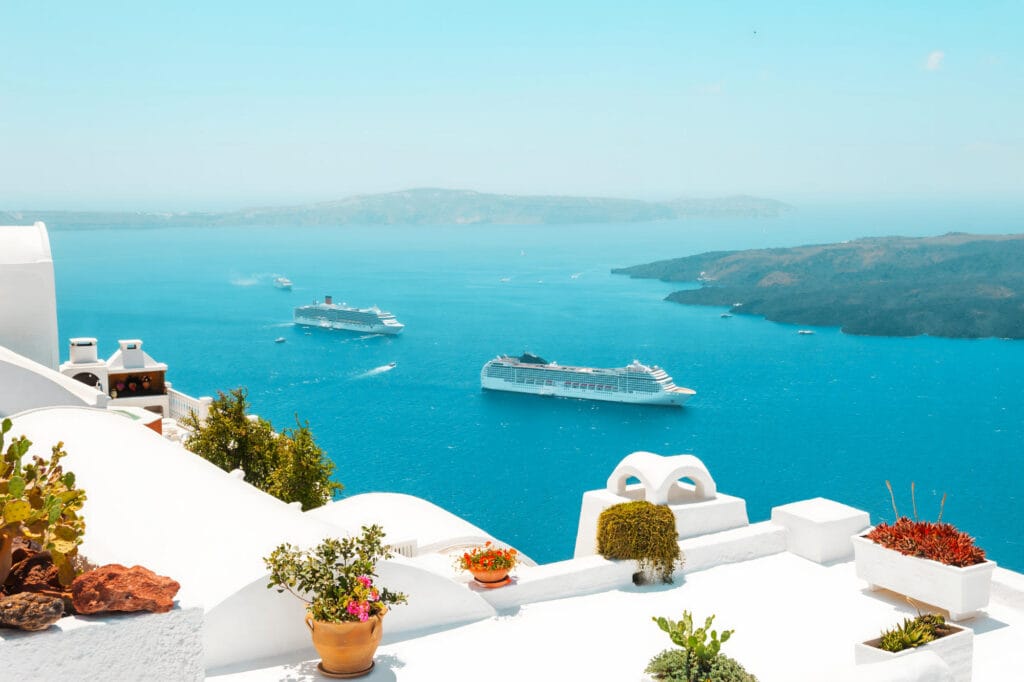
- Santorini (2 nights — caldera views, Oia sunset, volcanic beach)
- Paros (2 nights — Naoussa harbor, beaches, easy pace)
Ferry: Athens (Piraeus) → Santorini (~8 hrs conventional or ~5 hrs fast). Santorini → Paros (~2–3 hrs fast ferry).
→ See full itinerary: Athens to Santorini: How to Plan the Perfect Trip
7–8 Days: The Classic Cyclades Triangle
The most popular island hopping route in Greece — and for good reason. These three islands complement each other perfectly.
- Santorini (3 nights)
- Mykonos (2 nights)
- Paros or Naxos (2 nights)
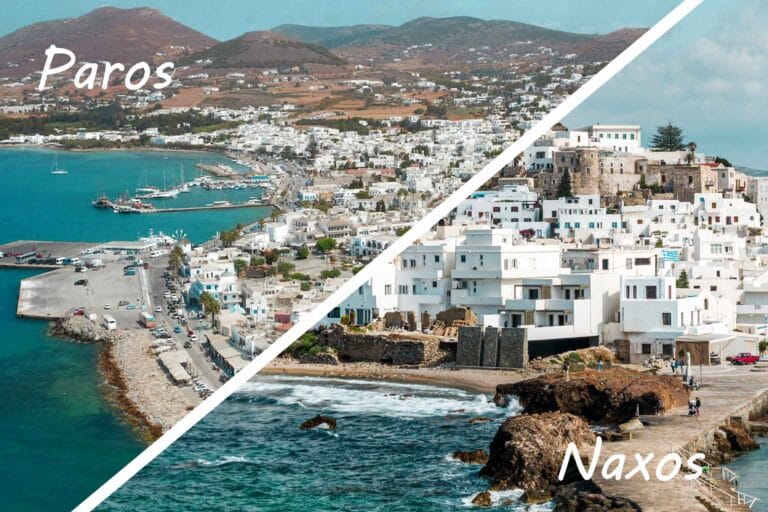
This route gives you the romance of Santorini, the energy of Mykonos, and the authenticity of either Paros (great ferry hub, charming) or Naxos (bigger, more beaches, better value).
→ Full route breakdown: Cyclades Island Hopping Itinerary
10 Days: Cyclades + Crete
Add Crete to the mix and you get a completely different dimension — Greece’s largest island, ancient ruins, gorge hiking, and a food culture unlike anything in the Cyclades.
- Santorini (3 nights)
- Naxos (2 nights)
- Paros (2 nights)
- Crete (Heraklion or Chania) (3 nights)
Ferry: Paros → Heraklion (~4–5 hrs). Alternatively fly Santorini → Heraklion (30 min) if time is tight.
→ Related: 10 Days in Greece: Islands, Athens & More
12–14 Days: The Full Aegean Circuit
Two weeks opens up the map considerably. This route balances iconic stops with quieter islands most visitors skip.
- Athens (2 nights)
- Santorini (3 nights)
- Milos (2 nights — volcanic beaches, boat caves)
- Paros (2 nights)
- Mykonos (2 nights)
- Naxos (2 nights)
Milos is the standout addition here — still relatively under the radar, with beaches that genuinely rival anywhere in the Mediterranean. Book accommodation early, especially in July–August.
→ Full plan: 2 Weeks in Greece: The Ultimate Trip Plan
7–10 Days: Family Island Hopping
Families need different criteria — calm beaches, easy logistics, shorter crossings, and islands with enough to keep kids engaged.
- Crete (4–5 nights — wide choice of family beaches, water parks, ruins)
- Rhodes (3–4 nights — medieval old town, accessible beaches)
Both islands have direct international flights, which simplifies arrival and departure. The ferry between Crete and Rhodes runs regularly in summer (~4–5 hrs).
→ Related: Greece with Kids: A 7–10 Day Family Itinerary
The Classic Cyclades Route — A Closer Look
The Cyclades are where most island hopping trips begin and end. Here’s why this chain works so well:
- All major islands connect by ferry — often multiple daily sailings in summer
- Islands are close enough that crossings rarely exceed 3–4 hours
- Each island has a distinct personality — you’re not seeing the same place twice
- Infrastructure for travelers is excellent — accommodation, restaurants, transport
The Order Matters
Most travelers do Santorini first, then work north. This makes logistical sense — you fly into Santorini (direct from many European cities), then use ferries to move to Paros, Naxos, or Mykonos before flying home from Mykonos or heading back through Athens.
Doing it in reverse (Mykonos first, Santorini last) also works well — some people prefer to end with Santorini’s sunsets as a finale. The ferries run both directions.
Paros vs. Naxos: Which to Include?
If you have time for only one, the choice comes down to vibe. Paros is slightly more stylish and compact — Naoussa is one of the prettiest villages in the Cyclades. Naxos is bigger, has better beaches, better food, and more to do over several days. For a 7-day trip, Paros fits better. For 10+ days, Naxos is worth the extra time.
→ Full comparison: Paros & Naxos: A Guide to Two Hidden Gems
Beyond the Cyclades: Alternative Routes
The Ionian Islands Route
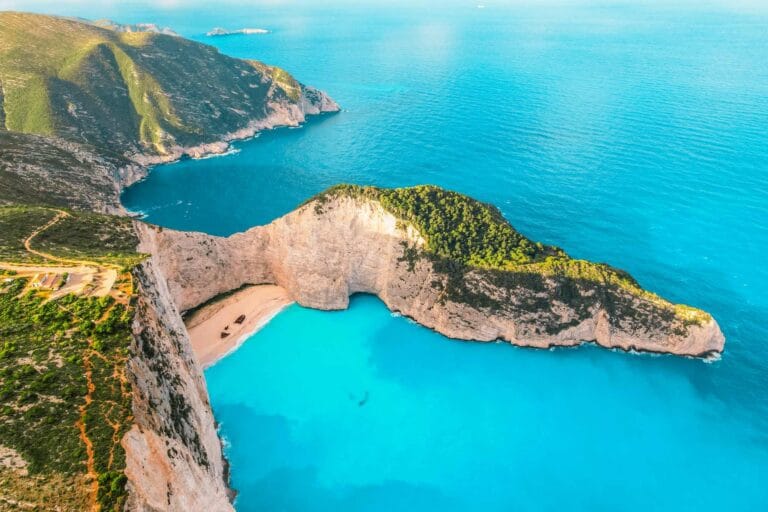
Corfu, Kefalonia, Zakynthos, and Lefkada form a completely different Greek island experience — lusher, greener, more influenced by Venetian architecture. These islands connect to each other and to the mainland (not to the Aegean islands), so this works best as a standalone trip or combined with Athens on either end.
Corfu → Lefkada (road bridge from mainland, or ferry) → Kefalonia → Zakynthos — 10–12 days ideal.
→ See: Corfu Travel Guide | Zakynthos Guide
The Dodecanese Route
Rhodes, Kos, Symi, and Patmos form a chain along the Turkish coast. Less visited by island hoppers than the Cyclades, but incredibly rewarding — more history, more authentic character, and fewer crowds in shoulder season.
Rhodes (3 nights) → Symi (2 nights, tiny and beautiful) → Kos (2 nights) → Patmos (1–2 nights, sacred island, very atmospheric)
→ See: Rhodes Travel Guide
Athens + Saronic Gulf Islands
For a shorter trip or an add-on to Athens, the Saronic islands — Hydra, Aegina, and Spetses — are accessible within 1–2 hours by ferry from Piraeus. Hydra in particular is one of the most beautiful islands in Greece and almost entirely overlooked by international travelers.
A 3-day Athens extension visiting Hydra and Aegina adds real depth without requiring much extra logistics.
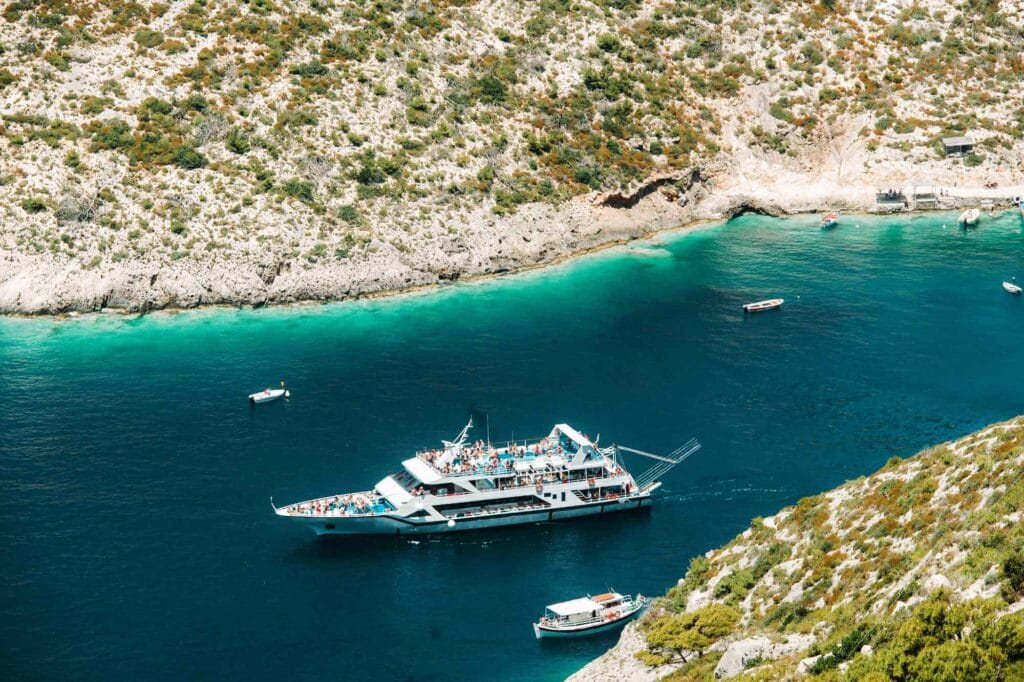
How to Book Ferries in Greece
Book in Advance for July–August
In peak season, popular routes sell out — especially fast ferries from Piraeus to Santorini and Mykonos. Book as soon as you know your dates, ideally 4–6 weeks ahead for July and August travel. Shoulder season (May–June, September) you can book 1–2 weeks ahead without stress.
Best Booking Platforms
Ferryhopper: The most user-friendly platform for Greek ferries. Shows all operators on one search, lets you filter by speed and price. Highly recommended.
Directferries.com: Good for comparing prices across operators. Slightly less polished interface but comprehensive.
Operator websites directly: Blue Star Ferries, Seajets, Golden Star — booking direct sometimes has lower fees.
Key Ferry Ports to Know
Piraeus (Athens): The main departure port for most Aegean routes. Massive and can be confusing — arrive at least 45 minutes early. Check your gate number on the ticket carefully.
Rafina (near Athens): A smaller port northeast of Athens, often cheaper and less chaotic. Serves Mykonos, Paros, and Naxos — worth considering if your hotel is on that side of the city.
Heraklion (Crete): Main hub for routes to Santorini, Piraeus, and Dodecanese islands.
Santorini (Athinios Port): The port is at the bottom of the caldera cliffs — allow time for the bus or taxi up to Fira.
Overnight Ferries
For longer routes — Athens to Crete, for example — overnight ferries make perfect sense. You board in the evening, sleep in a cabin, and arrive fresh the next morning having saved a night’s accommodation. Blue Star Ferries runs comfortable overnight services with private cabins.
How Many Islands Should You Visit?
The most common mistake in island hopping is trying to see too many islands in too little time. Moving every 1–2 days means spending a significant part of your holiday at ports, on boats, and waiting. You never settle into the rhythm of a place.
5–7 days: 2 islands maximum. Spend proper time on each.
8–10 days: 2–3 islands. This is the sweet spot for most trips.
12–14 days: 3–4 islands comfortably, or 2 islands explored in real depth.
As a rule: if you’re spending less than 2 nights somewhere, you’re not really experiencing it. Three nights is better. Four is ideal for islands like Crete or Naxos that reward slower exploration.
Best Time to Go Island Hopping in Greece
May–June (Recommended)
The best overall window. The sea is warm enough to swim by mid-May, the light is extraordinary, crowds are manageable, and prices are 20–40% lower than peak season. Some smaller beach clubs and boat tours haven’t fully opened yet, but that’s a minor trade-off.
July–August (Peak Season)
The most vibrant time — everything is open, the sea is perfect, the social atmosphere is electric. But Santorini and Mykonos feel genuinely overwhelmed in August, ferries are packed, and prices peak. If this is your only window, go — just book everything well in advance.
September–October (Also Excellent)
September is arguably the best month for island hopping. Crowds have thinned, the sea is at its warmest (heated all summer), and the light turns golden and dramatic. October starts to see some businesses closing on smaller islands, but the major ones stay lively through mid-October.
November–April (Not Recommended for Hopping)
Most ferry services reduce dramatically. Many hotels, restaurants, and beach bars close. Some smaller islands feel almost deserted. Crete and Rhodes stay open year-round, but for a hopping trip, this period doesn’t work.
→ Full seasonal guide: When Is the Best Time to Visit Greece?
Practical Tips for Island Hoppers
Don’t Over-Plan
Leave some flex in your schedule. Weather delays ferries. You’ll find a beach you want to stay at for an extra day. The best island hopping trips have structure but not rigidity — book accommodation for the first two nights on each island, but don’t feel obligated to fill every hour.
Travel Light
You’ll be moving your bags regularly — between ferries, up cobblestone hills, through narrow port crowds. A 40–50L backpack or a small rolling suitcase is ideal. Overpacking is the enemy of island hopping.
Keep Your Ferry Tickets and Times Organized
Use a simple notes app or a travel document folder. Greek ferry ports can be confusing, especially Piraeus, and missing a ferry in peak season when the next one is full is a bad start to a day. Screenshot your tickets and save offline copies.
Book Accommodation Before You Arrive on Each Island
July–August, popular islands can genuinely run out of available rooms if you arrive without a booking. Don’t rely on walking in. For shoulder season, booking 1–2 days ahead is usually fine.
Have Cash
Most island businesses accept cards, but smaller ferries, local tavernas, and taxis often prefer cash. Having €100–200 in euros at any given time avoids stress.
Rent a Car or ATV on Larger Islands
On Crete, Rhodes, and Naxos, renting a car unlocks the island completely. The best beaches, the mountain villages, the hidden coves — they’re all accessible by car and almost impossible otherwise. Book in advance in peak season.
→ Full guide: Best Car Rentals in Greece
What to Pack for Island Hopping
- Lightweight backpack or small suitcase with wheels
- Reef-safe sunscreen — especially important for volcanic beaches and boat trips
- A light layer for ferry rides (the Aegean wind is real, even in summer)
- Comfortable walking sandals — cobblestones are everywhere
- Dry bag or waterproof pouch for boat tours
- Portable charger — island power can be unreliable in smaller villages
- Copies of ferry tickets and hotel confirmations, saved offline
- Euros in cash
- Travel insurance — medical care on smaller islands can be basic
→ Full packing list: Greece Packing List: What to Bring for Every Season
Explore More: Greek Island Guides & Itineraries
- Greek Islands Hub: How to Choose Your Island
- Santorini Travel Guide
- Mykonos Travel Guide
- Paros & Naxos: Two Hidden Gems
- Crete Travel Guide
- Rhodes Travel Guide
- Cyclades Island Hopping Itinerary: Santorini to Paros
- 7 Days in Greece: The Perfect One-Week Itinerary
- Greece Ferry Guide: How to Book & Navigate Islands
- Best Car Rentals in Greece
FAQ: Island Hopping in Greece
How much does island hopping in Greece cost?
Ferry tickets between Cyclades islands typically cost €20–60 one way depending on speed and operator. Fast ferries from Athens to Santorini run €60–90. Budget €150–200 for ferry transport across a 10-day trip. Accommodation, food, and excursions are on top of that — expect a total daily spend of €100–250 per person depending on your style.
Do I need to book ferries in advance?
For July–August, yes — especially popular routes like Piraeus to Santorini or Santorini to Mykonos. Book 4–6 weeks ahead for peace of mind. In May–June and September, 1–2 weeks is usually enough. Very few routes can be left to last-minute in peak season.
What’s the best app for Greek ferries?
Ferryhopper has a clean, reliable app that covers all major Greek operators. It’s the easiest way to search routes, compare times and prices, and book. OpenSeas is another option used by locals.
Can I island hop without going through Athens?
Yes, if you fly directly into an island. Santorini, Mykonos, Crete, Rhodes, Corfu, and Zakynthos all have direct international flights from European cities in summer. From there you can island hop without touching Athens at all.
Is island hopping suitable for families with young children?
It can work well with some adjustments. Keep ferry crossings short (under 3 hours), limit yourself to 2 islands, and base yourself on family-friendly islands like Crete or Rhodes rather than the party-oriented ones. Overnight ferries with cabins can actually be a fun experience for kids.
Which is the best base island for island hopping?
Paros is often called the best base island in the Cyclades — central location, excellent ferry connections in all directions, and a genuinely beautiful place to spend a few days. Naxos is an equally strong option with more to do.
How do I get from Santorini to Mykonos?
By fast ferry, the crossing takes approximately 2–2.5 hours and runs daily in summer via Seajets or Golden Star Ferries. Tickets typically cost €50–80. Alternatively, there’s a short 30-minute flight with Olympic Air or Sky Express.
What should I do if my ferry is delayed or cancelled?
Ferry cancellations due to weather (especially strong winds — meltemi) are common in August. Build buffer days into your itinerary, particularly around departure dates. Most operators will rebook you on the next available sailing. Travel insurance that covers transport delays is worth having.
→ See: Greece Travel Insurance: Do You Need It?
Ready to Start Island Hopping?
You’ve got the route. Now let’s sort the rest.