Corfu Travel Guide: Greece’s Greenest Island
Corfu does not look like the rest of Greece. Where most Greek islands are bleached white and sun-scorched brown by July, Corfu stays green — deep, lush, almost extravagantly so. The island’s position in the northern Ionian Sea brings more rain than any other part of the country, and the result is an interior of ancient olive groves, cypress trees, wildflowers, and forested hills that feels closer to rural Italy than to the Aegean. The Venetians ruled here for over four centuries, and that influence shaped everything — the architecture, the cuisine, the music, and the temperament of the place.
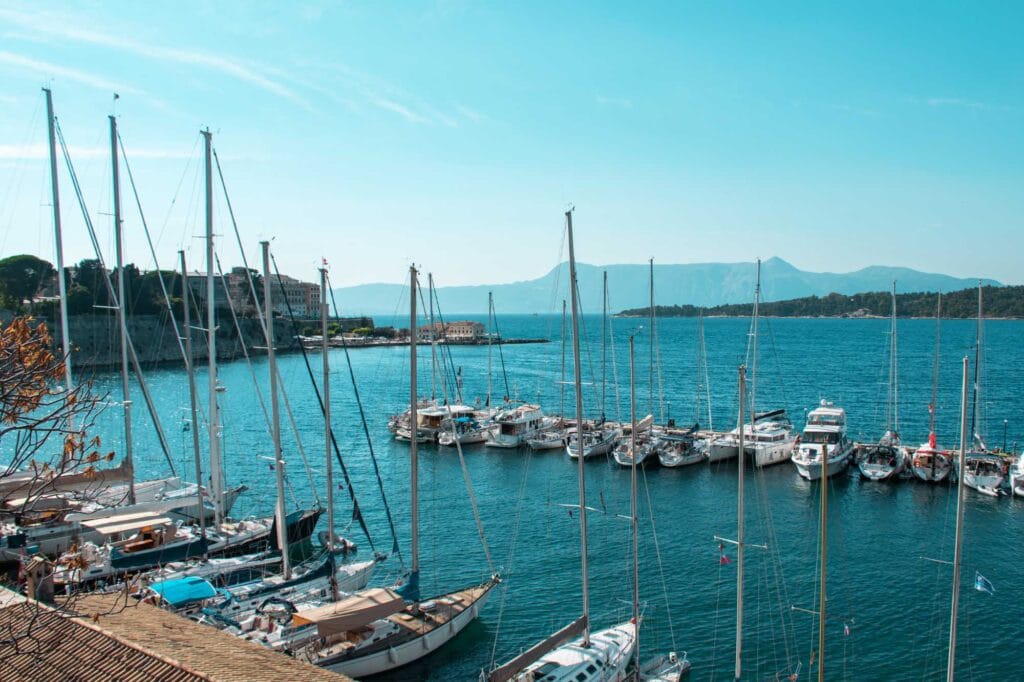
The capital, Corfu Town, is the jewel. A UNESCO World Heritage Site and one of the finest examples of Venetian urban architecture in the world, it sits between two imposing fortresses on a peninsula jutting into the Ionian Sea. The old lanes — the Campiello, the Liston arcade, the Jewish Quarter — are dense with history and still entirely lived-in. This is not a museum town.
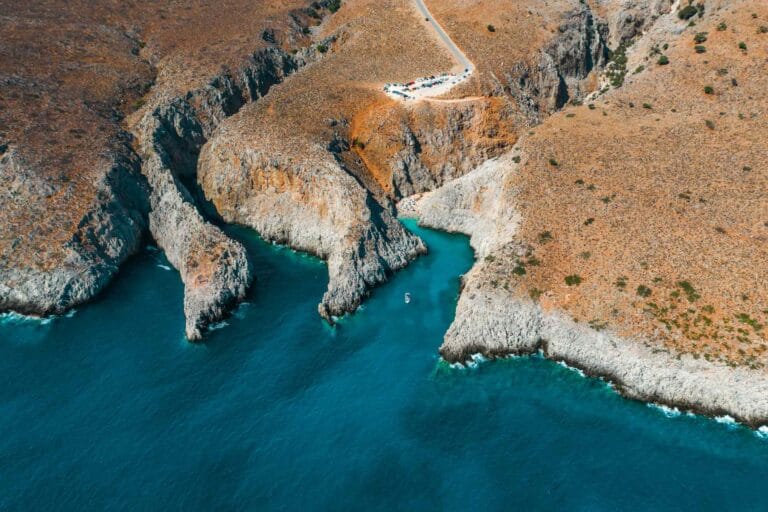
Beyond the capital, the island fans out into a landscape of contrasts: organised resort beaches on the east coast, wild cliff-backed coves in the north and northwest, the extraordinary turquoise lagoon of Paleokastritsa, and a mountainous interior where villages like Pelekas and Makrades sit surrounded by ancient olives and uninterrupted views. Corfu is the kind of island where a week feels exactly right, and two weeks would not be wasted.
Note: This page contains affiliate links. We may earn a small commission at no extra cost to you when you book through our links. This helps us keep creating free travel guides.
Corfu at a Glance
| Greek name | Kerkyra |
| Island group | Ionian Islands |
| Size | 592 km² — the third-largest Ionian island |
| Capital | Corfu Town (Kerkyra Town) |
| UNESCO status | Corfu Old Town — World Heritage Site since 2007 |
| Best known for | Venetian Old Town, Paleokastritsa, olive groves, Ionian cuisine |
| Best time to visit | May–June and September |
| Airport | Corfu International Airport (CFU) — direct flights from across Europe |
| Getting around | Rental car strongly recommended for the full island |
| Literary connection | Gerald and Lawrence Durrell lived here in the 1930s — the White House in Kalami is still standing |
How to Get to Corfu
By Flight
Corfu International Airport (CFU) sits almost absurdly close to the capital — the runway extends into the sea on a narrow strip of land, and planes come in low over the beach at Kanoni in a descent that has become one of the more dramatic arrivals in European aviation. Direct charter and scheduled flights connect Corfu to most major European airports from April through October. The busiest routes are from the UK, Germany, the Netherlands, and Scandinavia.
From Athens, domestic flights take around 55 minutes. Olympic Air and Sky Express operate year-round connections. Out of season (November through March), direct European connections drop significantly, and most international visitors connect through Athens.
By Ferry
Regular ferry services connect Corfu to Igoumenitsa on the Greek mainland — a crossing of about 1.5 hours that runs year-round. This is the main route for travellers arriving overland through Greece or continuing into the Balkans. Ferries also serve Patras (about 8 hours), which connects to Athens by road or rail.
International ferries run from Corfu to Bari and Ancona in Italy — a popular route for travellers doing a Greece-Italy road trip. These routes are operated mainly by Grimaldi Lines and Anek Lines and run seasonally.
Within the Ionian Islands, ferries connect Corfu to Paxos (about 1.5 hours), Lefkada, Kefalonia, and Zakynthos — useful for island hopping across the Ionian chain.
Getting Around the Island
Corfu is a large island — about 60 km from north to south — and public transport, while functional for the main tourist routes, leaves the best parts of the island inaccessible without your own wheels. A rental car is the best investment you can make for exploring beyond the resorts.
The east coast road is fast and well-maintained. The northwest, where Paleokastritsa and the most dramatic coastal scenery lies, is accessible but the roads narrow considerably as you head inland and into the hills. The northeast — the quietest and most beautiful part of the island — requires confidence on narrow single-track roads through olive groves.
- Rental car: Essential for the full island experience. Book in advance for July and August.
- Scooter/quad: Good for the east coast and short trips. Less suited to mountain roads in the northwest.
- KTEL buses: Operate from Corfu Town to major resorts and some villages. Useful for a day trip to Paleokastritsa or Sidari if you are based in town without a car.
- Taxi boats: Small boats that ferry passengers between beaches along the coast. Practical and fun for exploring coves accessible only from the sea.
Corfu Old Town: A UNESCO Walking Guide
Corfu Old Town was designated a UNESCO World Heritage Site in 2007 — the only urban historic centre in Greece to hold this status outside of Athens. The designation recognises an extraordinary palimpsest of European architectural history: Byzantine, Venetian, French, and British layers sitting on top of each other in a coherent, still-inhabited whole.
The town is compact enough to walk in a morning, but rewards multiple visits at different times of day. The Campiello — the oldest residential quarter — is best early in the morning before the heat and the cruise ship crowds arrive. The Liston arcade is perfect in the evening, when the locals take their volta (evening stroll) and every cafe table fills.
Key Sights in Corfu Old Town
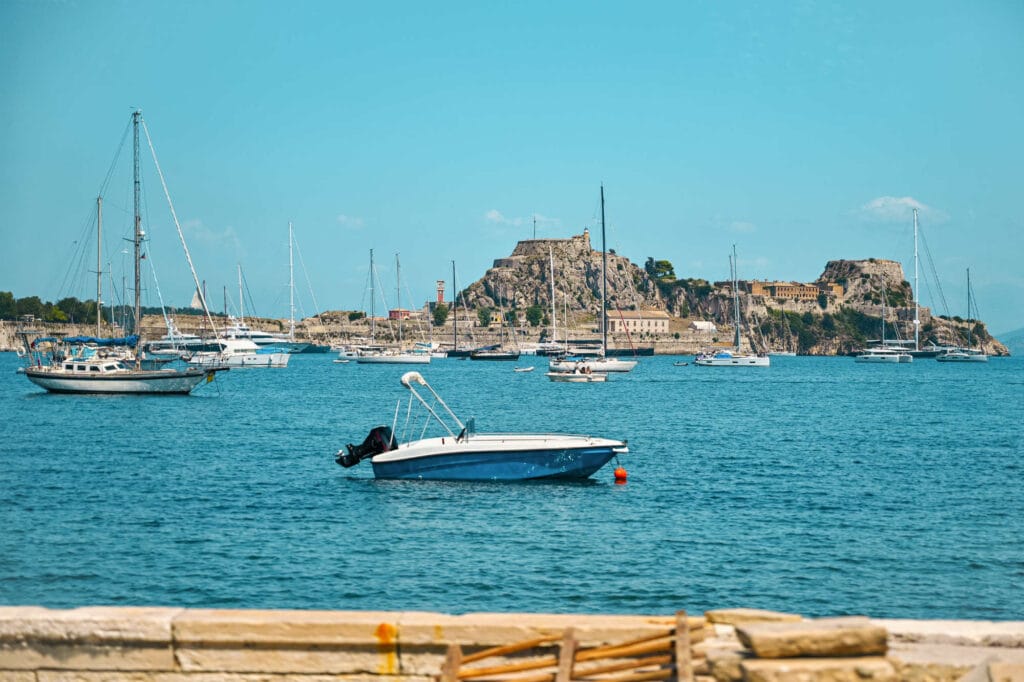
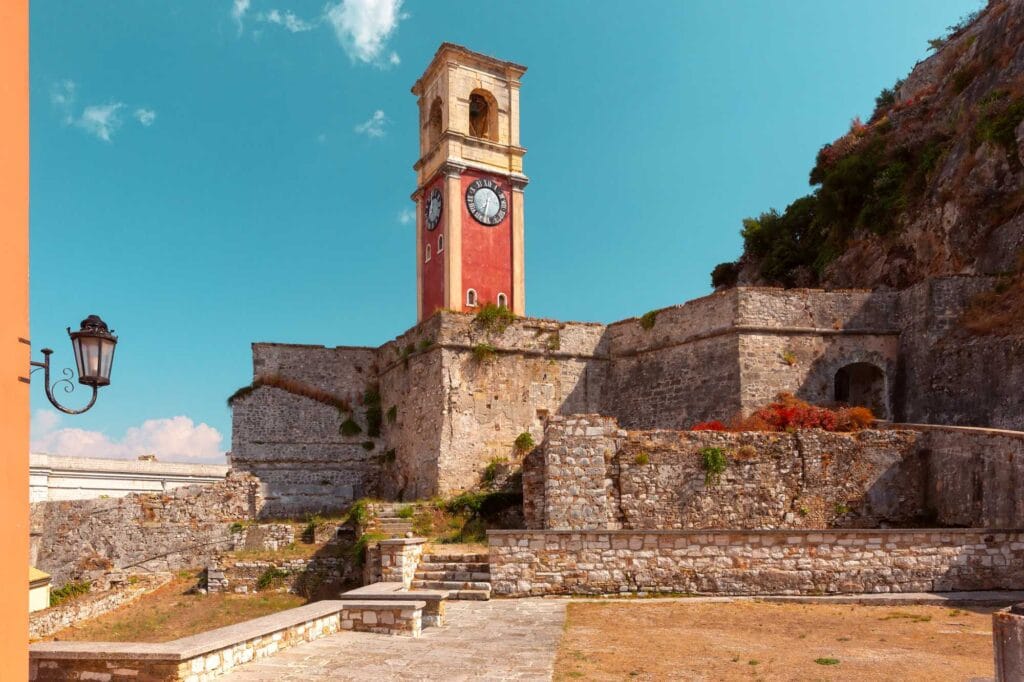
- The Old Fortress (Paleo Frourio): The eastern fortress built on a natural rocky promontory, separated from the town by an artificial canal. The Venetians reinforced an earlier Byzantine structure in the 15th century. Climb to the lighthouse at the top for panoramic views over the town and the Albanian coast. Worth the entrance fee and the climb.
- The New Fortress (Neo Frourio): The western fortress built by the Venetians in the late 16th century. Less visited than the Old Fortress but arguably more atmospheric — a labyrinth of tunnels, cisterns, and bastions with excellent views over the port.
- The Liston: A neoclassical arcaded promenade built by the French during Napoleon’s brief occupation (1807–1814), modelled on the Rue de Rivoli in Paris. The most elegant street in any Greek island capital. Best experienced with a coffee and no particular agenda.
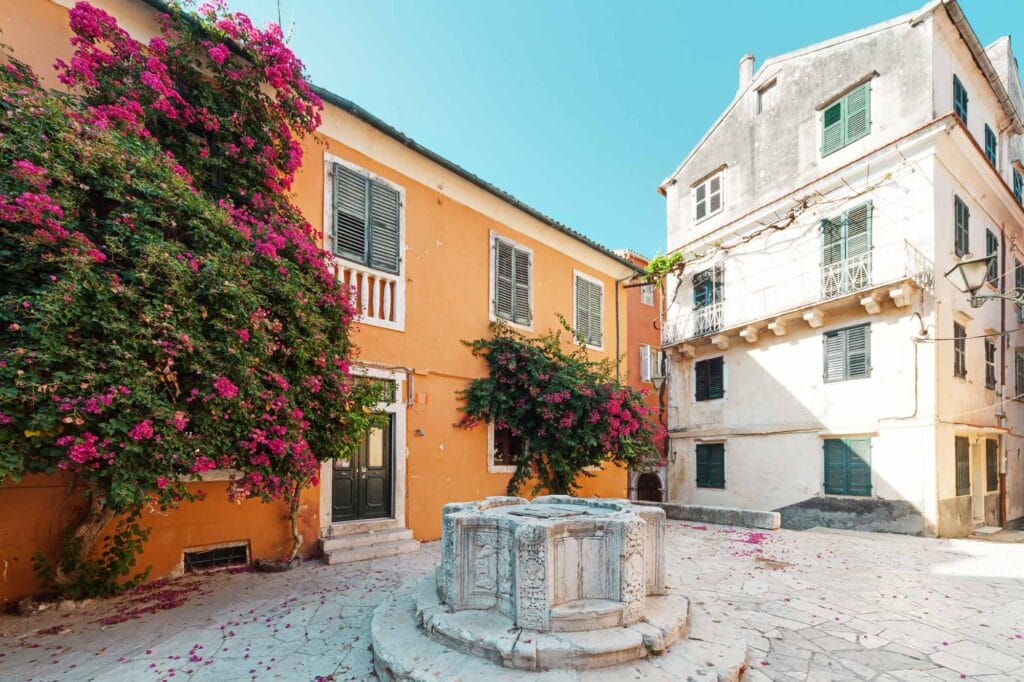
- The Campiello: The Venetian heart of the old town — a dense maze of narrow lanes, tall ochre-and-sienna houses, washing lines, and sudden small squares. The architecture is unmistakably Italian, but the atmosphere is entirely its own. Easy to get lost in; that is the point.
- Church of Agios Spyridon: The most important church in Corfu, home to the silver reliquary containing the remains of the island’s patron saint. The campanile (bell tower) is the most distinctive landmark in the old town skyline. The church is open daily and the interior is always busy with candles and quietly reverential locals.
- Palace of St. Michael and St. George: A neoclassical palace built by the British during their Protectorate (1815–1864), now housing the Museum of Asian Art — an unlikely but genuinely excellent collection of East Asian and Indian decorative arts, assembled by a Greek diplomat. Worth an hour.
- The Jewish Quarter: A small but well-preserved historic neighbourhood in the southern part of the old town. The Scuola Greca synagogue and the Scuola Kedosha synagogue — one Romaniote, one Sephardic — reflect Corfu’s long Jewish history. The community was nearly destroyed in the 1944 deportations; the remaining synagogue is still active.
- Mon Repos Estate: A neoclassical villa and gardens on a wooded promontory south of the old town. Built by the British Commissioner in 1831, it became a Greek royal residence and is the birthplace of Prince Philip, Duke of Edinburgh. Now a museum with pleasant gardens open to the public.
Practical notes: the old town is very busy with cruise ship passengers from around 10am to 5pm in summer. Arriving early or staying late in the evening gives you a completely different and more rewarding experience. Most sights are within easy walking distance of each other.
Best Beaches in Corfu
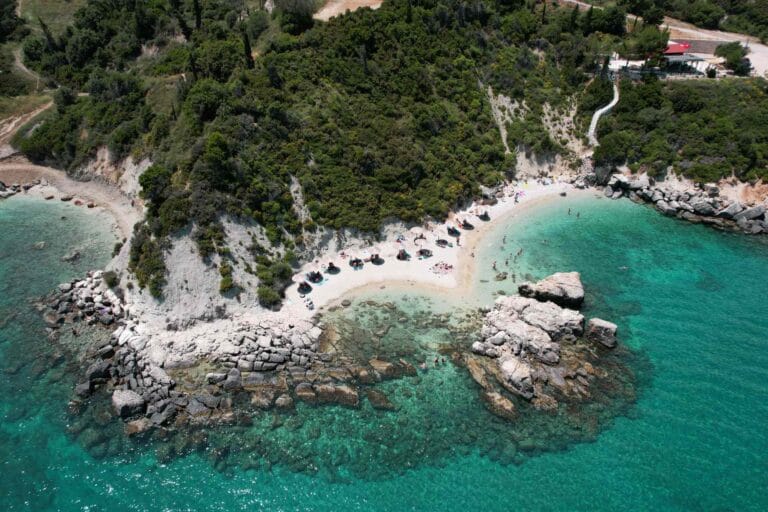
Corfu’s beaches vary enormously in character across the island. The east coast is calmer, more organised, and convenient for the resort areas. The northwest has the most dramatic scenery but is rougher and more exposed. The northeast is the quietest, most unspoiled corner of the island.
Northwest Coast (Wild & Dramatic)
- Paleokastritsa: Covered in full below — the island’s most iconic coastal area. A series of deep turquoise coves backed by forested cliffs and dominated by a hilltop monastery. One of the most beautiful spots in the entire Ionian.
- Agios Georgios (Northwest): A long, wide beach on the exposed northwest coast, popular with windsurfers. More rugged and less organised than the resort beaches. The sunsets here are extraordinary.
- Loggas Beach (Peroulades): A dramatic strip of sand at the base of tall vertical cliffs in the far north of the island. Access by steep steps from above. The clifftop sunset bar above this beach is one of the most celebrated spots on the island — arrive early to get a seat.
- Arillas: A small, sheltered bay in the northwest with calm water and a relaxed village atmosphere. One of the better family options on the northwest coast.
Northeast Coast (Quiet & Unspoiled)
- Avlaki Beach: A quiet shingle cove near Kassiopi, fringed by olive trees. Calm, clear water and minimal development. A favourite among those who know the island well.
- Kalami & Kouloura: Two small fishing village bays in the northeast. Kalami is where Lawrence Durrell wrote Prospero’s Cell — the White House where he lived still stands on the waterfront. Both bays are extraordinarily pretty and best seen from a boat or kayak.
- Kassiopi Beach: The main beach of the northeast’s largest village. Sandy, family-friendly, with good facilities and a lively waterfront for evening dining.
East Coast (Organised & Convenient)
- Barbati: One of the best beaches on the east coast — a wide stretch of large smooth pebbles with clear water and a more upscale feel than the main resort beaches. Popular with repeat visitors to the island.
- Glyfada: The longest sandy beach on the west coast, accessible from the interior. Well-organised with sun loungers and beach bars. Popular but large enough to spread out.
- Agios Gordios: A wide sandy bay on the west coast with a dramatic backdrop of green hills. Lively in summer with a younger crowd. One of the most photogenic beaches on the island.
- Canal d’Amour (Sidari): A series of low sandstone rock formations carved by the sea into channels and arches near the resort of Sidari in the north. More unusual than beautiful, but visually striking and very popular. Legend holds that couples who swim through the canal will marry.
Paleokastritsa: The Island’s Most Dramatic Coastline
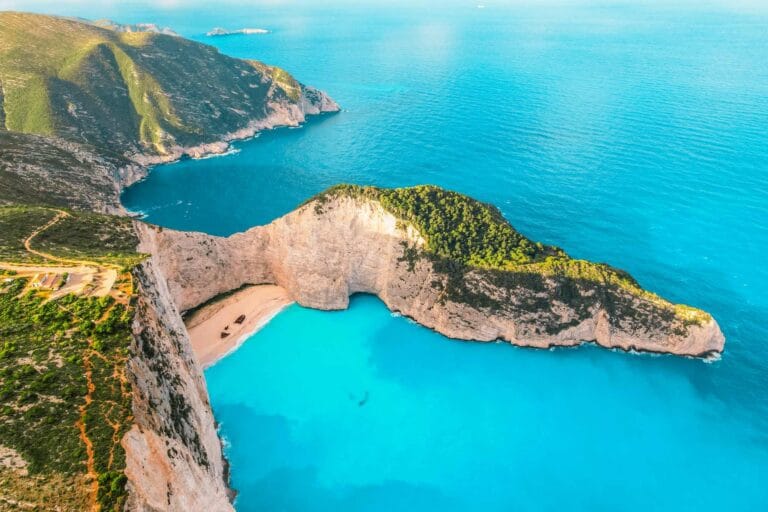
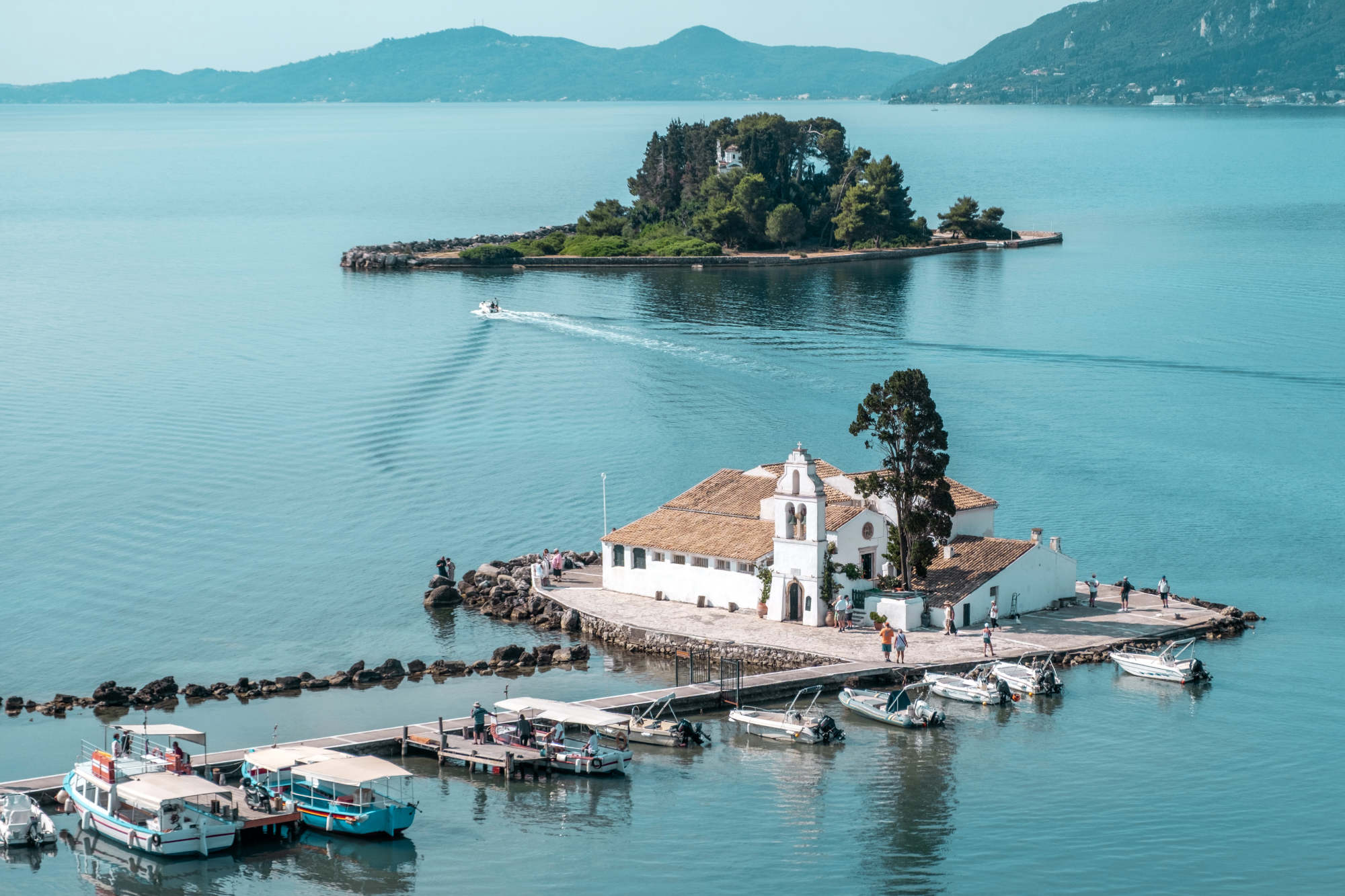
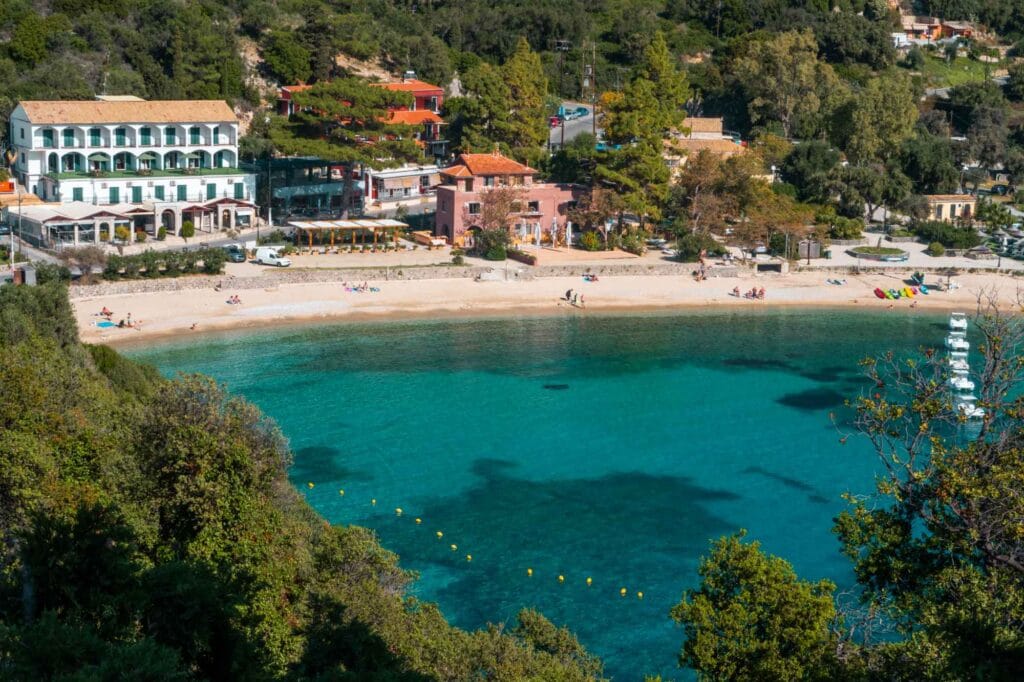
Paleokastritsa is the defining natural image of Corfu — and possibly of the entire Ionian. A series of small, deep coves cut into a forested coastline, the water changing from turquoise to deep blue as the bottom drops away, framed by wooded cliffs and dominated by the white walls of a 13th-century monastery perched on the highest promontory above the sea.
The monastery of Theotokos (Mother of God) is still active and open to visitors in the mornings. The view from its terrace — across the patchwork of coves below, with the mainland mountains of Albania and Greece on the horizon — is one of the most beautiful views in Greece. Dress modestly: shoulders and knees covered are required.
Below the monastery, the coves are accessible by road and by small boat. Boat trips depart from the main beach and take you around the entire headland, into sea caves, and to coves that cannot be reached from land. This is one of the best ways to see Paleokastritsa — the coastline from the water is extraordinary.
Paleokastritsa is best visited early in the morning (the light is better and the car parks are not yet full) or in the late afternoon when the day-trippers have left. It is one of the most visited spots on the island, and the parking situation in high season reflects that. If you are staying nearby, walking down in the morning before the crowds is the ideal approach.
Best Villages to Visit in Corfu
- Pelekas: A hilltop village in the centre of the island with views over the entire west coast. The Kaiser’s Throne viewpoint above the village — named after Kaiser Wilhelm II, who reportedly watched sunsets here — offers a 360-degree panorama. The village itself has a good taverna, a traditional feel, and almost no tourists compared to the coastal resorts.
- Makrades: A small, traditional village on the road between the interior and Paleokastritsa, lined with shops selling locally produced olive oil, honey, and herbs. One of the most authentic shopping stops on the island — the products are genuinely local.
- Kassiopi: The main village of the northeast — a proper fishing village with a small harbour, a ruined Byzantine castle on the headland, and an excellent selection of waterfront tavernas. Less developed than the main resort areas, with a loyal following of repeat visitors.
- Benitses: Once one of the island’s most notorious resort towns, Benitses has quietened considerably and now shows glimpses of the traditional fishing village it was before the package tours arrived. Worth a stop for the Roman baths and a waterfront lunch.
- Agros & the Ropa Valley: The wide agricultural plain in the centre of the island. Surrounded by ancient olive groves and small farming villages, the Ropa Valley is the most rural and least-visited part of Corfu. Drive through it slowly.
- Kavos: The southernmost resort on the island, with a reputation for very young crowds and high-volume nightlife. Mentioned here for completeness — it is not what most travellers associate with Corfu’s character, but if that is what you want, Kavos delivers it.
The Durrell Connection: Literary Corfu
Corfu has a more celebrated literary history than most islands. Gerald Durrell, the naturalist and writer, spent five formative years here in the 1930s as a child, and later wrote about the experience in the Corfu Trilogy — My Family and Other Animals, Birds, Beasts and Relatives, and The Garden of the Gods. The books are among the most beloved British travel memoirs ever written, and they made Corfu famous in the English-speaking world in a way that went far beyond tourism.
His brother Lawrence Durrell, the novelist, also lived on Corfu during this period and wrote Prospero’s Cell — a lyrical and still-beautiful account of the island that holds up as well today as when it was published in 1945. Lawrence lived in Kalami, in the northeast, in the White House on the waterfront — a building you can stay in today.
- The Durrell Museum (Corfu Town): A small but well-curated museum dedicated to Gerald Durrell and his family’s years on the island. Worth a visit for fans of the books or the television series.
- Kontokali: One of the villas the Durrell family rented during their years on Corfu is near this village north of the capital.
- Kalami White House: Lawrence Durrell’s home, now a self-catering rental with a taverna on the ground floor. Staying here, or simply having lunch on the waterfront, connects you to one of the most evocative pieces of Corfu’s literary geography.
Best Things to Do in Corfu
- Walk the old town at dusk: After the cruise passengers have left and the light goes golden on the Venetian facades, Corfu Town is at its finest. Have a coffee at the Liston, wander the Campiello, and find a table for dinner in one of the old town’s back-street restaurants.
- Take a boat trip from Paleokastritsa: The sea caves and hidden coves of the northwest coast are only accessible from the water. An hour on a small boat reveals a completely different Corfu.
- Drive the northeast coast road: The road from Corfu Town north to Kassiopi and Agios Stefanos follows a coastline of olive groves, small bays, and the occasional view across to Albania. One of the most beautiful drives in the Ionian Islands. Take it slowly.
- Watch the sunset from Loggas: The clifftop bar above Peroulades Beach on the northwest coast has one of the most celebrated sunsets on the island. Arrive 45 minutes early in high season to get a seat.
- Visit the Old Fortress at sunrise or sunset: The light on the limestone at golden hour is exceptional. The fortress is open late in summer.
- Eat sofrito in Corfu Town: The Ionian islands share this dish with Zakynthos — braised veal in white wine and vinegar — but the Corfu version is considered the original. Order it in any traditional restaurant in the old town.
- Kayak around the northeast coast: Guided sea kayak tours from Kassiopi explore the coastline between Kalami and Agios Stefanos — a stretch of sea caves, swimming coves, and fishing villages accessible only from the water.
- Visit Achilleion Palace: The neoclassical summer palace built by Empress Elisabeth of Austria (Sisi) in 1891, surrounded by terraced gardens. Later owned by Kaiser Wilhelm II. Kitsch and grand in equal measure, but the views over the east coast are worth the visit.
Where to Stay in Corfu
Corfu has accommodation across every budget and style, from simple studios above family olive groves to luxury boutique hotels with infinity pools overlooking the Ionian. The choice of base matters more than on smaller islands.
Corfu Town
The most atmospheric base on the island — staying in or near the old town gives you the evenings when the light is best and the crowds are gone. A mix of boutique hotels, restored Venetian townhouses, and modern options. Best for couples, cultural travellers, and those who want a proper city base with beach access by car.
Paleokastritsa Area
For those whose priority is the northwest coast scenery. A range of smaller hotels and villas within reach of the best coves. Requires a car for anything else. The views justify the relative inconvenience.
Northeast Coast (Kassiopi, Kalami, Nissaki)
The island’s most upscale and naturally beautiful area. Private villas, boutique hotels, and direct beach access in small coves. Lawrence Durrell’s White House in Kalami is available for self-catering rental. A car is essential. This is the part of Corfu most loved by those who return year after year.
East Coast Resorts (Benitses, Moraitika, Messongi)
The family resort strip on the east coast. Calmer water than the west, easy airport access, good facilities. Less character than the northeast but entirely practical for families who want organised beach access and reliable transport links.
Glyfada & West Coast
For beach-focused stays on the west coast. Closer to Paleokastritsa and the sunset-facing beaches. More limited in accommodation options but good for those who prefer the western light and the longer beach days.
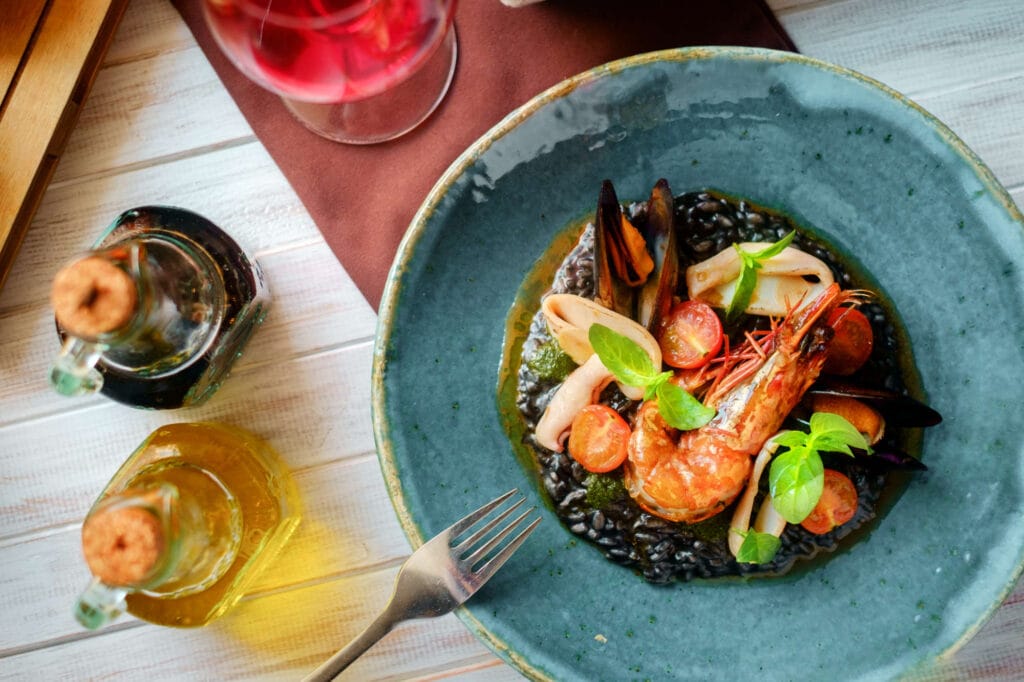
What to Eat & Drink in Corfu
Corfu’s cuisine is the most distinct of any Greek island — four centuries of Venetian rule left a food culture that uses pasta, slow-cooked meat dishes, spices, and technique that you simply do not find on the Aegean islands. This is real culinary heritage, not tourist approximation.
Dishes to Order
- Sofrito: The island’s defining dish. Thin slices of veal pan-fried and then braised in a sauce of white wine, garlic, white pepper, and flat-leaf parsley. Tender, aromatic, and the clearest expression of Venetian influence on Corfiot cooking. Order it at least once in a traditional restaurant in the old town.
- Pastitsada: Beef or rooster cooked slowly in a rich tomato sauce spiced with cinnamon, allspice, and cloves, served over pasta (typically thick macaroni). Deeply comforting and entirely unlike anything on the Aegean menu.
- Bourdeto: A spicy stew of fish or scorpionfish cooked with onions, tomato, and a generous quantity of hot red pepper. The Corfiot answer to the French bouillabaisse. Best ordered in the old town or in Kassiopi.
- Savoro: Fried small fish — typically sardines or whitebait — marinated in a sweet-sour sauce of vinegar, raisins, rosemary, and garlic. A classic Venetian agrodolce preparation and one of the best things to eat on the island.
- Kumquat liqueur: Corfu is the only place in Europe where kumquats are grown commercially. The small orange fruit was brought to the island by the British in the 19th century and is now processed into liqueur, marmalade, and confectionery. The liqueur — both sweet and bitter versions are available — is the definitive Corfu souvenir.
- Ginger beer: Another British legacy. Corfu produces its own ginger beer (tsitsibira), which is sold throughout the island. Refreshing, slightly spicy, and genuinely local.
Where to Eat
- The old town back streets: Away from the Liston and the main tourist drag, the narrow lanes of the Campiello and the area behind Agios Spyridon have excellent traditional restaurants serving genuine Corfiot cuisine. Look for handwritten menus and local clientele.
- Kassiopi waterfront: Good fresh fish and seafood in a village setting. More relaxed and better value than the old town.
- Makrades village: Stop for local products — the olive oil sold directly from producers here is exceptional.
Best Time to Visit Corfu
- April – May: Corfu is at its greenest and most beautiful in late spring. The wildflowers are out, the olive groves are vibrant, and the island has not yet filled with summer visitors. Water temperature is still cool for swimming, but the weather is warm and excellent for sightseeing, walking, and exploring the old town. Some beach facilities are not yet open.
- June: The sweet spot. Warm enough for beaches, the sea has warmed up, and the island is busy but not overwhelmed. Direct European flights are running.
- July – August: Peak season. Corfu Town is crowded with cruise ship passengers during the day. Beaches are busy. Paleokastritsa parking is a challenge. The weather is reliably hot. Book everything well in advance.
- September: Excellent. The crowds thin, prices drop, the sea is at its warmest, and the light is extraordinary. One of the best months to visit.
- October: Still warm enough for swimming in the first half of the month. The island takes on a quieter, more local rhythm. The olive harvest begins — you can often see the nets spread under the trees throughout the interior.
- November – March: Corfu receives more rain than any other Greek island in winter. The interior is spectacularly green and the old town is quiet and entirely local. Not suitable for a beach holiday but rewarding for those who want to experience the island in its authentic off-season state.
A specific recommendation: Corfu in May or early June, combined with a day trip to Paxos, is one of the finest short trips in Greece. The light is clear, the crowds are manageable, the food is at its best, and the island reveals itself at a pace that actually allows you to absorb it.
Explore More About the Ionian Islands
- Zakynthos Travel Guide: Beaches, Nightlife & What to Do
- Greek Islands: How to Choose the Best Island for Your Trip
- Island Hopping in Greece: The Ultimate Guide
- Best Greek Islands for Couples
- Best Greek Islands for Families
- Greece Ferry Guide: How to Book & Navigate Islands
- Getting Around Greece: Ferries, Flights & Cars
FAQ: Corfu Travel Guide
Is Corfu worth visiting?
Without question. Corfu offers something that most Greek islands do not: a genuine historic capital (one of the finest UNESCO Old Towns in the Mediterranean), exceptional food with a distinct Venetian-influenced culinary tradition, dramatic and varied coastal scenery, and a lush green interior that sets it apart visually from every other island in Greece. It works for couples, families, cultural travellers, and anyone who wants more from a Greek island holiday than just beaches.
How many days do you need in Corfu?
Five to seven days is the ideal window. Three days covers the old town, Paleokastritsa, and one or two beaches. A full week lets you explore the northeast coast, the interior villages, the Achilleion, and the lesser-known corners of the island at a pace that actually allows you to absorb what you are seeing. Corfu rewards slow travel more than most islands.
What is Corfu best known for?
The UNESCO-listed Old Town is the island’s most celebrated asset — one of the finest examples of Venetian urban architecture in the world, still entirely inhabited and functioning. Beyond the capital, Corfu is known for Paleokastritsa (its most dramatic coastline), the Gerald Durrell books and TV series, its distinct Venetian-influenced cuisine, and kumquat liqueur. The island is also significantly greener than the rest of Greece, which surprises many first-time visitors.
Is Corfu good for families?
Yes. The east coast resort areas — Benitses, Moraitika, Dassia, Ipsos — have calm, shallow water and good facilities suited to families with young children. The island is large enough that different family members can find their own experience. The cultural attractions in the old town work well for older children. The Achilleion Palace is a reliable hit. And the island’s lushness and variety keep it engaging beyond the beach.
Do I need a car in Corfu?
For anything beyond the main resort areas and Corfu Town, yes. The northeast coast, the interior villages, Paleokastritsa, and the best quiet beaches are not accessible by public transport in any practical way. A car transforms Corfu from a pleasant beach holiday into a genuinely rich and varied island experience. Roads are generally good, though narrow in the northeast and on the mountain roads of the northwest.
What makes Corfu different from other Greek islands?
Several things. The greenness — Corfu receives significantly more rainfall than the Aegean islands and is covered in ancient olive groves, cypress trees, and wildflowers year-round. The UNESCO Old Town — no other island capital in Greece outside Athens has this status. The cuisine — genuinely distinct from mainland Greek cooking, with deep Venetian influences that produce dishes like sofrito, pastitsada, and bourdeto found nowhere else in Greece. And the literary heritage — Corfu’s association with the Durrell family gives it a cultural dimension that goes beyond the typical Greek island experience.
Can you do a day trip to Paxos from Corfu?
Yes — day trip boats depart from Corfu Town to Paxos during the summer season. The journey takes about two hours each way on a standard boat, or around 75 minutes on a faster vessel. Paxos is a tiny, exceptionally beautiful island with olive-covered hills, turquoise coves, and three small villages. Antipaxos, a short trip from Paxos, has some of the clearest and most beautiful water in the entire Ionian. A day trip combining both is one of the best excursions available from Corfu.
When is the best time to visit Corfu for good weather?
June and September are the most consistently good months for weather, with warm sunny days, sea temperatures suited to swimming, and significantly fewer crowds than July and August. May is also beautiful — the island is at its greenest, the air is clear, and the wildflowers are still out. If you are primarily interested in the old town and cultural sights rather than beach time, April and October are also excellent.
Ready to Plan Your Corfu Trip?
Corfu is the kind of island that catches people off guard. They arrive expecting a beach holiday and leave having walked a UNESCO World Heritage city, eaten one of the most distinctive cuisines in Greece, driven through ancient olive groves at sunset, and found a coastline that does not look like anywhere else in the Aegean. It is a full island — one that rewards time and attention.
Start with the essentials below and build your trip around them.