Paros & Naxos: A Complete Guide to Two of the Cyclades’ Best Islands
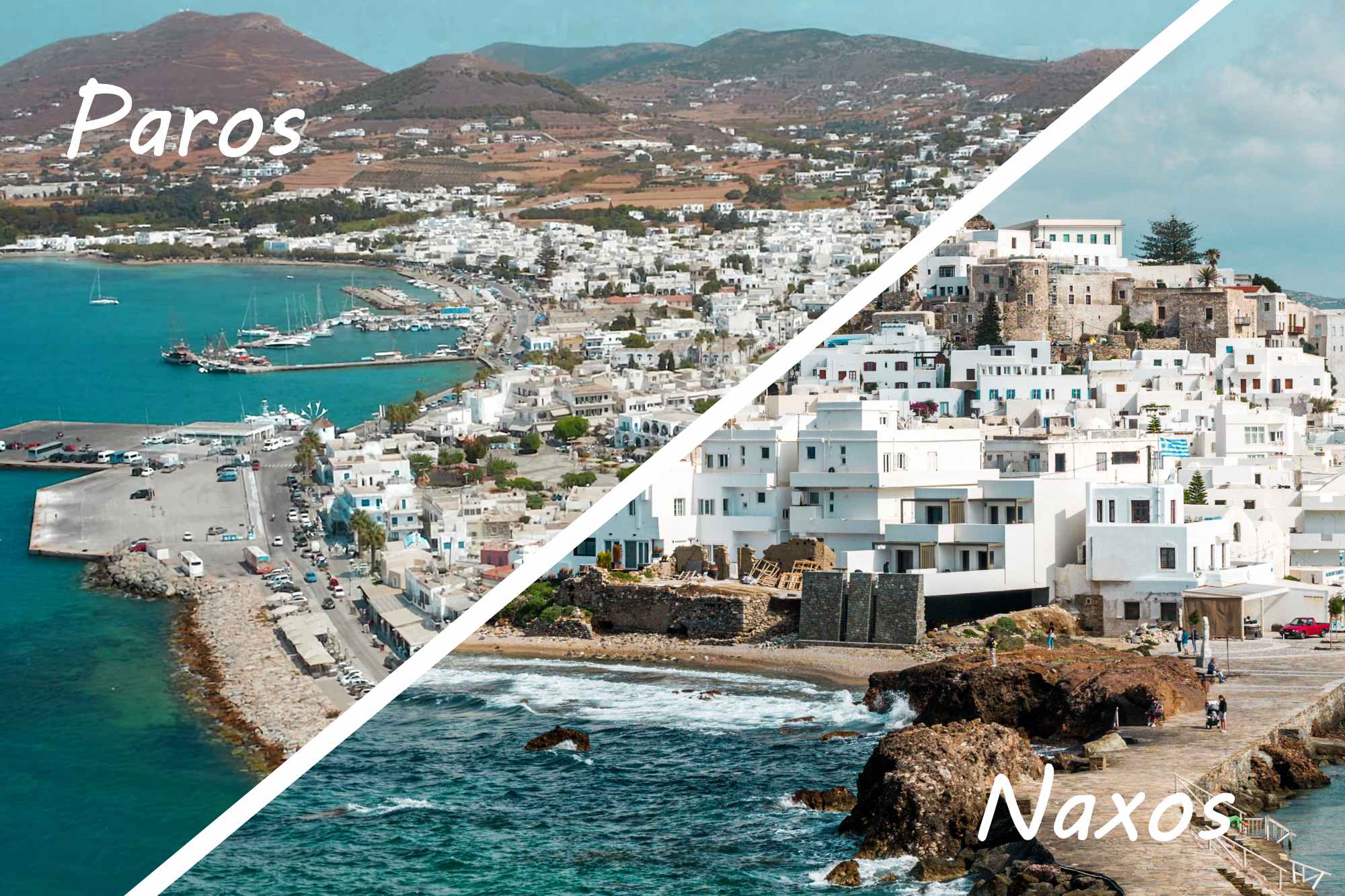
Santorini gets the Instagram posts. Mykonos gets the headlines. But ask anyone who has spent real time in the Cyclades which islands they keep going back to, and the answer is usually Paros, Naxos, or both. These two neighbours sit at the heart of the archipelago — close enough to each other that you can catch a thirty-minute ferry between them, different enough that visiting both in the same trip genuinely doubles your experience.
Paros is the one people discover when they are done with the crowds. A fishing harbour that still functions as a fishing harbour. Villages that have not fully surrendered to tourism. Beaches that range from sheltered family coves to the long golden strip at Santa Maria where the wind draws kitesurfers from across Europe. The atmosphere is relaxed in a way that feels earned rather than manufactured.
Naxos is bigger, greener, and arguably more self-sufficient than any other Cycladic island. It has its own olive oil, its own cheese, its own potatoes (genuinely famous in Greece), and a mountainous interior with Byzantine churches and ancient marble quarries that most visitors never reach. The beaches along the west coast are among the finest in the Aegean — long, sandy, and backed by dunes rather than development.
This guide covers both islands in full — what to see, where to stay, the best beaches, when to go, and how to combine them into one trip. Whether you are choosing between them or planning to visit both, here is everything you need.
Note: This page contains affiliate links. We may earn a small commission at no extra cost to you when you book through our links. This helps us keep creating free travel guides.
Paros vs Naxos: Which Should You Choose?
This is the question most travellers ask first. The honest answer is that they suit slightly different priorities — and both reward visitors who go in without a fixed agenda.
| Paros | Naxos | |
| Size | Smaller, easier to cover in 3–4 days | Larger, needs 4–6 days to do it justice |
| Vibe | Relaxed, stylish, social | Authentic, local, diverse |
| Best beaches | Kolymbithres, Santa Maria, Golden Beach | Agios Prokopios, Plaka, Agia Anna |
| For couples | Excellent — Naoussa is romantic | Excellent — Naxos Town is atmospheric |
| For families | Good | Very good — beaches are ideal |
| Nightlife | Lively in Naoussa, moderate elsewhere | Moderate — more relaxed |
| History & culture | Good (marble quarries, Panagia) | Outstanding (Temple of Apollo, Byzantine villages) |
| Food scene | Strong, especially seafood in Naoussa | Exceptional — best local produce in Cyclades |
| Crowds in August | Busy but manageable | Busy but large enough to absorb them |
| Island hop to | Naxos (30 min), Antiparos (10 min) | Paros (30 min), Koufonisia (1.5 hrs) |
In short: choose Paros for a slightly more curated, social experience with great beaches and a beautiful harbour town. Choose Naxos for more variety, more space, better food, and a genuine glimpse of Cycladic life beyond tourism. Choose both if you have the time — the ferry between them takes under an hour.
Getting to Paros and Naxos
By Ferry from Athens (Piraeus)
The most common route is ferry from Piraeus port in Athens. High-speed ferries reach Paros in about 3.5–4 hours and Naxos in around 4–4.5 hours. Standard ferries take 5–6 hours and cost less. Blue Star Ferries and SeaJets are the main operators on these routes.
Ferries run daily throughout the year, with significantly increased frequency from June through September. Booking in advance is strongly recommended for summer travel, especially if you have a vehicle.
By Flight
Both Paros and Naxos have small airports with domestic flights from Athens. The flight takes around 40–45 minutes. Olympic Air and Sky Express serve both islands seasonally. Flights are convenient but limited in frequency and can be disrupted by wind — both islands sit in the heart of the Cyclades where the meltemi (summer wind) is a factor.
Getting Around Each Island
Both islands are best explored with a rental car or scooter. Public buses connect the main towns and beaches but run infrequently and stop serving more remote areas by early afternoon.
- Paros: Compact enough to drive end-to-end in under 45 minutes. A scooter covers the main attractions comfortably. Roads are generally good.
- Naxos: Larger and more varied. The mountain interior requires a car — a scooter is sufficient for coastal routes but the road to the summit of Mount Zeus is steep and rough in places. Plan for a full day to explore inland properly.
— PAROS —
Paros: Complete Island Guide
Paros at a Glance
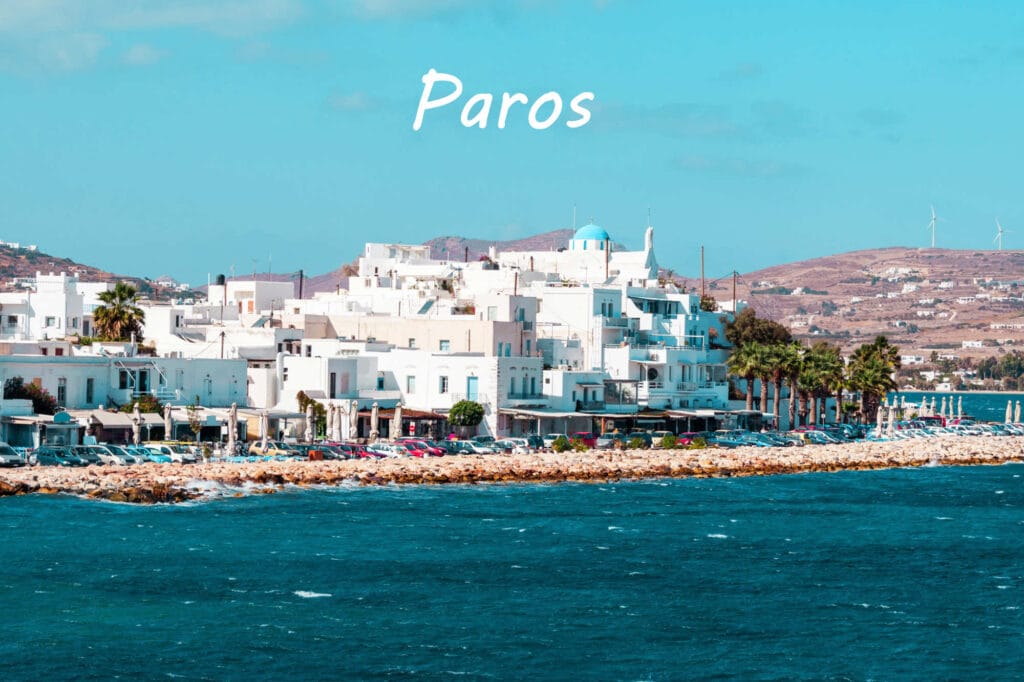
Paros is a mid-sized Cycladic island — small enough to feel intimate, large enough to have real variety. The population is around 13,000 year-round, concentrated in Parikia (the capital and ferry port) and Naoussa (the island’s social and gastronomic hub on the north coast). Between them, a patchwork of villages, vineyards, and marble hillsides connects a coastline full of excellent beaches.
The island has been inhabited since antiquity — its white marble was used for the Venus de Milo and the Winged Victory of Samothrace. That heritage sits lightly on a place that today feels welcoming rather than self-important.
Parikia: The Capital
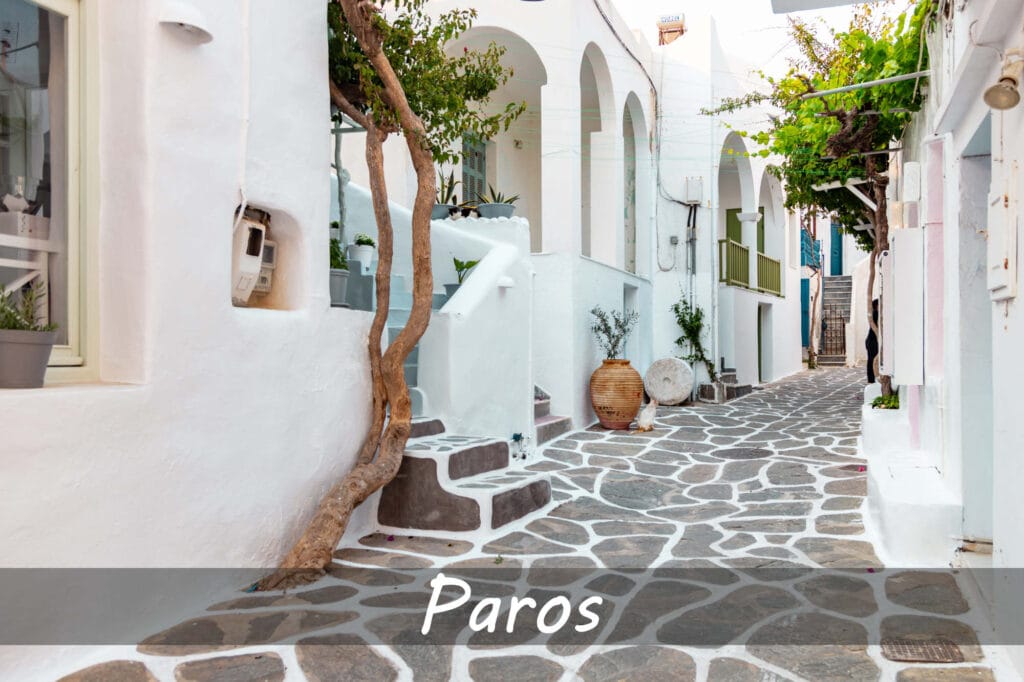
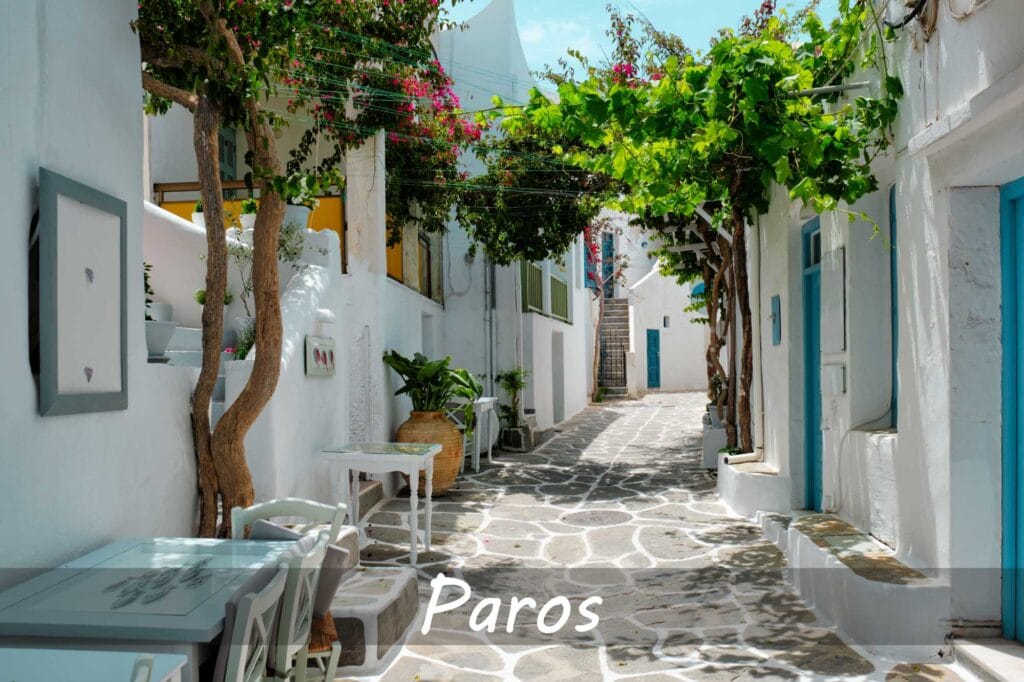
Parikia is where you arrive by ferry, and it is worth more than a quick pass-through. The old kastro neighbourhood — a dense Venetian-era maze of whitewashed lanes and bougainvillea — is as photogenic as anything in the Cyclades. The Panagia Ekatontapyliani (Church of a Hundred Doors) is one of the oldest and most significant early Christian churches in Greece, dating to the 4th century.
The port waterfront has the usual mix of tourist restaurants and bars, but wander five minutes inland and the atmosphere changes completely. Small tavernas, bakeries, and local shops take over. Parikia rewards those who stay a night rather than just passing through.
Naoussa: Where to Eat, Drink & Be
Naoussa is the star of Paros. A working fishing harbour that has evolved into the island’s most stylish destination without losing its soul entirely. The waterfront is lined with restaurants where the catch comes off the boats metres away. Narrow lanes of whitewashed houses fill up with boutiques, wine bars, and cocktail spots by evening. The atmosphere peaks around midnight in August, but even in June and September Naoussa buzzes with genuine energy.
The food here is exceptional by any standard. Fresh seafood, local wine from Parian grapes, and a dining culture that takes its time. Plan at least two dinners in Naoussa over a four-day stay — you will not regret it.
Best Beaches in Paros
- Kolymbithres: The island’s most distinctive beach — a series of sheltered coves separated by smooth granite rock formations sculpted by the sea over millennia. Shallow and calm, excellent for families. One of the most photographed spots in Paros.
- Golden Beach (Chryssi Akti): The longest beach on the island, with fine golden sand and consistent wind that makes it the windsurfing and kitesurfing capital of the Cyclades. Organized with facilities, lively in summer.
- Santa Maria Beach: On the north coast near Naoussa. A wide sandy bay with crystal clear water, water sports, and a beach bar that gets seriously good on weekends. More sheltered than Golden Beach.
- Logaras & Piso Livadi: Quieter alternatives on the east coast. Less organized, more local feel. Good for those who prefer peace over facilities.
- Parasporos: South of Parikia. Calm, clear, and rarely crowded. A local favourite that tourists tend to overlook.
Best Villages in Paros
- Lefkes: The island’s highest and most traditional village, in the marble hills of the interior. Completely car-free in its centre, with an Ottoman-era marble path connecting it to the coast below. Peaceful and genuinely beautiful.
- Marpissa & Marmara: A cluster of traditional villages in the southeast with windmills, Byzantine churches, and almost no tourist infrastructure. A glimpse of the island before the visitors arrived.
- Antiparos: Technically a separate island, accessible by ferry or caique in ten minutes from Parikia. A tiny, quieter alternative with its own charm, a dramatic stalactite cave, and a devoted following of repeat visitors.
Things to Do in Paros
- Panagia Ekatontapyliani: Visit in the morning before the heat. The interior is cool, quiet, and surprisingly moving.
- Marble quarries of Marathi: Ancient quarries in the interior that supplied the finest white marble in antiquity. Mostly unvisited and eerily beautiful.
- Sunset from Naoussa: The harbour at golden hour, with a glass of local white wine, is one of those simple travel experiences that stays with you.
- Day trip to Antiparos: Take the ten-minute caique crossing and spend a morning exploring before the day-trippers arrive. Walk to the cave if you have the energy.
- Windsurfing at Golden Beach: The consistent Meltemi wind makes this one of the best windsurfing spots in the Mediterranean. Lessons and rentals available on site.
— NAXOS —
Naxos: Complete Island Guide
Naxos at a Glance
Naxos is the largest island in the Cyclades — about twice the size of Paros and significantly more varied. While other Cycladic islands are largely barren and rocky, Naxos has a fertile interior: a mountainous spine rising to 1,001 metres at Mount Zeus, dotted with medieval Venetian towers, Byzantine churches, and villages that have barely changed in centuries. The island produces its own food — cheese, olive oil, potatoes, citrus — and that self-sufficiency gives it a different energy from its neighbours.
The beaches along the west coast are simply outstanding. Long, wide, sandy, and sheltered from the north wind by the island’s mass, they rank among the best in the entire Aegean. And unlike many Cycladic beaches, they are large enough that even in high season they never feel overwhelmed.
Naxos Town (Chora)
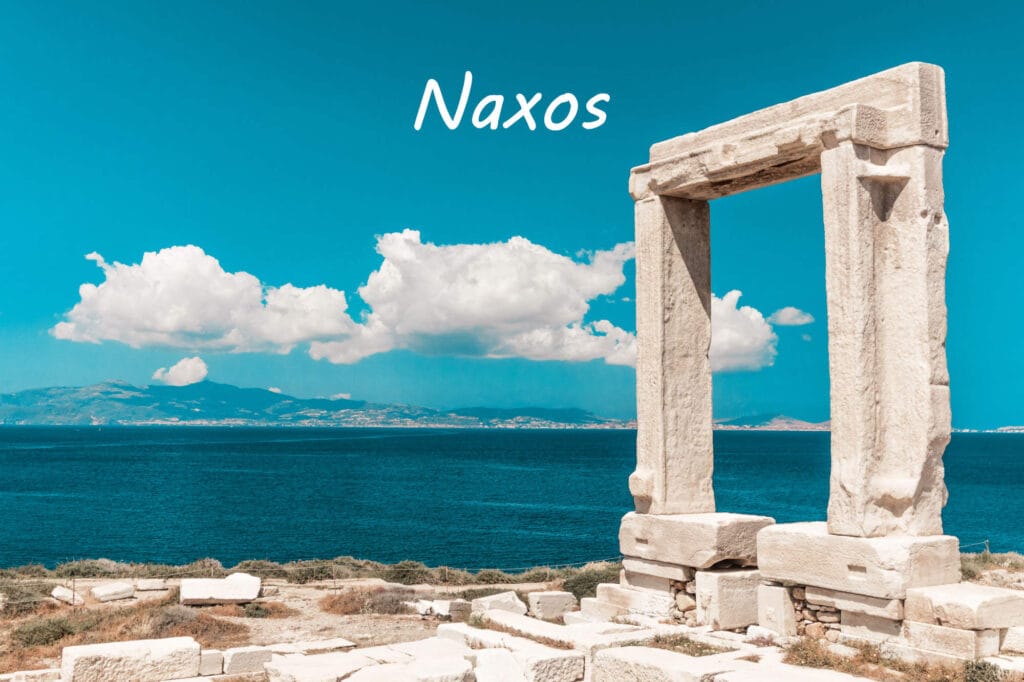
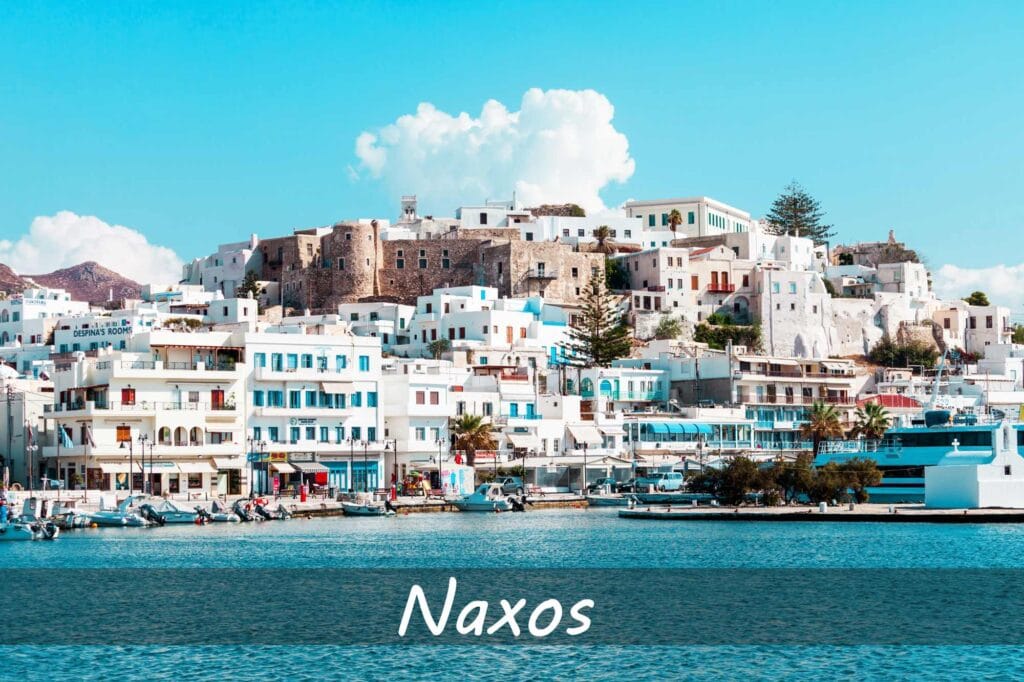
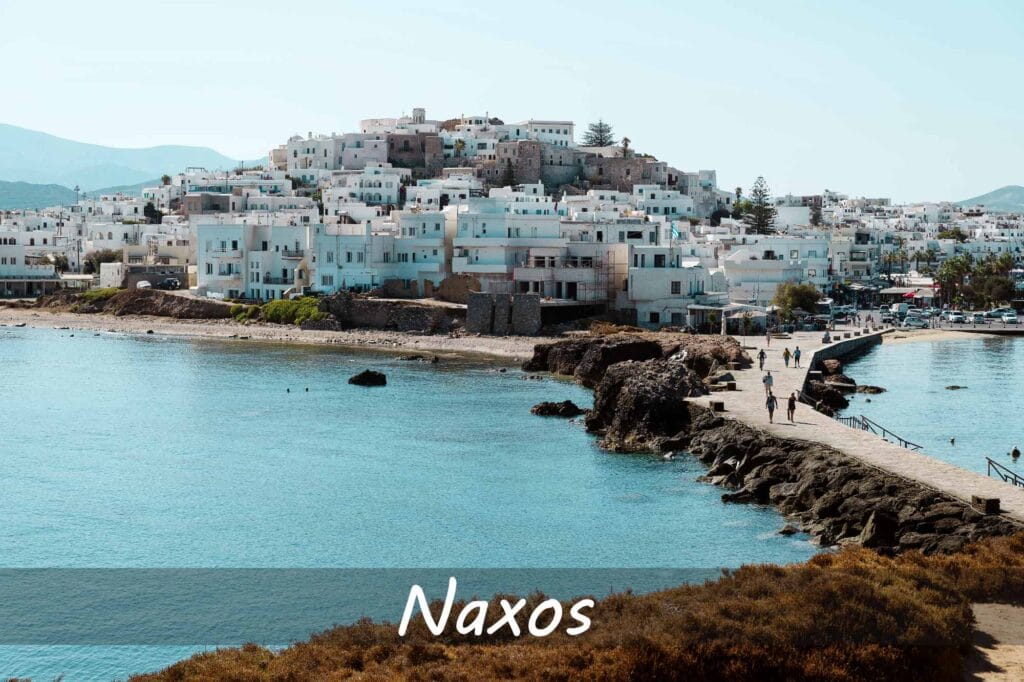
The capital of Naxos is anchored by the Portara — an enormous marble doorway standing alone on a small promontory jutting into the sea. It is the unfinished entrance to a temple of Apollo, dating from the 6th century BC, and it is the most iconic image of the island. The sunset here, with the doorway silhouetted against the Aegean, is one of the great simple pleasures of Greek island travel.
Behind the Portara, Naxos Town climbs a hillside of Venetian-era lanes to the Kastro — a fortified medieval town within the town, still inhabited, with a Catholic cathedral, a Venetian loggia, and a remarkable sense of preserved history. The town also has an excellent waterfront market street with local products, good restaurants, and a lively evening promenade.
Best Beaches in Naxos
- Agios Prokopios: The most celebrated beach on the island. Fine white sand, turquoise shallow water, a gentle slope into the sea — near perfect for families. Organized with sun loungers and a beach bar. About 6 km from Naxos Town.
- Agia Anna: Immediately south of Agios Prokopios. Slightly more compact and village-adjacent, with excellent waterfront tavernas. A local favourite.
- Plaka Beach: South of Agia Anna, less organized, longer, and backed by low dunes. The water is exceptional and the atmosphere calmer. One of the finest beaches in the Cyclades.
- Mikri Vigla: A long sandy beach on the southwest coast, split by a rocky promontory. One side is ideal for windsurfing; the other sheltered and calm. Spectacular in the afternoon light.
- Kastraki & Alyko: Further south still. Alyko is backed by a small pine forest — unusual for the Cyclades — and feels genuinely remote. The water is pristine.
- Apollonas Beach: On the north coast, a long shingle-and-sand beach in a deep bay. Worth the drive for the scenery and the nearby Kouros statue.
The Naxos Interior: Villages and Byzantine Trails
Most visitors to Naxos never leave the coast, which means the interior is yours. The mountain villages of the Tragaea valley — Filoti, Halki, Apiranthos — sit in an olive-covered landscape that feels completely removed from the beach scene below.
- Halki: The former capital of Naxos, a perfectly preserved Venetian-era village with citrus trees, Byzantine churches, and an excellent local distillery producing kitron — a Naxian liqueur made from citron fruit found only on the island.
- Apiranthos: A marble-paved village clinging to the mountainside with an almost defiant self-sufficiency. The residents speak a distinct dialect, the cafes are full of locals, and there are four small museums in a village of a few hundred people.
- Filoti: The largest village in the interior, at the foot of Mount Zeus. The starting point for the hike to the summit — about 3.5 hours round trip with views across the entire Cyclades on a clear day.
- Kouros statues: Two enormous unfinished marble statues from the archaic period lie abandoned in the landscape near Melanes and Apollonas — one face-up in an olive grove, one propped against a hillside. Both are extraordinary and almost entirely unvisited.
Best Things to Do in Naxos
- Sunset at the Portara: Non-negotiable. Arrive 30 minutes early, find a spot on the rocks, and watch the light change.
- Drive the Tragaea: A half-day loop through Halki, Apiranthos, and Filoti. Stop for kitron tasting in Halki and coffee in Apiranthos.
- Hike Mount Zeus: For those with the fitness and a clear day. The views from the summit are extraordinary.
- Visit the Kouros of Melanes: A short walk from the road through an olive grove to find a 10-metre marble statue lying in the grass. One of those genuinely surprising travel moments.
- Eat at a village taverna in Apiranthos: Order whatever they have that day. This is some of the most honest Greek cooking you will find anywhere.
- Swim at Plaka: Allow a full afternoon. Bring snorkelling gear — the water is remarkably clear.
How to Island Hop Between Paros and Naxos
The ferry between Paros and Naxos is one of the easiest island hops in the Cyclades. High-speed catamarans cross in around 30–40 minutes. Standard ferries take about an hour. Services run multiple times daily in summer.
A practical itinerary that works well: fly or ferry into Paros, spend three nights exploring the island, then take the morning ferry to Naxos for three to four nights. Return to Athens from Naxos by high-speed ferry (around 3.5 hours). This gives you six to seven days across both islands — enough to go beyond the highlights without feeling rushed.
Extending the Hop: Koufonisia
If you have an extra day or two, the tiny island of Koufonisia — about 1.5 hours by fast ferry from Naxos — is worth adding. The smallest inhabited island of the Small Cyclades, with a handful of tavernas, turquoise lagoon-like beaches, and no cars. A complete contrast to the main islands, and a favourite among travellers looking for the quietest possible Cycladic experience.
Where to Stay: Paros and Naxos
Where to Stay in Paros
- Naoussa: The best base for couples and those who want the liveliest atmosphere. Close to Kolymbithres and Santa Maria beaches, excellent restaurant options, good nightlife. Book well in advance for summer.
- Parikia: Convenient for ferry connections and the Old Town. Better value than Naoussa. A good base if you plan to island hop.
- Piso Livadi / Logaras: Quieter east coast option. Smaller hotels, more local feel, easy beach access. Good for families.
Where to Stay in Naxos
- Naxos Town (Chora): The most atmospheric base. Easy access to beaches (5–10 minutes by car), the Portara, and the Kastro. Best for those who want a mix of culture and coast.
- Agios Prokopios / Agia Anna: The beach strip south of Naxos Town. Best for those whose priority is beach time. Plentiful accommodation from studios to boutique hotels.
- Halki or Apiranthos: For those who want total immersion in Naxian village life. Limited accommodation but some exceptional small guesthouses. Requires a car.
Best Time to Visit Paros and Naxos
The same principle applies to both islands as to the Cyclades generally. June and September are the sweet spots — warm, sunny, the sea at its best, and notably calmer than high summer.
- May – June: Beautiful weather, green hillsides (especially on Naxos), far fewer crowds. Some facilities not yet fully open in May. Ideal for exploration and hiking.
- July – August: Both islands are at full capacity. Naoussa and Naxos Town are lively and social. Beaches are busy. Book everything months in advance.
- September – October: Arguably the best overall window. Warm sea, warm days, thinning crowds. The light in October is extraordinary.
- November – April: Both islands are very quiet. Many hotels and restaurants close. Best for those who want to experience the authentic off-season rhythm — and prices are a fraction of summer.
One specific note for Paros: the Meltemi wind, which blows strongly across the central Cyclades in July and August, can make the north coast beaches rough for swimming during this period. Golden Beach and Santa Maria are genuinely popular with windsurfers precisely because of it — plan accordingly.
Explore More About the Cyclades
- Greek Islands: How to Choose the Best Island for Your Trip
- Island Hopping in Greece: The Ultimate Guide
- Santorini Travel Guide
- Mykonos Travel Guide
- Greece Ferry Guide: How to Book & Navigate Islands
- Best Greek Islands for Couples
- Cyclades Island Hopping Itinerary: Santorini to Paros
FAQ: Paros and Naxos
Is Paros or Naxos better?
Neither is objectively better — they suit different priorities. Paros offers a more social, intimate atmosphere with a beautiful fishing harbour in Naoussa and excellent beaches. Naxos is larger, more varied, has better food, and a fascinating interior that most visitors never explore. If you have the time, visit both. The ferry between them takes under an hour.
How many days do you need in Paros?
Three to four days is ideal for Paros. Two days gives you the highlights — Naoussa, a couple of beaches, and Parikia — but you miss the slower pace that makes the island special. Four days lets you rent a car, reach the quieter east coast beaches, explore the interior villages, and take a day trip to Antiparos.
How many days do you need in Naxos?
Four to six days is the right window for Naxos. Three days is enough for the coast, Naxos Town, and a couple of beaches. But the island rewards more time — particularly if you plan to explore the interior, hike Mount Zeus, or visit the smaller villages of the Tragaea valley. Naxos is one of those rare Greek islands where you genuinely run out of time before you run out of things to discover.
Can you do Paros and Naxos in one trip?
Easily — this is one of the most natural island combinations in the Cyclades. The ferry takes 30–40 minutes on a high-speed service. A week across both islands works well: three nights in Paros, four in Naxos (or vice versa). You can return to Athens by high-speed ferry from either island.
What are the best beaches in Paros?
Kolymbithres is the most distinctive — sheltered coves between sculpted granite rocks, ideal for families and calm swimming. Golden Beach is the island’s longest and windiest, perfect for windsurfing. Santa Maria near Naoussa is the best all-round beach: good water, facilities, and a lively beach bar. Parasporos, south of Parikia, is the local’s favourite — quieter and often overlooked.
What are the best beaches in Naxos?
Agios Prokopios is the most praised — fine sand, shallow clear water, good facilities. Plaka, further south, is longer, calmer, and backed by low dunes. For something more remote, Alyko in the southwest is backed by a rare pine forest and feels genuinely off the beaten track. Mikri Vigla is the best option for windsurfers and those who like a dramatic coastal setting.
Is Naxos good for families?
Very good. The west coast beaches are long, shallow, and calm — some of the best for children in the entire Cyclades. The island is large enough that different family members can find their own corners. The food culture is strong, with tavernas serving fresh local produce that goes beyond the standard tourist menu. And the pace is relaxed in a way that suits families who are not chasing nightlife.
Do I need a car in Paros and Naxos?
For Paros, a scooter or small car is useful but not essential if you are based in Naoussa and content with the nearby beaches. For Naxos, a car is strongly recommended. The island is significantly larger, the interior is only accessible by road, and the best beaches south of Agia Anna require driving. Rental cars are available on both islands but should be booked in advance for July and August.
Planning Your Paros or Naxos Trip?
Both islands are among the most rewarding destinations in the Greek archipelago — precisely because they have stayed closer to what the Cyclades used to be before the mega-destinations took over. The beaches are exceptional, the food is honest and good, and the pace allows you to actually settle in rather than rush through.
Sort your logistics below and start planning the kind of trip you will actually remember.