Samaria Gorge & Best Hikes in Crete: Complete Hiking Guide
The Samaria Gorge is one of the great walks in Europe. It’s not easy — 16km through the heart of the White Mountains, descending from 1,200 metres to sea level, finishing at a tiny coastal village accessible only by ferry. It takes 4–6 hours depending on your pace, your knees, and how many times you stop to stare at the sheer rock walls closing in around you.
But Crete isn’t only the Samaria Gorge. The island has an extraordinary network of walking trails, gorges, and mountain paths that very few visitors ever discover. From a gentle morning walk along the coastal path to Loutro, to a full traverse of the E4 European long-distance trail, the hiking here rewards exploration.
This guide covers the Samaria Gorge in detail — everything you need to plan the day and do it well — plus the best alternative hikes for different fitness levels and interests.
Samaria Gorge: The Full Guide
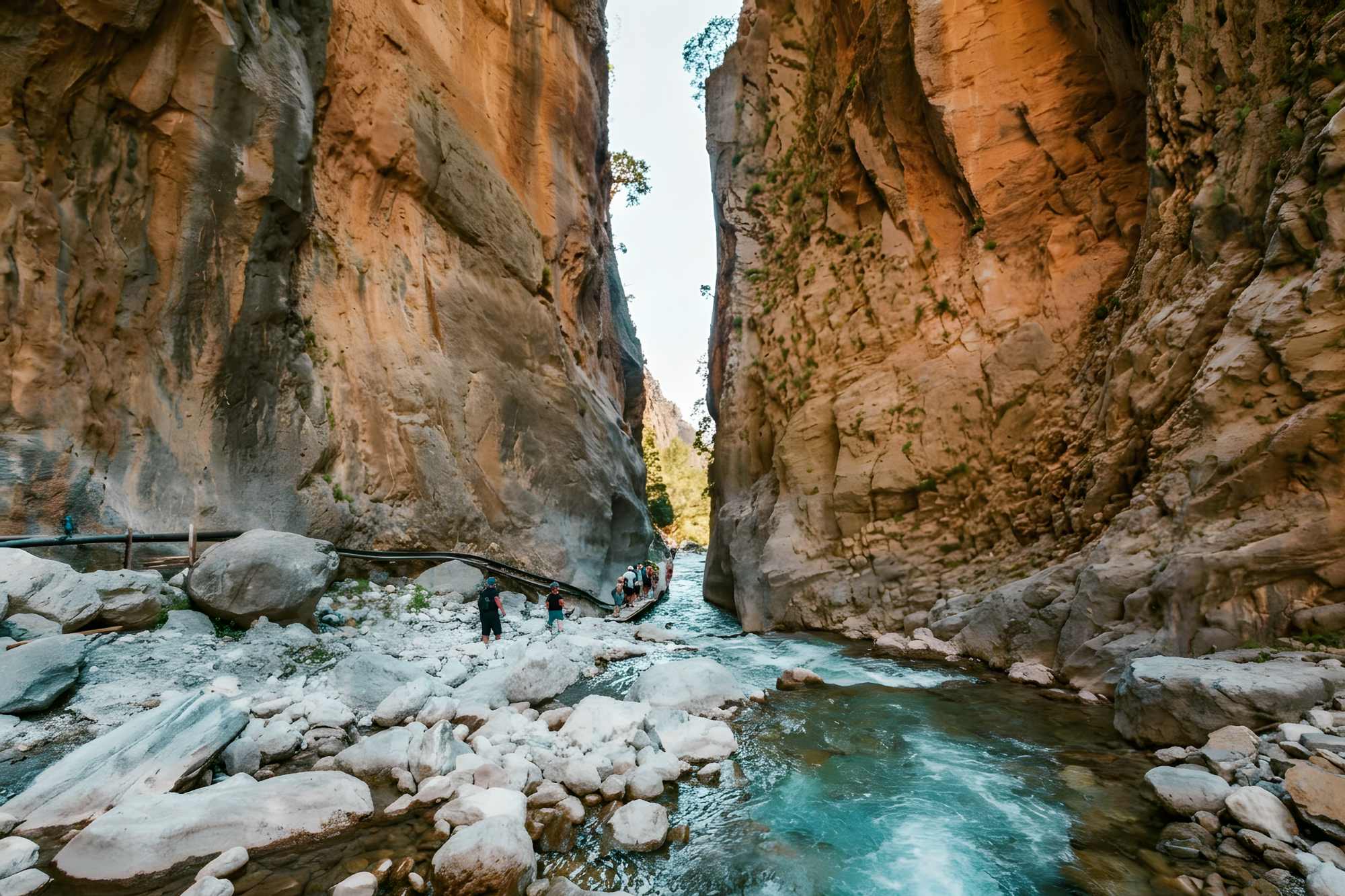
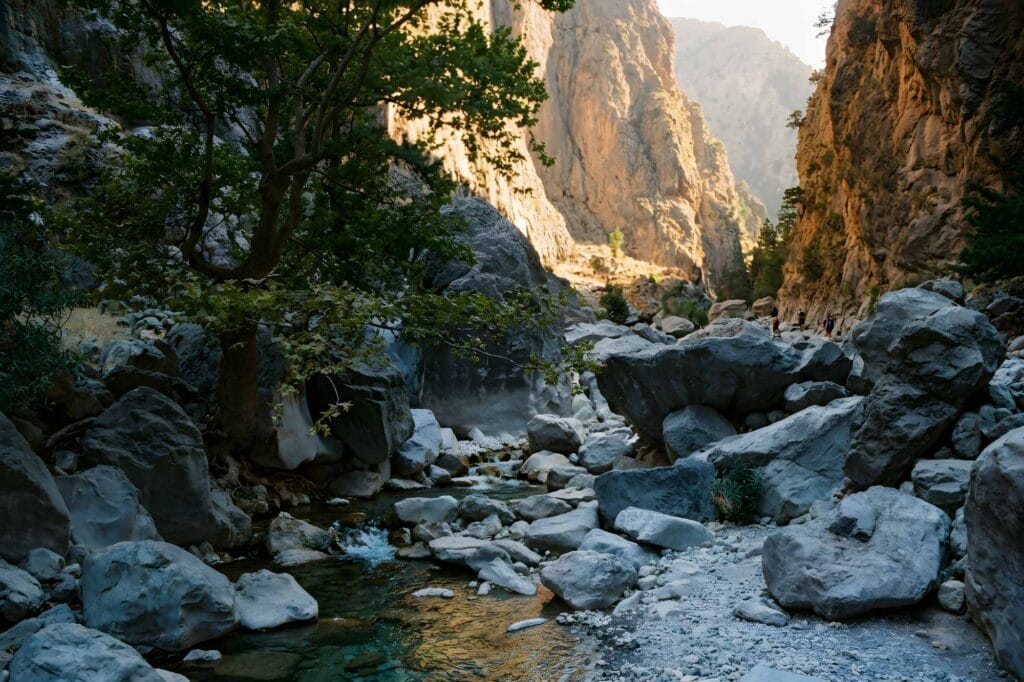
The gorge was formed over millions of years by the Tarraios river cutting through the Lefka Ori (White Mountains) massif. At its narrowest point — the famous Iron Gates (Sideroportes) — the walls rise 300 metres above you and close to just 3 metres apart. Walking through is a physical experience that pictures genuinely fail to capture.
The gorge is also a national park and home to the Kri-kri, a wild Cretan ibex that’s endemic to the island. You’ll almost certainly see them — particularly in the early morning — picking their way across the cliff faces with complete casual authority.
The starting point is Omalos Plateau at 1,200m altitude. The ending point is the small coastal village of Agia Roumeli, reachable only by ferry. This is not an out-and-back hike — you’ll need to arrange transport from both ends.
When is Samaria Gorge Open?
The gorge typically opens in early May and closes at the end of October. The exact dates vary by year depending on weather and trail conditions. Crucially, the gorge closes during and after heavy rain due to flash flood risk — always check the day before you plan to go.
The gorge authorities maintain a closure status online and post notices at the Omalos entrance. Local hotels and tour operators in the area stay informed and will tell you if conditions are unsafe.
Peak season (July–August): The gorge is open but busy. Starting before 8am is strongly advisable.
Shoulder season (May–June, September–October): The best time to hike. Cooler temperatures, smaller crowds, and the landscape is either lush with spring wildflowers or golden with autumn light.
How to Get to Samaria Gorge
From Chania
The easiest starting point. A direct bus leaves Chania Central Bus Station daily at 6:15am and 7:30am in season, arriving at Omalos (the gorge entrance) about 90 minutes later. This is the most popular option.
Driving to Omalos is straightforward — 1 hour from Chania on good roads. Parking is available at the trailhead.
Getting back from Agia Roumeli
This is the logistical consideration most people don’t think about until they’re standing at the bottom with aching knees. Agia Roumeli is car-free. You must take a ferry.
Ferries run from Agia Roumeli to Hora Sfakion (east) and Paleochora (west). From Hora Sfakion, buses and taxis connect back to Chania. From Paleochora, buses run to Chania.
If you drove to Omalos, you’ll need to take a taxi or organised transfer from Hora Sfakion back to the start. Several companies offer this service.
The Hike Step by Step
Xyloskalo to the Gorge Entrance (0–2km)
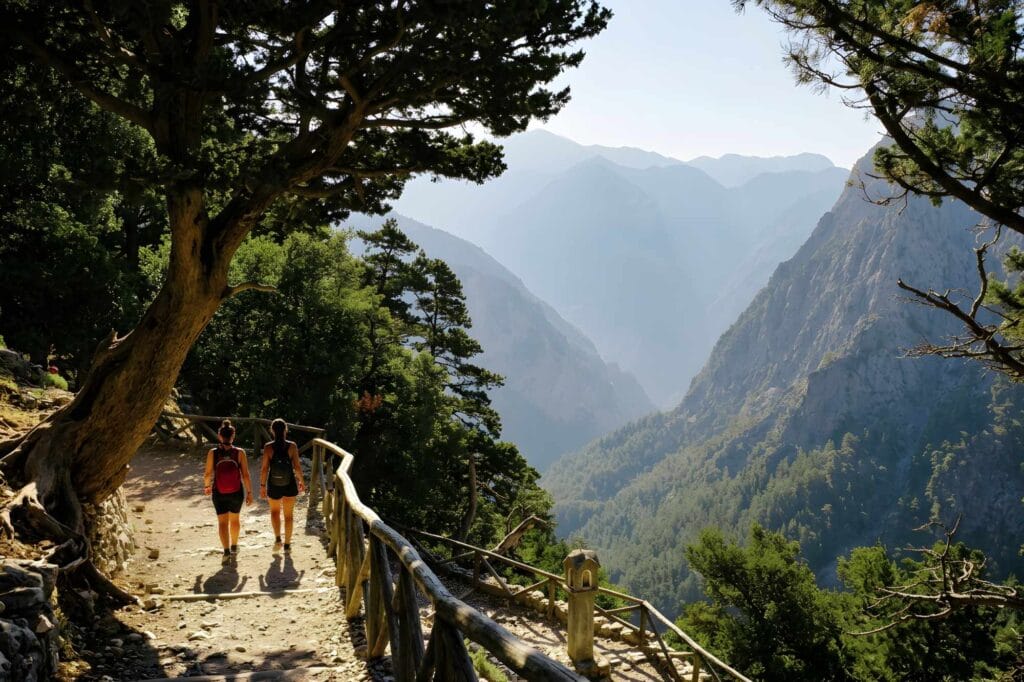
The first section descends steeply from Omalos on a wooden staircase path (xyloskalo means ‘wooden staircase’ in Greek). This is the hardest section for your knees. Take it slowly, and be grateful — the views back up the White Mountains from here are extraordinary.
Through the Gorge (2–12km)
The trail follows the riverbed — sometimes on one bank, sometimes crossing via stepping stones. The rocks are smooth and can be slippery when wet. In early season, you may be walking through actual river water in places.
The abandoned village of Samaria appears about halfway. A handful of structures remain, including a small chapel. Worth a moment’s pause.
At around the 12km mark, you reach the Iron Gates — the gorge’s narrowest point. This is the image most people associate with Samaria, and walking through it with the walls pressing in around you is something you won’t forget.
Agia Roumeli (12–16km)
The final stretch opens up as the gorge widens toward the coast. ‘Old’ Agia Roumeli is another abandoned settlement. The sea appears ahead, and the small modern village of Agia Roumeli sits just beyond the gorge exit. There’s a taverna and cold drinks waiting at the end. You’ve earned them.
What to Bring
- Footwear: Proper hiking shoes or trail runners with ankle support. The terrain is rocky, uneven, and wet in places. Trainers are technically possible but not advisable. Sandals and flip-flops are genuinely dangerous here.
- Water: Minimum 2 litres per person. There are springs with drinkable water along the route, but carrying your own is essential. The gorge gets very warm in the afternoon.
- Food: A lunch and snacks. There’s nothing to eat in the gorge itself.
- Sun protection: Hat, sunscreen, and sunglasses. The upper sections are exposed.
- Trekking poles: Helpful for the steep initial descent and for the final long flat section when your legs are tired. Not essential, but appreciated.
- Layers: Omalos can be cold in the early morning (especially May and October). You’ll warm up quickly as you descend, but start with a layer.
- Small backpack: Everything you bring, you carry the full 16km.
Tips to Make the Most of the Day
- Start early: The 6:15am bus from Chania puts you on the trail by 8am. This means cooler temperatures for the descent, fewer people at the Iron Gates, and certainty of catching the afternoon ferry.
- Don’t rush: The gorge rewards a slower pace. The geology, the flora (over 450 plant species, many endemic), and the wildlife are the point, not the completion.
- Knee care: The initial descent is steep. If you have any knee concerns, trekking poles are helpful and taking the first section very slowly saves pain later.
- Ferry timing: Last ferry from Agia Roumeli is typically around 6pm in season. A slow walker who starts at 9am will be fine. Don’t leave it to chance — check the schedule on arrival.
- What if the gorge is closed?: Have the Imbros Gorge as a backup plan. It’s shorter (8km), easier, and still beautiful.
Best Other Hikes in Crete
Imbros Gorge
The best alternative to Samaria, and genuinely worth doing on its own merits — not as a consolation prize. The Imbros Gorge is 8km long, less dramatic than Samaria but wilder and far less crowded. It runs from the village of Imbros to Komitades, ending with the option of continuing to the coast. Takes 2–3 hours.
Open for a longer season than Samaria and doesn’t require ferry transport. A more achievable option for those who are less fit or have less time.
Agia Irini Gorge
A 7.5km gorge hike near Sougia on the southwest coast. Far less known than Samaria or Imbros, and correspondingly quiet. The trail ends in the coastal village of Agia Irini. A good choice for those who want gorge scenery without the crowds.
E4 European Long Distance Trail
The E4 crosses Crete from east to west, covering approximately 320km through some of the island’s most remote and spectacular terrain. The full crossing takes 10–15 days and requires experience and preparation. Individual sections — particularly around the White Mountains and the Lasithi Plateau — are outstanding day hikes.
Psiloritis Summit
The highest point in Crete at 2,456m, reached via a trail from the Nida Plateau. A full-day excursion for fit walkers. The views from the summit cover virtually the entire island. Not a technical climb — just a long, high walk.
Coastal Walk from Loutro to Agia Roumeli
For those who want spectacular coastal scenery without a gorge, the 12km coastal path from Loutro to Agia Roumeli is one of the finest walks in the Mediterranean. Rugged, remote, and extraordinarily beautiful. Access to Loutro itself is by ferry — the car-free village is a destination in its own right.
Lasithi Plateau Walk
A gentler option: the plateau in eastern Crete sits at 800m altitude and is surrounded by mountains, windmills, and almond orchards. A circular walk of 8–12km takes you through traditional villages and past the Diktaion Antron cave (legendary birthplace of Zeus). Good for families with older children who can manage uneven terrain.
Gorge Alternatives: Imbros & Agia Irini
If Samaria is closed, if you want shorter walks, or if you’ve already done the main gorge and want more — these two are the best options:
Imbros Gorge: 8km, 2–3 hours, starts from Imbros village. Open longer season than Samaria. Quieter, faster, easier. Ends near Hora Sfakion where you can get a ferry or bus.
Agia Irini Gorge: 7.5km, 2–3 hours, starts near Sougia. Almost no tourists. Beautiful dry gorge scenery. Ends in a small coastal village.
Explore More About Crete
- Crete Travel Guide: The Ultimate Island Adventure
- Crete with Kids: A Family-Friendly Guide
- Best Beaches in Crete: From Elounda to Falasarna
- 7 Days in Crete: A Complete Island Itinerary
- Getting Around Greece: Ferries, Flights & Cars
FAQ
How hard is the Samaria Gorge hike?
Moderate. The initial descent is steep and hard on the knees. The bulk of the trail through the gorge is long but not technically difficult. The final flat section is tiring. Anyone with basic fitness and proper footwear can complete it. It is not appropriate for young children, people with knee problems, or those in inappropriate footwear.
Can I hike Samaria Gorge without a guide?
Yes — the trail is well-marked, and independent hiking is standard. Guided tours are available and make logistics easier (transport both ways handled), but the gorge itself requires no navigation skills. Rangers are stationed along the route.
How long does it take to hike Samaria Gorge?
Most hikers complete it in 4–6 hours. Faster walkers do it in 3.5 hours. If you stop frequently, 7 hours is possible. Plan around the ferry departure times from Agia Roumeli.
What happens if it rains during the hike?
The gorge closes during and after heavy rain due to flash flood risk. If caught in a shower mid-hike, the gorge staff will advise whether to proceed or wait. The trail is closed preventatively — never attempt a closed gorge, regardless of how the weather looks to you.
Is Samaria Gorge worth it?
For anyone with reasonable fitness and interest in the outdoors — absolutely. It’s one of the most impressive natural landscapes in all of Greece and the hike is a genuinely memorable physical experience. The end reward of cold water and a ferry across the Libyan Sea doesn’t hurt.
What are the best hikes in Crete for beginners?
The Imbros Gorge (8km, straightforward), the Lasithi Plateau walk (gentle altitude, beautiful scenery), and the coastal paths around Paleochora are all appropriate for hikers without previous mountain experience.
Can I do Samaria Gorge in one day from Chania?
Yes — and this is the most common approach. Early morning bus from Chania, hike through the day, ferry from Agia Roumeli to Hora Sfakion, bus or taxi back to Chania. You’ll be back by evening.