Santorini Travel Guide: Everything You Need to Know Before You Go
Santorini travel guide starts here — and if you’re planning your first trip to this island, you’re in the right place. Whitewashed villages perched on volcanic cliffs, sunsets that stop conversations mid-sentence, beaches made of black and red lava sand — Santorini delivers on every postcard promise, but only if you know how to navigate it.
This guide covers everything: when to go, where to stay, how to get around, what to eat, and which parts of the island are actually worth your time. No filler, no generic tips — just the practical details that make the difference between a good trip and a great one.
Why Santorini Deserves a Spot on Your Trip
There’s a reason Santorini keeps showing up on everyone’s travel list — and it’s not just the sunsets (although those are genuinely hard to beat).
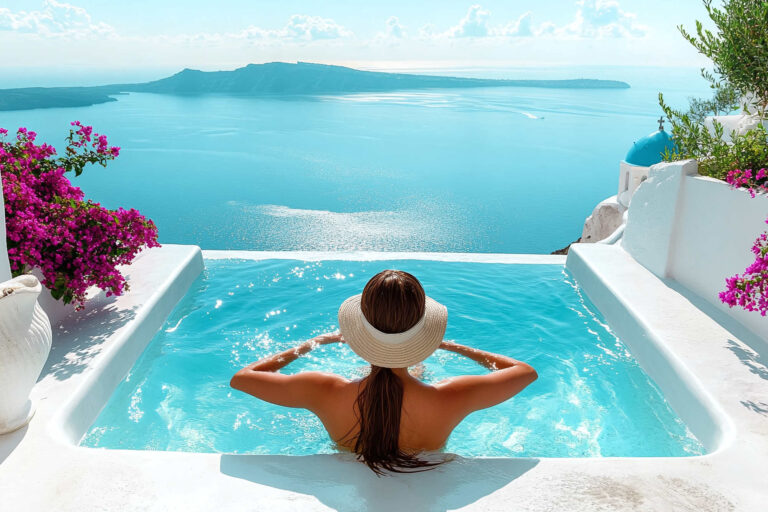
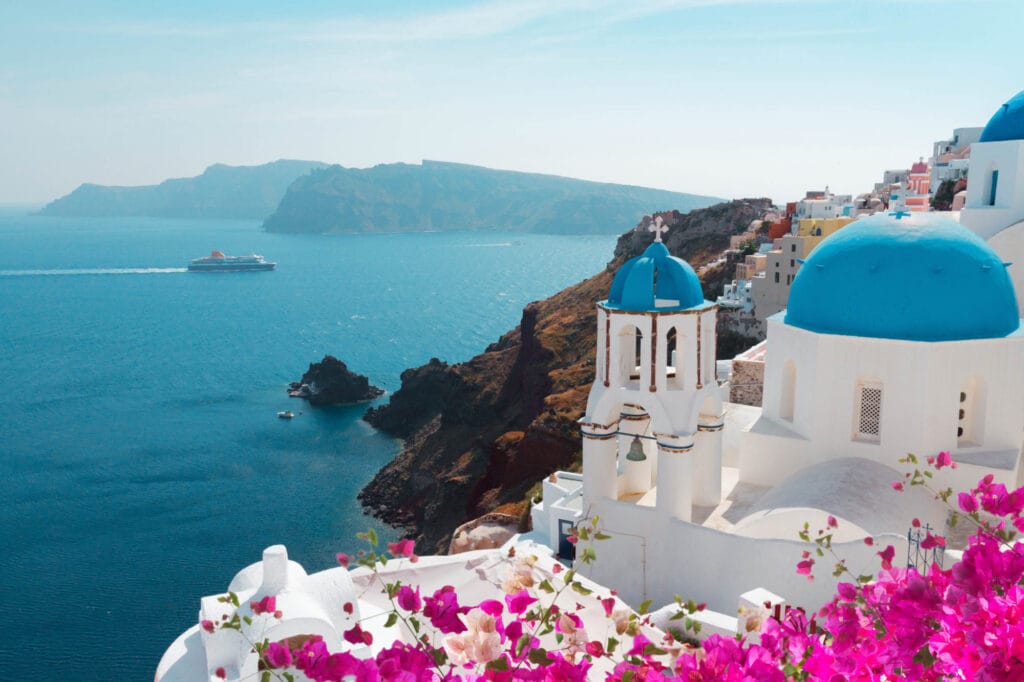
This small volcanic island in the southern Cyclades is one of those rare places that delivers on every level. Dramatic cliff views, whitewashed villages, crystal-clear water, and a food and wine scene that punches way above its weight. Whether you’re planning a romantic getaway or a relaxed family escape, Santorini has a way of making every moment feel effortless.
This complete Santorini travel guide will walk you through everything you need to know — from the best time to visit to the hidden spots most tourists never find.
Quick Facts About Santorini
Here’s a snapshot of the island before we dive in:
- Location: Southern Cyclades, Greece — about 200 km south of Athens
- Population: Around 15,000 (it swells to over 1 million visitors a year)
- Best known for: Caldera views, blue-domed churches, volcanic beaches, and stunning sunsets
- Main towns: Fira (capital), Oia, Imerovigli, Pyrgos
- Island size: About 76 km² — small enough to explore, big enough to surprise you
- Getting there: Ferry or flight from Athens (more on that below)
When Is the Best Time to Visit Santorini?
The Sweet Spot: Late April – Early June & Mid-September – October
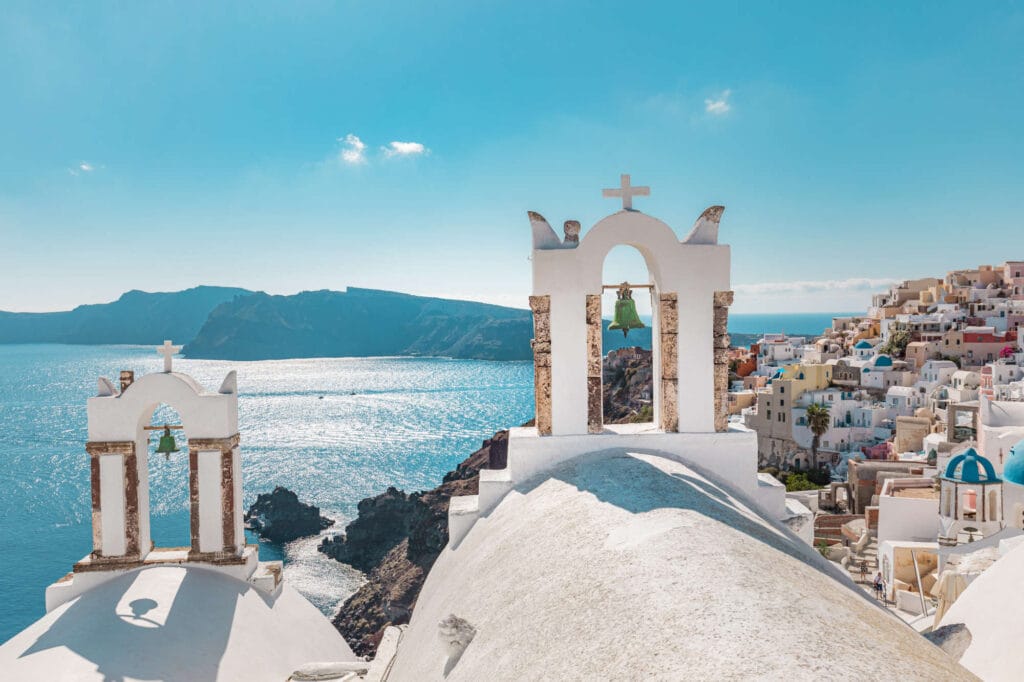
If you want the best balance of warm weather, smaller crowds, and lower prices, the shoulder seasons are your answer. Days are sunny, the island isn’t packed, and nearly everything is open and running.
May is a favourite — temperatures hover around 20–25°C, the light is gorgeous, and you can enjoy a peaceful morning coffee on the caldera without elbowing anyone.
September and early October are equally special. The sea is still warm from summer, prices start to drop, and the golden autumn light makes the whole island look like a painting.
What About Summer (June – August)?
Summer is peak season — and it shows. The island is at its liveliest, with long sunny days, warm water, and everything open around the clock. But it also means bigger crowds, higher prices, and the need to book months in advance.
If you don’t mind the buzz and plan ahead, summer in Santorini is magical. Just be prepared for July and August, when popular spots like Oia can feel very crowded — especially after cruise ships dock mid-morning.
Can You Visit in Winter?
Santorini in winter is a very different experience — quieter, more intimate, and significantly cheaper. Some restaurants and hotels close, but Fira stays lively year-round. If you’re after a peaceful escape and don’t need beach weather, it can be a lovely time to go.
How to Get to Santorini

Flying In
The fastest option. Santorini has its own airport (JTR), with direct flights from Athens taking around 45 minutes. In high season, you can also find direct flights from London, Paris, Amsterdam, and other European cities.
Flying is the way to go if you’re short on time or arriving from an international flight with a connection in Athens.
Taking the Ferry
The ferry ride into Santorini’s caldera is one of the most scenic arrivals in all of Greece — and we genuinely mean that. Sailing in and seeing the cliffs for the first time is an experience in itself.
From Athens (Piraeus port), high-speed ferries take around 4–5 hours, while conventional ferries take about 7–8 hours. Ferries also connect Santorini to nearby islands like Naxos, Paros, Mykonos, and Crete, making it a great stop on an island-hopping route.
Pro tip: If you have the time, take a conventional ferry for the arrival — the open deck gives you the full caldera view. If speed matters more, go with the high-speed option.
Getting Around the Island
Public Buses
Santorini’s bus network (KTEL) is cheap, easy to use, and connects all the main towns and beaches. From Fira, you can reach Oia, Kamari, Perissa, and most places you’d want to go. Buses run frequently in peak season.
Renting a Car
A rental car gives you real freedom — especially if you want to explore the quieter villages, visit wineries at your own pace, or reach beaches that buses don’t serve well. Roads on the island are straightforward, though parking in Oia and Fira can be a challenge.
We recommend booking your rental in advance, particularly in summer. A small car is all you need.
Taxis & Transfers
Taxis are available but pricey, especially compared to buses. For airport or port transfers, consider booking a pre-arranged transfer — it saves you the hassle of haggling and waiting.
ATVs & Scooters
Popular with younger travellers, but we’d only recommend these if you’re an experienced rider. The roads have some sharp turns, and combining them with alcohol is a serious risk. If you rent one, do it sober and with a valid licence.
Where to Stay in Santorini: Oia vs. Fira vs. Imerovigli
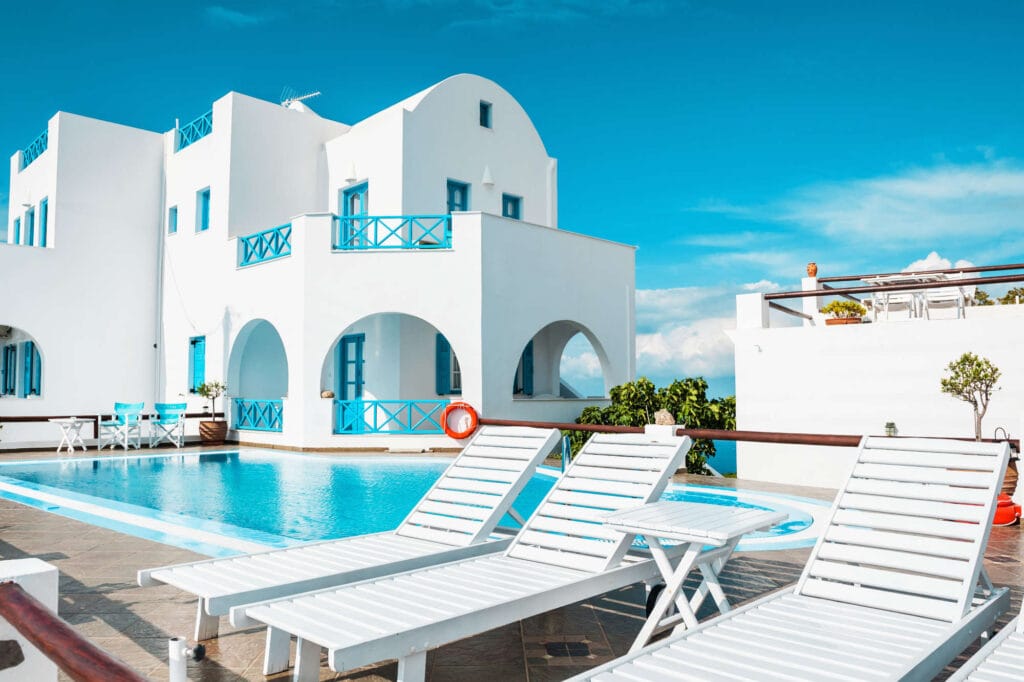
Choosing where to base yourself is one of the most important decisions you’ll make for this trip. Here’s an honest breakdown of the three main options:
Oia — The Iconic Choice
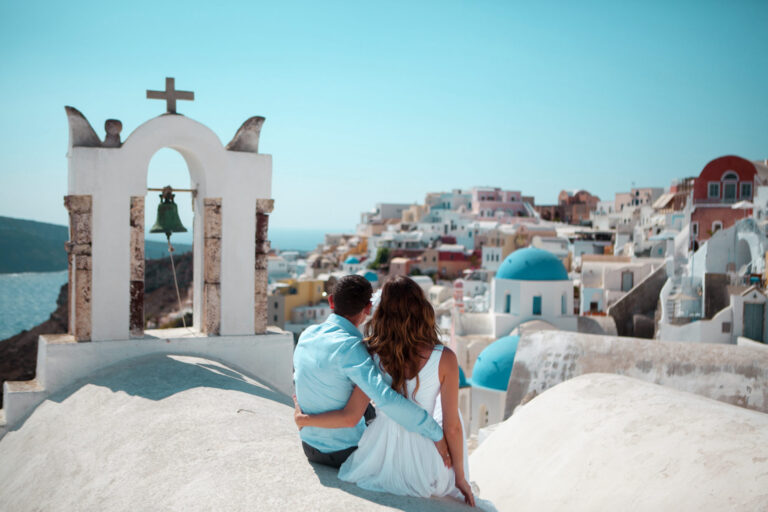
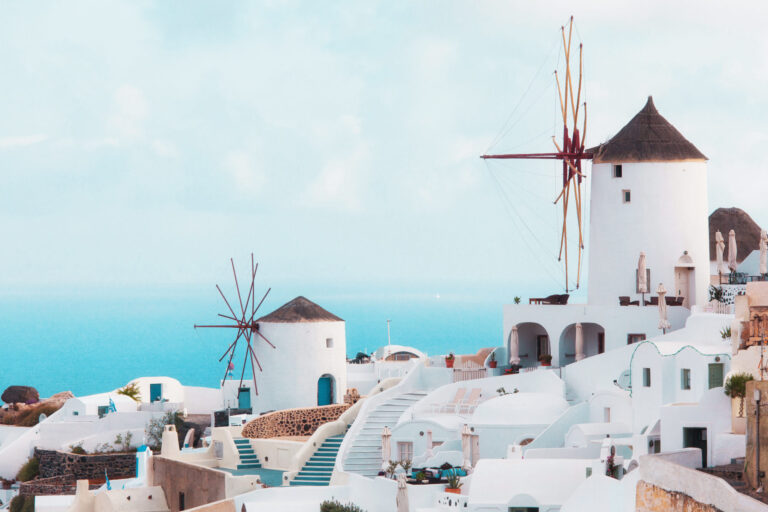
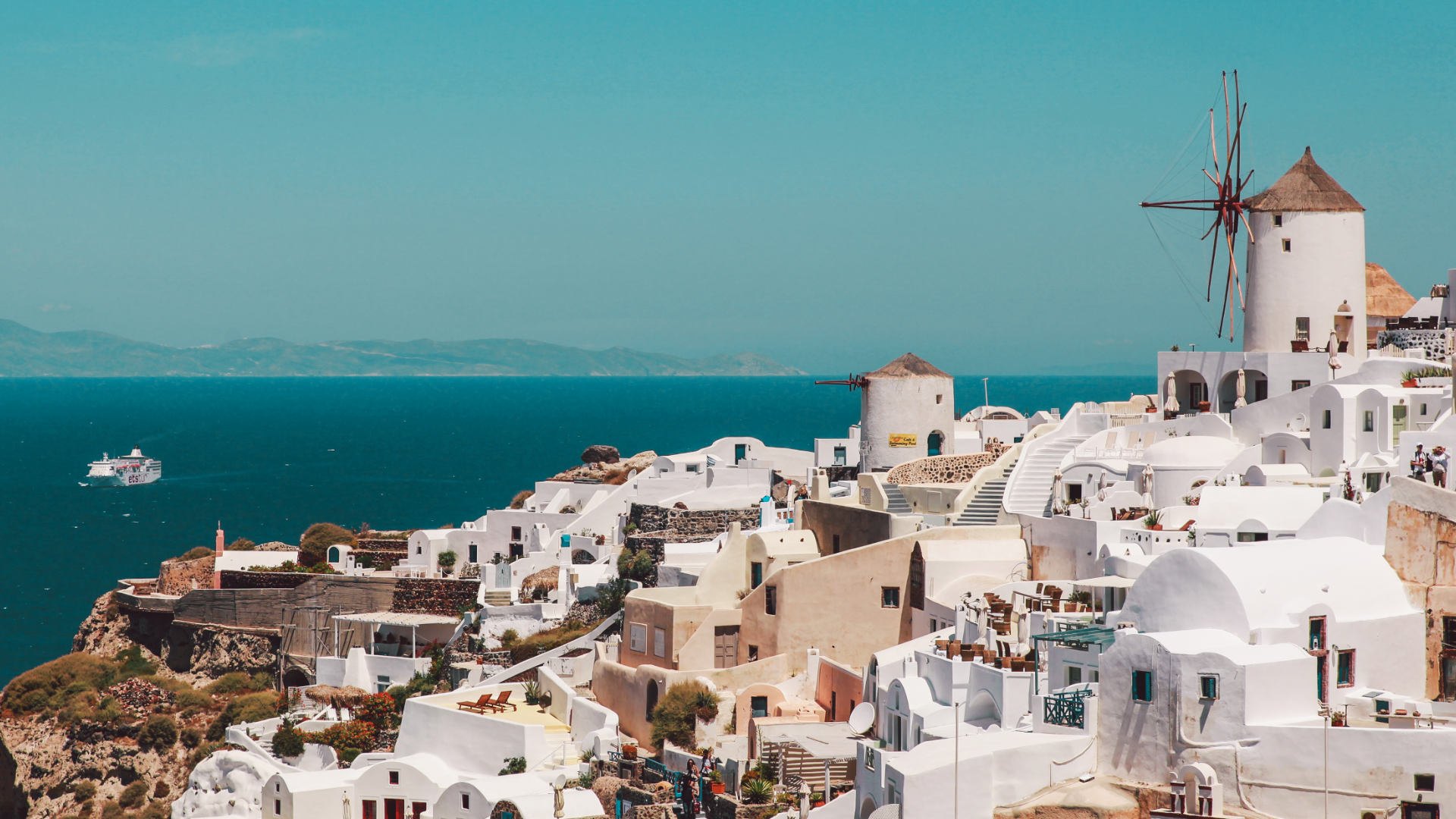
Oia is the postcard version of Santorini. Blue domes, stunning sunset views, and boutique hotels tucked into the cliffs. It’s beautiful, romantic, and worth at least a full day of exploring.
Best for: Couples, honeymoons, and anyone who wants that classic Santorini photo moment.
Keep in mind: It’s the priciest area on the island, and it can get crowded during the day — especially when cruise ship passengers arrive. If you stay here, you’ll feel the magic most intensely in the early mornings and evenings.
Fira — The Practical Choice
Fira is the capital and the heart of the island. It has the best transport links, the widest range of restaurants and shops, and plenty of accommodation at every price point.
Best for: First-time visitors, solo travellers, and families who want convenience and easy access to everything.
Keep in mind: It’s busier and noisier than Oia, but the caldera views are still stunning — and you’ll pay noticeably less for accommodation.
Imerovigli — The Hidden Sweet Spot
Imerovigli sits between Fira and Oia on the caldera path, and it’s often overlooked. The views here are arguably the best on the island, the atmosphere is quieter, and the prices land somewhere in the middle.
Best for: Couples or travellers who want stunning views without the Oia price tag or the Fira crowds.
Keep in mind: There are fewer dining options within walking distance, so you might need a bus or car to get to restaurants in the evening.
Top Things to Do in Santorini
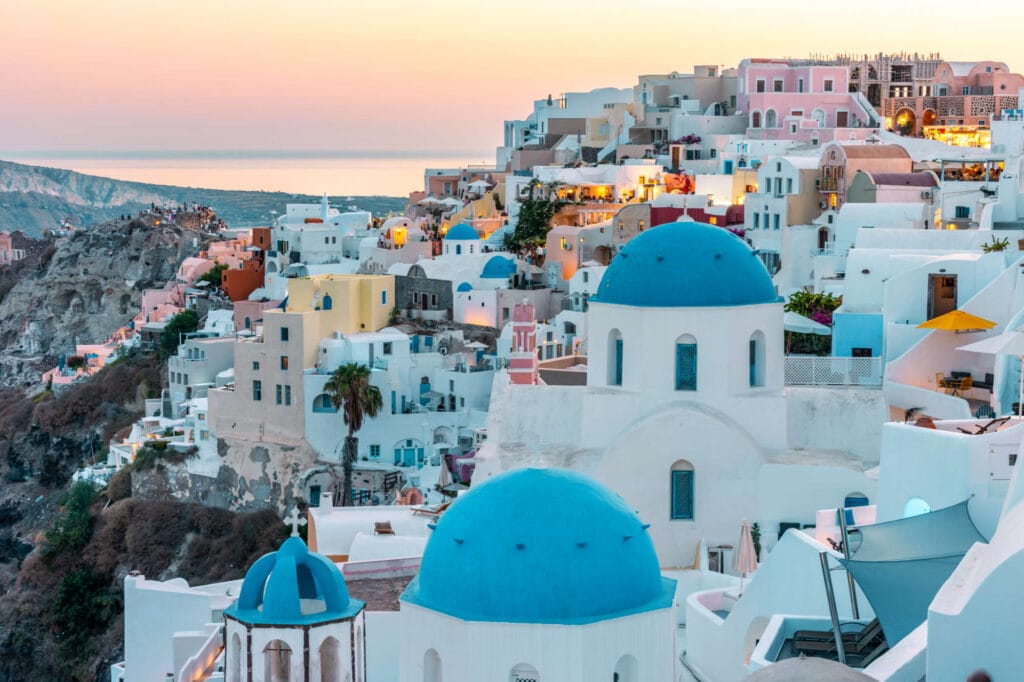
Walk the Caldera Trail (Fira to Oia Hike)
This iconic hike stretches about 10 km along the cliff edge, passing through Fira, Firostefani, and Imerovigli before ending in Oia. It takes roughly 3–4 hours and offers some of the most breathtaking views you’ll find anywhere in Greece.
Start early in the morning to beat the heat and the crowds. Bring water, wear sturdy shoes, and enjoy every single step.
Explore the Archaeological Site of Akrotiri
One of the most well-preserved ancient settlements in the Mediterranean. Akrotiri was buried by a volcanic eruption around 1600 BC, and the excavations here reveal a surprisingly advanced civilisation — complete with colourful frescoes, multi-storey buildings, and an impressive drainage system.
It’s fascinating even if history isn’t usually your thing.
Visit the Wineries
Santorini’s volcanic soil produces grapes unlike anything else in Greece — and the wines are seriously good. The island is home to several excellent wineries, many with caldera views.
Santo Wines and Estate Argyros are two favourites. Santo is stunning at sunset, while Argyros offers a more intimate tasting experience. A winery tour is one of the best ways to spend an afternoon here.
Watch the Sunset (and Do It Right)
Santorini sunsets are legendary — and they deserve to be. Oia is the most famous spot, but it also draws the biggest crowds. For a more peaceful experience, try watching from Imerovigli or from a rooftop bar in Fira.
Whatever you do, get there at least 30 minutes early and find your spot.
Take a Boat Tour Around the Caldera
Sailing around the volcanic caldera is one of the highlights of any Santorini trip. Most boat tours include a stop at the volcanic island of Nea Kameni (where you can hike to the crater), a swim in the hot springs, and a visit to the Red Beach.
Some tours include food and drinks — making it a genuinely enjoyable day out on the water.
Discover Pyrgos
Pyrgos is one of the least-visited villages on the island, and it’s charming in a way that feels genuinely local. Wander through its narrow streets, visit the Church of the Transfiguration at the top of the village for panoramic views, and stop at one of the small cafes for a coffee.
It’s the kind of place that reminds you Santorini is more than just caldera views.
The Best Beaches in Santorini
Santorini isn’t known as a beach destination the way some other Greek islands are — but its volcanic beaches are unlike anything else.
- Red Beach: A short, striking stretch of red volcanic sand near Akrotiri. Gorgeous for photos and a quick swim.
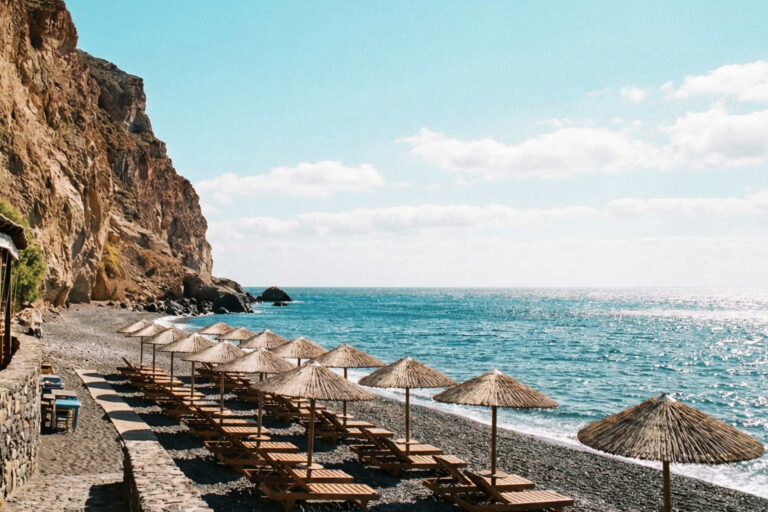
- Black Beach (Perissa): The longest beach on the island, with distinctive black volcanic sand. Great for a full day of relaxing and swimming.
- Kamari: Another black sand beach with a lively waterfront strip of tavernas and bars. A solid choice for an evening by the sea.
- White Beach: Accessible only by boat, this small cove is peaceful and picturesque — worth visiting on a boat tour.
Santorini Wine & Food: What to Try
Greek food is one of the great underrated pleasures of travel, and Santorini has its own delicious spin on it.
Must-Try Foods
- Fresh seafood: Octopus, calamari, and fish — best enjoyed right by the water.
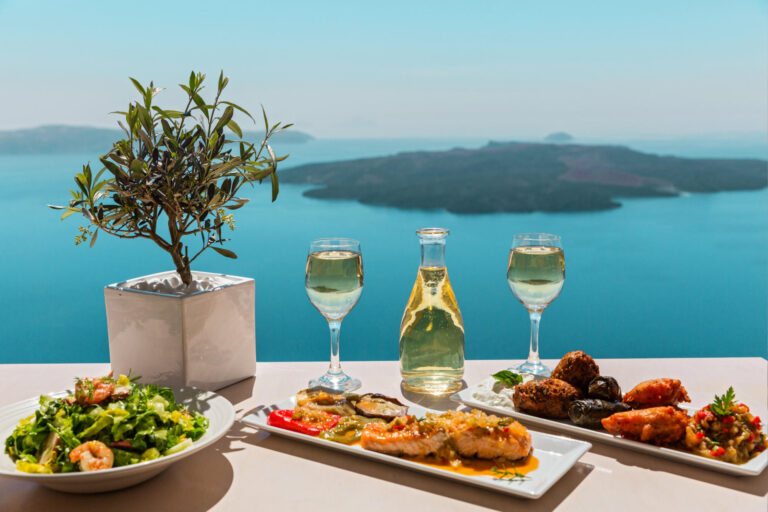
- Santorini tomatoes: Small, sweet, and incredibly flavourful. They’re a local speciality and show up in salads, sauces, and dishes across the island.
- Fava: A creamy, slightly sweet dip made from yellow split peas. It’s one of the island’s signature dishes.
- Tzatziki & mezze: Simple, fresh, and perfect for sharing.
Santorini Wine
The island’s signature grape is Assyrtiko — a dry white wine with a crisp, mineral quality that pairs beautifully with seafood. You’ll find it everywhere, and it’s genuinely worth trying.
For something sweeter, look out for Vinsanto — a dessert wine made from sun-dried grapes that’s been produced on the island for centuries.
How Many Days Do You Actually Need?
Here’s a quick guide to help you decide:
- 2–3 days: Enough to see the highlights — the caldera, a sunset in Oia, a beach, and a winery. Feels a little rushed but doable.
- 4–5 days: The sweet spot. You can explore at a relaxed pace, take a boat tour, hike the caldera trail, and still have time to just sit and soak it all in.
- A week or more: If you want to really settle in — visit the quieter villages, take day trips to nearby islands, and feel like you truly know the place.
For most travellers, we’d suggest aiming for at least 3–4 full days.
Santorini Travel Tips & Tricks
A few things that will make your trip smoother:
Book accommodation early. Especially for summer and shoulder season — the best spots fill up fast, sometimes months in advance.
Wear comfortable shoes. Santorini is built on steep cliffs with lots of steps and cobblestone paths. Flip-flops won’t cut it for a full day of exploring.
Carry cash. While most places accept cards, smaller tavernas and local shops often prefer cash. There are ATMs in Fira and Oia.
Stay hydrated. The sun can be deceptive, especially on the caldera path. Carry a water bottle everywhere.
Get up early. The best light, the quietest streets, and the most peaceful mornings all belong to those who wake up before the crowds do.
Don’t skip the less famous villages. Pyrgos, Megalochori, and Emporio are all worth a wander — and they’ll give you a much more authentic feel for island life.
FAQ — Santorini Travel Guide
Is Santorini worth visiting? Absolutely. It’s one of the most beautiful islands in Greece, and while it is popular, there are plenty of ways to enjoy it without feeling overwhelmed — especially if you visit during shoulder season or spend time in the quieter villages.
How do I get from Athens to Santorini? You have two main options: fly (about 45 minutes) or take a ferry (4–8 hours depending on the type). Both are straightforward and well-connected. Flying is faster; the ferry gives you a stunning arrival.
Is Santorini safe? Yes, Santorini is very safe for tourists. Like anywhere, use common sense — keep valuables secure, stay aware of your surroundings, and be careful on the cliff paths. The island is family-friendly and welcoming.
Do I need to rent a car in Santorini? Not necessarily. Buses connect most of the main spots, and many travellers get by without a car. However, renting one gives you more freedom — especially for visiting wineries and quieter beaches.
Is Santorini good for families with kids? It can be, but it’s worth knowing that the island is very hilly and the caldera paths have no railings in many places. Families tend to enjoy Fira as a base, and the beaches at Perissa and Kamari are great for kids.
What’s the best time to visit Santorini for couples? Late May or September are ideal — warm weather, fewer crowds, and a romantic atmosphere without the peak-season chaos. Stay in Imerovigli or Oia for the full experience.
How much does a trip to Santorini cost? It varies a lot depending on where you stay and eat. Oia is the priciest area; Fira and the beach towns offer more budget-friendly options. On average, expect to spend around €100–200 per person per day, including accommodation, food, and activities.
Can I visit Santorini as part of an island-hopping trip? Yes — Santorini connects well by ferry to Naxos, Paros, Mykonos, Ios, and Crete. It makes a great addition to a longer Greek islands itinerary.
Explore More About Santorini
- Santorini Itinerary: How to Spend 3, 4 or 5 Perfect Days
- 15 Best Hotels in Santorini: Where to Stay
- Santorini Beaches: Where to Swim & Relax
- Best Restaurants in Santorini: Where to Eat
- Santorini for Couples: A Romantic Escape
CTA
Ready to start planning your Santorini trip?
The first step is finding the perfect place to stay. Santorini’s best hotels fill up months in advance—especially the romantic cave suites with caldera views and private pools.
Once you’ve secured your accommodation, use our detailed guides in the section above to plan every detail of your trip.